You walk into a session with four ideas on your phone. A hook you’ve had since February, two toplines that never found a home, a progression you keep coming back to.
By six that evening one of them is inside a song with three other names on it. Everyone had a good day. Nobody wrote down who brought what, because nobody writes that down.
The conversation this is really about
Split sheets get drafted weeks later, usually by whoever’s most organised, often over text. That conversation is where “I had that hook already” either lands or doesn’t.
It rarely turns hostile. What it turns is vague. Four people reconstruct a day they spent making something, and the person who brought the strongest idea is relying on three other memories to agree with theirs. If one person is certain the hook came out of the room, there’s no way to settle it. You’re both describing the same afternoon differently.
A dated record changes the shape of that. “I had it in February” stops being a claim and becomes a thing you can show, and the conversation moves on to what it should be about, which is what the song is worth and who did what to get it there.
What actually counts as bringing something in
Worth being honest with yourself here, because over-claiming does more damage than under-claiming.
A finished hook, melody and lyric, in a form someone else could sing, is something you brought. A topline written over someone else’s beat before the session is too. A chord progression is a weaker claim, and a general direction or a reference track isn’t a claim at all.
Register the first two. Registering the third invites an argument about whether four chords are yours, which is a worse conversation than the one you were trying to avoid.
Register the voice memo as it is
Ideas at this stage are rough. A phone recording with a fridge humming, a bounced loop, a lyric typed into a note. That’s fine. The record isn’t a demo, it’s a date.
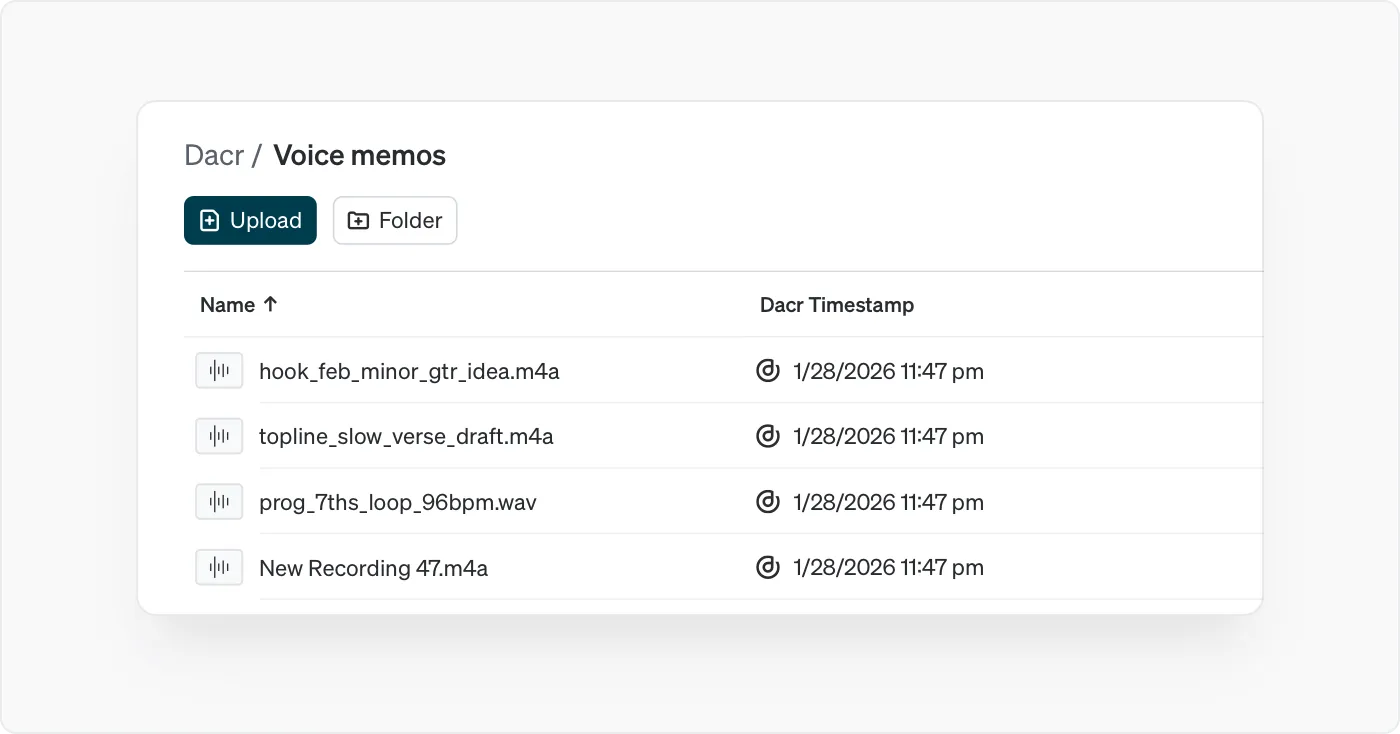
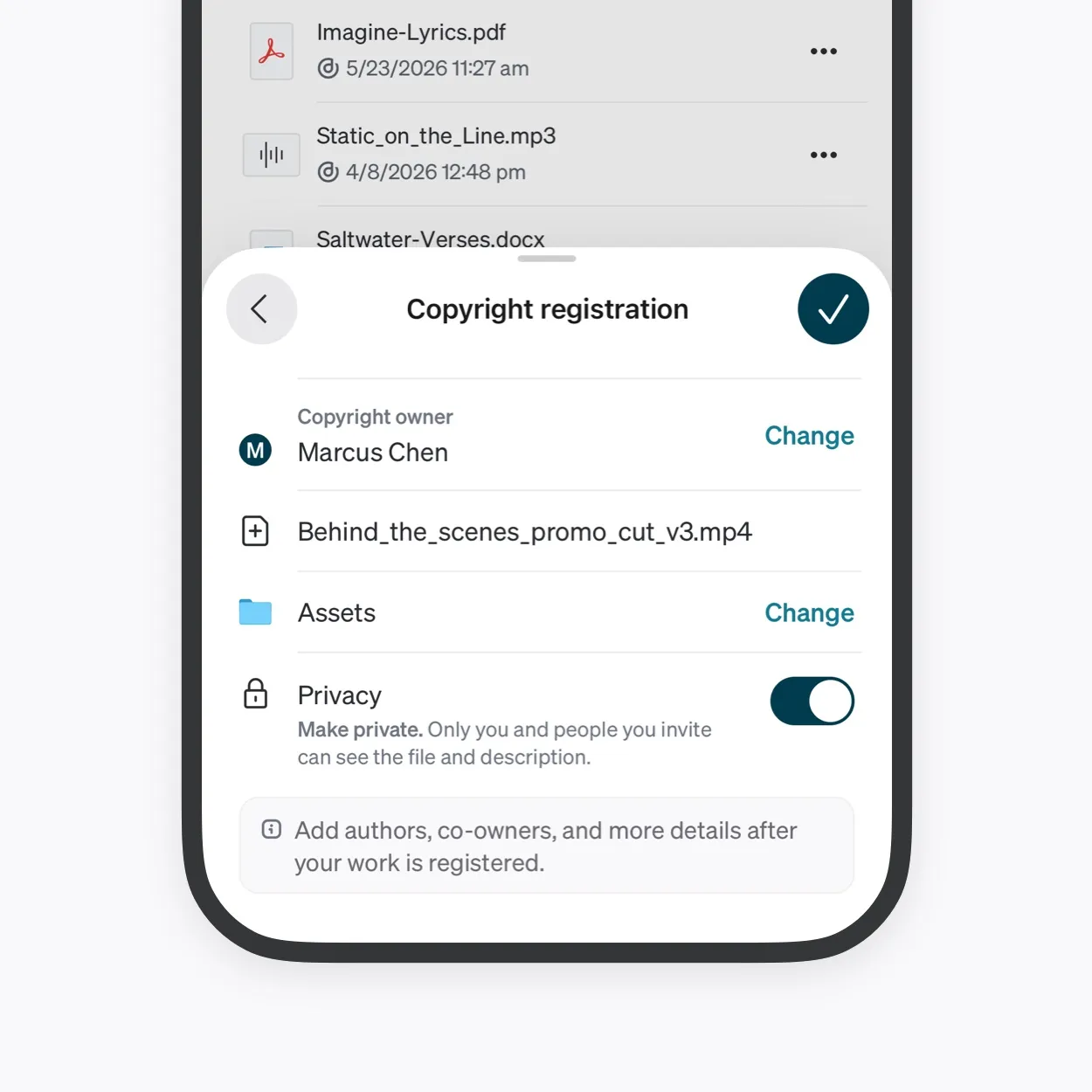
Each file becomes its own registration, so choose the ideas rather than dumping the folder. Four you’d genuinely defend is a session’s worth. Registering forty voice memos mostly registers noise, and makes the good ones harder to find later.
Rename before you upload. The filename is permanent and stays publicly visible on the registration, so New Recording 47.m4a is what the record says you made. It takes a minute and there’s no fixing it afterward.
Set them private. That hides the audio and the description; the filename stays visible either way, which is the second reason to name things properly.
Doing it before a session is the hard way
If you only register the night before a booked session, you’ll do it once, in a rush, and then stop.
A monthly pass over whatever’s accumulated on your phone is easier and produces a better record, because the date sits close to when the idea actually existed rather than close to when you got nervous about it. It also means you never prepare for a session at all. You walk in and everything you’ve brought is already recorded.
File them somewhere sensible while you’re there. An unplaced ideas folder by year is enough, and it means that when a hook finally gets used, you can find the original in a minute rather than scrolling three years of voice memos.
What you register after the session is a different job
The song written in the room is a new work with its own ownership question, and it needs its own registration. The pre-session records say nothing about it.
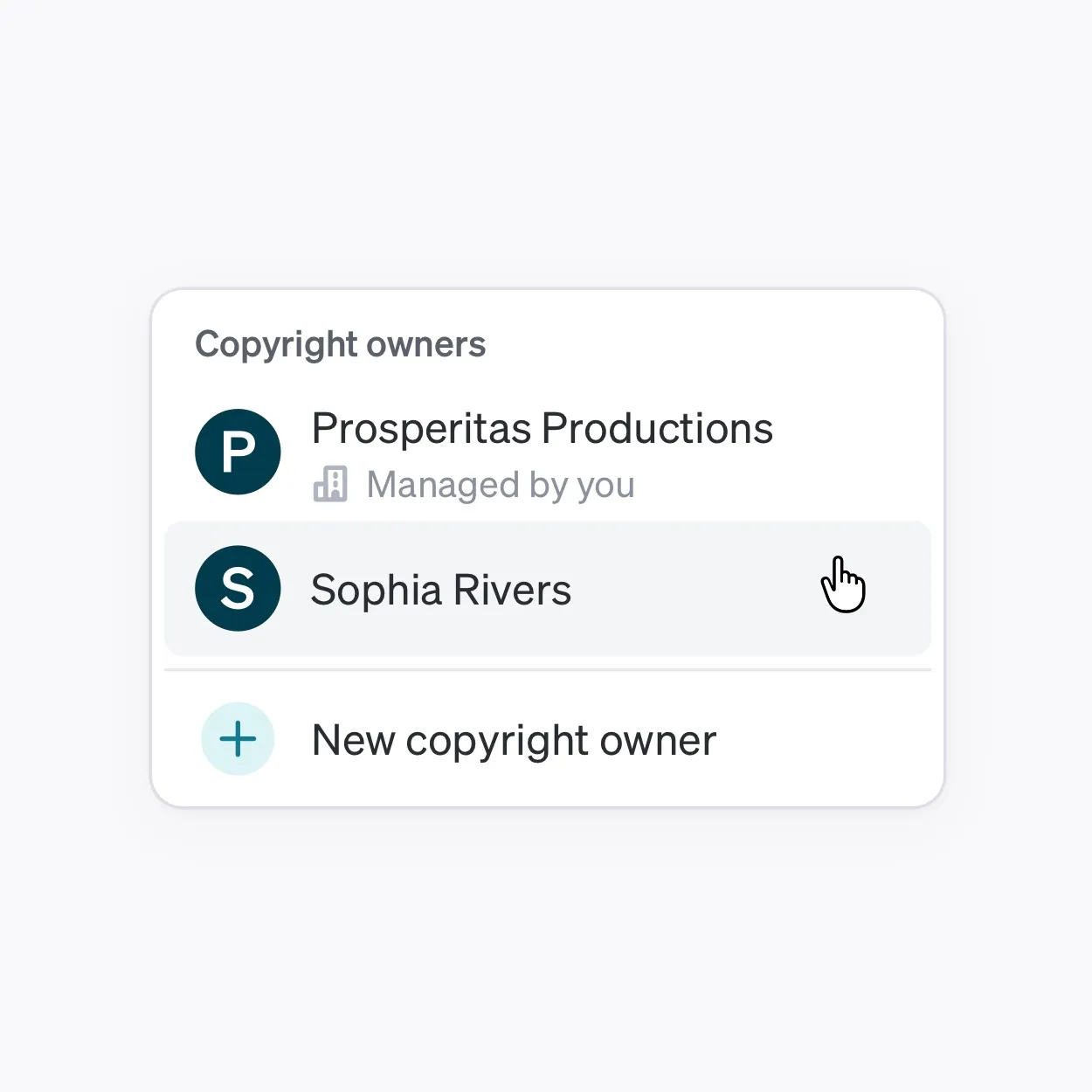
Register that too, and don’t wait for the arrangement to be settled. Co-owners and authors can be added afterward, so you can put the work on record now and name people as it resolves. Credit is the part that’s easy to agree and the first thing anyone forgets.
Raising it in the room
Some writers feel awkward mentioning any of this at a session, as though it signals distrust of people they’re about to spend eight hours with.
The answer is to have done it already. Nobody has to be told about a record you made in February, and if it comes up later you’re describing something routine rather than something you did because of them. Producers and writers who register everything they make, as a matter of course, never have this conversation at all.
When it’s the other way round
You’ll also be in sessions where someone else brought the strongest idea. The same records help you there, because a clean account of what arrived and what got written is what stops a split negotiation becoming a memory contest.
Which is the underrated version of this. It isn’t only protection. It’s that the sessions where everyone can point at what they brought are the ones where the split conversation takes ten minutes.