The riskiest window in most creative work is the one between finishing something and getting back to your desk.
A shoot wraps and the client’s marketing person asks for a couple of frames on the spot. A session ends and someone airdrops a rough to the artist’s manager. A studio visit ends with a collector photographing the piece. A build ends and a producer wants a clip for social.
Why that gap matters more than it looks
Work leaves in that window, informally, to people who were not planning to receive it and won’t remember what was agreed.
It is also the point at which the work is most clearly yours and least documented anywhere. By the time you’re home and importing, a version of it may already be on three phones.
Registering before you pack up closes that. It takes a couple of minutes, and it happens at the only moment when the files are finished and still only in your hands.
What you can actually do from a phone
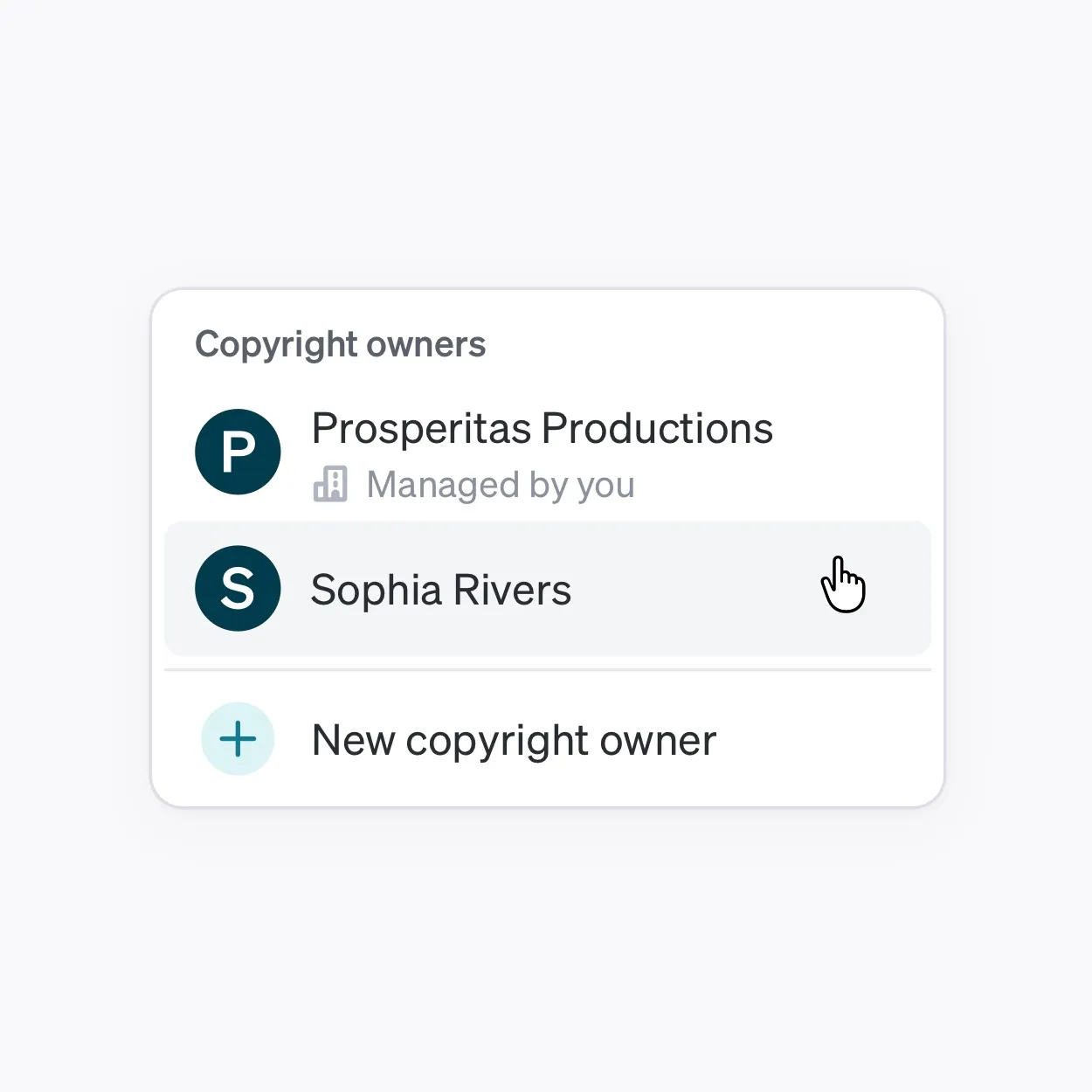
Registration works from mobile, and the flow asks the things a desktop takes from context: which owner, which folder, and whether it is private.
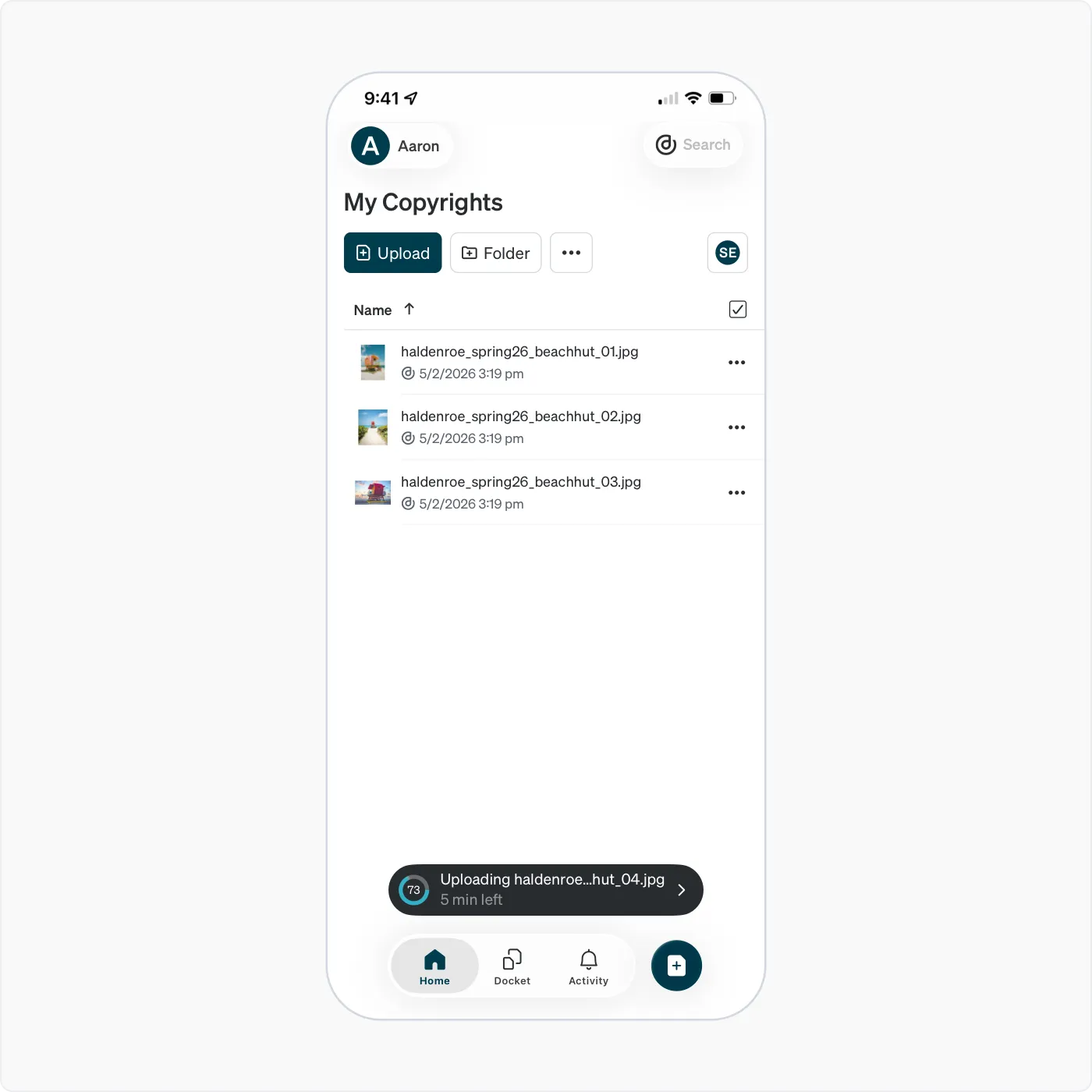
So the version you do standing in a car park is the same registration you would make at a desk. The record doesn’t know or care where you were.
Register what actually leaves
This isn’t a backup. Each file you register is its own registration, so the useful selection is the small set that is about to exist outside your control.
The two frames you’re sending. The rough bounce. The clip. If nothing is leaving, this can wait until you’re home and doing it properly.
Where the whole take matters and the volume is high, register the delivered edit later and use the on-location step only for what goes out early.
Naming, which is the hard part on a phone
The filename you upload is permanent and stays publicly visible, and it becomes the record’s starting title. Search looks at the title.
Nobody wants to type a careful convention on a phone at the end of a twelve-hour day. Two things make it survivable. Set your camera or recorder to produce useful names in the first place, which is a settings change you make once. And keep the on-location name short but distinctive, since the title can be tidied later even though the filename cannot.
A project name and a date beats a sequence number, and takes four seconds.
Set privacy before you send anything
Most work at this stage is unannounced, and a private registration hides the work and the description while ownership, authorship and the timestamp stay publicly verifiable.
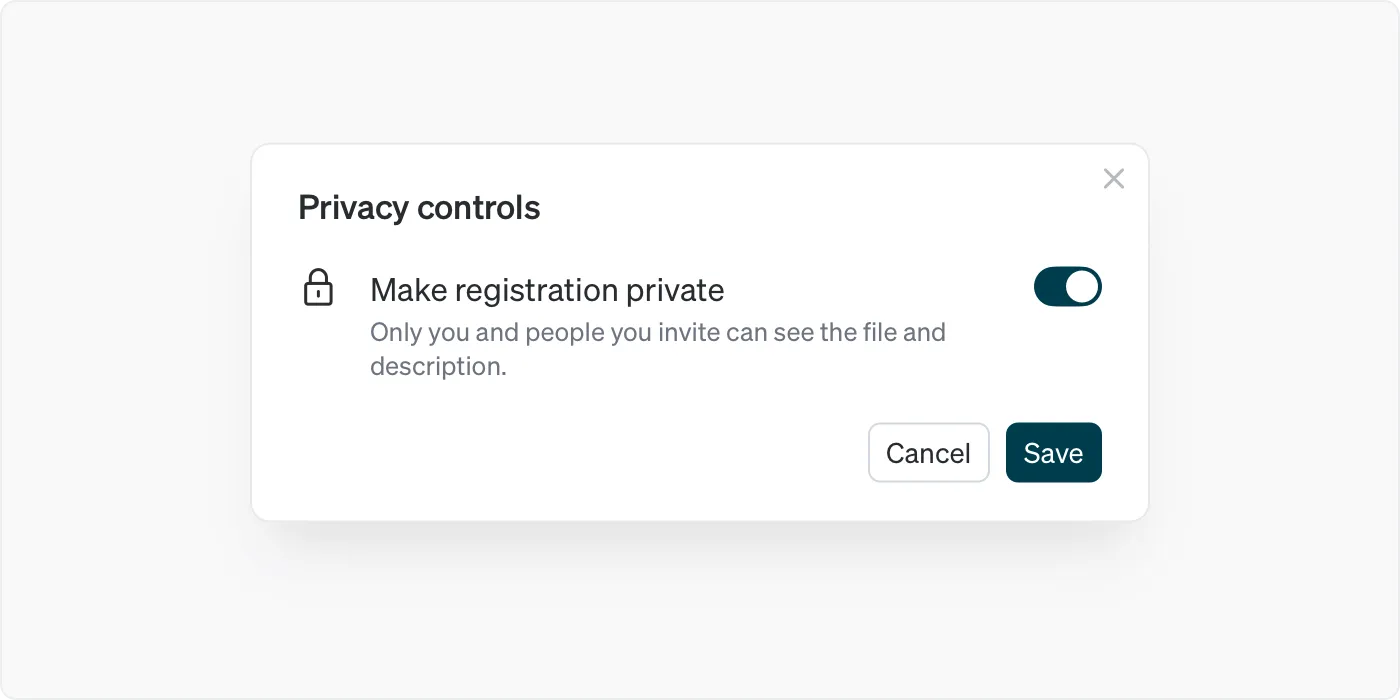
If most of what you register is unreleased when you register it, set your default file privacy once in Account settings rather than deciding it on location.
Then send the link instead of the file, where you can
Once the registration exists you have an alternative to airdropping a file to someone you met an hour ago.
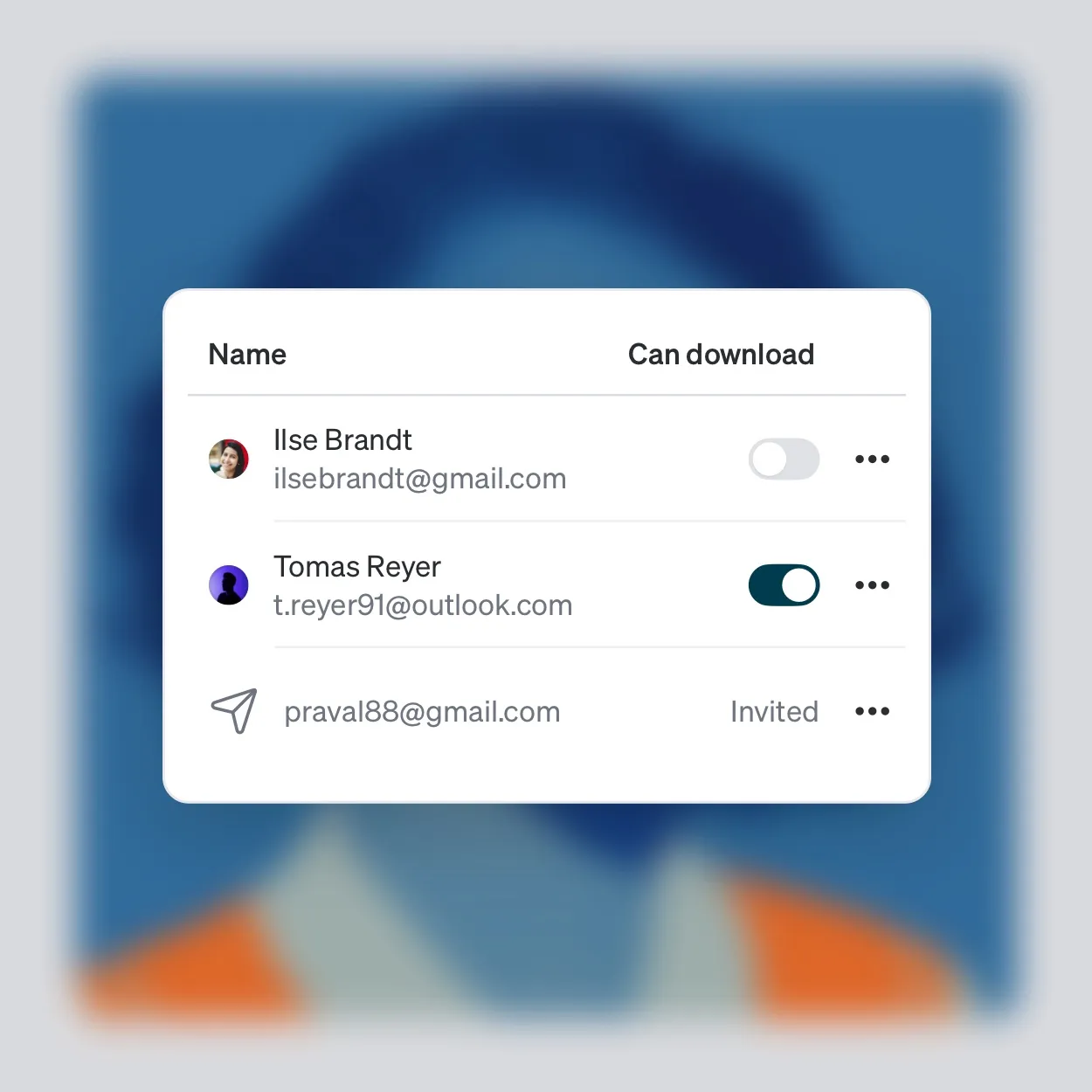
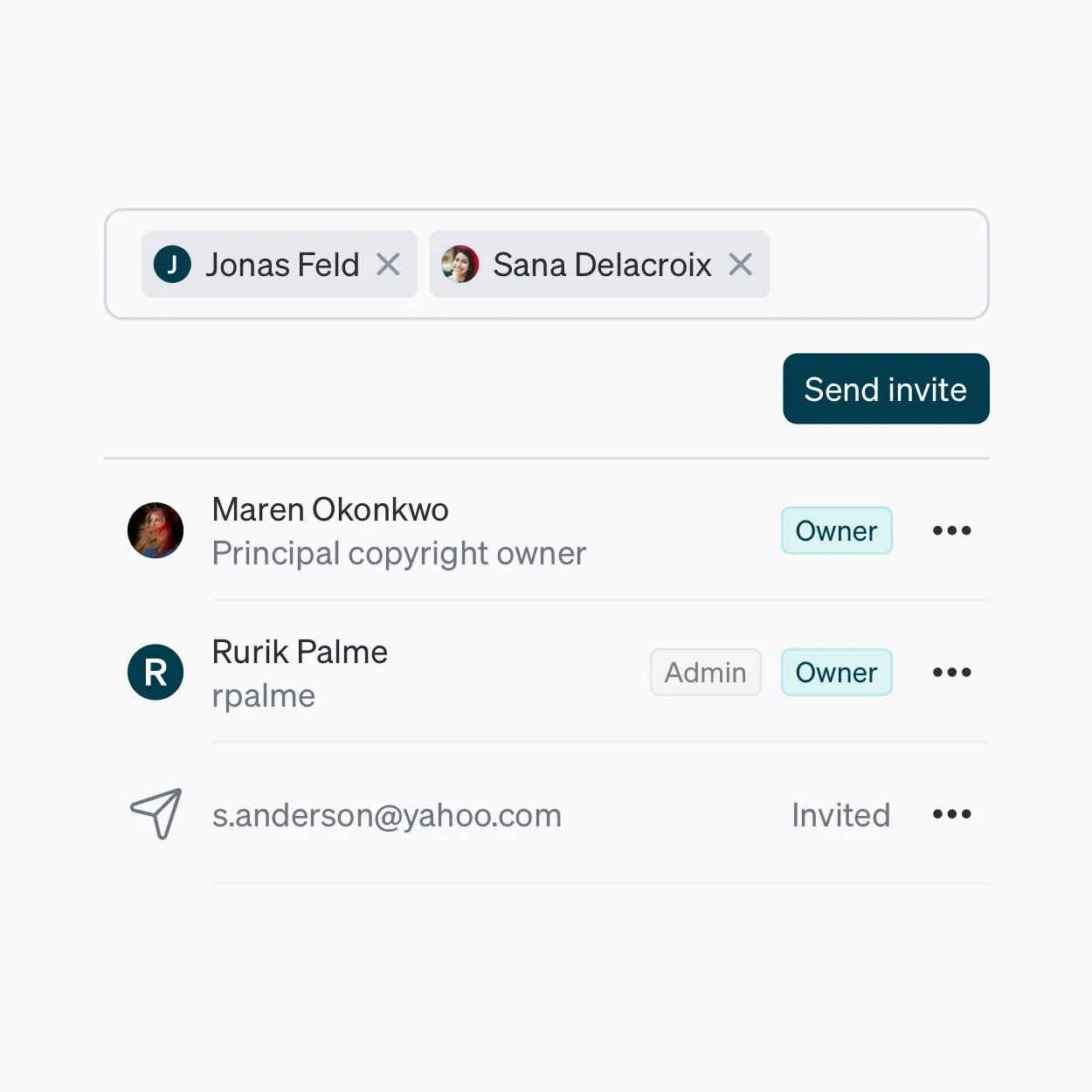
The registration’s public page proves the work is yours without exposing it, and an invitation gives a named person access with downloading switched off. Neither is slower than sending a file, and both leave you knowing who has what.
When it is worth it and when it is not
Do it whenever something finished is about to leave the room. A first look, a rough, a selection, a clip for approval.
Skip it for material you’re taking home to work on. Unfinished work will change, and registering every intermediate state fills your catalog with versions you will never look at again.
The habit that survives is narrow: if it is going out today, it goes on the record before it does.