You’ve found it. A print of your photograph on a marketplace listing, your track under someone’s ad, three paragraphs of your article on a site you’ve never heard of. The obvious next move is to say something.
Hold off for a few hours. What you do in that window shapes what’s available to you afterward, and contact tends to close options rather than open them.
What the message costs you
Reaching out tells the other party you’ve noticed. Some will pull the work down immediately. That feels like a result until you go looking for the listing and there’s nothing left to describe, not the price, not the account that posted it, not how long it had been up. If what you wanted was a licence fee or a serious conversation, the material that supports it has gone.
Others edit instead of removing. They crop the image, change the caption, swap the file for a slightly different one. Now the thing you found and the thing that exists aren’t the same, and you’re describing something that isn’t there.
The tone problem is less abstract than it sounds. Messages written in the first half hour rarely read the way you’d want them to a month later, and they set the temperature for everything after.
Get the file, not a picture of it
Download the actual thing. The image, the exported audio, the saved video, whatever form the copy takes. Take a screenshot too, since it captures context the file doesn’t carry, but the file is what a comparison runs against.
Do this first, because it’s the part that vanishes.
Check the docket before you do anything else
Dacr analyses each registration against everything already registered with Dacr, automatically, when it’s created and again whenever someone else registers something that matches it. That runs on every account without being switched on or paid for, and flagged pairs surface in your infringement docket, where flagged matches and infringement reports appear, with a score and a breakdown.
So there may already be a record of this, or of something adjacent you hadn’t noticed. Worth looking before you start from scratch.
Matching runs against work registered with Dacr, so the docket is the place to check what has already been flagged before you go further.
Check what your registration covers
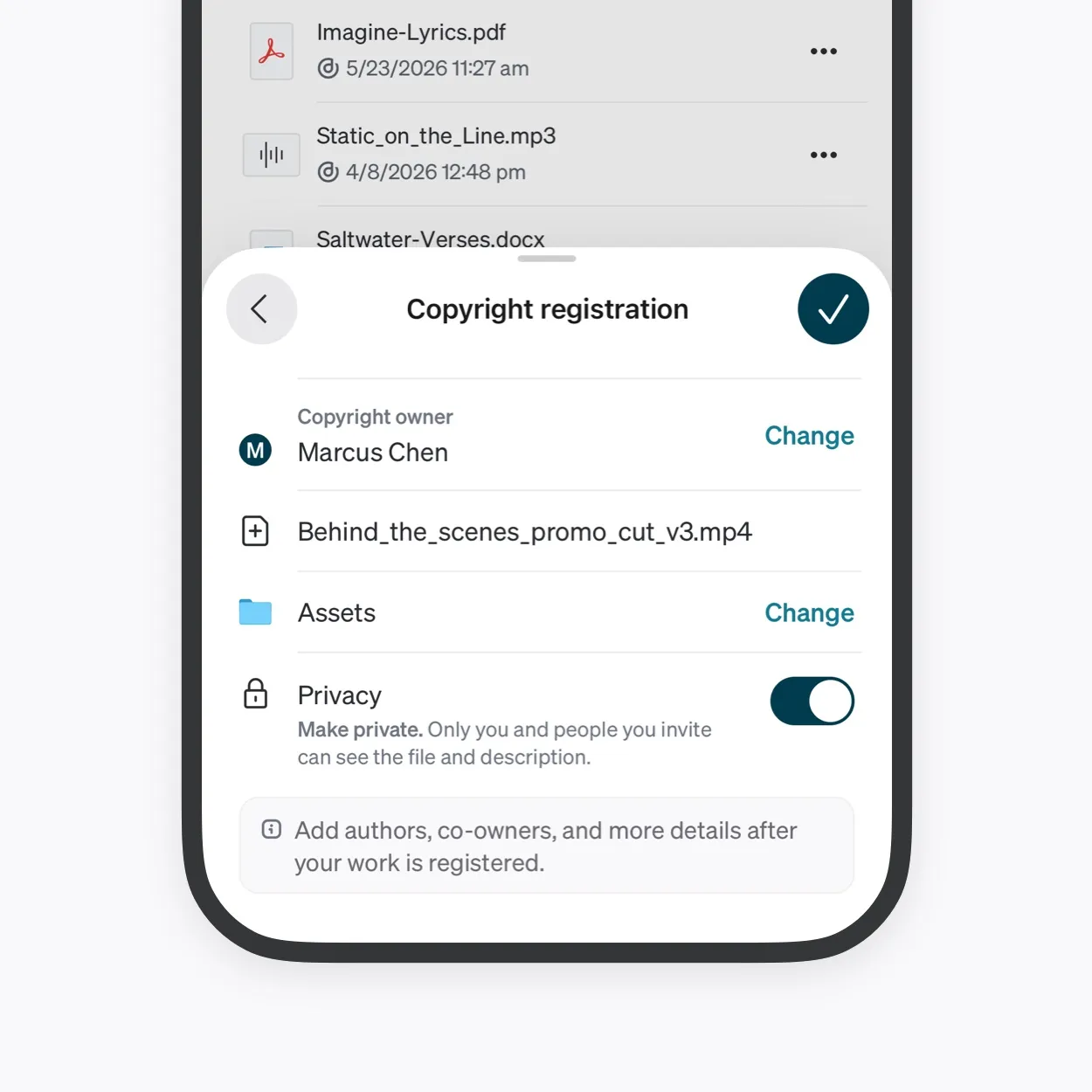
Open the registration and look at the date and the countries. Both are fixed. The date is either earlier than the copy or it isn’t, and the countries are whichever ones you chose at the time.
If the use is happening somewhere you didn’t cover and you’re a Dacr Member, you can add that country to the registration. The new record is timestamped from today rather than backdated. Worth doing for what comes next in that market. It isn’t retrospective coverage, and nobody should tell you otherwise.
What your existing registration does for you in a country you hadn’t covered depends on that country’s law and on what’s being argued. If the situation is serious, that’s a question for a lawyer rather than an assumption in either direction.
While you’re in there, pull your source files together. The registered version, the working files, anything showing the work being made.
Run the comparison
A technical comparison analysis report takes your registered work and the file you obtained and documents where they line up. You can start it from a flagged match in the docket, or by uploading the file you found and choosing which of your registrations to compare it against.
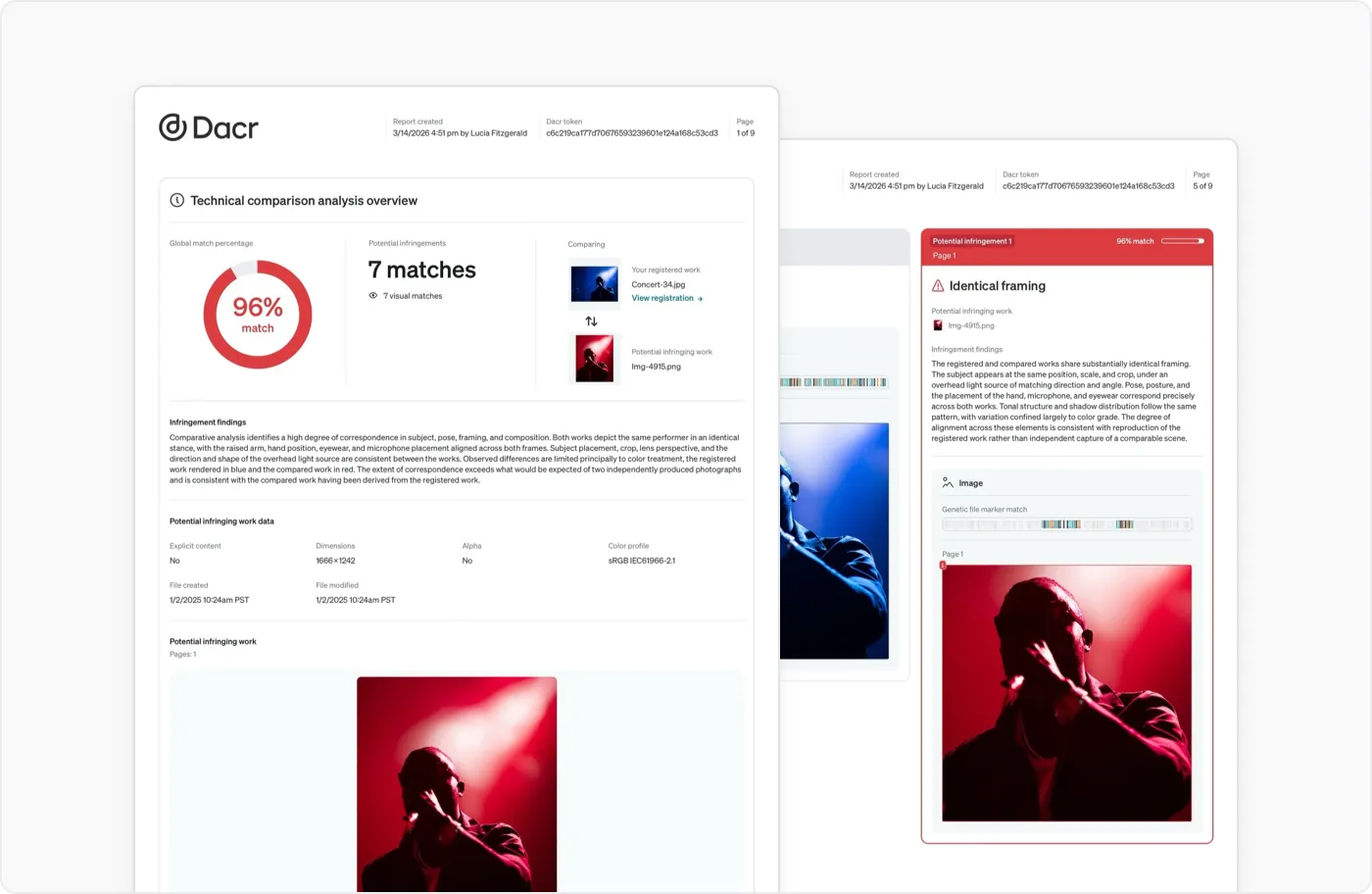
Creating a report uses one report credit, spent at creation whatever the report finds. It comes back if the report fails to process or the upload fails, but not because the result disappointed you.
You’ll also confirm that you’re acting in good faith, that you hold the rights to the original work, and that Dacr will store both files to process the report. That’s the Create report button rather than a tick box, so read it before you press it.
What the report changes about the conversation
Sometimes the answer is that you licensed it eighteen months ago and forgot. Sometimes what looked damning at 2am reads as coincidence in a documented comparison. Sometimes it’s precisely what it appeared to be.
Whichever it is, you’re deciding with information rather than with an impression. Takedown, licensing, or a formal route is a question about what the use is worth and what you want from it, and that’s a conversation for a lawyer rather than an article.
Bring the report, the file, your registration, and the screenshot with its context. A lawyer’s first hour goes further on what to do next than on working out what happened.