How Dacr AI’s Copyright Superintelligence turns a potential match into a court-ready technical record that creators, counsel and courts can examine
Most creators discover copying in the least forensic way imaginable. A friend sends a link. A fan notices a familiar chorus in somebody else’s video. A photographer sees an image in an advertisement and knows immediately where it came from. The first reaction is usually certainty: that’s my work.
The difficulty starts one minute later. How much of the work is actually there? Where does the overlap begin and end? Was the audio altered? Did the video use the same frames, or only a similar scene? Does the second document repeat the same language, or simply discuss the same subject? A creator may be completely right about what happened and still need a disciplined way to show it.
That is the job of the Dacr Infringement Intelligence System, or DIIS.
DIIS is the forensic analysis layer powered by Dacr AI. It takes a registered work and a suspected use, performs a technical comparison across the evidence available for that medium, and generates a report designed for evidentiary review. The report does far more than announce that a match exists. It shows where the works correspond and then explains, finding by finding, why the correspondence is technically significant. A reviewer can move from the overall result into the exact passage, frame sequence, audio interval, visual relationship, or other matching material that produced it.
For a creator, the difference is simple. Instead of saying, ‘These look alike,’ or ‘I can hear my song in this clip,’ DIIS gives the claim a technical record that another person can inspect. The report is built to help a rights holder, attorney, platform reviewer, expert, or court evaluate whether the technical evidence supports an infringement claim rather than relying on the creator’s instinct alone.
A match becomes useful when it can be located
The headline number in a DIIS report is the Dacr Match Score. It summarizes technical correspondence between the compared works, but the score is only the entry point. DIIS breaks the comparison into individual findings and connects each one to the underlying material. The reviewer can see which portions correspond, how strong the relationship is, and the technical basis for calling that particular segment a match. The report is meant to answer the question a percentage alone cannot answer: what, exactly, did the system find?
That matters because a work is rarely copied in one clean block. In a video, the strongest visual correspondence may appear in a short sequence of frames while the surrounding edit is different. A song may reuse a rhythmic structure, melodic phrase, vocal element, or instrumental passage for less than a minute. A document may reproduce one passage closely and paraphrase another. DIIS preserves those distinctions and explains them separately instead of flattening the entire comparison into one yes-or-no result.
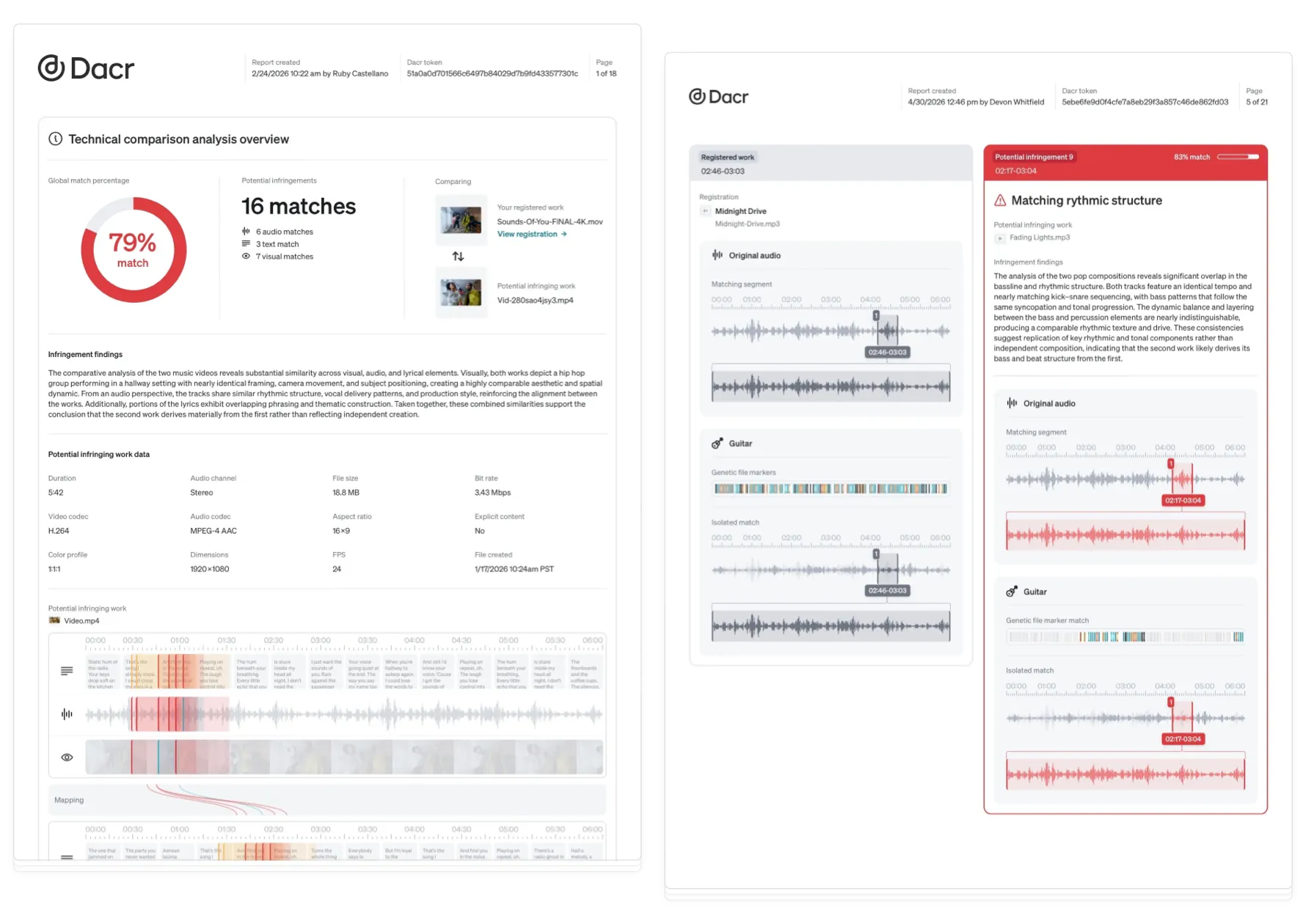
For time-based media, the report maps the registered work and the suspected use against one another. Matching audio or video can be located to exact intervals, and the corresponding segments are shown side by side. The creator can see where the suspected work uses the material and where that material came from in the registration.
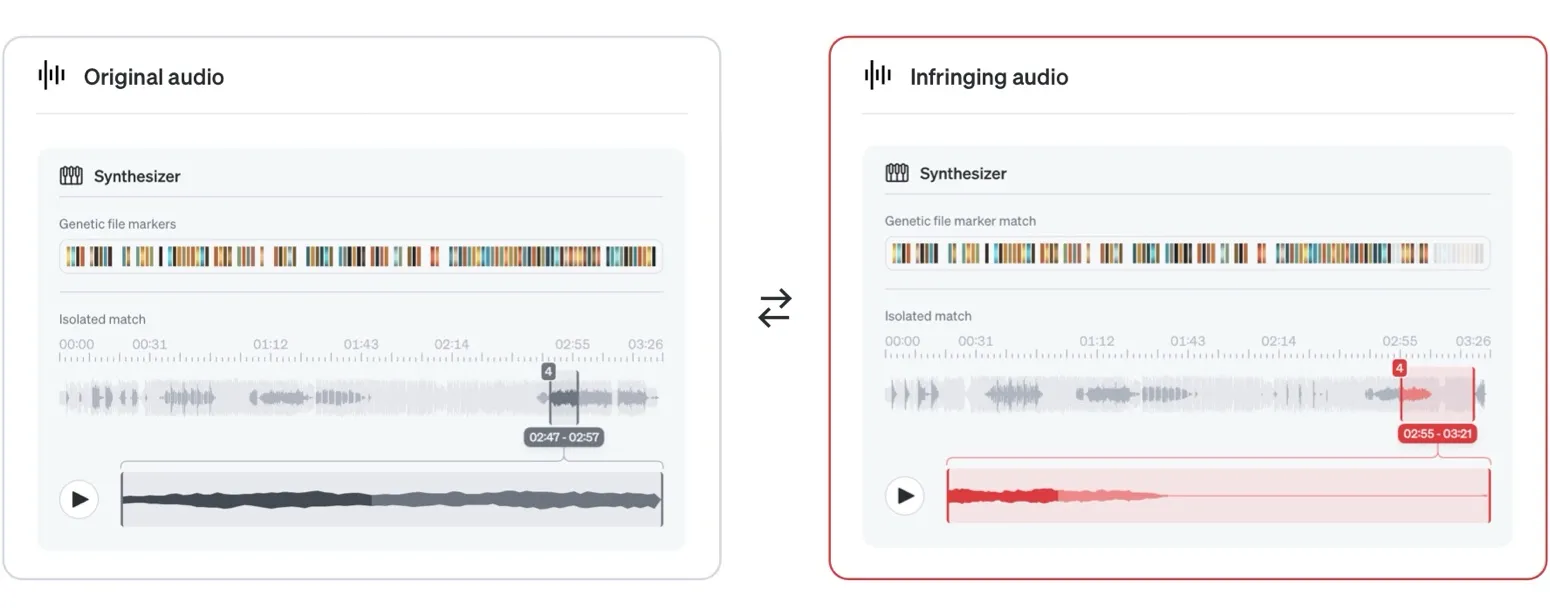
The reports make this especially clear. A video comparison can locate the matching sequence frame by frame and tie it to an exact timecode. An audio finding can place the registered waveform beside the corresponding interval in the suspected recording and, when the evidence supports it, narrow the analysis to the relevant stem. DIIS then explains what it is seeing in that segment rather than simply drawing a box around it. The result is a technical account of what matched, where the match occurred, how strong the correspondence is, and why the system considers the relationship significant.
Different works leave different kinds of evidence
DIIS does not force every copyright dispute into the same forensic language. The analysis follows the medium.
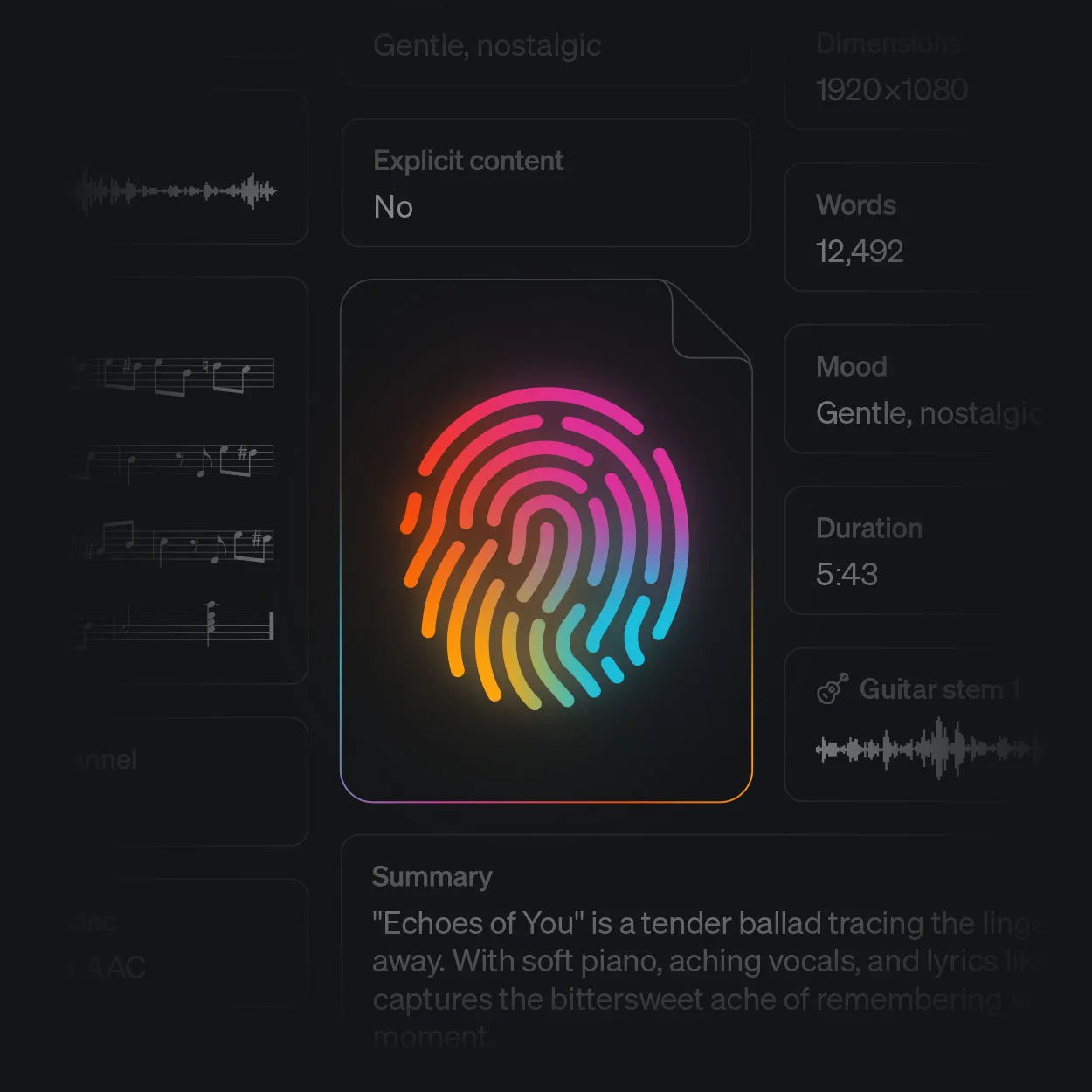
With audio, Dacr AI can work from the technical understanding created around the registered recording, including isolated stems and the fingerprinting associated with the work. A report can localize the matching interval in the original audio, compare the corresponding section in the suspected work, and explain the technical basis for the match. Depending on the evidence, that may include rhythmic structure, tonal progression, instrumental patterns, vocal material, or a correspondence within a particular stem rather than treating the track as one undifferentiated waveform.
Visual analysis works differently. An image report can examine composition, subject placement, spatial arrangement, repeated visual elements, and other content-level correspondence while displaying the registered image and the suspected work together. For video, that same logic operates across time. DIIS can map the frames that correspond, show the relevant intervals, and explain why the visual relationship is significant instead of relying on a single still image from the clip.
Text brings another kind of problem. Copying can be literal, lightly edited, paraphrased, or distributed across a longer document. DIIS can identify the relevant passages, distinguish stronger textual correspondence from broader structural or semantic similarity, and explain the basis for each finding. A report may show near-verbatim language in one place and a more moderate paraphrase somewhere else, with each finding tied back to the exact pages and surrounding context.
The point is not to make every medium look identical inside a report. It is to give each kind of evidence a form that makes sense to the person reviewing it.
Dacr AI supplies the Superintelligence; DIIS creates the forensic record
DIIS is powered by the same Dacr AI infrastructure that learns a work at registration. By the time a comparison begins, the registered work already has several layers of technical identity inside Dacr. Its proprietary digital DNA provides the deeper internal understanding of the content. The digital fingerprint gives the system an outward-facing way to recognize that work in other files and external environments. Genetic File Markers add another identity layer tied to the registration. DIIS can use those layers together when it examines a suspected work.
When a potential use is identified, that intelligence gives DIIS a much stronger starting point than a filename, a thumbnail or editable metadata. The suspected file can have another name. Its metadata can be missing. The audio may have been re-encoded or the image cropped. The comparison is built around the content.
Fingerprinting helps DIIS locate and establish correspondence without depending on filenames or editable metadata. The deeper DNA and Genetic File Marker technology can then help the system analyze that relationship more closely. In the report, the Genetic File Marker information becomes visible as part of the comparison: the registered work carries its original marker pattern, while the suspected work can display a corresponding marker view in which matching elements are highlighted and non-corresponding elements are muted. For a creator, the visual is straightforward. It provides another way to see which parts of the suspect work line up with the protected technical identity of the registration. Behind that visual, Dacr AI continues with the media-specific analysis that explains why the match matters.
The important boundary is that DIIS preserves the Copyright Superintelligence’s technical result as technical evidence. Dacr AI can analyze more dimensions than a manual review could reasonably process, but it does not turn that technical depth into a legal verdict. A Match Score measures correspondence. Permission, fair use, applicable exceptions and the governing jurisdiction may still matter to the legal question.
The report is built for someone who was not in the room
A creator already knows the original work. A court, attorney, platform reviewer or opposing party does not. DIIS reports are structured around that reality.
The report identifies the registered work and the suspected work, records the report-creation information, and gives the comparison its own Dacr token. It then presents an overview of the technical findings before moving into the individual matches and the evidence supporting them. The length changes with the case. A simple image comparison may need far fewer pages than a video or audio report containing many separate matches.
The evidence is deliberately visual. A reviewer can move from the global Match Score into the passages, frames, waveforms or components that produced it. The Genetic File Marker comparison adds another visual layer: the original registration shows the marker pattern associated with the protected work, while the suspected work can show which corresponding marker elements remain present and which do not. That lets a creator see part of the technical identity comparison without having to understand the proprietary DNA underneath it. For time-based media, the same evidence can be mapped on a timeline so the relationship between the two works is not buried inside prose.
That makes the report useful before litigation as well as during it. A creator can share it with counsel. A platform can review the technical comparison. An expert can inspect the findings and methodology. If the dispute reaches a court, the evidence is already organized into a formal technical record rather than reconstructed later from scattered links, files, and memory.
One score should never hide the evidence
The Dacr Match Score gives a creator a fast way to understand the overall level of technical correspondence, but the report is intentionally more granular than the number at the top. In the report examples shown here, one comparison contains sixteen separate findings across audio, text and visual material, while another image comparison contains six visual findings. A document comparison can contain many more individual passages. The score summarizes the relationship; the matches show what produced it.
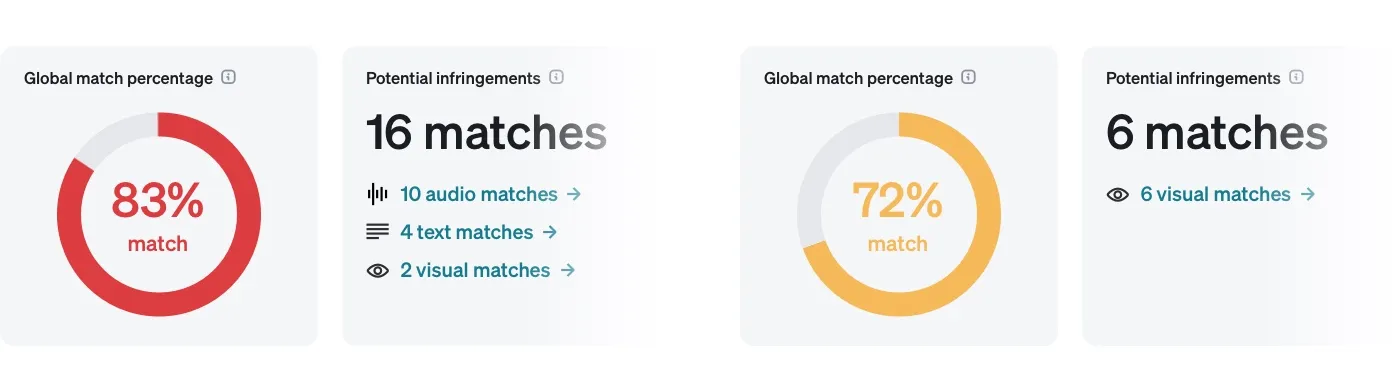
Each finding is classified according to what the forensic system observed, and the report explains the technical reason for that classification. In video, that may mean the precise run of corresponding frames and the visual features that persist across the sequence. In audio, DIIS can identify the interval and explain the rhythmic, melodic, structural, vocal, or stem-level relationship that caused it to be flagged. A visual-art comparison can describe compositional overlap, while a document report can separate near-verbatim copying from a more moderate paraphrase and tie the finding to the relevant text. The reviewer does not have to reverse-engineer the score because the report shows the evidence and the reasoning beneath it.
This is especially important when a work has been used selectively. A ninety-second clip inside a longer video may matter a great deal even though most of the second file is unrelated. DIIS keeps that local evidence visible rather than letting the unmatched material wash it out. The creator can see the corresponding segment, the report can explain what technically matches inside that segment, and counsel can evaluate that evidence in the context of the larger work.
The same approach works in the opposite direction. A high overall score is not a shortcut around analysis. The report still shows the individual findings so a reviewer can decide whether the correspondence is technically meaningful and legally relevant. The product is designed to make the score explainable, not mysterious.
Why a Copyright Superintelligence can go deeper than a manual review
A skilled human reviewer can recognize similarity, compare two works and form a legal or expert opinion. What a human cannot realistically reproduce by eye or ear alone is the same volume of technical analysis across every layer of a complex work. Dacr AI is engineered as a specialized Copyright Superintelligence: a system capable of evaluating frame-level visual correspondence, exact time intervals, stem-level audio relationships, digital fingerprints, Genetic File Marker evidence, textual structure and other medium-specific signals together. DIIS turns that machine-scale analysis into findings a creator, lawyer or court can actually read.
That is where the report becomes more than an automated similarity check. The Copyright Superintelligence can explain why a match was identified with a level of technical specificity that would be extraordinarily difficult and time-consuming to reproduce manually. It can isolate the relevant portion of a work, correlate multiple technical signals, measure the strength of the correspondence and describe which features persist between the registration and the suspected use. The human reviewer still brings legal judgment and context. Dacr AI brings the depth of forensic intelligence needed to make that judgment far more informed.
The same report can serve very different readers
Creators, lawyers, platforms and technical experts do not read evidence in the same way. A creator may want to know whether the chorus, photograph or passage they recognize is actually present. Counsel may care about the exact extent used and the source history. A platform reviewer needs enough specificity to understand what is being challenged. An expert may want to inspect the methodology and underlying technical measurements.
DIIS is designed so those readers can start from the same document instead of receiving separate versions of the story. The plain-English findings sit beside the technical comparison, and the visual exhibits lead back to the registered work and the suspected source. That shared record can reduce the amount of explanation a creator has to recreate every time the dispute moves to another person.
Court-ready means traceable, not magically conclusive
The phrase ‘court-ready’ is important, and so is what it does not mean. DIIS is designed to produce forensic documentation suitable for evidentiary review. It does not guarantee that a court will admit every report, accept every technical conclusion or find infringement. Those questions depend on the law, the case and the evidentiary rules that apply.
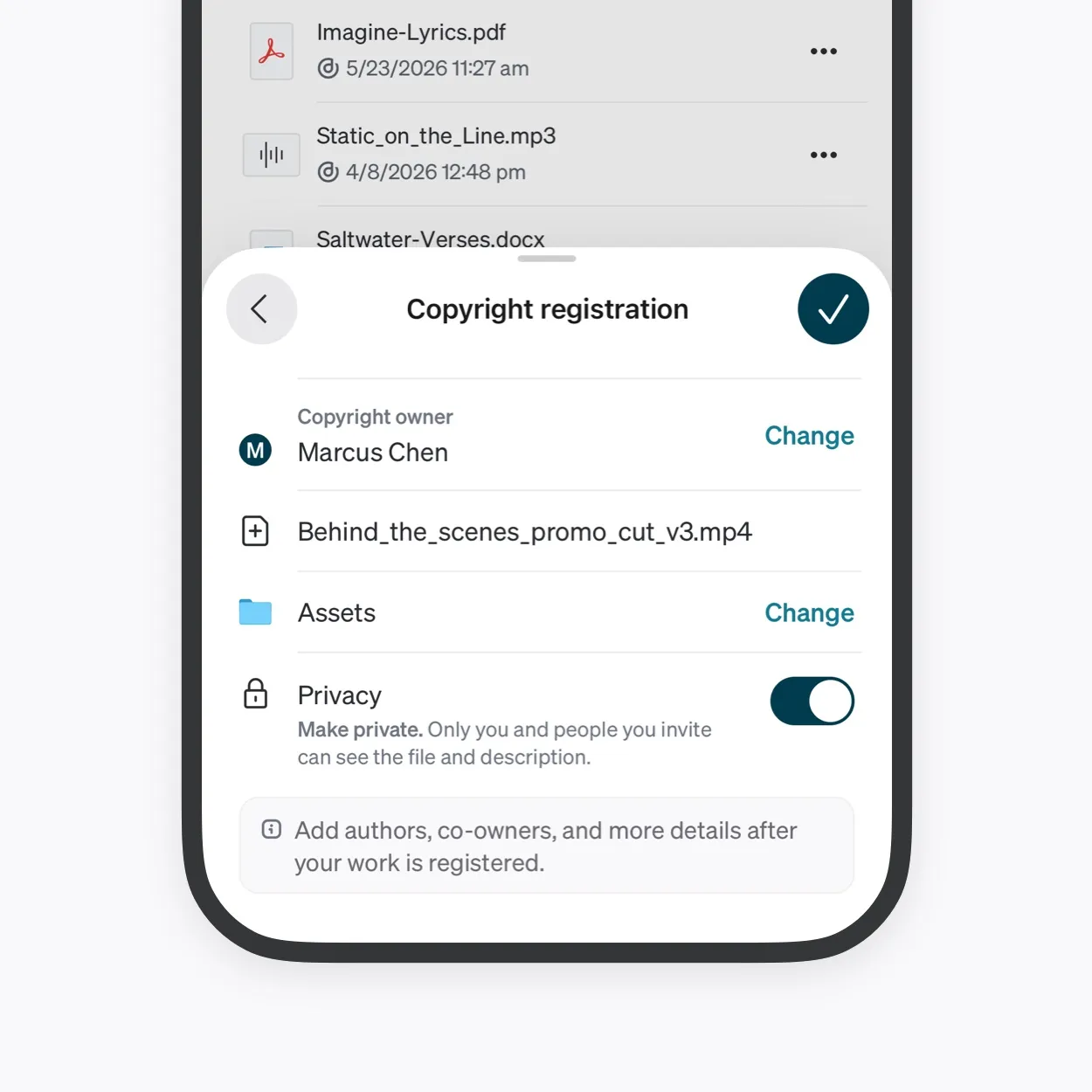
What DIIS can do is give the technical evidence structure and specificity. The registered work is connected to the Dacr record and cryptographic timestamping, together with the content identity Dacr AI established when the work was registered. The suspected work is then analyzed against that reference using the fingerprint, deeper DNA analysis and Genetic File Marker evidence where applicable. DIIS localizes the individual findings to the relevant portions of both works and documents why those portions correspond technically. The report preserves the path from the overall Match Score down to the evidence beneath each finding, so a reviewer can evaluate the technical case rather than being asked to trust a conclusion.
Each generated report also carries its creation details and Dacr token so the document can be tied back to the report record that produced it. For formal review, that kind of traceability matters as much as the visual comparison: the reader should be able to identify what was analyzed, when the report was created, and which evidence supports the findings shown on the page.
That is a meaningful difference from the material creators often begin with. A URL or saved copy may show that another work exists, but it says very little by itself about the technical relationship between the two works. DIIS is built to document that relationship in detail.
From monitoring to a formal report
DIIS also fits into a larger enforcement workflow. Dacr AI can monitor public internet sources and connected environments for potential matches to registered works. When a significant result is surfaced, the rights holder can review it and decide whether the situation deserves deeper analysis.

If it does, the creator can generate a DIIS report from the registered work and the suspected copy. The report is not automatically created simply because the system found a match. That decision remains with the rights holder.
This separation is useful. Monitoring is built for discovery. DIIS is built for the moment when discovery needs to become evidence.
A creator may decide that a match is licensed, irrelevant or too minor to pursue. Another match may involve a commercial use worth sending to counsel immediately. The technology helps find and document the facts without taking that decision away from the person who owns the rights.
Forensic evidence should not require a forensic expert to understand it
One of the design goals behind DIIS is to make that Superintelligence readable. A creator should be able to open the report and understand why the system produced the result without learning signal processing, computer vision or forensic linguistics.
That is why the report uses side-by-side comparisons, timelines, highlighted passages and visible match regions. The technical work can be sophisticated underneath while the presentation remains direct enough for a creator to follow.
The same report can then travel to people with deeper technical or legal expertise. Counsel can inspect the exact finding. An expert can review the methodology. A platform can see which material is being challenged. Everyone begins from the same documented comparison.
Creators have spent too long being asked to prove copying with tools that were never built for proof. DIIS is our attempt to change that.
The difference between suspicion and evidence
A creator will often know something is wrong before a system does. That instinct matters. It is also only the beginning.
DIIS gives the next step a technical form. It can show what matched, where it matched, how strong the correspondence is, which parts of the registered work appear in the suspected use, and the technical reasons those portions were identified as related. The purpose is to give the rights holder and the people reviewing the matter enough specificity to assess whether the technical evidence supports an infringement claim. The legal conclusion may still require counsel or a court, but the technical question is no longer left at ‘these seem similar.’
Dacr AI finds and understands the relationship. DIIS documents it.
That is how a potential infringement becomes forensic evidence.
Product note: The Dacr Match Score measures technical correspondence between compared works. It does not determine authorization or make a legal conclusion. DIIS reports are designed for court-ready evidentiary presentation, but admissibility and legal effect remain subject to the applicable jurisdiction, evidentiary rules and facts of the case.