Why we rebuilt the platform from the ground up, and what this next chapter means for creators
Over the past year, our understanding of the copyright problem changed. Dacr began with a simple conviction: creators should be able to establish a trusted record of their work quickly, without navigating a process designed for another era. That conviction still sits at the center of the company. We also learned that a record alone is not enough when the laws and institutions around it cannot help a creator act.
A creator can register a work in seconds. The work can carry cryptographic timestamping, a digital certificate, and an identity that does not disappear when a filename or metadata field changes. Those things are powerful. Yet a creator in a country with outdated copyright infrastructure may still watch a work copied and monetized abroad with no practical way to enforce the right or collect what is owed. Digital distribution crossed borders long ago. The legal and administrative systems serving many creators have not kept pace.
That realization led us to begin working directly with sovereign nations. Dacr has now been designated as the official national copyright registry in multiple countries. We will announce those countries separately, together with the governments involved, when each is ready. Our work with governments includes the technology, the operating model, and legislative policy through the Digital Assertive Copyright Bill. Modernization has to reach both the system and the law if creators are going to receive practical remedies, clearer royalty pathways, and protection that can function beyond one national border.
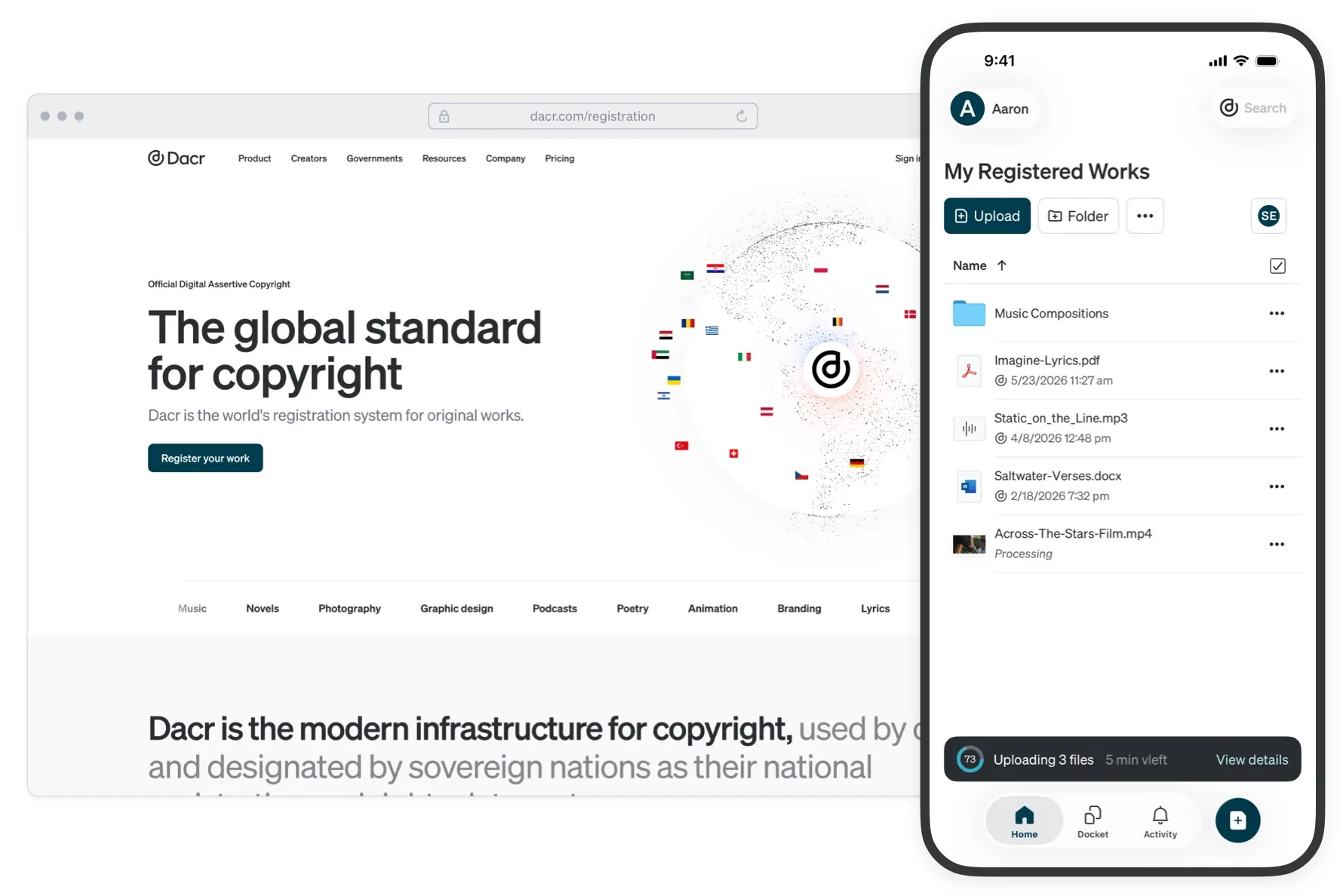
Today, we are introducing an entirely new Dacr. The platform has been redesigned and rebuilt from the ground up. The new web experience is available now, and new desktop and mobile applications will follow in the coming weeks. The visual change is immediate, but the larger change is beneath the interface: registration, intelligence, community, enforcement, and national infrastructure now operate as parts of one system.
The lesson that changed our direction
We began by building a better product. The harder lesson was that copyright is also national infrastructure. Technology can organize records, identify a work, preserve evidence, and connect systems, while governments determine the legal force behind those records and the remedies available when ownership is challenged.
Working with governments forced us to think at a different scale. In many markets, the deepest problem is not a lack of creativity. It is the absence of a modern national system that platforms, courts, rights administrators, and foreign authorities can rely on. When that foundation is weak, a creator may have a valid right in principle and still be nearly powerless when the work is used commercially somewhere else.
The new Dacr was built around that reality. It is a creator-facing registration platform and sovereign-grade copyright infrastructure, supported by a legislative framework that governments can adapt to local law. In countries where Dacr has been designated, the registry and the legal policy are designed to work together. Across the wider Dacr network, a work registered in one participating country can be filed for recognition in another, giving the creator a connected path rather than forcing the history of the work to be rebuilt market by market.
We will share much more about those government partnerships. For now, the public product and the national infrastructure have been rebuilt as one system.
A completely new Dacr experience
The first thing people will notice is the design. We reconsidered how the platform explains copyright, how registration feels, and how technical evidence is presented. The experience is cleaner because the system is doing more work behind the scenes.
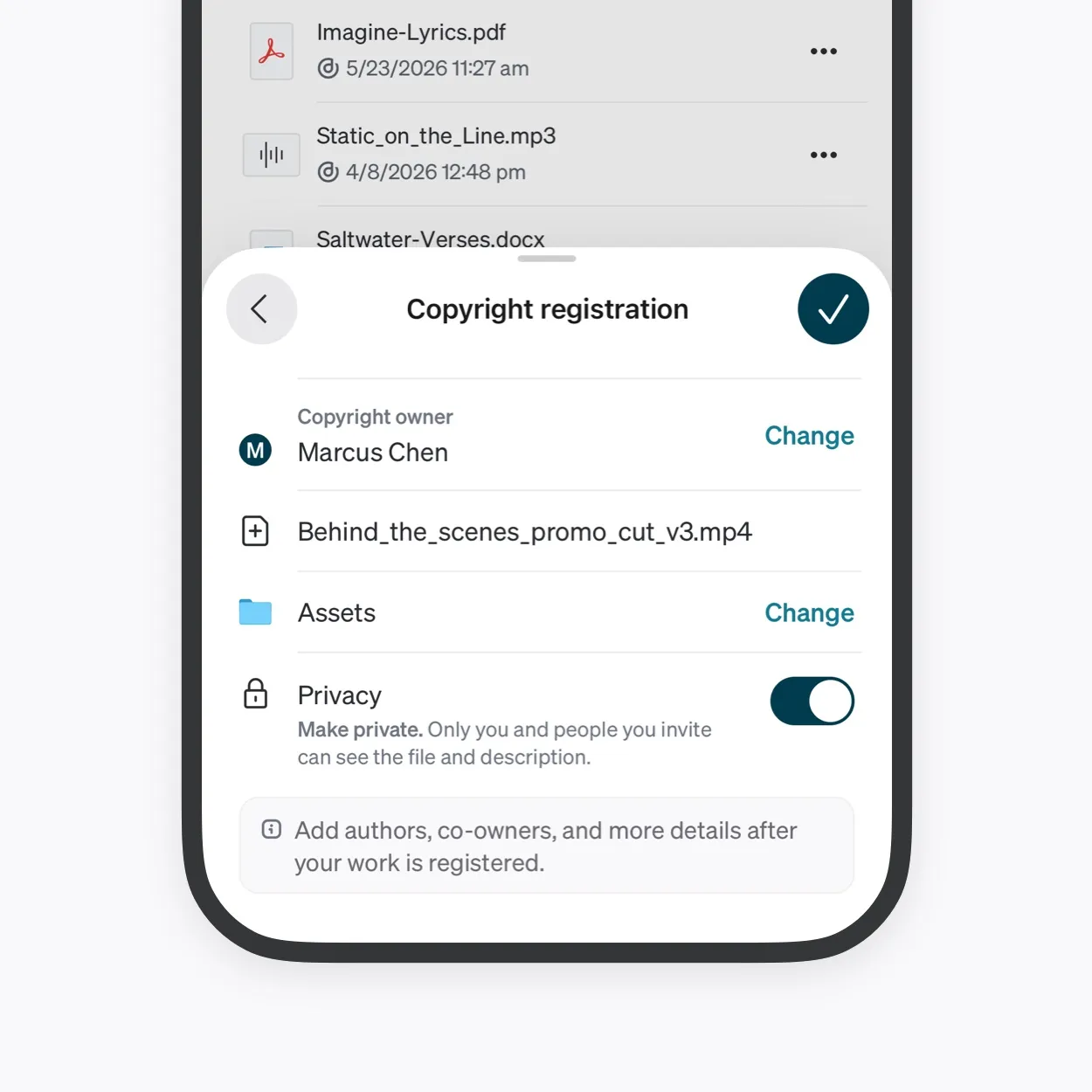
A creator can register an original work in seconds and receive a digital copyright certificate connected to the work that was deposited. Privacy can be controlled. Ownership and authorship can be recorded with greater precision. A creator working personally, through a studio, or on behalf of a rights holder can maintain the structure that reflects the way the work is actually owned.
Registration is the beginning of the experience. The same work can later be compared against suspected copies, organized within a catalog, shared with controlled access, and recognized in additional jurisdictions where protection is needed. We designed the system so that the record created today remains useful when the work changes format, moves to a new platform, or becomes valuable years later.
The redesigned web platform is available first because the web is where creators, institutions, and teams can see the full system together. The mobile and desktop applications will extend that experience into the places where creative work is produced and managed every day.
Dacr Membership and a community built around creator rights
The new Dacr also introduces Dacr Membership and the Dacr Membership Card. Membership is the community layer around the platform, bringing creators and rights holders closer to the education, conversations, and programs that shape a durable creative career.
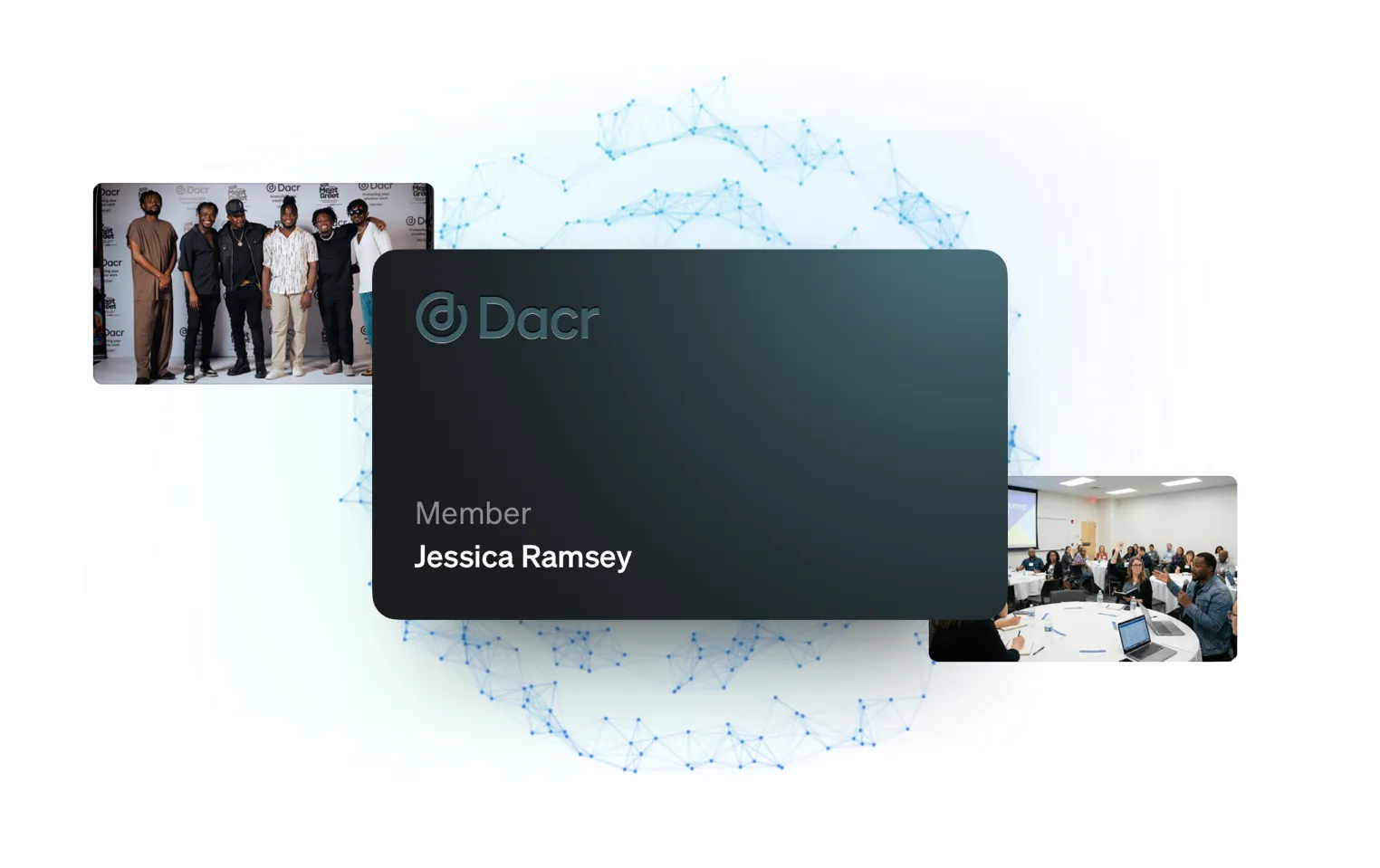
Members will have access to workshops, live conversations, practical resources, and a growing library of guidance on ownership, registration, protection, and the business decisions that follow. The Membership Card gives that participation a visible identity inside the Dacr community.
Membership also supports creator-rights initiatives beyond the individual account. It helps fund programs, events, and modernization efforts that connect creators with the institutions responsible for protecting their work. This is especially important for young people entering the creative economy. A teenager recording music, making a film, or building software should be able to see a path from talent to ownership, income, and a real career.
A healthy creator economy grows when people understand their rights early, institutions can act on reliable records, and the next generation believes creative work can support a future.
Dacr AI, two years in the making
The most important technology in this release is Dacr AI. We have spent the last two years developing an intelligence layer specifically for copyright. It was built into the registration system from the beginning.
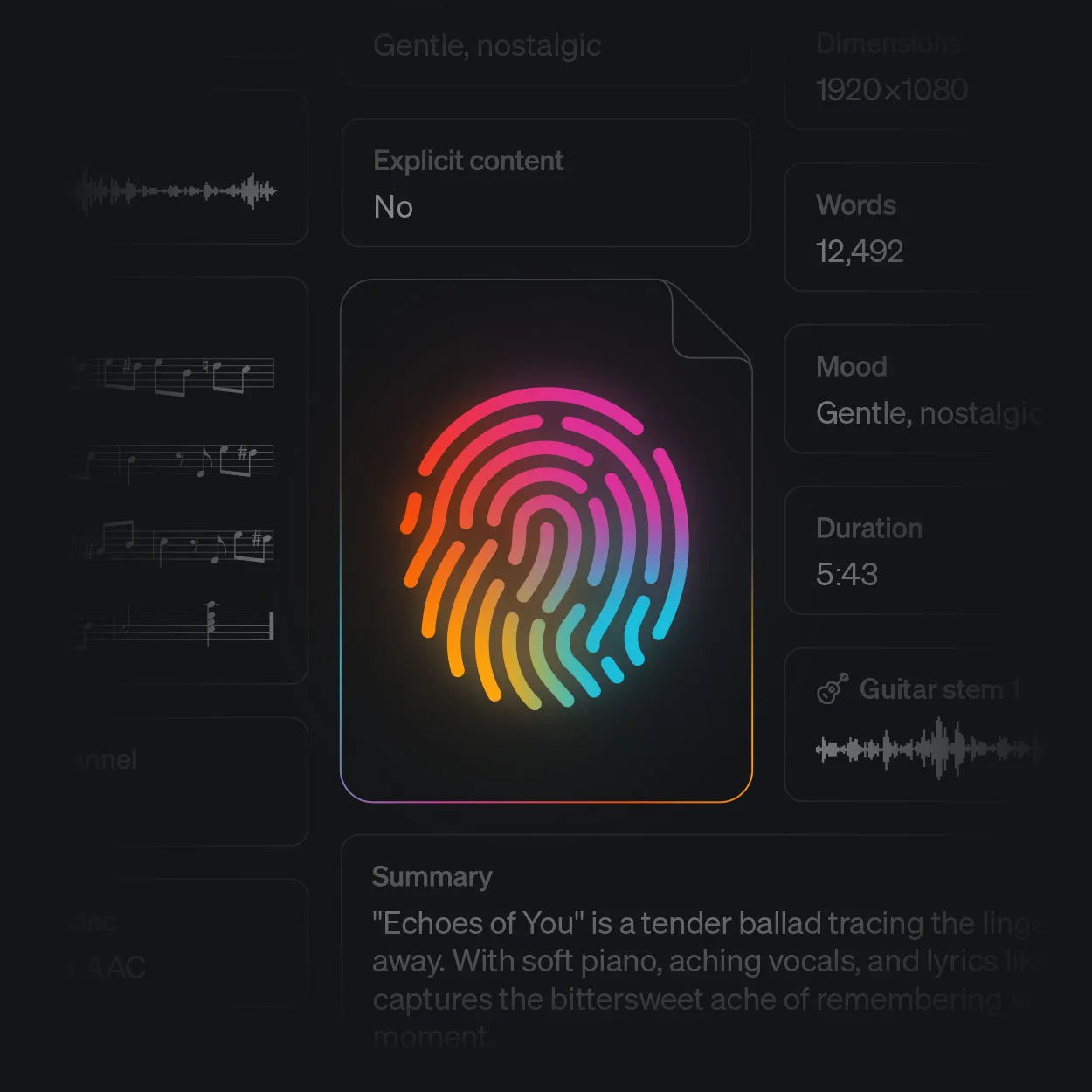
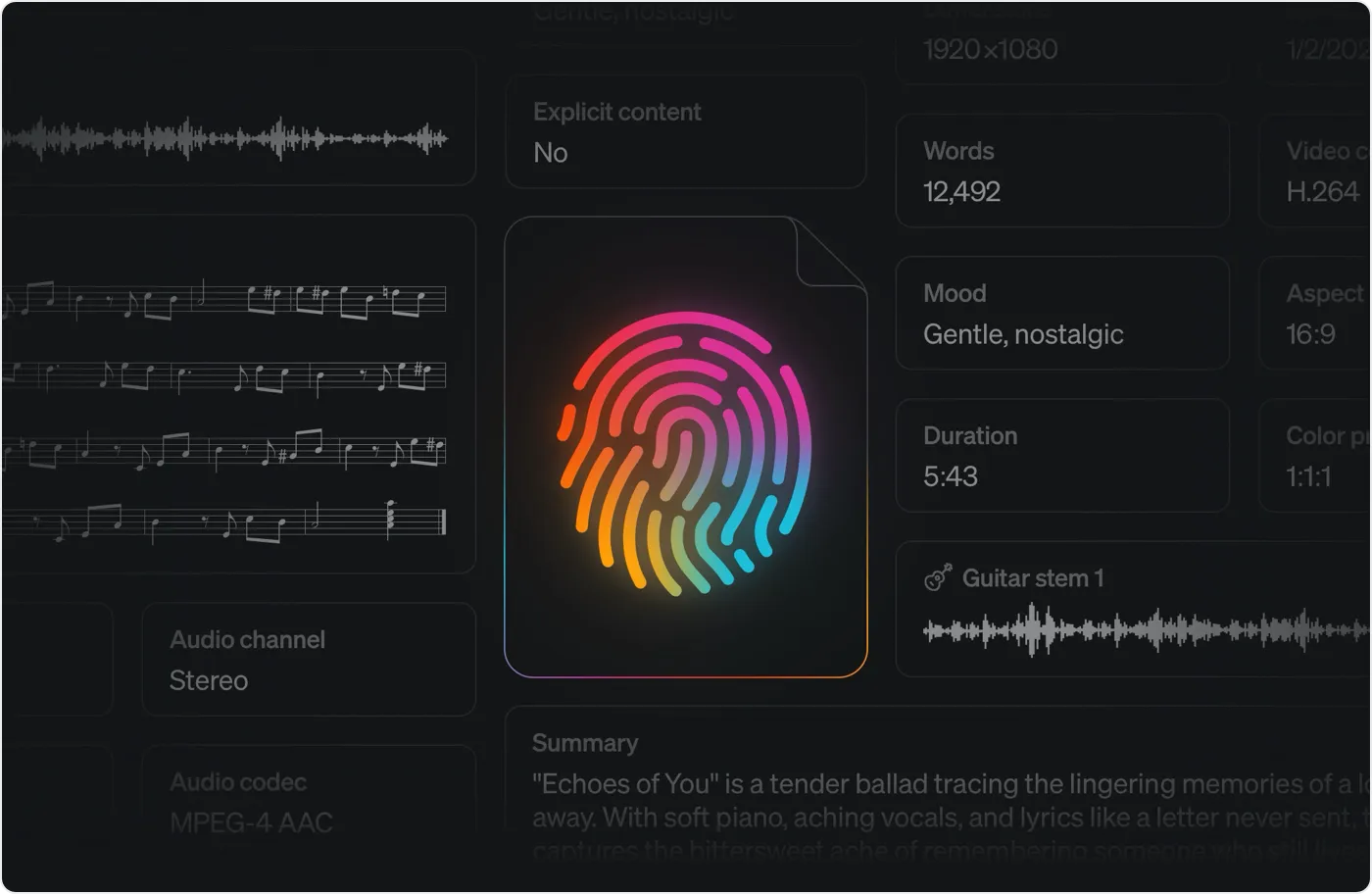
Every registered work is analyzed at the content level. Dacr AI does not rely on the filename, because filenames are easily changed. Editable metadata can be stripped or rewritten. The system studies the work itself and creates a technical identity that can remain useful after ordinary changes to the file.
Genetic File Markers are part of that identity. They capture distinctive patterns associated with the registered work and are designed to survive compression, clipping, cropping, and reformatting. Deep learning models then generate a multidimensional digital fingerprint from the work’s underlying content.
The analysis changes with the medium. In audio, the system can examine waveform, spectral, harmonic, and vocal characteristics. Visual works reveal identity through composition and pixel-level features, while text and software require different structural and semantic analysis. The goal is the same in every case: understand the content well enough to recognize meaningful reuse after ordinary technical changes.
That technical identity also becomes the reference for monitoring. Dacr AI can scan the public internet and connected sources for matches to a registered work, including uses of only part of the content. When the system finds a potential match, the rights holder can be notified with the location and context needed to review it.
A match notification is not a legal conclusion. It is an early warning that allows the rights holder to investigate while the evidence is still available. Dacr AI will continue to improve as the system encounters more registered works and legitimate comparisons, giving creators, experts, platforms, and courts a stronger technical record than a screenshot or two files that merely look similar.
DIIS turns a suspicion into a forensic record
A rights holder may discover copying through a follower, a client, or their own monitoring. Increasingly, that discovery can also begin with a Dacr AI match notification. Either way, the next step requires something more disciplined than a claim based on appearance or instinct.
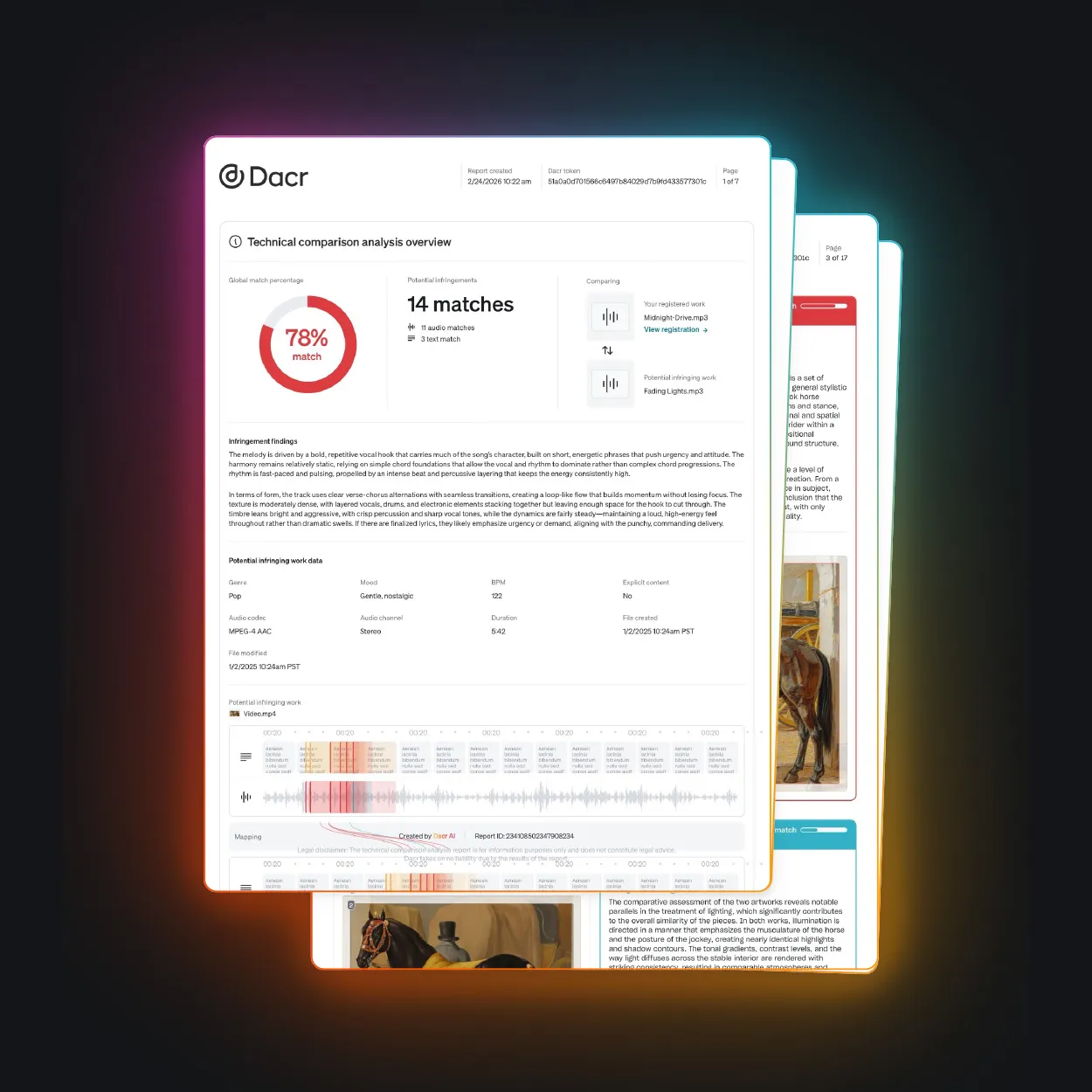
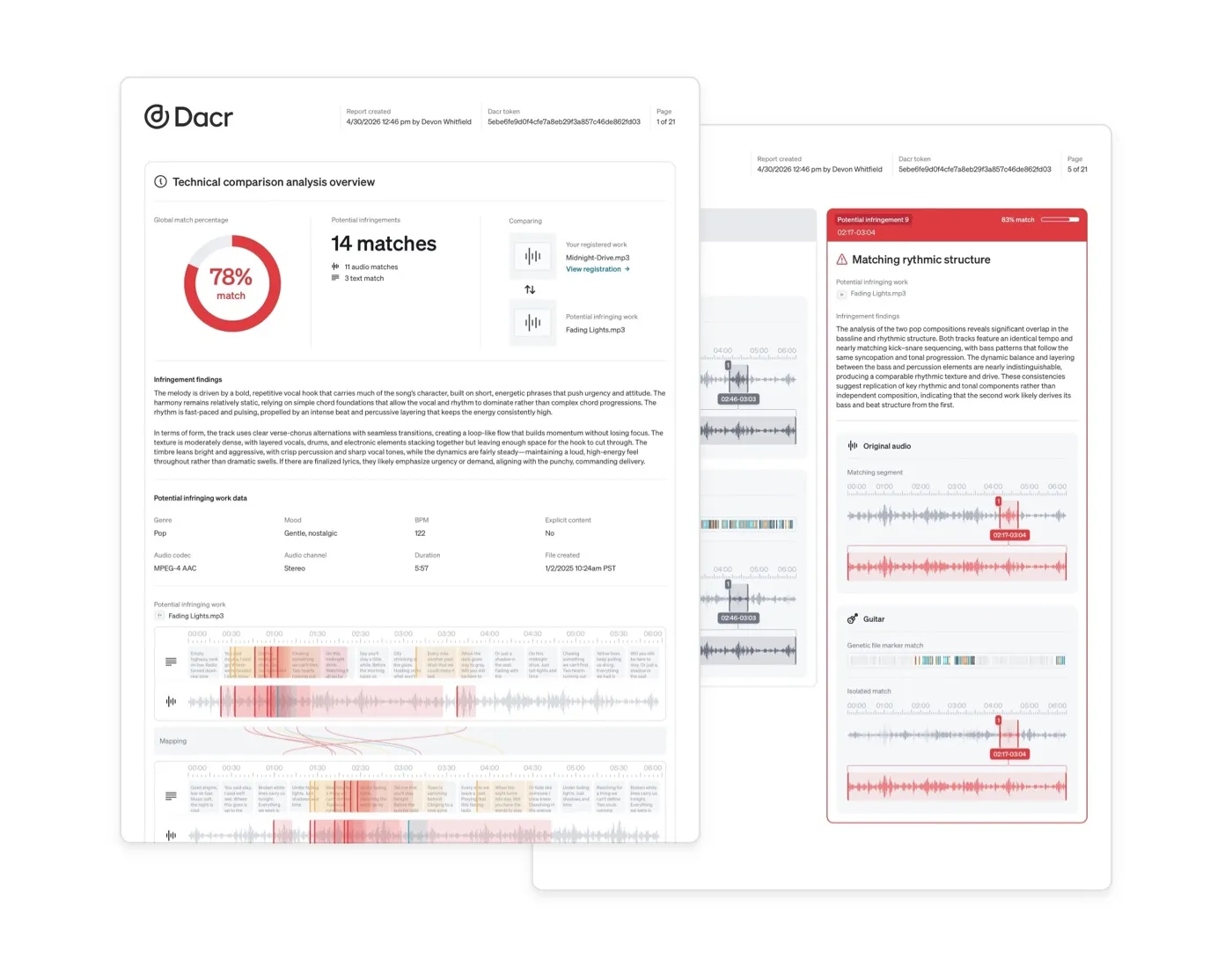
The Dacr Infringement Intelligence System, or DIIS, is the forensic extension of Dacr AI. After reviewing a match, the rights holder can create a report using the registered work and the suspected use. DIIS then verifies the technical identity of the files and performs a deeper comparison, placing the works side by side and locating the portions that correspond.
DIIS makes that analysis readable. In a recording, the report can locate matching audio and show where it occurs. For video, text, or images, it documents the corresponding material in the form appropriate to the work. The reader can see the suspected use and the underlying comparison instead of receiving a single unexplained score.
That level of detail matters before a case is filed and in evidentiary review. Lawyers, experts, platforms, and creators need a record they can inspect, supported by the registered work, cryptographic timestamping, the comparison methodology, and a documented chain of evidence.
DIIS reports are structured for court-ready presentation, with the registration, the suspected work, and the supporting findings documented together. Monitoring and forensics are separate steps by design: Dacr AI helps the rights holder find and assess possible uses, and DIIS creates the deeper technical report when formal action is warranted.
Sophisticated forensic tools have historically been available mainly to large companies that could retain experts after a dispute became expensive. DIIS brings that capability much closer to the creator at the moment the problem is discovered.
What registration can make possible
Registration gives the creator a stronger position when opportunities and disputes arrive. It can support licensing, platform claims, royalty administration, and enforcement by giving the market a reliable answer about the work and the rights holder. Registration does not create demand or guarantee payment, but it can prevent legitimate income from being delayed or lost because ownership was never made clear.
The legal benefits vary by country. In some jurisdictions, registration affects the remedies available in court. In others, it strengthens evidence or supports royalty administration. Our government work is intended to close the larger gap: modern infrastructure paired with laws that give creators a realistic way to act when their work is commercially used, especially when that use occurs abroad.
The economic value reaches beyond an individual registration. When creators can document ownership, license work, collect royalties, and enforce agreements, more of the creative economy becomes visible and investable. Talent already exists in every country. Modern copyright infrastructure helps convert more of that talent into businesses, employment, exports, and measurable economic activity. It also gives young creators a reason to build at home because the system around their work can support a career.
Dacr connects the creator-facing certificate to the technical identity of the work and to the record other institutions may need to verify. Within the Dacr network, creators will be able to file a work registered in one member state for recognition in another participating country through a connected process.
Outside countries where Dacr has been designated, creators continue to rely on the protections available under national law and international frameworks such as the Berne Convention and the TRIPS Agreement. Those frameworks remain fundamental, but they do not remove the practical need for local records, procedures, and enforcement capacity. Dacr is designed to make that protection more operational where governments adopt the infrastructure and connect their systems through the network.
What comes next
The redesigned Dacr web experience is live. New mobile and desktop applications will follow in the coming weeks. We will also announce the countries that have designated Dacr as their official national copyright registry, one partnership at a time and in coordination with each government.
This release brings together work that developed on different timelines: the product rebuild, two years of Dacr AI research and engineering, internet-scale monitoring, the DIIS forensic system, the Membership community, and the national and legislative infrastructure required for official deployment. They now meet in one experience.
The measure of the new Dacr will be whether a creator can establish a serious record in seconds, be informed when the work appears elsewhere, create a forensic report when action is needed, and carry that record into the legal and commercial systems that determine whether creative work becomes lasting income.
That is the standard we rebuilt Dacr to meet. The new platform is here. The country announcements, the mobile and desktop applications, and the continued expansion of Dacr AI and the Dacr network will follow.