How deep learning, proprietary digital DNA, Genetic File Markers and an external-facing digital fingerprint turn registration into active copyright intelligence
A filename is not an identity. Neither is a title, an upload date or a block of metadata. Those things are useful until the moment a work leaves the environment in which they were created. A photograph can be renamed in seconds. Metadata can be stripped. A recording can be compressed, re-encoded, shortened, pitched or placed inside another production. A video can be cropped into a vertical clip and lose every label that once described it.
Copyright systems have traditionally been very good at recording what a creator says a work is. The harder problem is teaching the system to understand the work itself.
That is the purpose of Dacr AI.
Dacr AI is the intelligence layer built into Dacr’s copyright infrastructure. When a work is registered, the same intake that creates the rights record and cryptographic timestamping also sends the content through an AI analysis process designed for the type of work being protected. The goal is to create a machine-readable understanding of that work deep enough to recognize meaningful correspondence later, even when the file has changed.
This article describes that system at a functional level. The production models, thresholds, descriptor construction, model weights, training methods, internal mappings and other implementation details remain proprietary. What matters to creators is what the architecture allows Dacr to do.
The intelligence begins at registration
Every registered work gives Dacr AI a new technical object to understand. The system is built for audio, video, images, text, software and composite works, but it does not force those media into one generic template. A song reveals identity differently from a photograph. A screenplay carries different signals than a software project. Dacr AI uses analysis appropriate to the medium and creates a content-level characterization that can remain useful long after the original upload.
We often describe the result as the work’s digital DNA. That phrase is intentional, but it is also an analogy. Dacr is not reducing a creative work to one magic hash. The AI develops a proprietary, multi-dimensional characterization of the content. It is meant to capture enough of the work’s technical identity that the system can later ask a much more useful question than ‘Do these two files have the same name?’ It can ask whether the content itself corresponds.
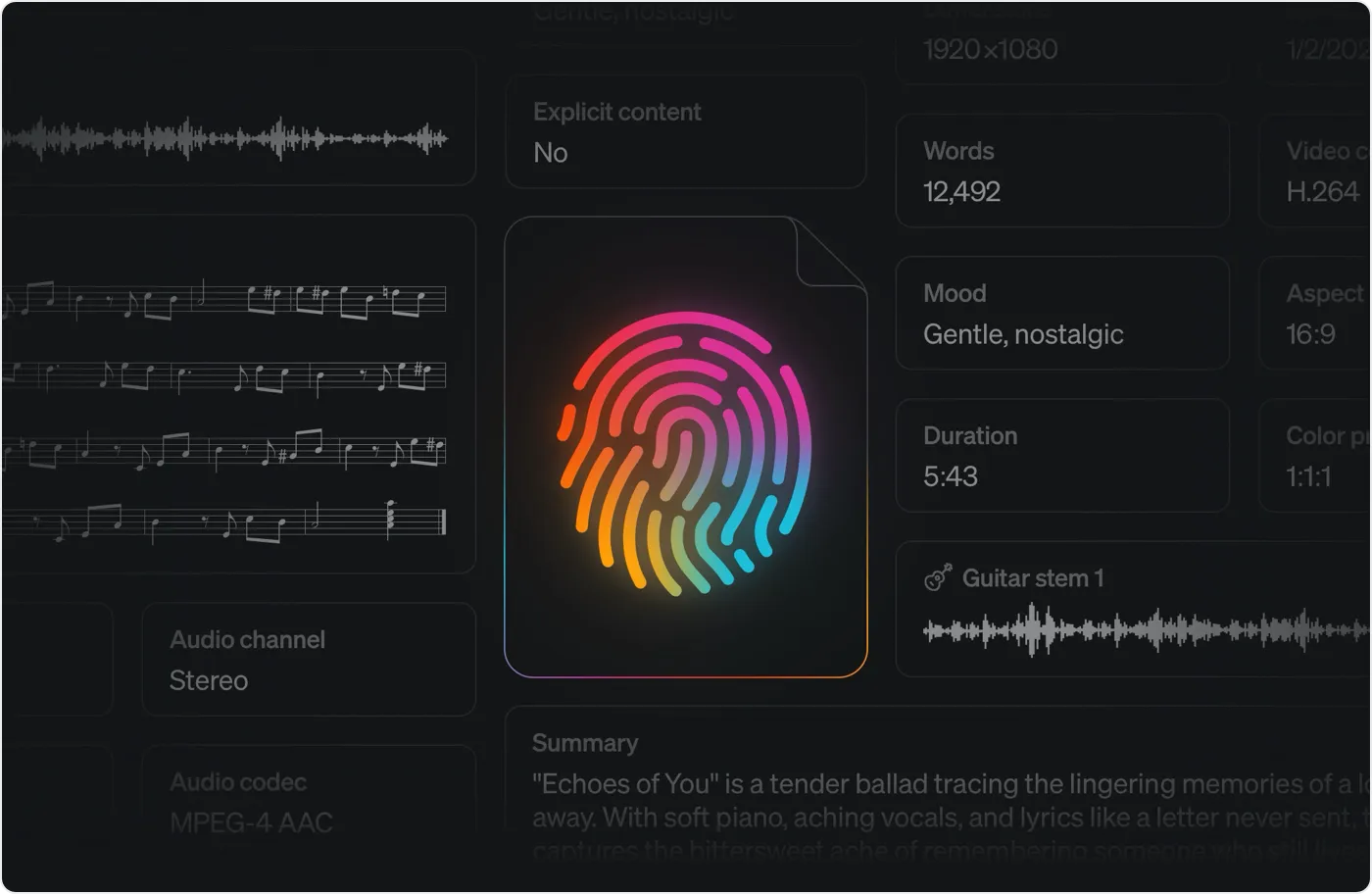
That deeper analysis also changes what a registration can contain. With audio, Dacr AI can separate the recording into stems and analyze those elements individually, while also extracting a transcript where speech or lyrics are present and generating musical notation from the audio on a stem-by-stem basis. With video, the system examines the work frame by frame rather than treating the upload as one opaque file. The resulting technical material is incorporated with the registration so the creator can see the work as a multidimensional data structure, not simply as a filename attached to a certificate.
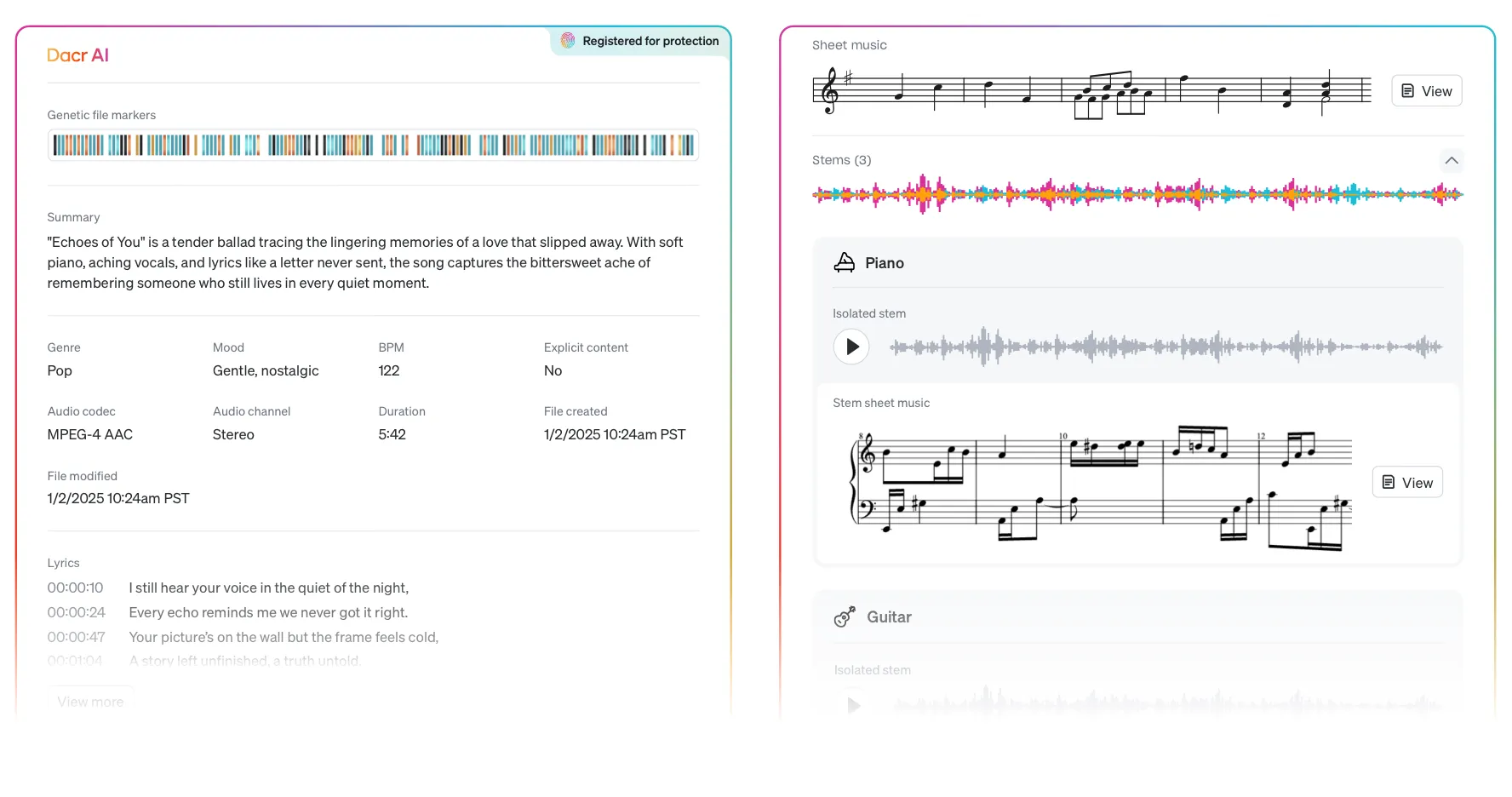
The distinction matters because a copyright record becomes more useful when the record knows something about the work behind it. A traditional certificate can tell you that a filing occurred. Dacr AI gives the infrastructure a technical reference it can use later for recognition, monitoring and evidence, while giving the creator a far richer view of what was actually registered.
The experience is intentionally visual. A creator can move beyond the flat file and see the analysis Dacr AI produced around the work, including the technical layers that are appropriate to that medium. The same data that supports later matching and forensic review also makes the registration itself easier to understand and more useful as a living rights record.
Three layers of identity, each doing a different job
One of the most important design choices in Dacr AI is that the system does not expose its deepest understanding of a work every time that work needs to be recognized. The proprietary digital DNA, the digital fingerprint and Genetic File Markers are related, but each serves a different purpose.
The digital DNA is the deepest internal representation. Dacr AI builds it from the content itself through medium-specific analysis and deep learning. It is intentionally proprietary and is not designed to be exposed as a public identifier. That richer internal understanding can support deeper verification and analysis when Dacr needs to reason about how one work relates to another.
The digital fingerprint is the outward-facing matching layer. It is a proprietary content-derived representation that can be used to recognize a work without exposing the richer DNA behind it. That makes the fingerprint especially useful when Dacr is looking for a registered work outside the platform, or when an authorized third-party system needs to determine whether content corresponds to a protected work. The filename can be different, the metadata can be gone, and the file can have been reformatted; the match is still based on the content.
Genetic File Markers add another identity and verification layer around the work. The deeper marker logic remains protected inside Dacr, but each registration also carries a visual representation of its Genetic File Markers. Those visual markers are displayed with the registration and anchored to the work, giving the creator and anyone viewing the record a visible expression of an identity layer that is also meaningful to the system internally. They are not watermarks embedded into the creative content, and they are distinct from the digital fingerprint used for outward-facing matching.
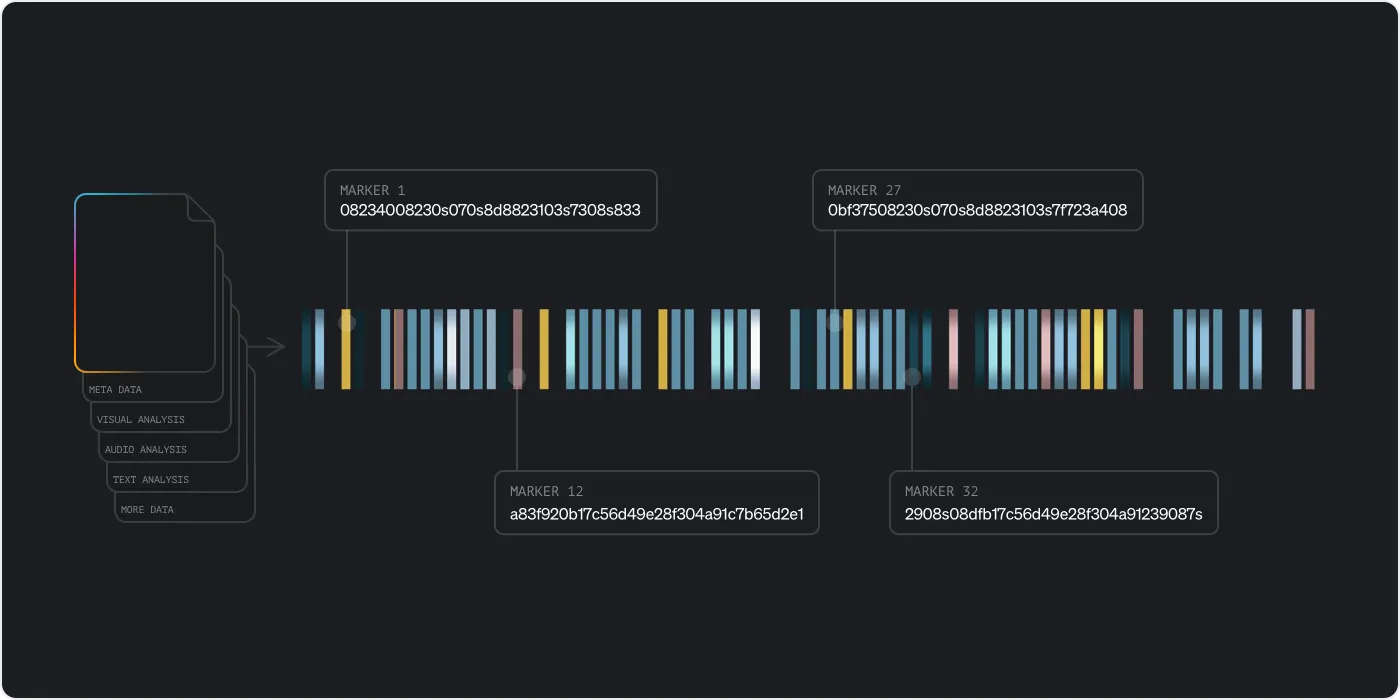
Together, those layers give Dacr AI a much more flexible way to work. The digital fingerprint can be used for discovery and matching beyond Dacr’s own environment, including rights-management workflows on authorized third-party platforms, without requiring Dacr to expose the deeper DNA. Genetic File Markers bridge the internal and visible sides of the record: their protected logic remains inside the system while the registration can display the visual marker representation tied to that work. Keeping those functions separate lets Dacr expose what is useful for creators, platforms and verification while protecting the proprietary intelligence underneath.
Deep learning has to understand the medium
A useful copyright fingerprint cannot be built from the same signal for every type of work. An audio recording has time, frequency, harmony, rhythm and vocal information. An image has spatial structure and visual composition. Written material carries semantic and stylistic patterns. Video combines visual change over time with audio, sequence and editing. Software contains its own structural relationships.
Dacr AI is designed around that reality. Its deep learning models build a multi-dimensional understanding of the work rather than relying on a single surface feature. An audio registration is taken apart far enough for the system to understand the recording through its component stems as well as the combined work. Video is examined across its frames so that a reused sequence can still have meaning even when the surrounding edit has changed. Images, text and software are analyzed according to the structures that make those media identifiable. The digital fingerprint is then generated from this content-level intelligence for practical matching outside the system.
The point is not to publish a catalogue of algorithms. The point is that each medium deserves a fingerprint built for the way that medium actually changes in the real world.
Consider a three-minute recording uploaded to a social platform. The copy may be converted to another format, trimmed to twenty seconds and shifted slightly in pitch. The metadata may be completely different. To a file-management system, the new upload may look unrelated. To a content-intelligence system, enough of the underlying recording may still be present to create a meaningful correspondence.
That is the standard Dacr AI is built around: recognition based on content, not administrative labels.
Built into the infrastructure, not bolted onto it
The easiest way to misunderstand Dacr AI is to imagine it as a separate AI product that receives a file after registration is finished. That is not how the system is designed. The intelligence layer sits inside the same registration-to-protection architecture that creates the Dacr record.
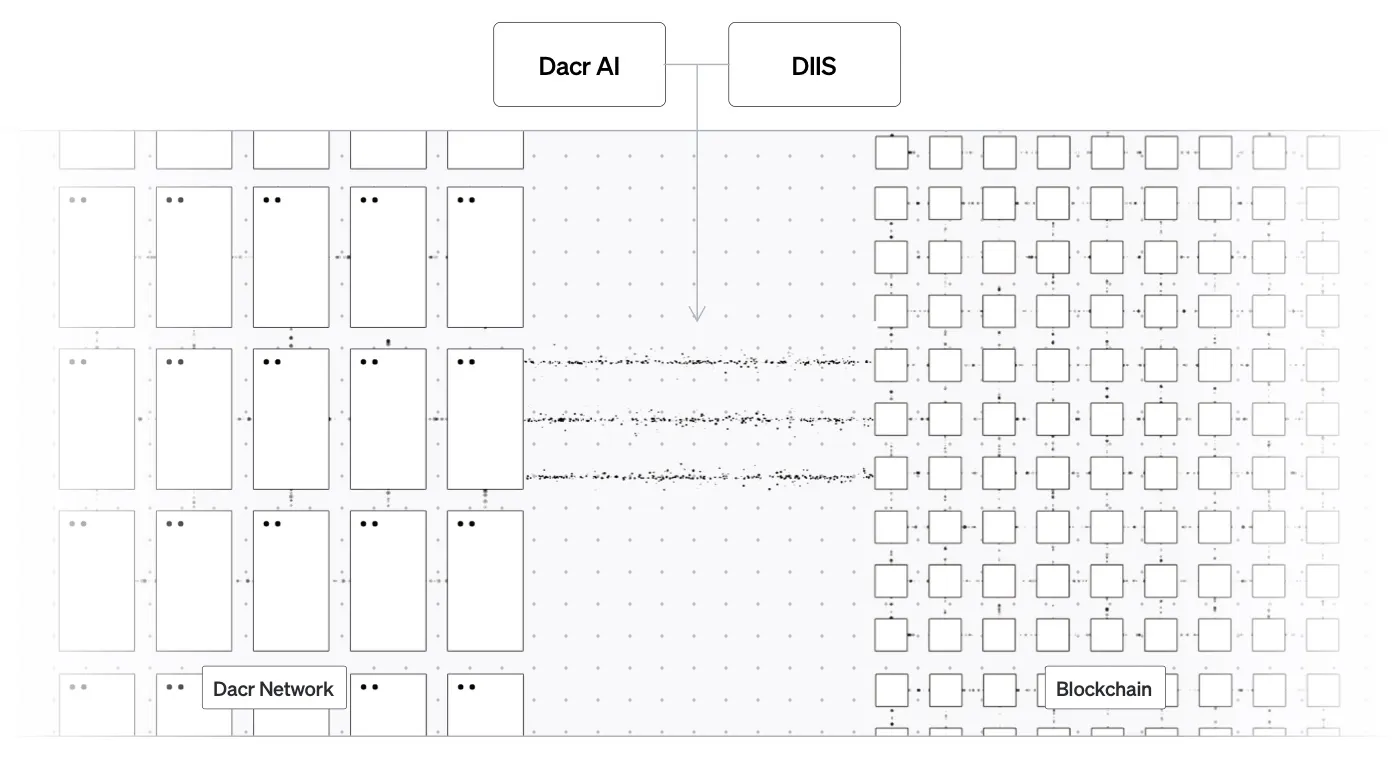
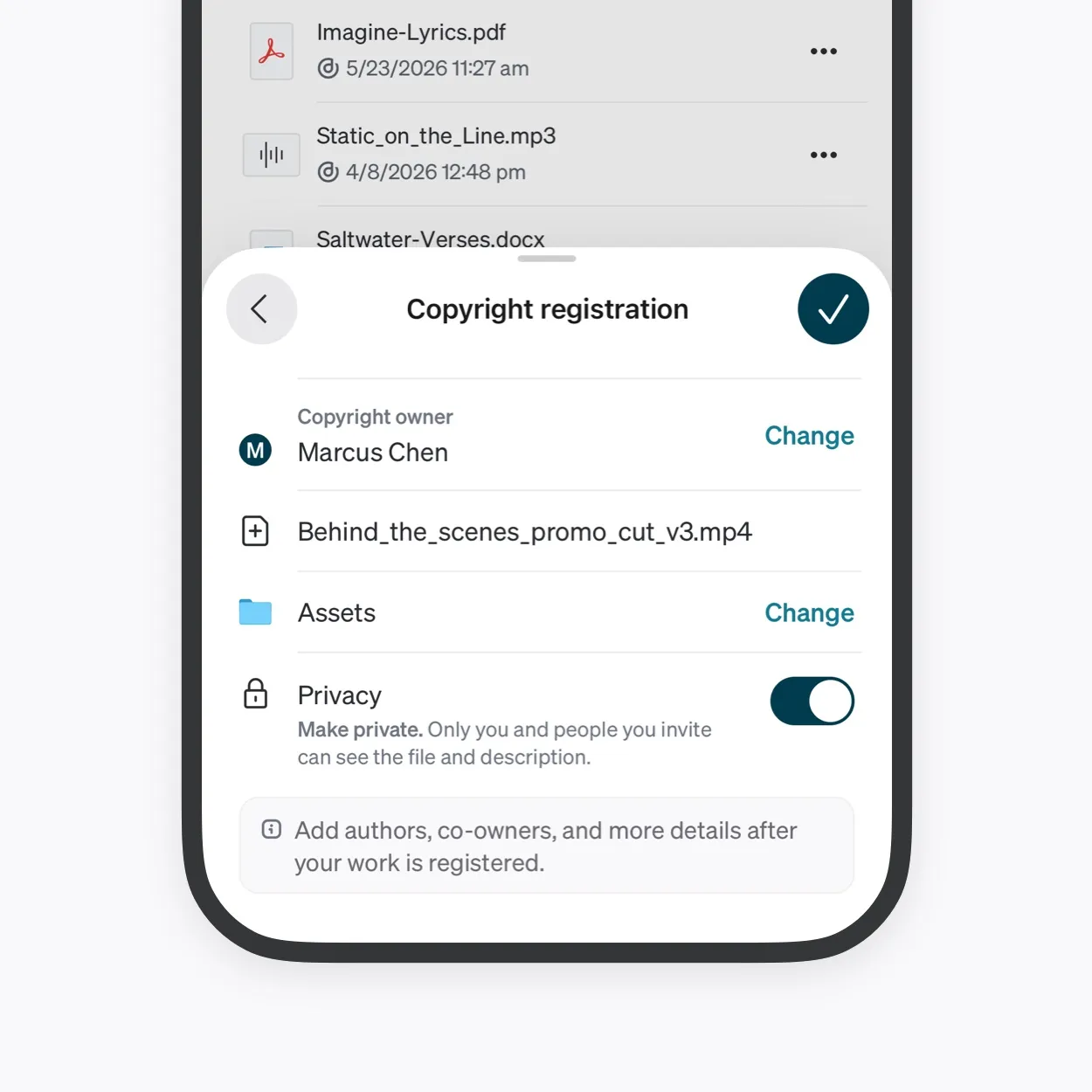
When a work is registered, Dacr creates the registration record and cryptographic timestamping while Dacr AI performs the content analysis that will be useful later. The certificate is the creator-facing proof of the registration, and the registration experience can also display the analysis generated around the work, including its visible Genetic File Marker representation and medium-specific technical outputs. The deeper intelligence remains associated with the work so the system can recognize, verify and compare it without asking the creator to rebuild that context from scratch.
This architecture also keeps different kinds of evidence in their proper place. The registration records what was filed, Dacr AI builds the technical understanding of the content, and any later match records a new correspondence against that original reference. The layers reinforce one another without collapsing into a single opaque result, which is important when the same registration may later support rights management, monitoring or forensic review.
At larger scale, the same separation is what makes platform integration practical. An authorized third-party service can use Dacr’s fingerprint-based matching layer to recognize protected content or support a rights-management decision without receiving the proprietary DNA itself. Dacr can return the registration or rights information appropriate to that integration while the deeper models, Genetic File Marker logic and internal representations remain protected.
A growing corpus creates a stronger intelligence layer
A registration database normally becomes more useful because it contains more records. An AI-native registry can gain something else: a richer body of media, transformations and legitimate comparisons from which its models can be trained, tested and improved.
That does not mean one creator’s private work should become training material for unrelated outside systems. Dacr’s product strategy is built around permissions and controlled use of protected records. It means the Dacr intelligence stack can be engineered and evaluated against an expanding copyright corpus while preserving the boundaries around user data and formal evidence.
The long-term advantage is cumulative. More registrations mean more kinds of media, more real-world variations and more opportunities to improve recognition across the conditions creators actually encounter. The result is an infrastructure layer that is designed to become more capable as the copyright network itself grows.
Matching is where the digital DNA becomes useful
A registration becomes materially more powerful when the work can still be recognized after it has left the creator’s own account, file system or distribution channel.
Dacr AI can use the digital fingerprint to search for correspondence in content outside the Dacr system and in approved third-party environments. An exact copy is the easy case. The more important problem is transformed use: a cropped image in an advertisement, part of a song inside a video, a shortened clip, an edited passage, or material that has been reformatted before it is published again.
When a potential match appears, Dacr AI can draw on the protected intelligence associated with the registration, including the deeper DNA and Genetic File Marker layers, to support a more informed analysis without exposing those internal representations to the outside system. That gives Dacr something a filename search can never provide: the work can remain recognizable even after the administrative information around it has disappeared.
Technical correspondence is still not the same thing as legal infringement. A lawful license, fair use, an exception under local law or another factual circumstance may change the legal analysis. Dacr AI’s job is to establish and explain the technical relationship. Legal conclusions remain a separate question.
The work does not have to wait for the creator to find the copy
The same intelligence that supports one-to-one matching can be used proactively. Dacr AI can monitor the public internet and connected sources for potential uses of registered works. When the system finds content that corresponds strongly enough to a protected work, the rights holder can be notified and shown the source that requires review.
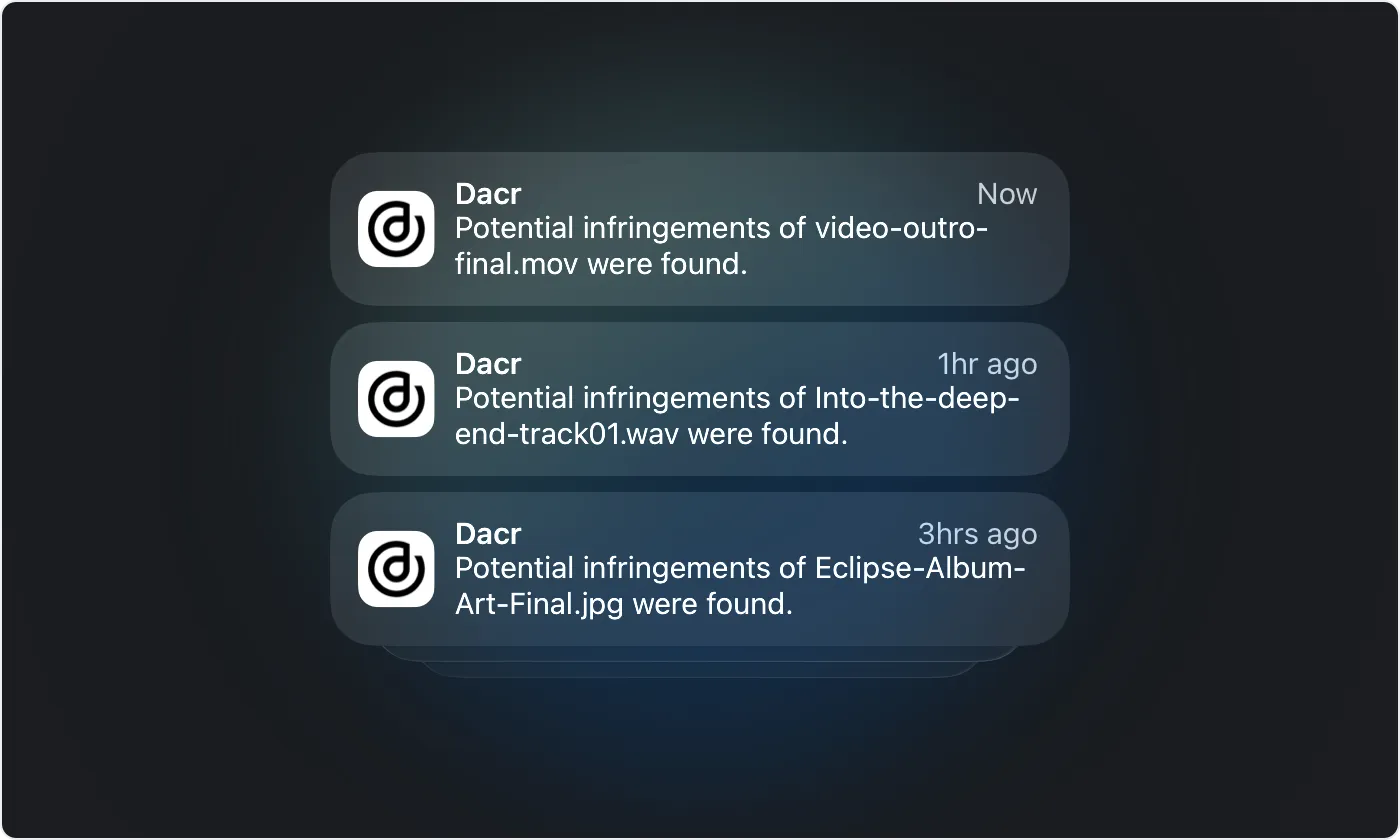
That changes the creator’s role. Copyright enforcement has traditionally depended on discovery by accident: a fan sends a link, a photographer sees an image in an ad, or a musician hears part of a recording in someone else’s video. Monitoring lets the registered work become part of the search process.
Dacr AI can also track what happens after the first discovery. A source may change, disappear or reappear elsewhere. Related results can be grouped so that a creator is not forced to treat every duplicate as a completely new event.
The system does not label every match as infringement. It surfaces evidence-based observations that deserve attention. The rights holder remains in control of authorization status and the decision about what to do next.
Where Dacr AI ends and DIIS begins
A detected match is often the beginning of a more serious question. If a rights holder reviews the source and wants a deeper forensic comparison, Dacr’s Infringement Intelligence System, or DIIS, can take over.
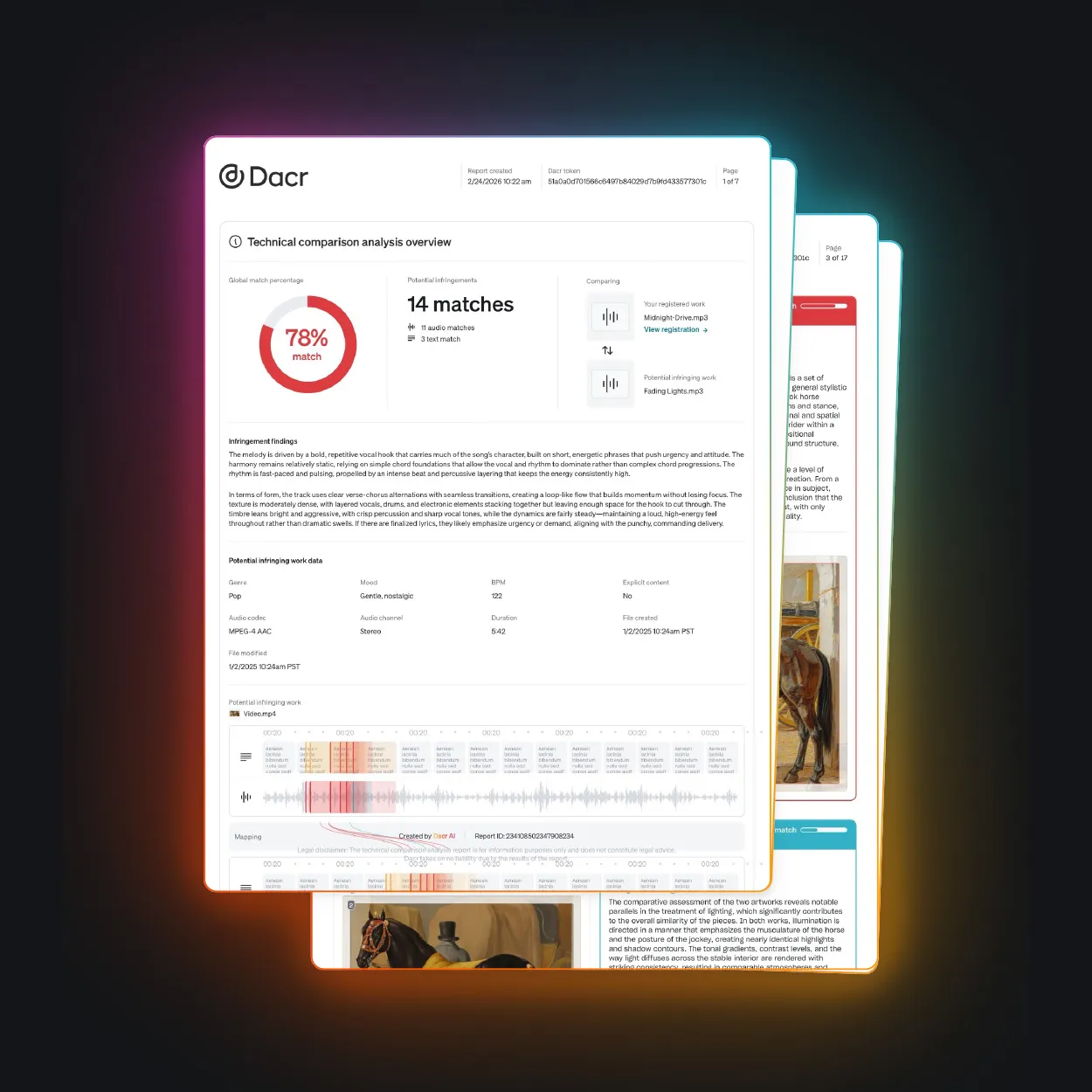
DIIS uses validated technical analysis to compare the registered work and the suspected use in greater detail and organize the supporting evidence into a formal report. That includes the correspondence the system can localize, the relevant technical findings and the evidentiary history needed for review by counsel, platforms, experts or a court.
We will cover DIIS separately because it is a product in its own right. The important point here is architectural: Dacr AI does not stop at describing a work. The intelligence created at registration is designed to remain useful all the way through monitoring, match review and, when necessary, forensic evidence.
Technical intelligence and legal judgment remain separate
Dacr AI is built to be powerful without pretending that technical analysis is a legal verdict. The system can determine that two works correspond technically, identify where that correspondence appears and preserve the underlying evidence. Whether a particular use is licensed, fair, exempt under local law or otherwise lawful remains a separate legal question.
That separation matters most when a potential match becomes serious. The technical result should remain anchored to the work, the comparison and the evidence that produced it. A stronger product experience can make those findings easier to inspect, but it should not transform a measured correspondence into a legal conclusion.
Authorization is one example. Dacr may know that no permission is recorded inside the platform for a particular source, but an agreement could exist elsewhere. A high technical match can therefore be highly relevant evidence without automatically proving infringement. That boundary is part of the architecture, not a disclaimer added after the analysis.
For creators and third-party systems, this makes the intelligence more useful because the technical finding can be acted on without being overstated. Platforms can use fingerprint-based recognition for rights-management workflows, rights holders can review matches, and DIIS can perform the deeper forensic work when formal evidence is needed.
Copyright intelligence should begin before the dispute
Most copyright disputes begin with reconstruction. The creator searches old drives for the original file, tries to prove when it existed, compares two works manually and then explains to someone else why the relationship matters.
Dacr AI is built around a different premise. The moment a work is registered, the infrastructure begins learning what that work is. It develops a proprietary digital DNA, creates an external-facing digital fingerprint for recognition and matching, and anchors Genetic File Markers to the work with a visual representation displayed as part of the registration. Audio can be separated into stems, transcribed and converted into musical notation; video can be examined frame by frame; and the resulting intelligence becomes part of the registration’s multidimensional data structure. The fingerprint can travel outward into discovery and rights-management workflows without requiring Dacr to expose the deeper DNA itself. From there, the protected intelligence behind the registration can support monitoring, deeper matching and forensic analysis.
That is the larger idea behind Dacr AI. Modern copyright should not begin learning about a work only after something goes wrong.
The intelligence should already be there.
Technology note: Dacr’s core AI, Media DNA, digital fingerprint, Genetic File Marker and forensic technologies are proprietary and patent pending. This article describes product capabilities and high-level architecture only. Dacr may publicly display the visual Genetic File Marker representation associated with a registration, and the digital fingerprint may be used through controlled matching and integration interfaces. The underlying DNA, marker logic and other protected representations remain proprietary. This article does not disclose fingerprint encoding, production algorithms, thresholds, model weights, training methods, keys, mapping logic or other trade-secret implementation details.