Most working creators end up with more than one name. A photographer shoots editorial under her own byline and commercial work through a studio she incorporated. An illustrator takes client jobs personally and sells prints through a company. A producer releases under an artist alias and invoices through an LLC.
Those names usually correspond to real differences in who contracted, who invoiced, and who holds the rights. A registration records an owner, so it asks you to be specific about something you may have been carrying loosely.
What a copyright owner is here
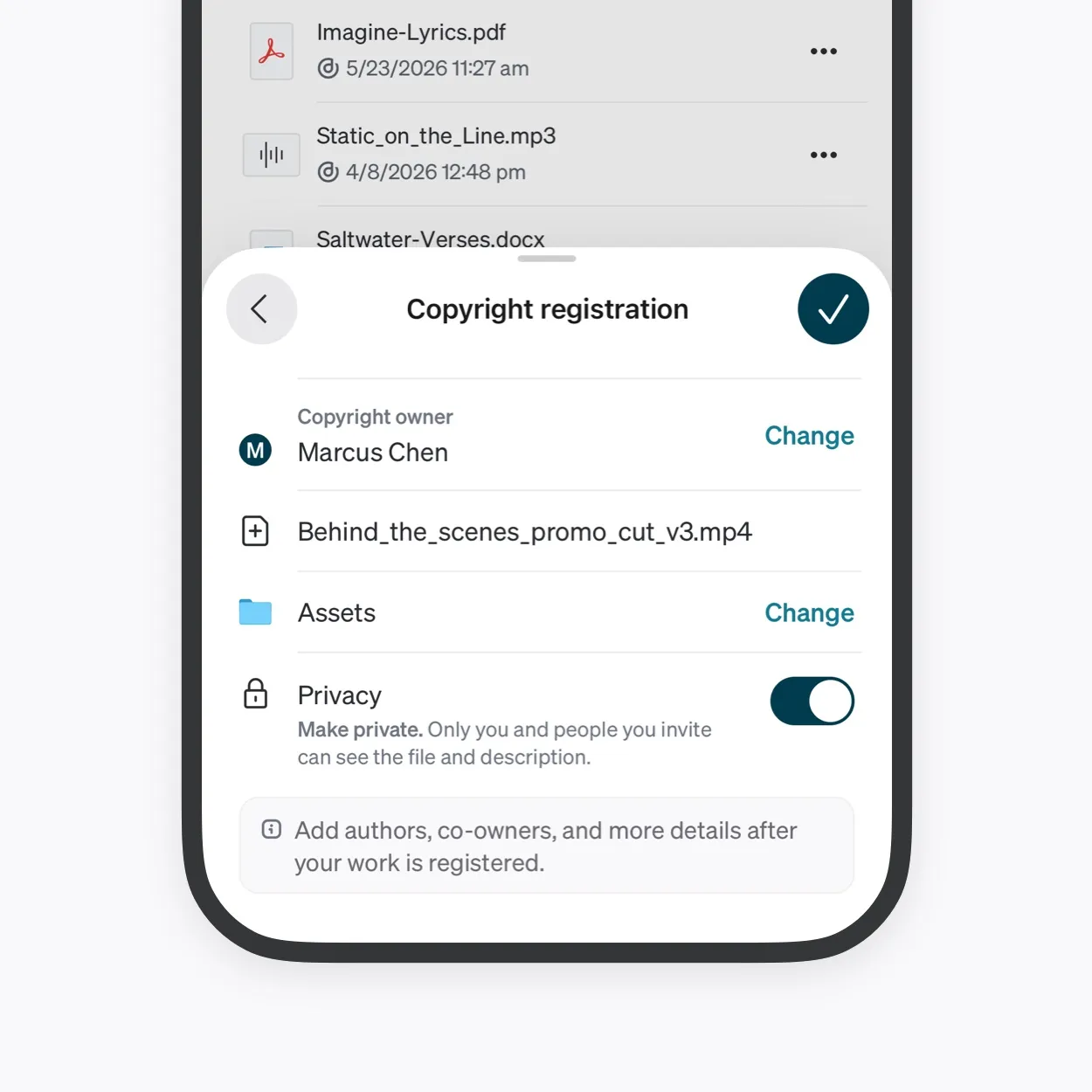
Your account comes with an owner representing you, and you can create two further kinds alongside it: a Personal owner, recording ownership under an individual, and an Organization owner, recording it under a company, studio, label, or agency.
Whichever is selected when you register, the files are owned by that person or that entity. This is separate from your account, which is who you are on Dacr and who does the registering.
A Personal owner is a name you type. Creating one doesn’t verify that person or connect them to a Dacr account, so it records your statement about who owns the work rather than confirming it independently.
Which entity owns a given job
The question isn’t which name you used. It’s which entity was party to the arrangement that produced the work.
If a client contracted with your company, invoiced your company, and paid your company, the Organization owner is right. If you took the job personally with no company involved, Personal is.
Self-initiated work follows the same logic. Work you make and sell yourself is usually owned personally, unless you’ve deliberately assigned it to a company, common where a company exists for tax or liability reasons and holds the creative assets as a matter of course.
Where a company exists but has never been the contracting party, registering under it doesn’t make it the owner. The registration records ownership rather than creating it, and a mismatch between your paperwork and your record is a problem you’ve made for yourself.
If you genuinely can’t tell which entity owns something, that points at your contracting arrangements rather than at the registration screen. A lawyer can answer it; this article can’t.
Create them before you register anything
Owners can be created from Account settings, from the explorer dropdown, or from the owner picker on mobile, wherever you happen to be when you realise you need one.
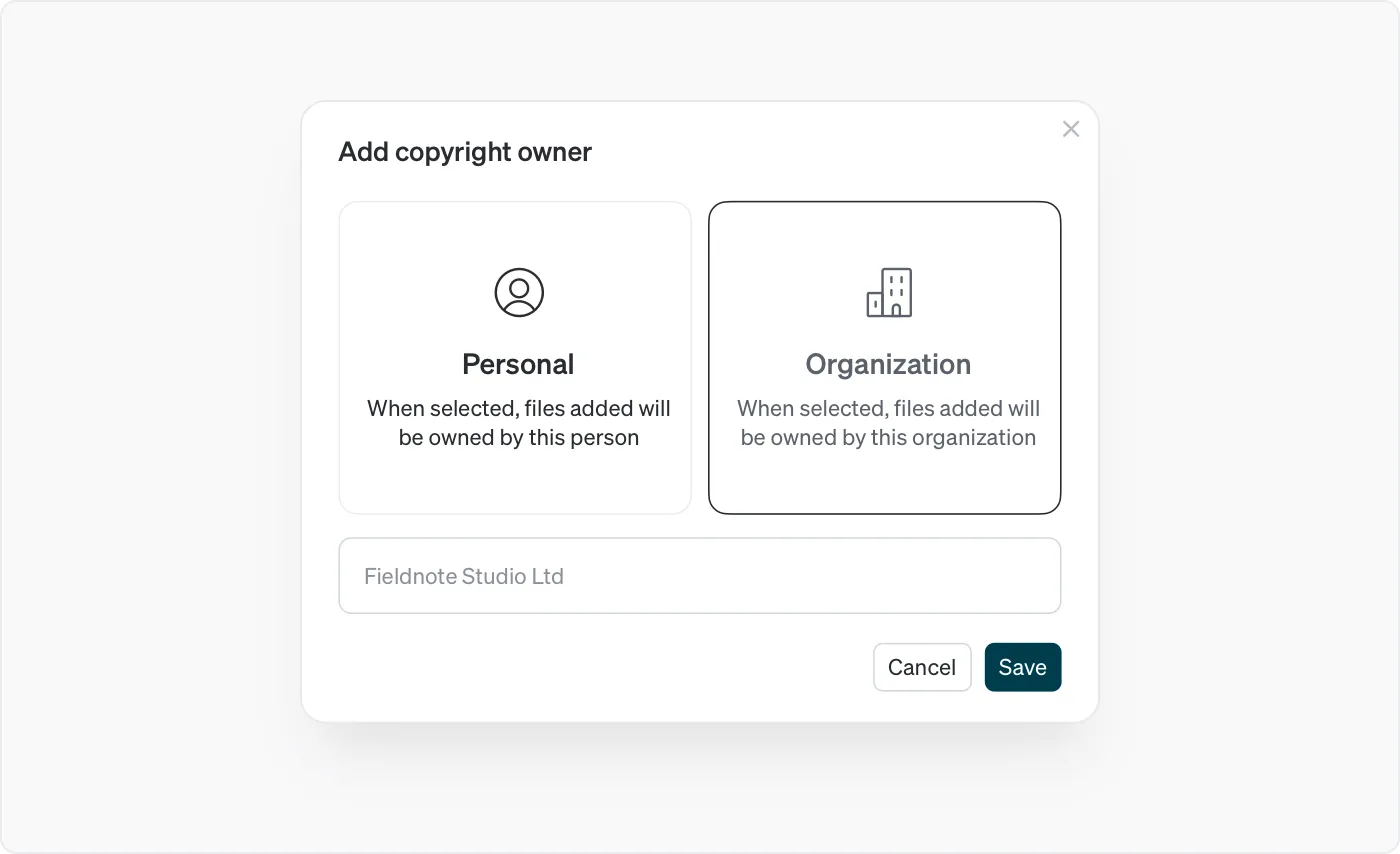
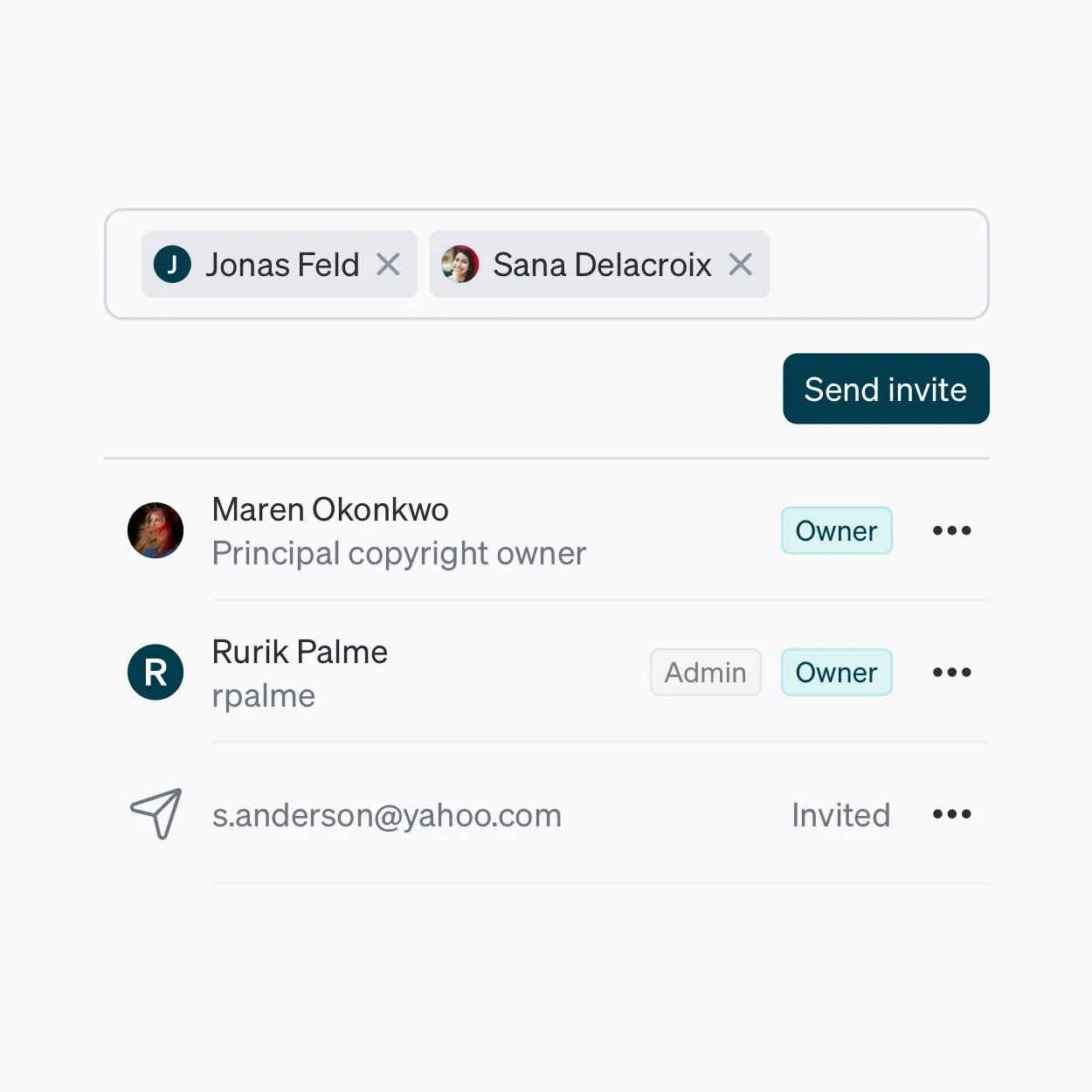
Doing it in advance matters because of the principal copyright owner. Co-owners and authors can be added or removed later, so those lists aren’t urgent. The principal owner can’t be edited, changing it means selling or reassigning the registration, so an owner you create in March doesn’t retroactively become the principal owner of work registered in February.
Enter organization names as they appear on your formation documents rather than your website. Trading names and registered entity names are frequently different, and the registered one is the one that means anything.
Living with two owners
The active owner is set in the file explorer, the “Adding copyright as” control, and your choice persists across sessions and devices. It isn’t something you set once in Account settings and forget; it’s a switch you’ll want to check when you change what you’re working on.
Point it at whichever entity owns most of your work, and change it for exceptions. If eight jobs in ten run through the studio, the studio should be what’s selected by default, setting it the other way means correcting yourself nine times out of ten, which is the kind of routine correction people quietly stop making.
Filing by owner, or by client within owner, means the answer is visible from your folder structure instead of held in your head.
If you run more than one company
A producer with a label and a publishing entity. An illustrator with a studio and a merchandise company. Same approach, more discipline required: create each as its own owner, keep the highest-volume one selected, and file by entity so a registration under the wrong owner shows up rather than disappearing.
Free accounts can hold a small number of owners, so anyone running several entities will want to check what their plan allows before building a structure around it.