The email usually turns up long after the invoice cleared. “Just confirming we own these outright, since we commissioned them.” Sometimes it’s friendlier. Sometimes it’s from a legal team. Sometimes there’s no email at all and you notice your photographs running in a campaign nobody mentioned.
Payment and ownership are different questions, and the second one is answered by your contract rather than your invoice.
What the fee bought
A commission fee buys whatever the agreement says it buys, which is often narrower than the client assumes and occasionally narrower than you assumed. It might cover one campaign in one territory for eighteen months. It might cover unlimited use in perpetuity. It might transfer the copyright entirely, which is different again from broad usage rights.
Where the contract is silent, the position depends on where you are. Legal systems differ on how commissioned work is treated, and some have particular rules for work created by employees or under specific kinds of agreement. What one country treats as an automatic transfer, another treats as a licence with the copyright staying put.
Which is why this isn’t settled by argument over email. If real money or real reuse is at stake, it’s a question for a lawyer who knows your jurisdiction and can read your actual contract.
Why it surfaces a year late
Nobody examines the rights clause while the work is going well. It gets read at the point of reuse. The client wants the images in a market that wasn’t discussed, or the track in a different edit, or the illustration licensed to a partner.
By then you’re arguing about a document neither side has looked at since signature, and the client has usually already made plans on the assumption they can.
The job already delivered
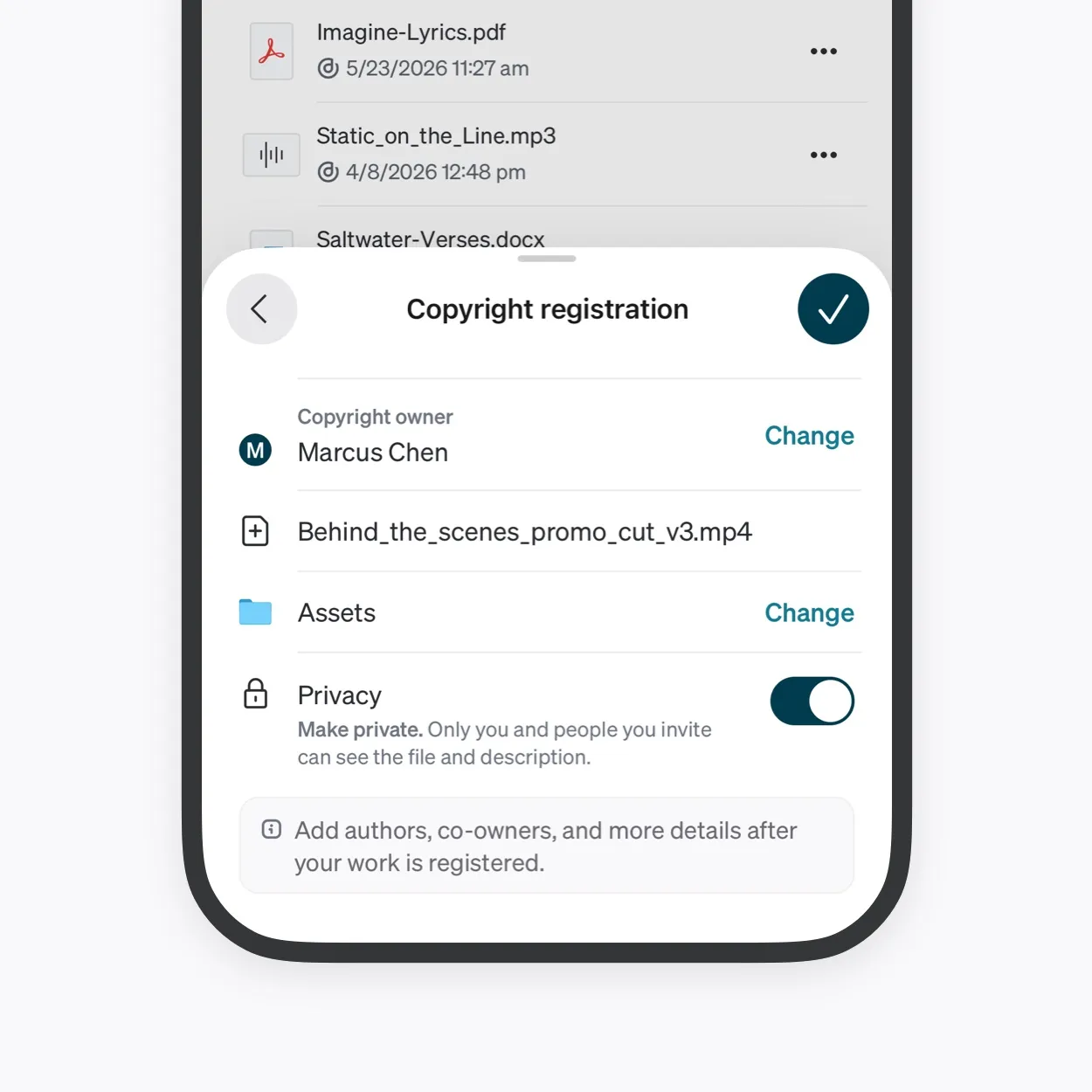
If you registered under the correct owner before delivery, the conversation has a starting point. Your registration records who owned it and when, and the client’s position has to engage with that rather than with your recollection.
If you didn’t register it, register it now. Today’s date won’t reach back, but it establishes a record going forward and costs you a few minutes.
Then find the contract, read the rights clause properly, and take it to a lawyer if the amount justifies it. Don’t relitigate ownership with the client’s marketing manager, who almost certainly didn’t write the clause and can’t interpret it.
Before the next one
Settle ownership in writing before you start. “Who owns the copyright when this is done, and what exactly are you licensing?” is a normal question at quoting and an awkward one at invoicing. Clients who intend a full transfer generally say so. Clients who assume it often haven’t thought about it, and asking early is what surfaces the assumption.
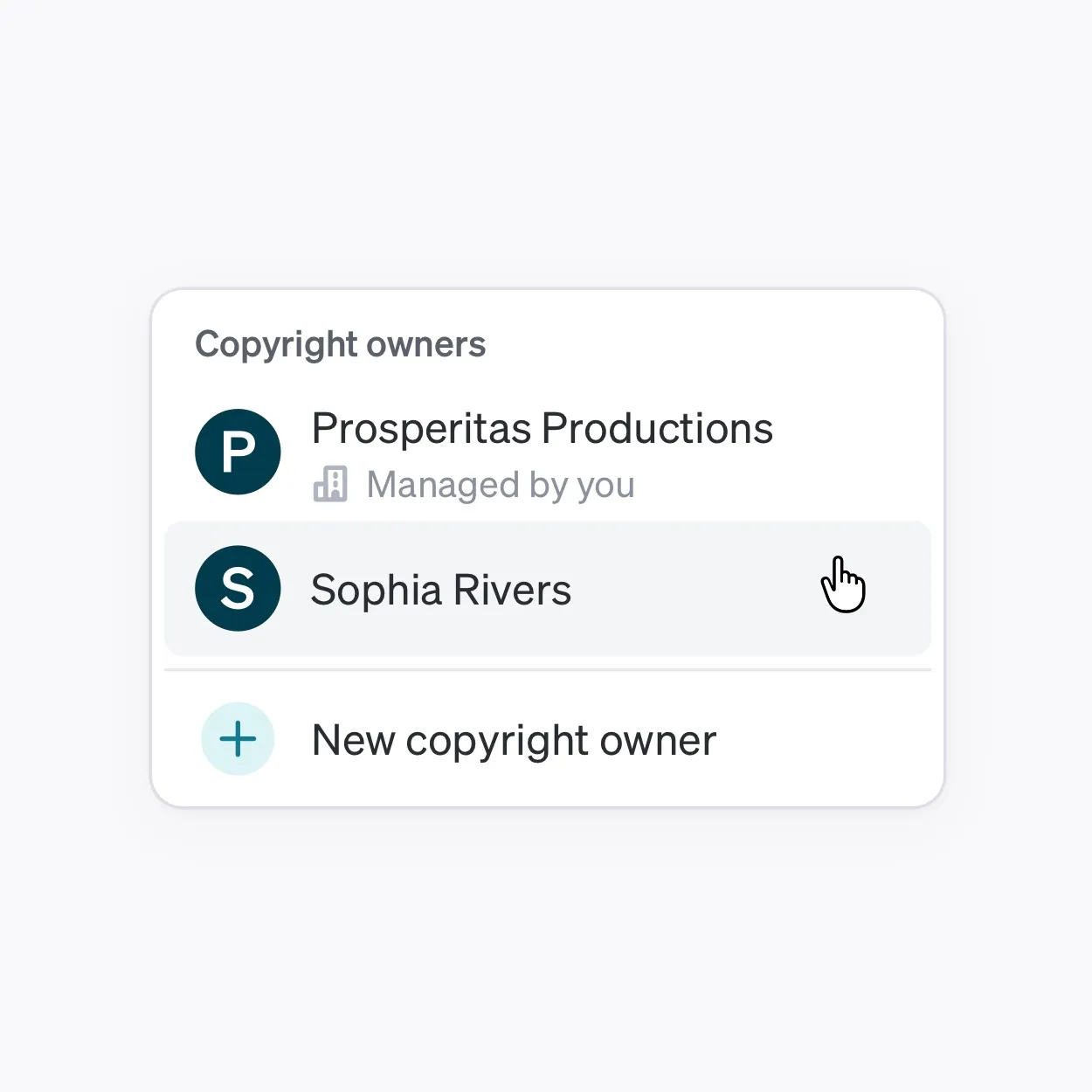
Then register under whichever owner the agreement names, before the work leaves your hands. Studio contracting means the organization owner; contracting personally means the personal owner.
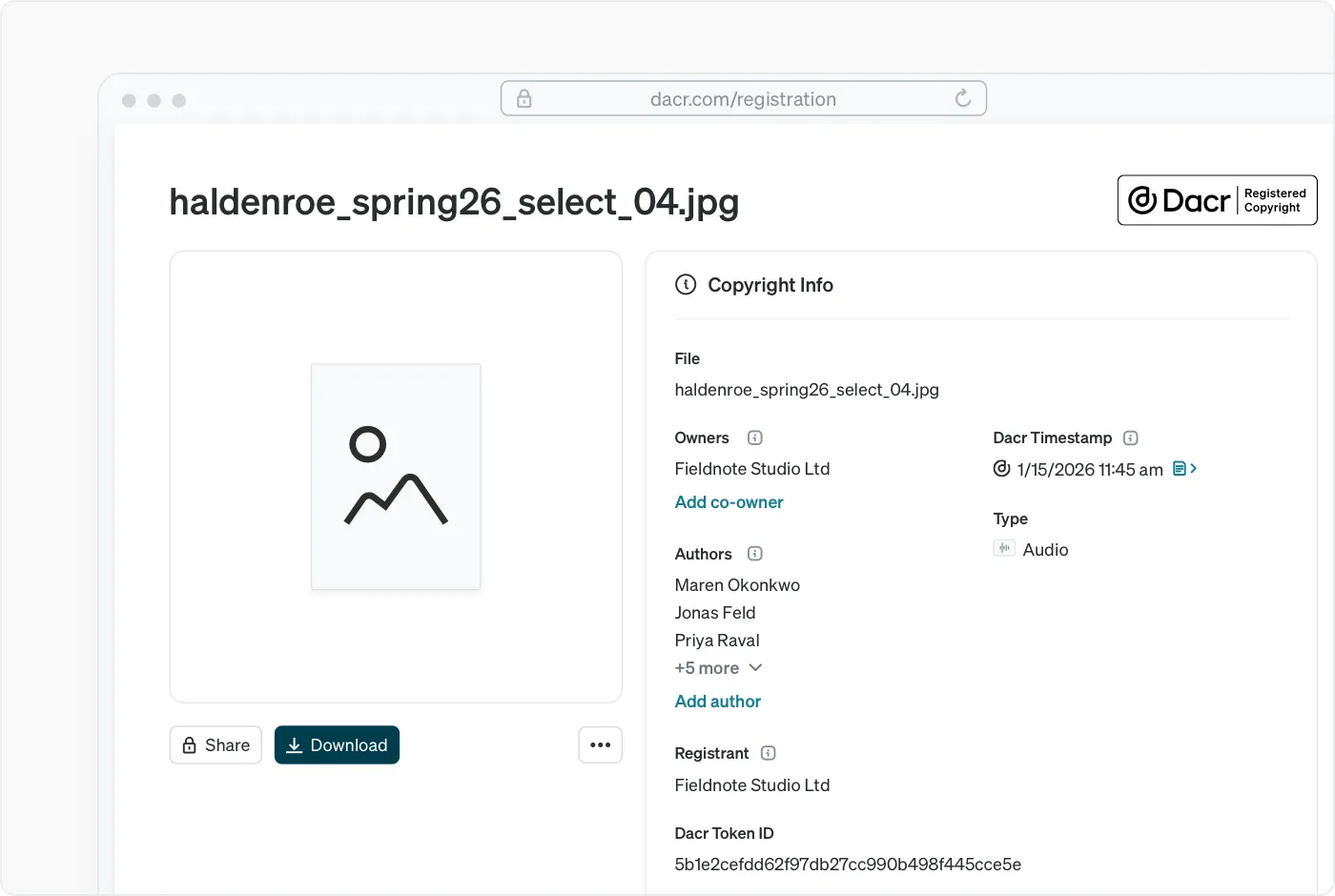
This is the part worth being careful about, because the principal owner can’t be edited afterward. Changing it means selling or reassigning the registration. Two minutes before you submit is worth more than sorting it out later.