Two people make something together and neither of them writes anything down. That isn’t carelessness. Raising ownership while the work is going well feels like distrust, and the conversation seems easier to have later, when there is something concrete to divide.
Later usually arrives as a licensing offer, a sync request, a publisher, or a disagreement. By then three or four people are reconstructing a collaboration from memory, and the version each of them remembers tends to place them a little nearer the centre of it.
The useful thing to understand is that the record and the agreement are separate. Waiting for one has been holding up the other, and it doesn’t need to.
Two questions people collapse into one
When several people make something, there are two facts to establish and they get confused constantly.
The first is who holds the rights. That determines who can license the work, who has standing if it is used without permission, and who any money is owed to. It is a commercial and legal question, and it is frequently settled by an agreement rather than by who did the work.
The second is who made it. That is a question about the record of the thing itself, and it has a different answer more often than people expect. A photographer’s assistant, a session player, a translator, a colourist and a fabricator all shape work they hold no rights in.
International copyright has kept these apart for close to a century. Article 6bis of the Berne Convention provides that independently of the author’s economic rights, and even after the transfer of the said rights, the author shall have the right to claim authorship of the work. Being credited and holding rights were never the same thing, and one survives the transfer of the other.
What a registration records
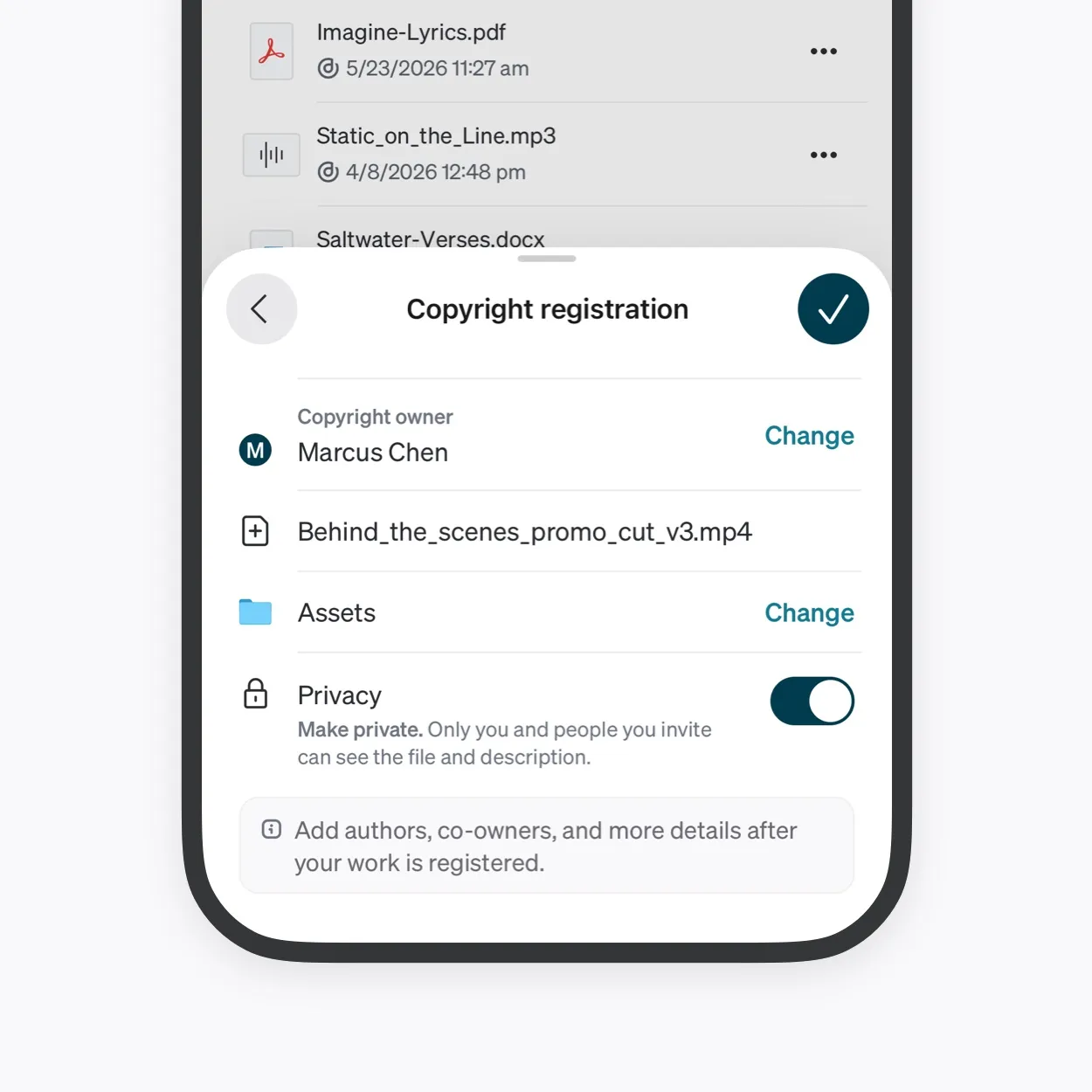
A Dacr registration has an owners list and an authors list, and they do those two jobs separately.
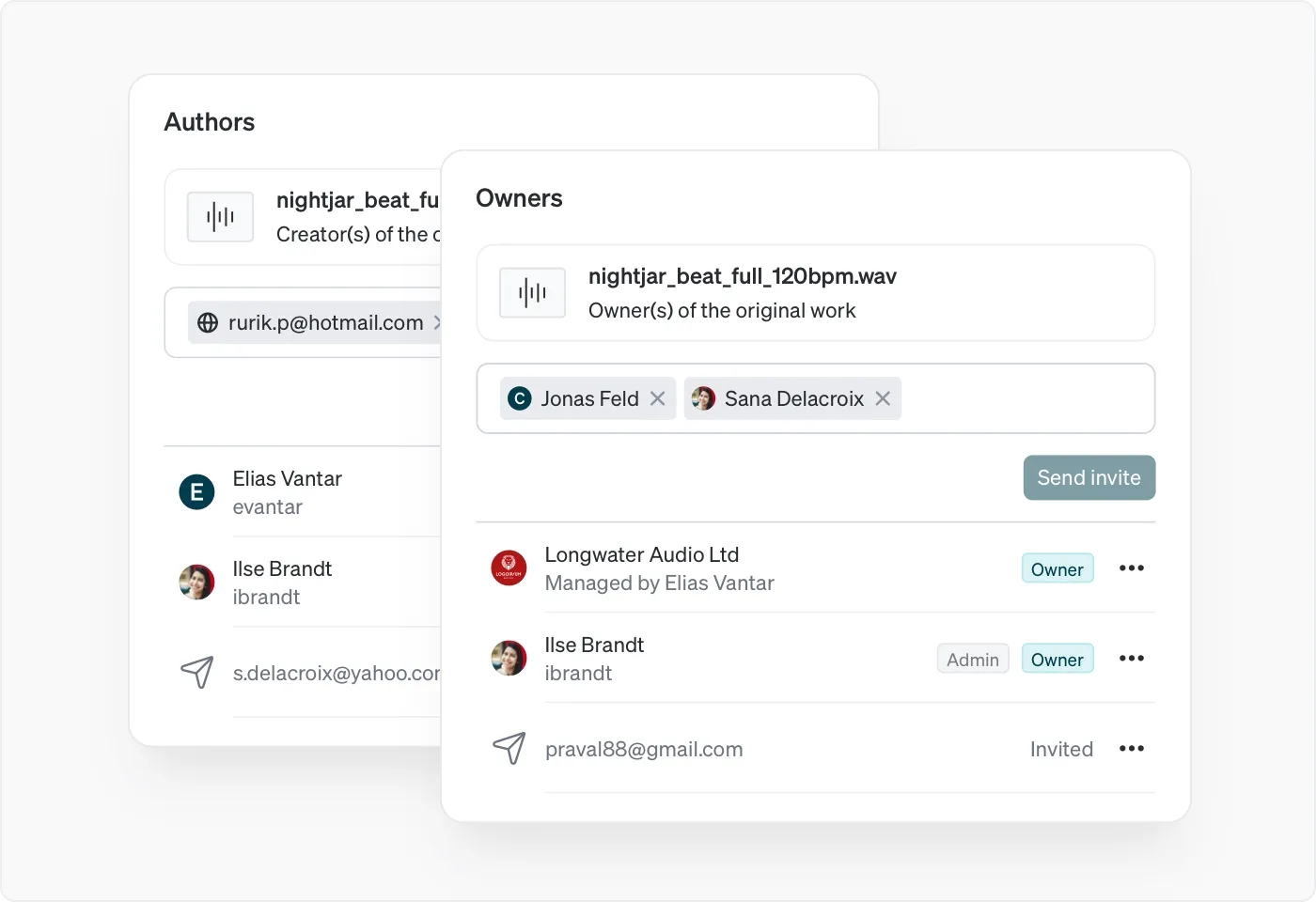
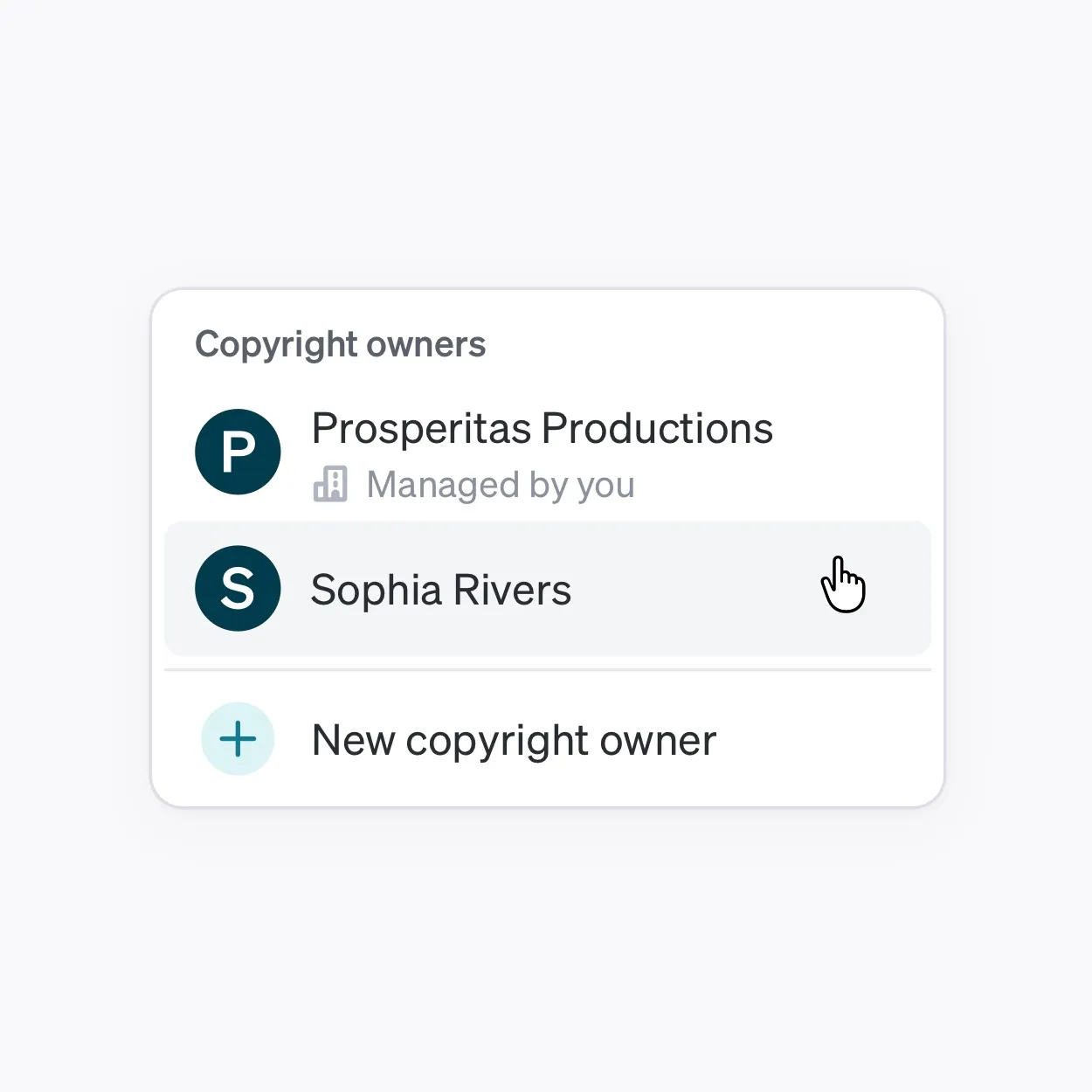
More than one owner can sit on a registration, which is how joint ownership gets recorded rather than assumed. Two people who own something together both belong there. One recorded while the other is understood to have an interest is the arrangement that causes trouble later.
Authors are recorded separately, and the lists do not have to match. Someone can be credited as an author while owning nothing, which is the ordinary arrangement for hired contributors, session musicians, assistants and specialists. Crediting them accurately costs no part of anyone’s ownership.
Both lists stay open. Co-owners and authors can be added or removed at any point, so neither has to be complete on the day you register. A contributor who surfaces two months later can still be recorded, and an ownership arrangement that shifts can be reflected.
Where the split actually lives
A registration records that people own a work. How much each of them owns is set by the agreement between you, and by whatever you file with a collection society.
That division is more useful than it first appears, because proportions are the part most likely to change. A split negotiated over several weeks, revised when someone’s contribution turns out to be larger than anyone remembered, and revised again when a publisher joins, is a moving number. The fact that three named people own the work is not.
So you can put the stable facts on record immediately and let the negotiation take as long as it takes. Nothing about registering commits you to a division you have not agreed.
The one decision to get right at the start
Almost everything on a registration stays editable. The principal copyright owner is the exception: it can’t be edited, and changing it means selling or reassigning the registration itself.
So where a collaboration is still unresolved, register under whoever is unambiguously the principal owner, and bring the others in as ownership is agreed. If a company, label or studio is the contracting party under an agreement everyone has signed, that entity is the principal owner and the individuals belong on the authors list.
If you genuinely cannot tell who that is, the collaboration has an ownership question rather than a registration question, and it is a better one to resolve before the work has commercial value than after.
Joint ownership is not the same everywhere
One thing to be aware of before you rely on any general account of co-ownership, including this one.
What joint owners can each do on their own varies by country. Whether one co-owner can license the work without the others’ agreement, how any income is divided in the absence of an agreement, and what happens when co-owners disagree are all matters national legislation handles differently.
A registration records who the owners are. What that entitles each of them to do depends on where you are and on what you have agreed between you, which is a question for a lawyer rather than for an article.
What to do before the conversation happens
Register the work as soon as it exists, under whoever is clearly the principal owner. Add the other owners as the arrangement settles, and add every contributor to the authors list while everyone still remembers precisely who did what.
Then have the ownership conversation on whatever timeline suits the people involved, knowing the record already exists and is dated.
Collaborations that go wrong rarely go wrong because someone was dishonest. They go wrong because four people remember an afternoon differently and nothing was written down while it was happening.