Royalty statements go wrong in predictable ways. A track credited to the wrong writer. A work registered twice under slightly different titles, paying out on neither correctly. A writer missing from a song they were in the room for.
Nearly all of it traces back to the same thing: the details a collection society holds about a work don’t match the details everyone involved would give you.
What a collection society is doing with your work
A collecting society, or CMO, collects money on your behalf when your music is played, performed, streamed or reproduced. PRS and PPL in the UK, ASCAP, BMI and SESAC in the US, GEMA, SACEM, APRA and their equivalents elsewhere.
For any of that to reach you, the society has to know the work exists and who should be paid for it. That’s what a work registration form is: you tell them the title, who wrote it, who publishes it, and what proportion each party receives. They match incoming usage data against those records and pay accordingly.
Which means the accuracy of your royalties depends almost entirely on the accuracy of what you filed, often years earlier, usually from memory.
Two records doing two different jobs
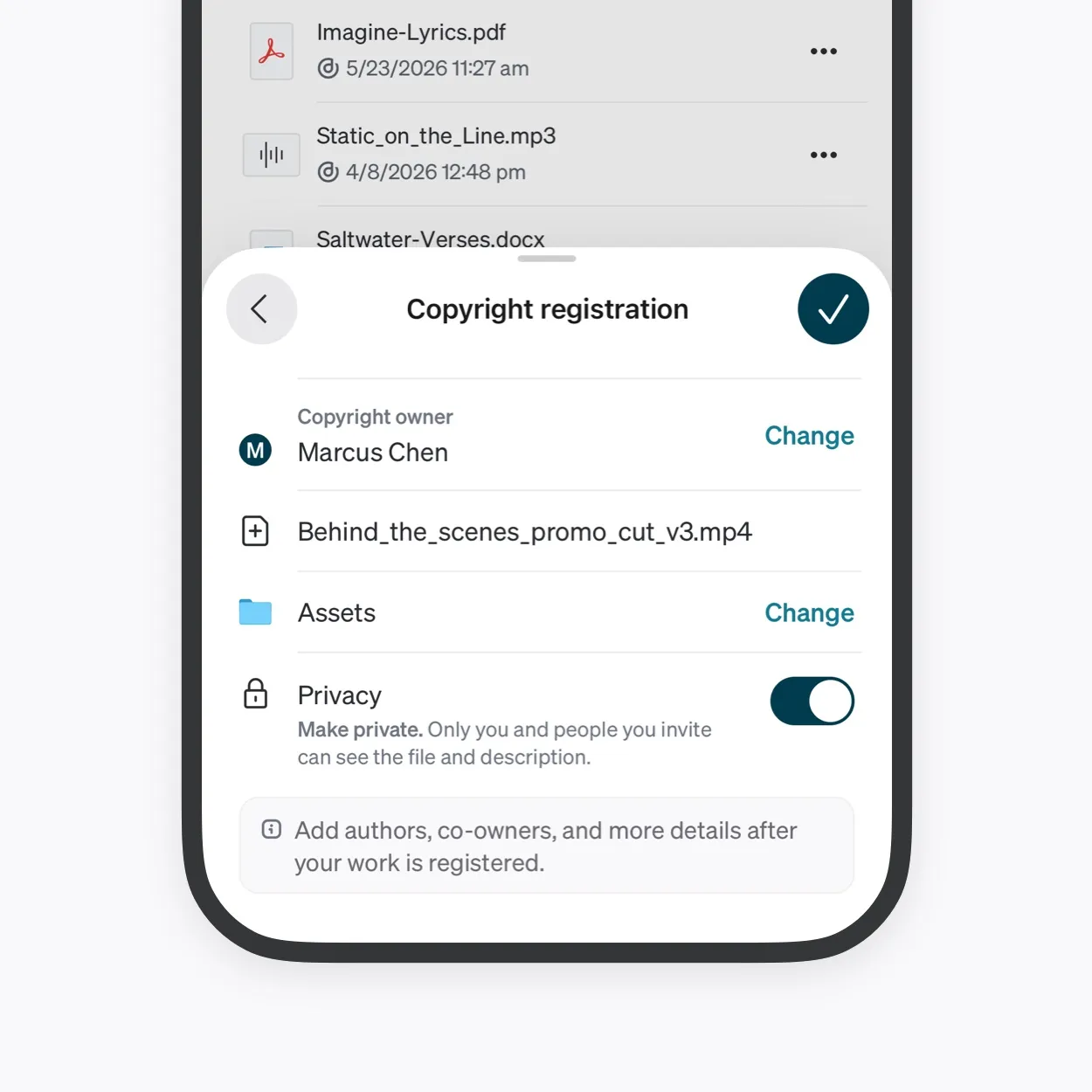
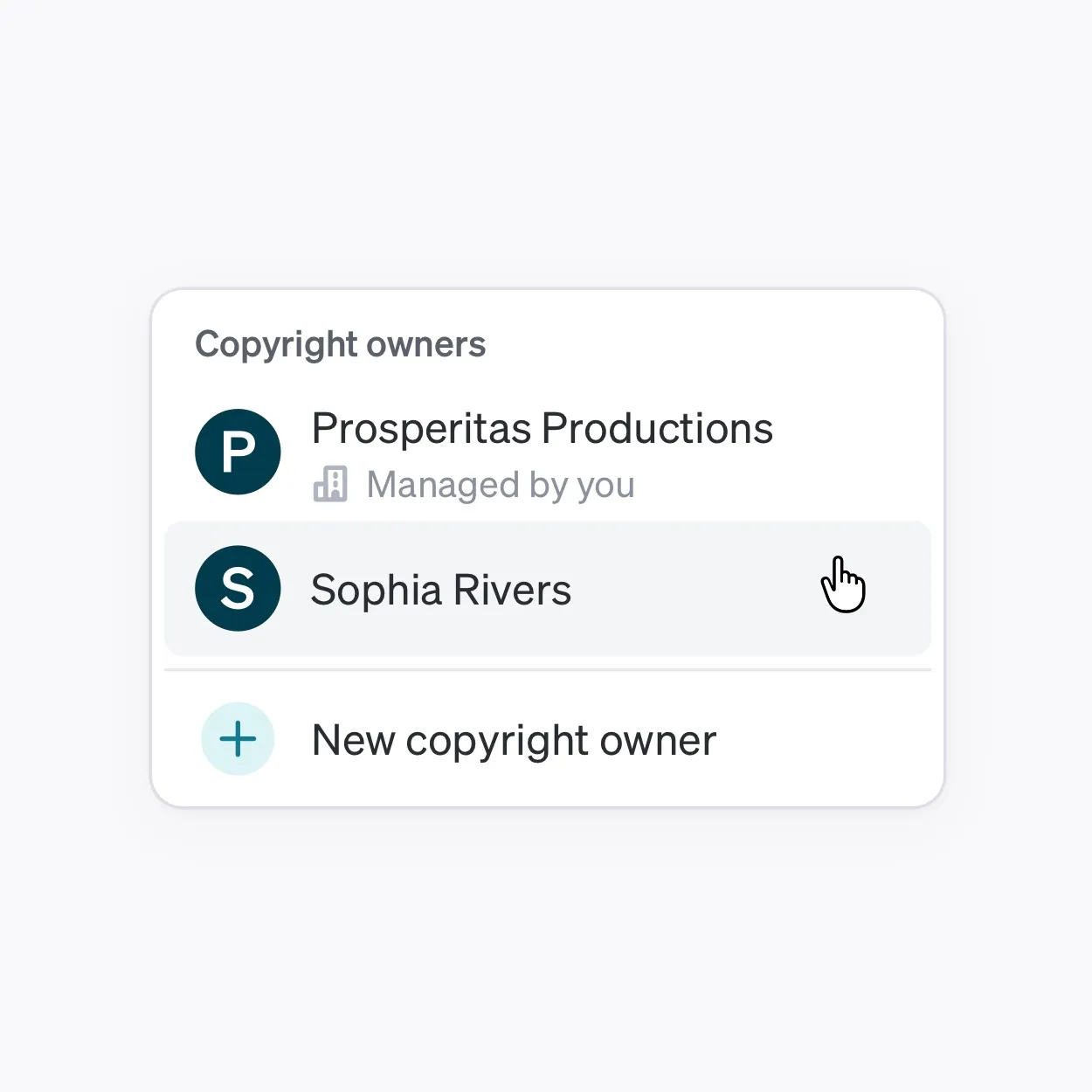
A Dacr registration establishes the facts of the work: what it is, who authored it, who owns it, and the date it went on record.
A society registration is a set of payment instructions: given those facts, here is how the money divides.
They’re complementary, and the order matters. The facts settle first, at the point the work exists. The payment arrangement follows from them, sometimes weeks later, and it’s a commercial negotiation between the people involved rather than something inherent to the work. That’s why the percentages live in your split sheet and your society filing, where they can be renegotiated, while the authorship and ownership sit in a record that doesn’t move and that a society can check against.
The society can check the record, not just take your word
Collecting societies will be able to connect to Dacr directly and confirm registration information against the record, rather than relying entirely on what was typed into a form.
That matters because the usual failure here is transcription. A work is filed slightly differently by three people, or a writer’s name is spelled two ways, and nothing downstream can tell which version is right. A record the society can verify against removes the guesswork from that.
Fill the form from the record, not from memory
Nearly every field a society form asks for is already sitting in your registration.
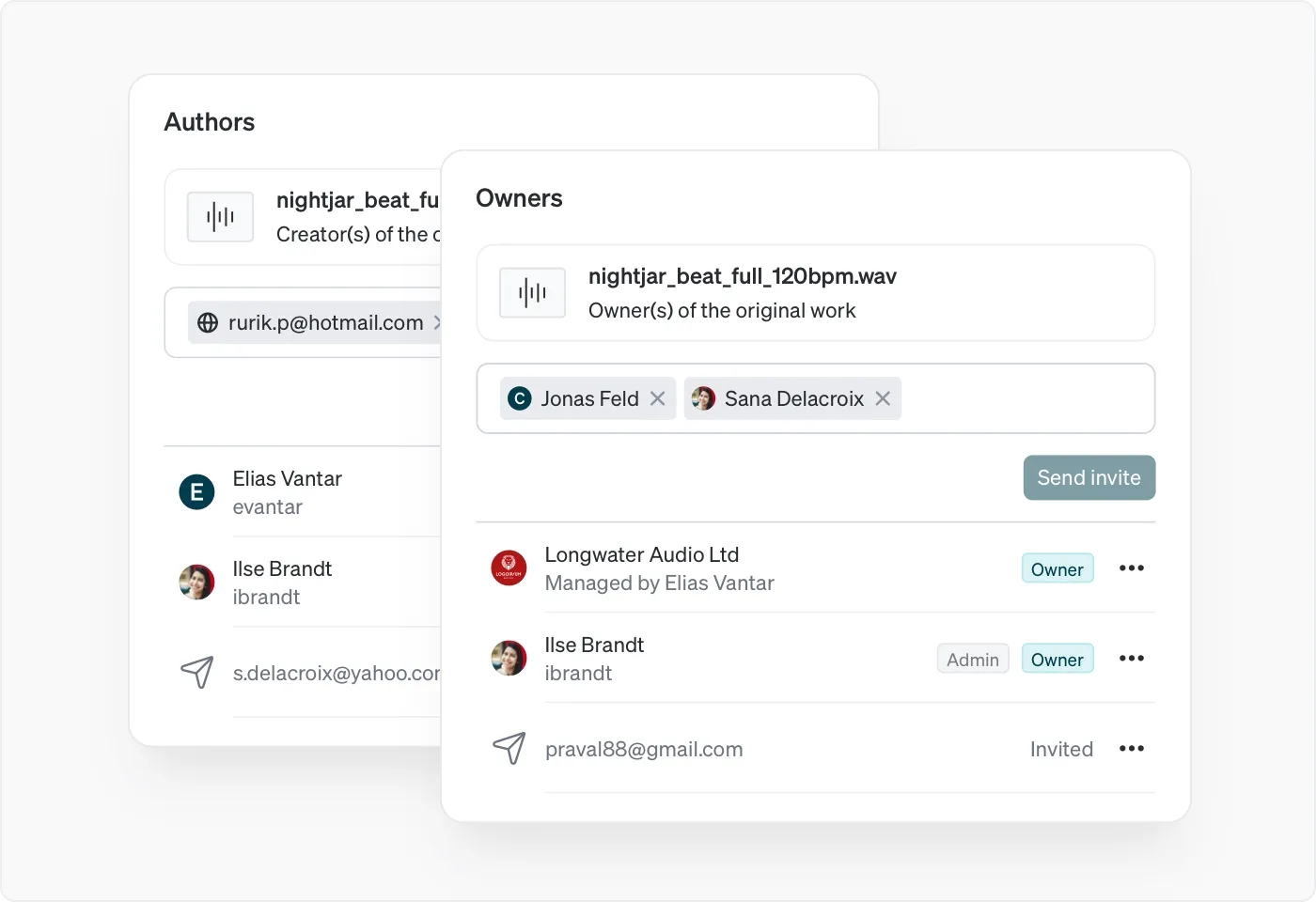
The title. The people who wrote it, on the author list. The parties holding rights, on the owner list. The date. All captured when the work was made rather than reconstructed in September from a group chat in March.
That’s the practical value here, and it’s larger than it sounds. Most royalty errors aren’t disputes. They’re three people filing the same song three slightly different ways because each was working from their own recollection. One source everyone can look at removes that entirely.
The proportions are the piece you’ll bring from your split sheet, since that’s the document that records what was agreed. Everything else comes off the registration.
Use the same title everywhere
Title mismatch is the single most common cause of a work paying out incorrectly. Nightjar, Nightjar (feat. …) and Nightjar, Radio Edit can end up as three separate works in a society database, each collecting a fraction of what one work should.
A registration’s title is editable at any time, so if it drifts from what you filed, correct it and keep the two aligned. The original filename underneath is permanent and publicly visible, so name it carefully at upload. The title is the field you’d point a society at.
Do both in the same sitting
The strongest habit here is treating society registration as the step immediately after registering the work, while the details are still in front of you and everyone still remembers the session.
Works registered in one place and filed with a society months later are where the mismatches come from, and they surface as missing money two years after that.
When a statement looks wrong
Start with what the society holds for the work rather than with the payment itself. Pull up their record and compare it against your registration: title, writers, rights holders. The discrepancy is usually visible in under a minute.
Corrections run through the society’s own process, and what makes that conversation short is being able to point at a dated record of the work rather than assembling the position from correspondence.