Three writers, a producer who built the track, a vocalist who wrote her own topline, an engineer who mixed it. Five people, four kinds of contribution, one registration that has to represent it.
Two questions run underneath that, and people routinely collapse them into one: who owns the work, and who made it.
Owners hold the rights
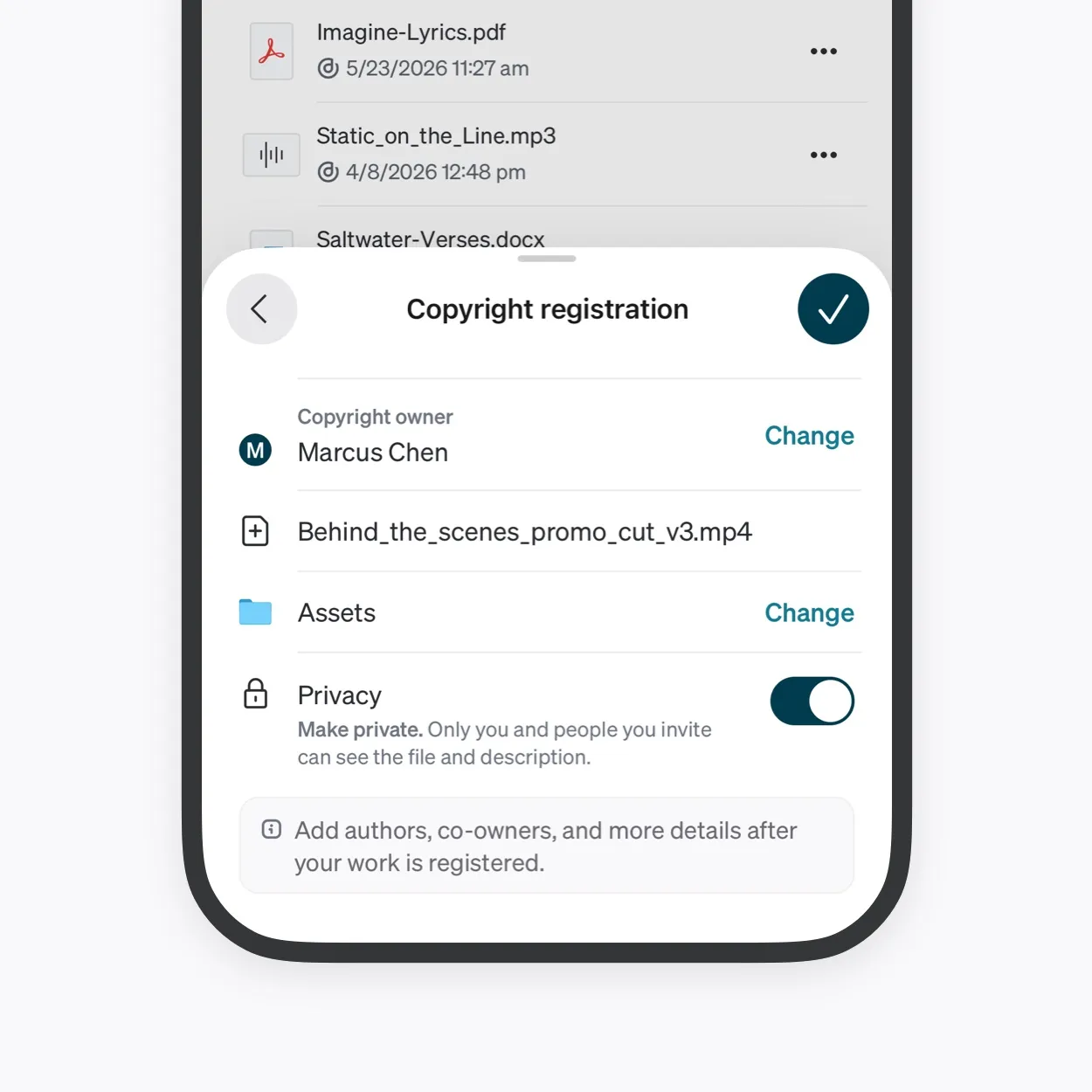
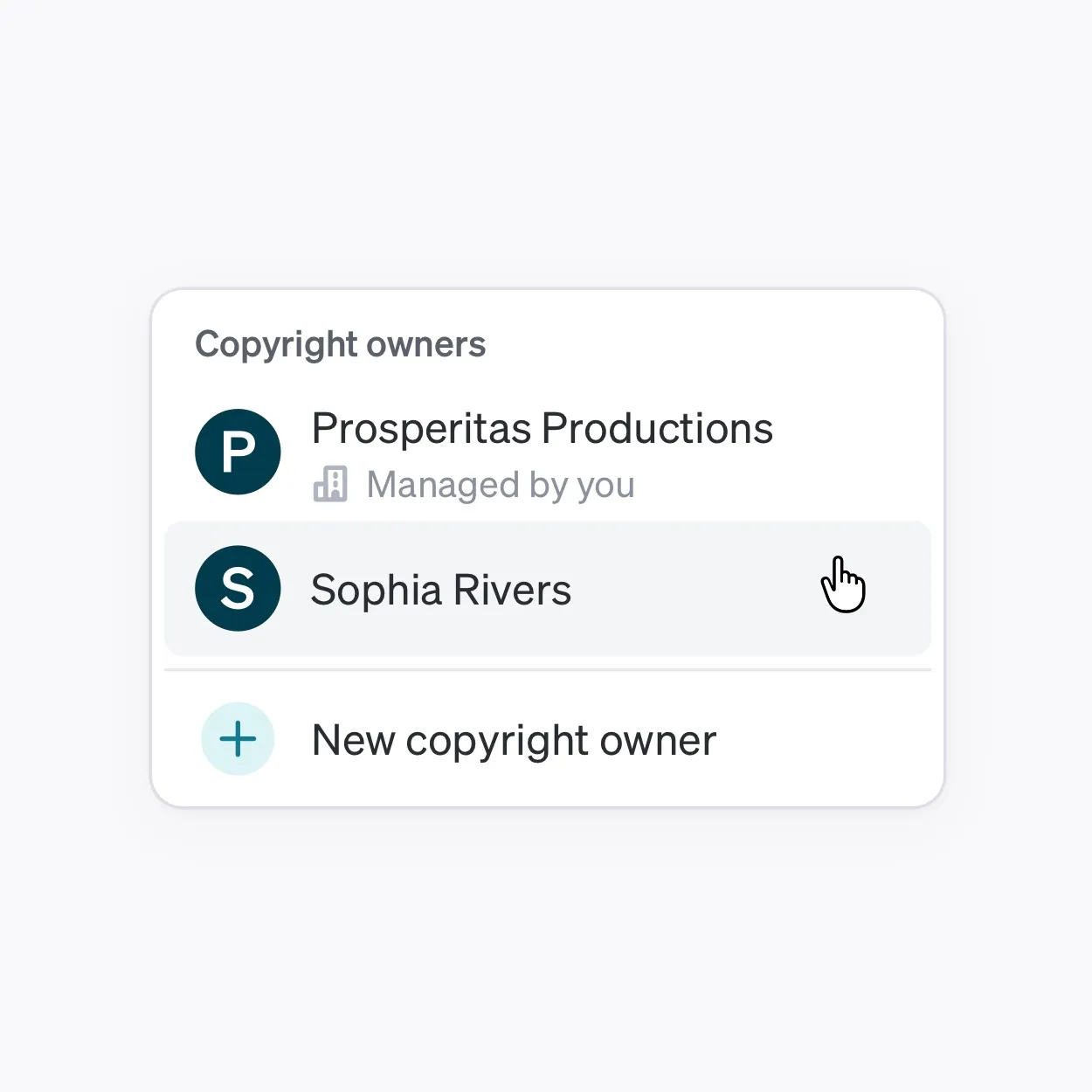
Owners are the parties holding rights in the registered work, who can license it, who has standing, who the commercial arrangement is between.
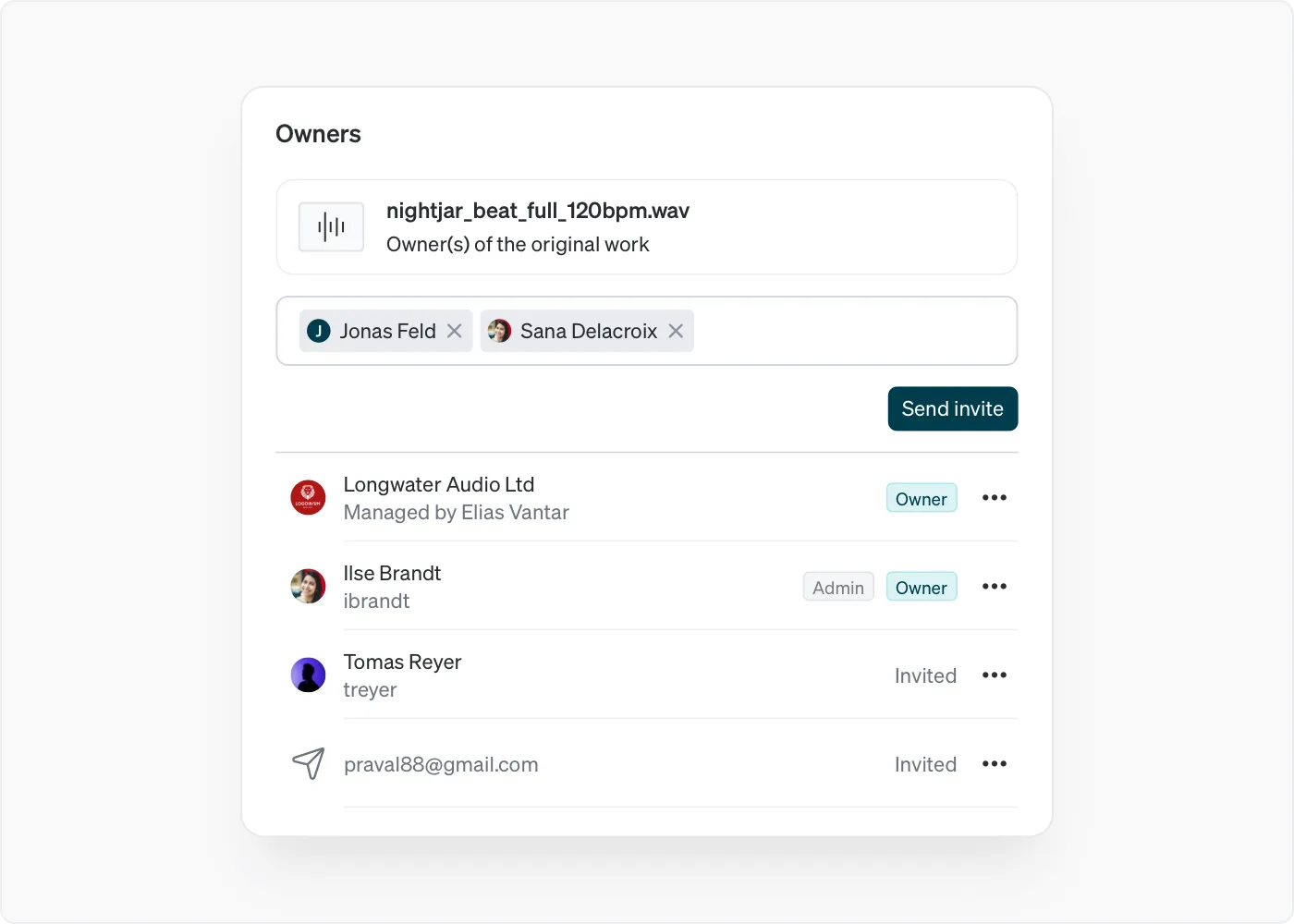
More than one owner can sit on a registration, which is how joint ownership gets recorded rather than assumed. Two writers who own the song together both belong there. One recorded while the other is understood to have an interest is how disputes begin.
Where the splits actually live
A registration records that people own the work. It doesn’t record how much each of them owns. There’s no percentage or share field.
So the split sheet still matters, and so does what you file with your collection society. Dacr is recording the parties and the date; the arithmetic between them belongs to your agreements.
Which is useful when the numbers aren’t settled. You can register accurately with everyone named before anyone has agreed a percentage, because the percentage was never going into the registration.
Authors are the credit
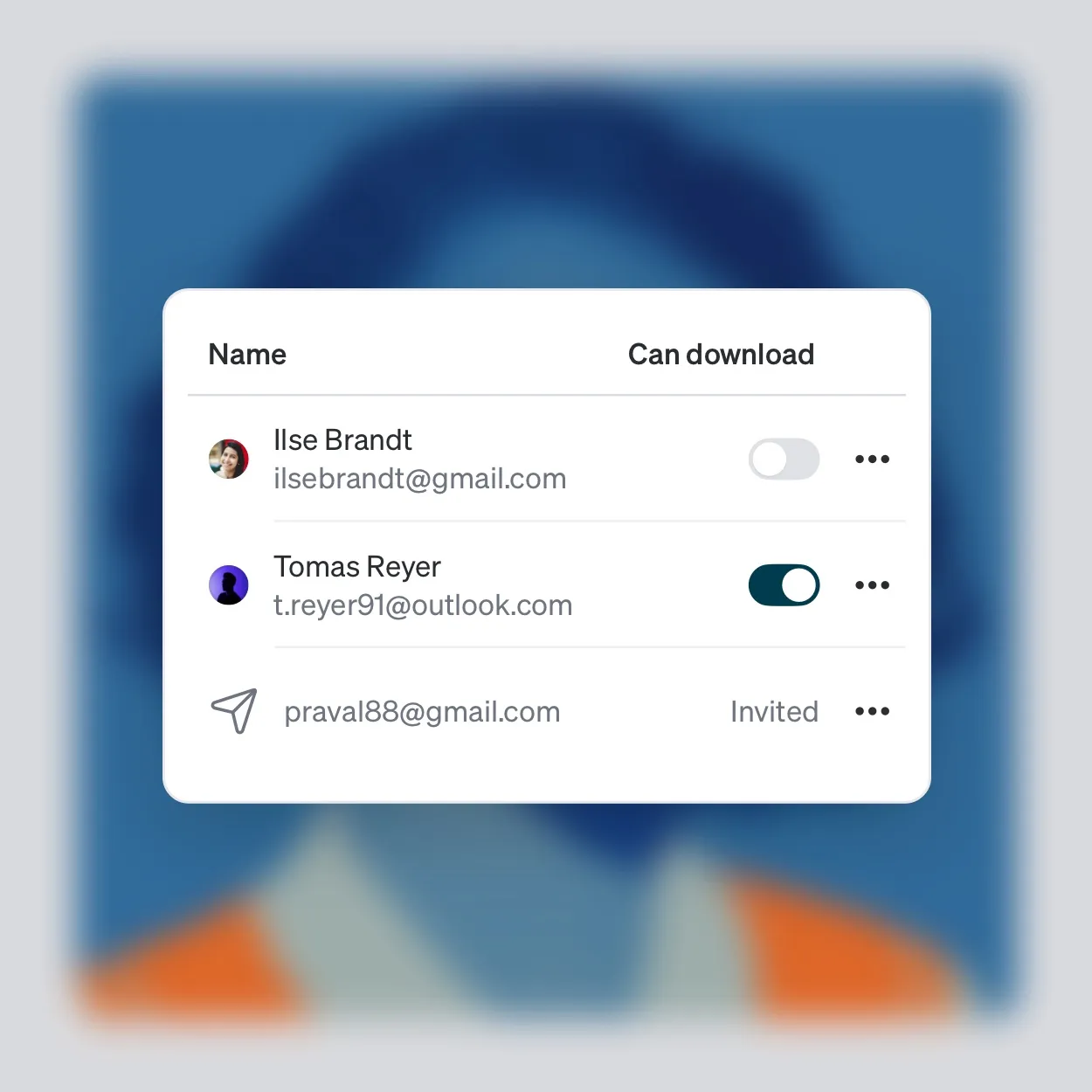
Authors are the people credited with creating the work, in music, the songwriters, producers, vocalists, and engineers who were actually involved.
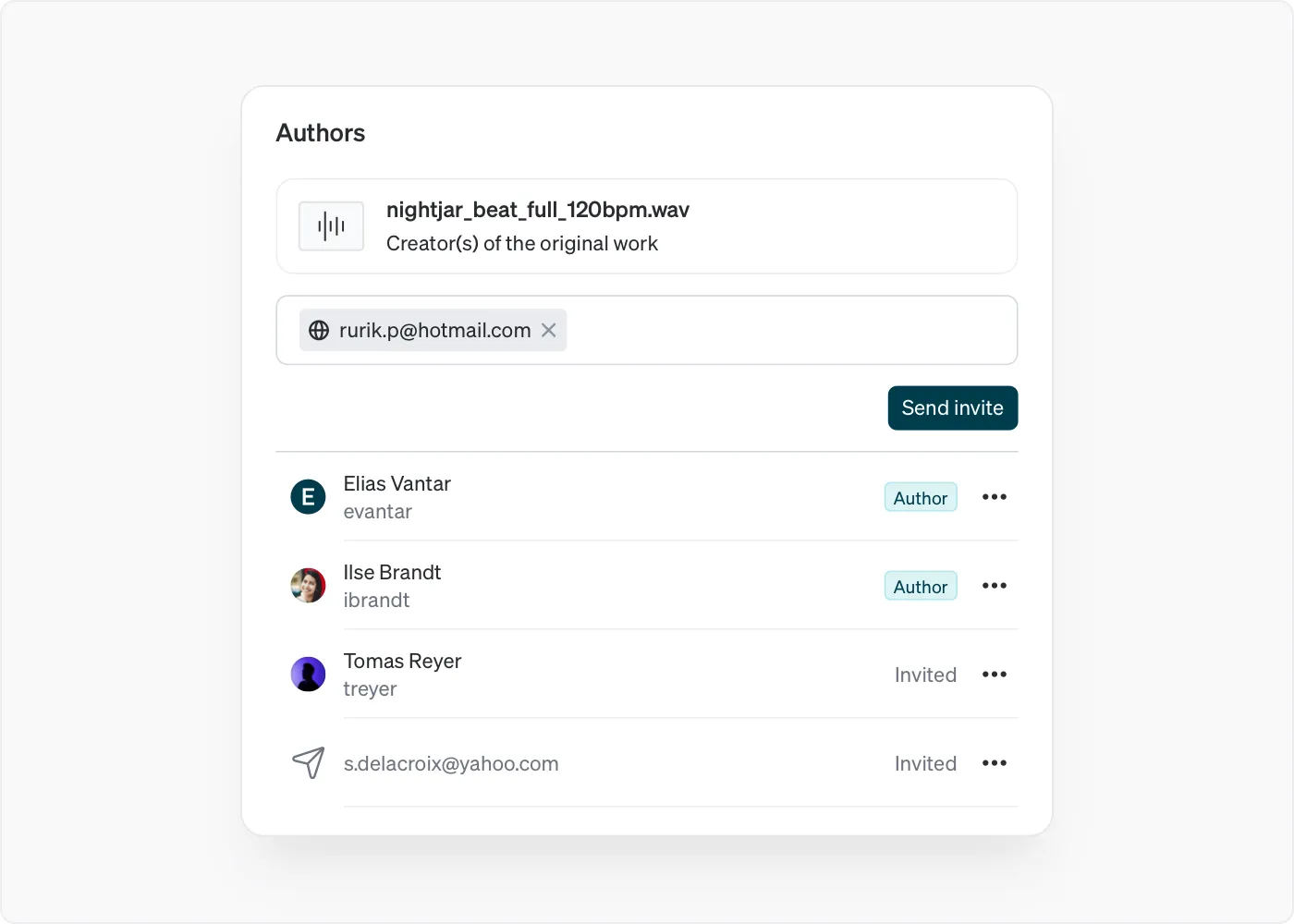
The two lists don’t have to match and usually shouldn’t. An engineer credited as an author owns nothing. A publisher recorded as an owner wrote nothing. Recording them separately means the registration reflects what happened rather than flattening it into whoever ended up on the paperwork.
Everyone on the author list is recorded as an author, so the record captures who contributed. The specific capacity each of them worked in belongs in your credits and your agreements.
Get the principal owner right first
Co-owners and authors can be added or removed at any point, so neither list has to be complete on day one.
The principal copyright owner is the exception. It can’t be edited, and changing it means selling or reassigning the registration. Where the arrangement is still moving, register under whoever is unambiguously the principal owner and let the rest follow.
Where the label or publisher sits
Under many deals the party owning the recording or the composition isn’t anyone who was in the room. If a label or publisher holds those rights, they belong in Owners and the creators belong in Authors.
Which applies to you is a question about your agreements rather than about the session. If you’re not certain what yours say, resolve that before the work has commercial value.
Registering before it’s settled
None of this requires an agreed arrangement. Register the work, name the people accurately while everyone remembers, and adjust as it resolves.
Authors can be added later, so nothing is lost if a name surfaces in a month. The reason to do it now is that credit is the first thing people forget, not that the system stops you.