A notification says your upload has been claimed. A marketplace listing is suspended. A video is monetised for somebody else, or blocked outright, on material you made.
Most of these come from automated matching rather than from a person who has looked at anything, and a significant share are mistakes. A licensed sample, a stock element you paid for, a distributor who registered the work on your behalf and then claimed it back at you.
That doesn’t make them harmless. Automated systems act first, and the burden of correcting them lands on you.
Work out what’s actually being claimed
Before responding, establish which specific part of your work is at issue and who is claiming it. Platforms usually identify the claimant and the matched segment, sometimes vaguely.
A licensed element you cleared is a different situation from a claim over material you authored outright, and they get answered differently. Working out which one you’re in is the whole of the first step.
Assemble your side before you respond
Most platform processes give you a short window and one substantive opportunity to make your case. Going in half-prepared is worse than going in a day later.
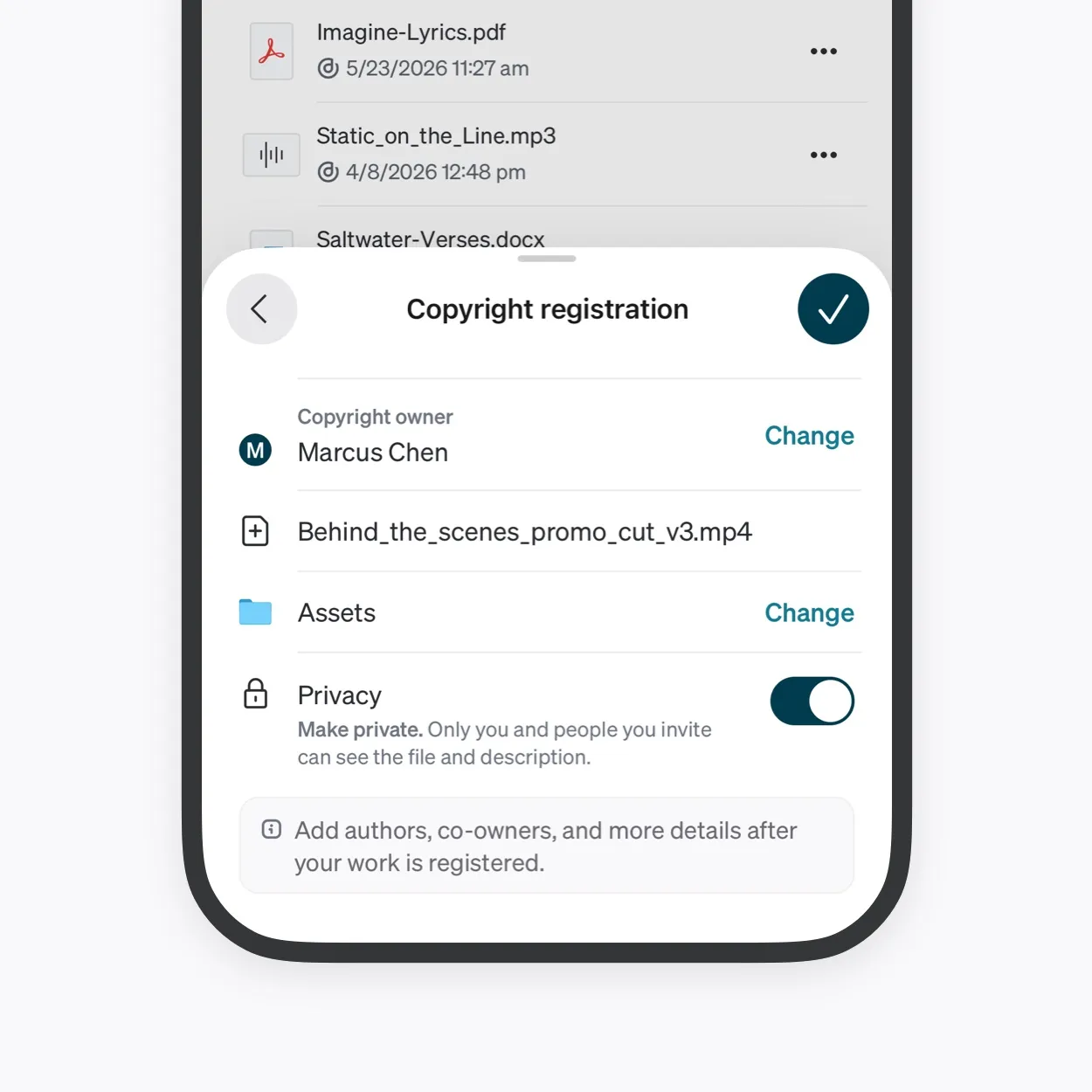
Your registration is the core of it: the record of the work, its authorship, its ownership, and the date it was registered. Every registration also generates a certificate, a downloadable PDF certifying it, which is the artifact an appeal form’s documents field is asking for. That’s produced automatically on every plan, so it exists whether or not you’ve ever looked at it.
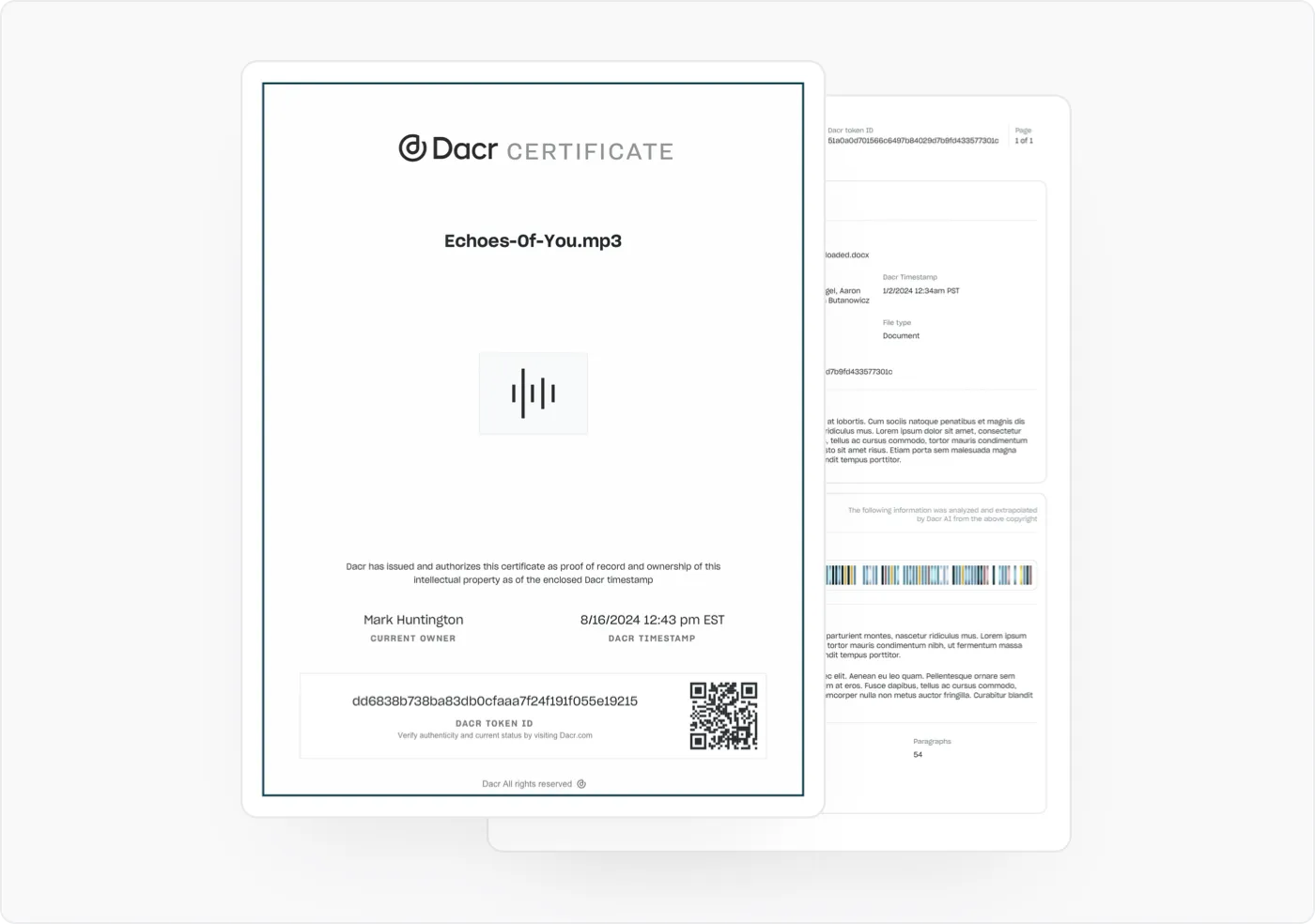
Dacr describes the certificate as court-ready, and pairs that with a qualifier worth carrying into any appeal: admissibility ultimately depends on the jurisdiction and the case.
Alongside it, gather your licences for any third-party material, your original working files, and delivery or publication records. If the claim relates to a specific segment, being able to point at where that material came from is what resolves it.
If a comparison would help
Where the claimant’s work is something you can obtain, a technical comparison analysis report documents how the two relate, which is more useful to a platform reviewer than an assertion that they don’t.
Check your infringement docket too, where flagged matches and infringement reports appear. Comparison runs automatically on every account against everything already registered with Dacr, so if the claimant’s material is registered there may already be a flagged pair with a score attached.
The formal route is legal territory
Platform counter-processes carry real consequences. Some involve statements with legal weight, some expose you to jurisdiction you hadn’t considered, and the specifics differ by platform and by country.
Read what you’re signing, and take advice before filing anything if the work matters commercially. This article can tell you what to gather; it can’t tell you what to file.
If the claim is deliberate
Occasionally the claim isn’t a mistake. Someone has registered your work with a rights database, or is claiming a catalogue they don’t own.
The response starts the same way, gather, then get advice, but the timeline is longer and the platform process is often not where it gets resolved. Documenting the claim itself, including the notification and the claimant’s details, matters here in a way it doesn’t for an ordinary false positive.
What makes this easier next time
Every part of the response above is faster if the work was registered before it was published and filed somewhere you can find it.
The claim arrives with a deadline attached. Whether you can meet it comfortably was decided months earlier.