A platform is holding your upload and the appeal form has a documents field. A client’s legal team won’t release payment without something for the file. A marketplace suspended a listing and gave you seven days.
“Proof of ownership” isn’t a defined document, and what satisfies one of these requests won’t satisfy another. Start with what the person asking is going to do with it.
Something they can file
If it’s going into a folder, attached to a form, or forwarded to counsel, send the certificate. Every registration generates one automatically. A downloadable PDF certifying the registration, on every plan, including a free account’s registrations.
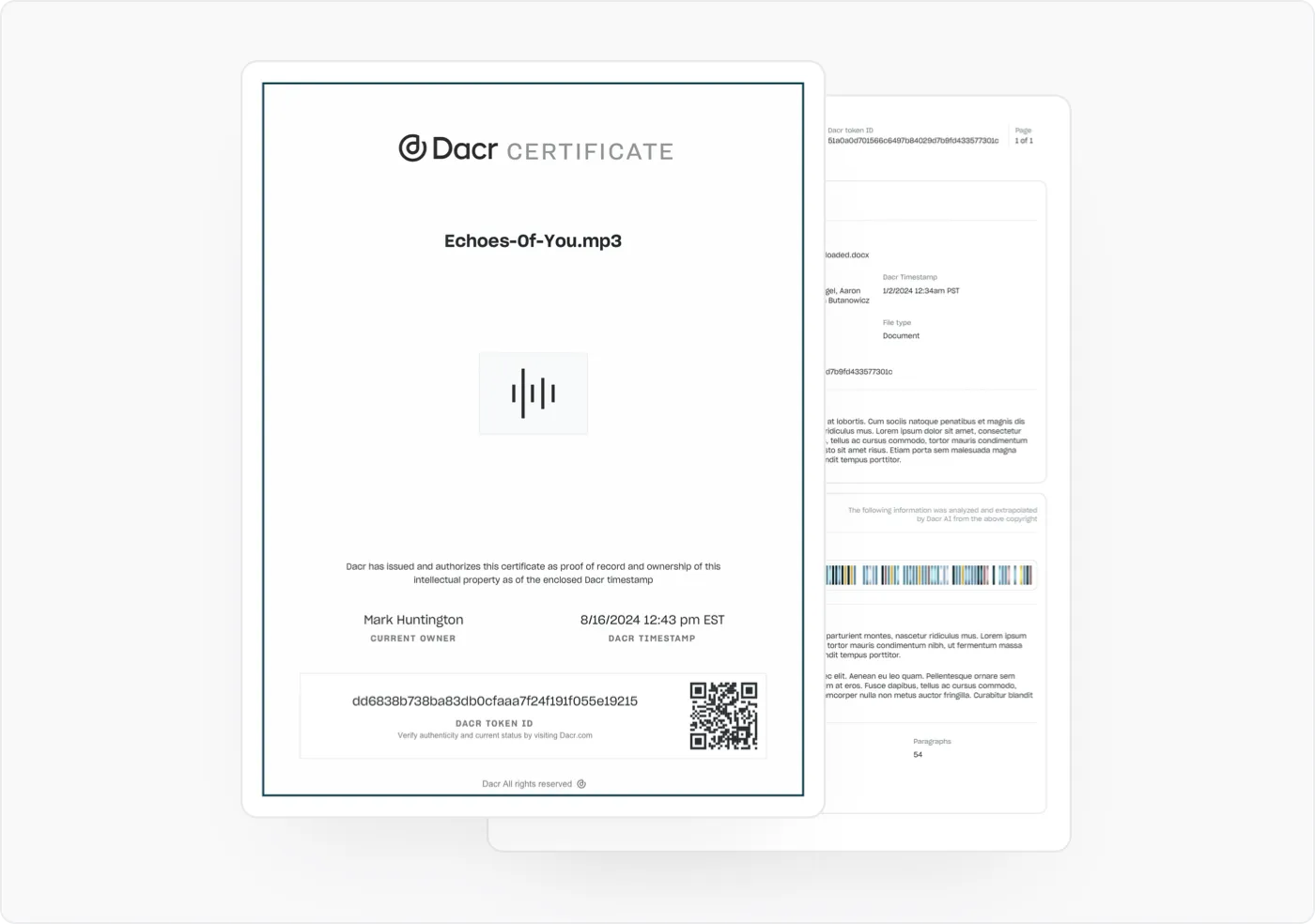
It carries the owner’s name, the work’s title, a preview image, the copyright ID, the timestamp, and a QR code linking to the registration’s public page. Where you’ve registered in a national jurisdiction there’s a separate certificate for it, headed as an official record recognized under that country’s laws.
Two practical things. The certificate is visible only to you and to people you’ve invited, not to the public, even when the registration itself is public, so sending it is something only you can do. And once you’ve sent the PDF, it can be forwarded onward like any other file.
Dacr describes the certificate as court-ready. Worth pairing that with the honest qualifier the company applies to its own evidence: admissibility ultimately depends on the jurisdiction and the case.
Something that establishes your position without handing over the work
Every registration has a public page, and its link proves your ownership publicly while the work itself stays private.
That suits someone deciding whether your claim is credible rather than filing anything. A label weighing a pitch, a gallery, a publisher, a prospective licensee early in a conversation. They see the registration exists and who owns it. They don’t get the work.
It’s the registration’s own address rather than a link you generate per recipient, so anyone can pass it on. Fine for what it’s for; not something to send in place of controlled access.
Access, when they need the detail
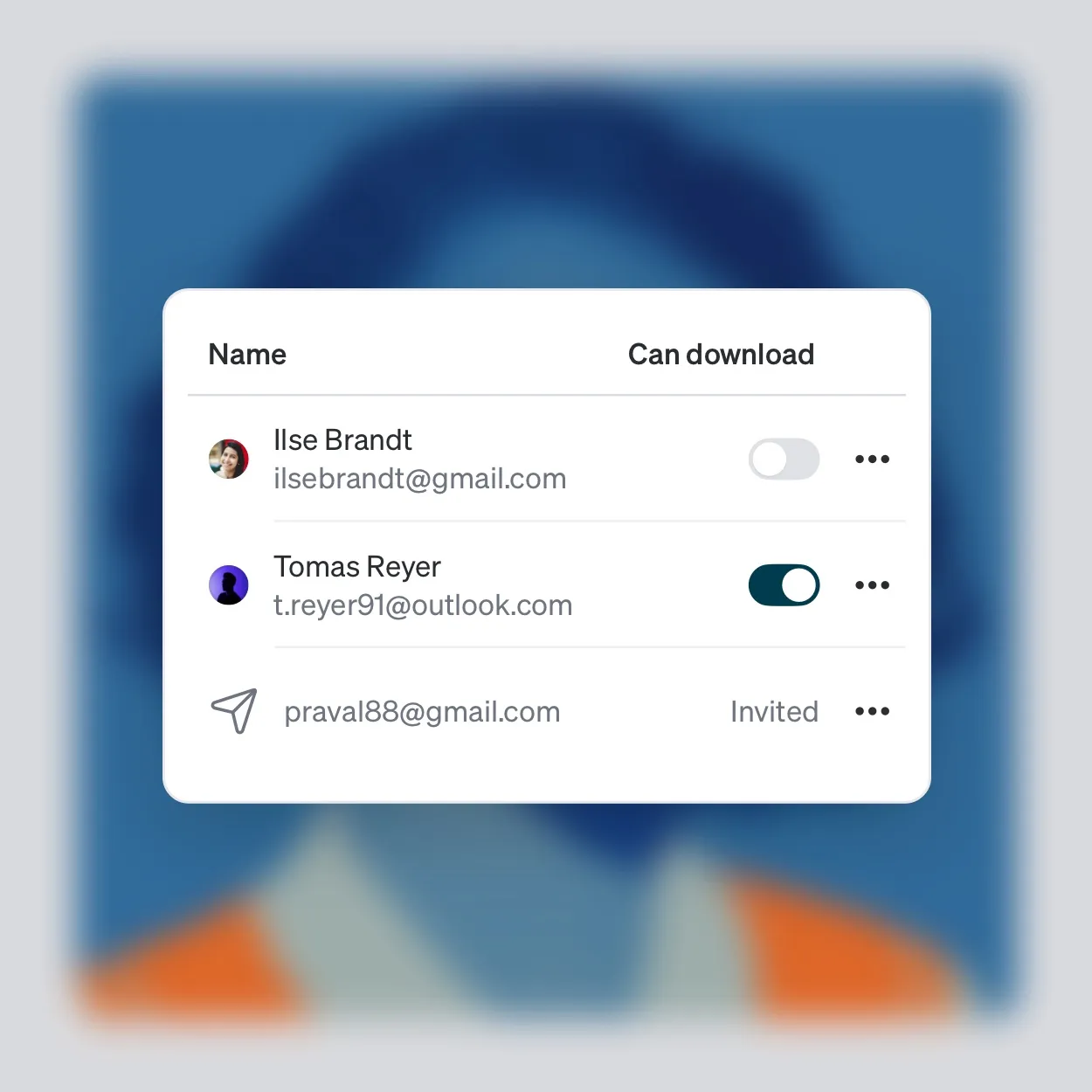
Collaborators, co-owners, and anyone examining the actual record rather than a summary can be invited to the registration through Custody and Privacy.
Downloading starts switched off for every invited viewer, so showing someone the work and letting them keep a copy remain separate decisions. Access can be withdrawn, and it ends immediately.
If a report is what they’re asking for
Platform enforcement teams and lawyers often want the comparison rather than the registration, what matched, and how much.
A technical comparison analysis report can be shared as a page or sent as a file. Note that a shared report shows only the matches you’ve left visible, so what a recipient sees can differ from what you see.
If it isn’t registered yet
Register it now, and be honest with yourself about what that accomplishes.
A registration created today carries today’s date. It doesn’t reach back to when you made the work, and the registration date shows that plainly. It still changes your position going forward, and it means the next request about this work is a different conversation.
For the request currently sitting in your inbox, you’re working with what already exists: original and working files, dated correspondence, delivery records, publication history. Gather it. How much weight it carries is a question for a lawyer, and it depends on the jurisdiction and on what’s being disputed.
The part nobody plans for
Requests like these come with a deadline attached, usually a short one.
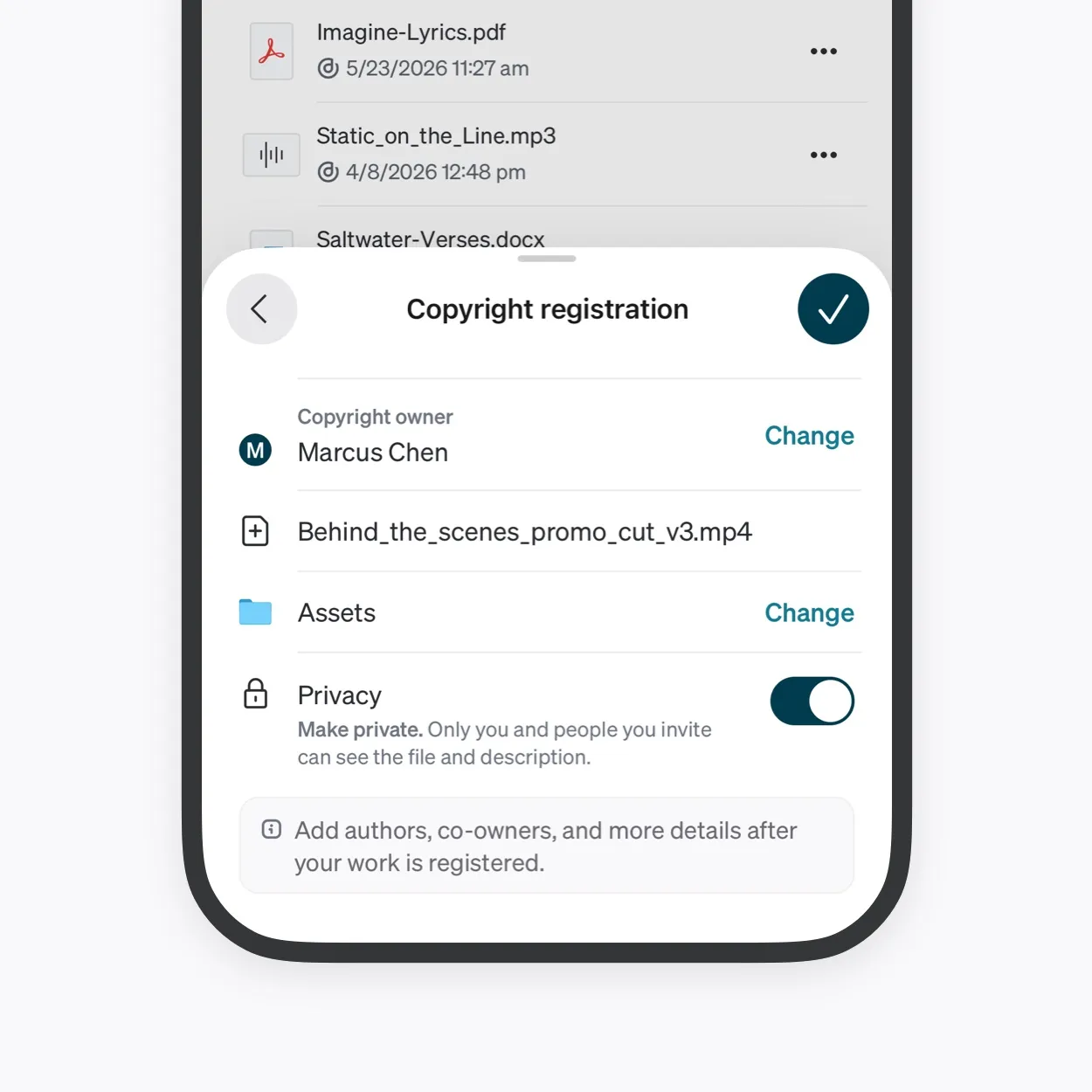
A registration you can’t find quickly isn’t much help against a seven-day appeal window. Folder structure and consistent naming, done at the time you register rather than when someone asks, are what make “can you send us documentation” a task you finish before lunch.
If you’re reading this without a deadline in front of you, that’s the thing to fix today.