Copyright exists from the moment you create something. Article 5(2) of the Berne Convention is explicit that the enjoyment and the exercise of these rights shall not be subject to any formality, which is why nobody has to file anything to own their own work.
Registering is about the second problem, which is being able to show what you made and when. And the friction there isn’t the registering. It’s that every time you sit down to it, the same handful of questions come up again, which owner, public or private, which folder, and answering them repeatedly is how a two-minute task becomes a task you don’t do.
Most of that is already decided if you let it be
Two of those settings persist once you’ve set them.
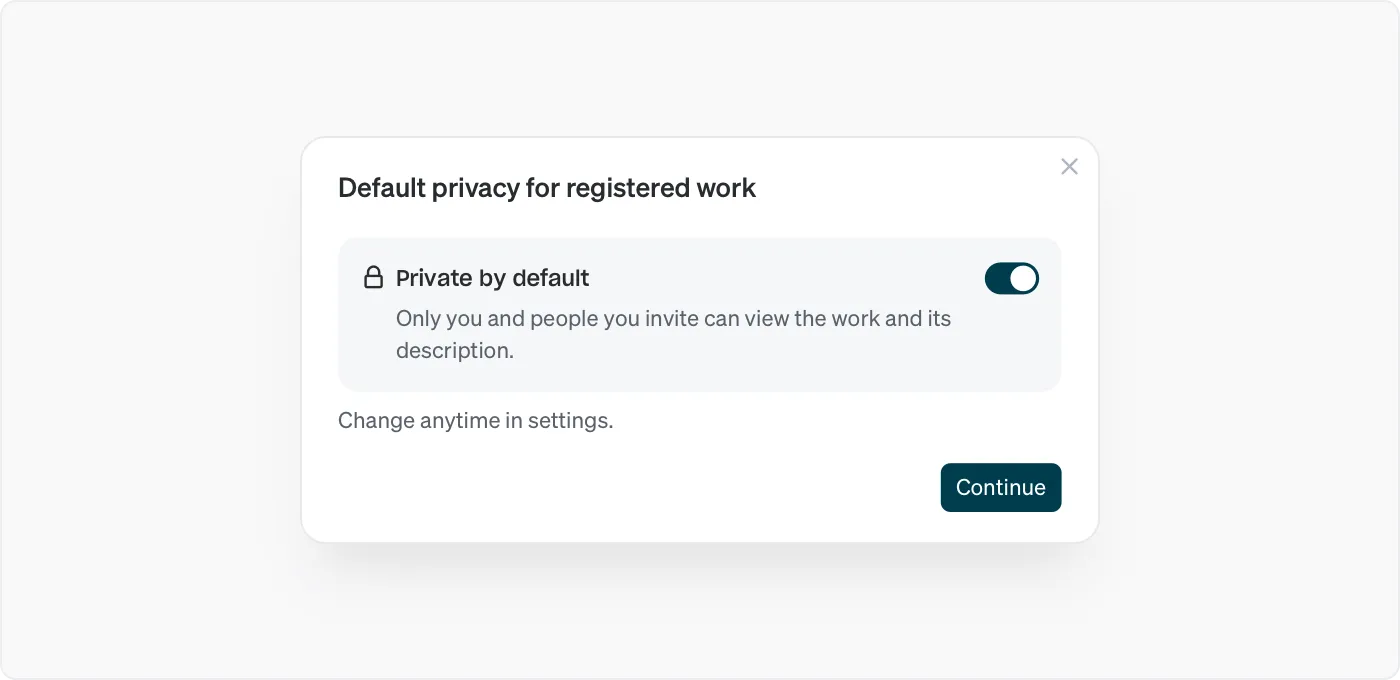
Default file privacy lives in Account settings and applies to everything you register afterward. Set it to whichever state most of your work is in when you register it, and stop deciding per file.
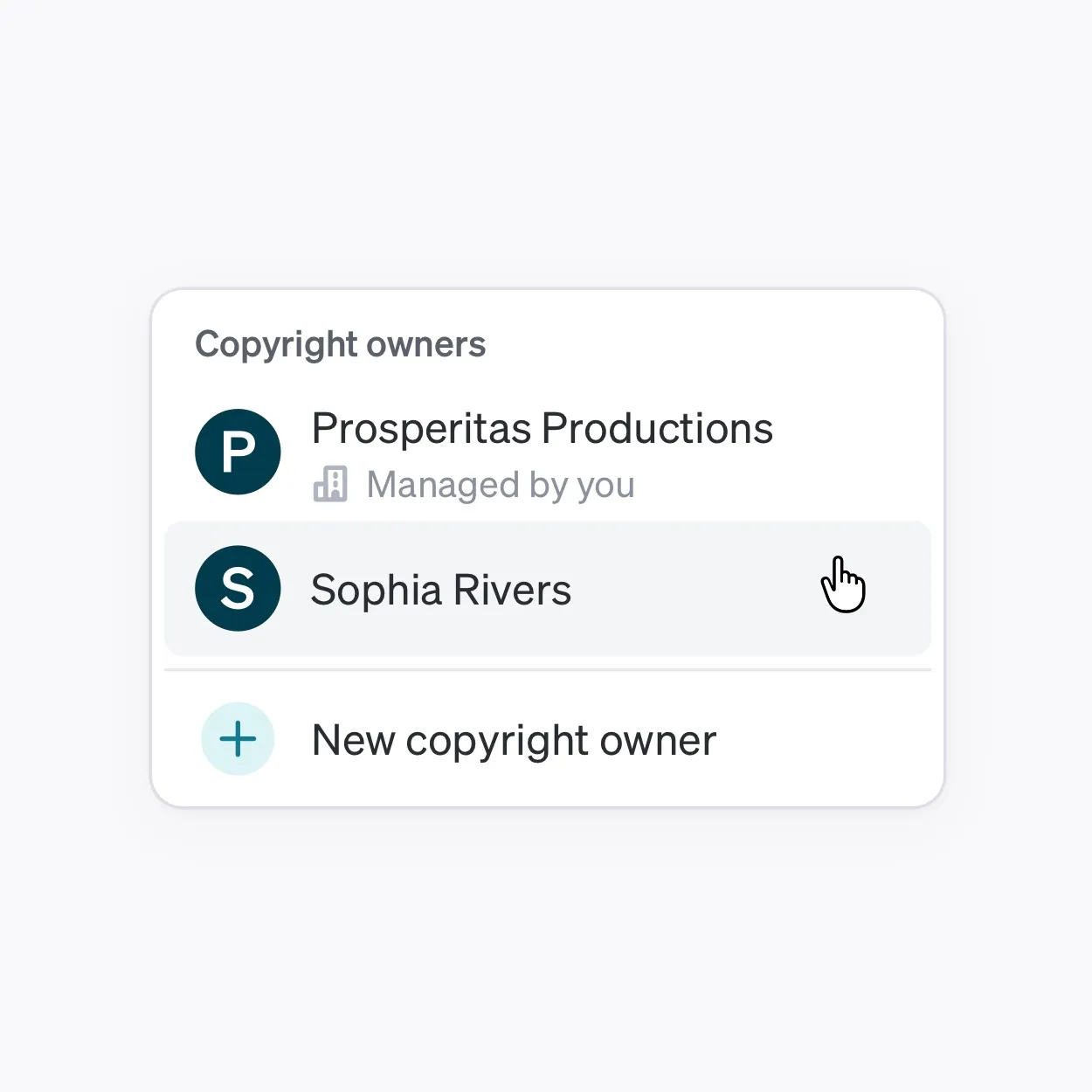
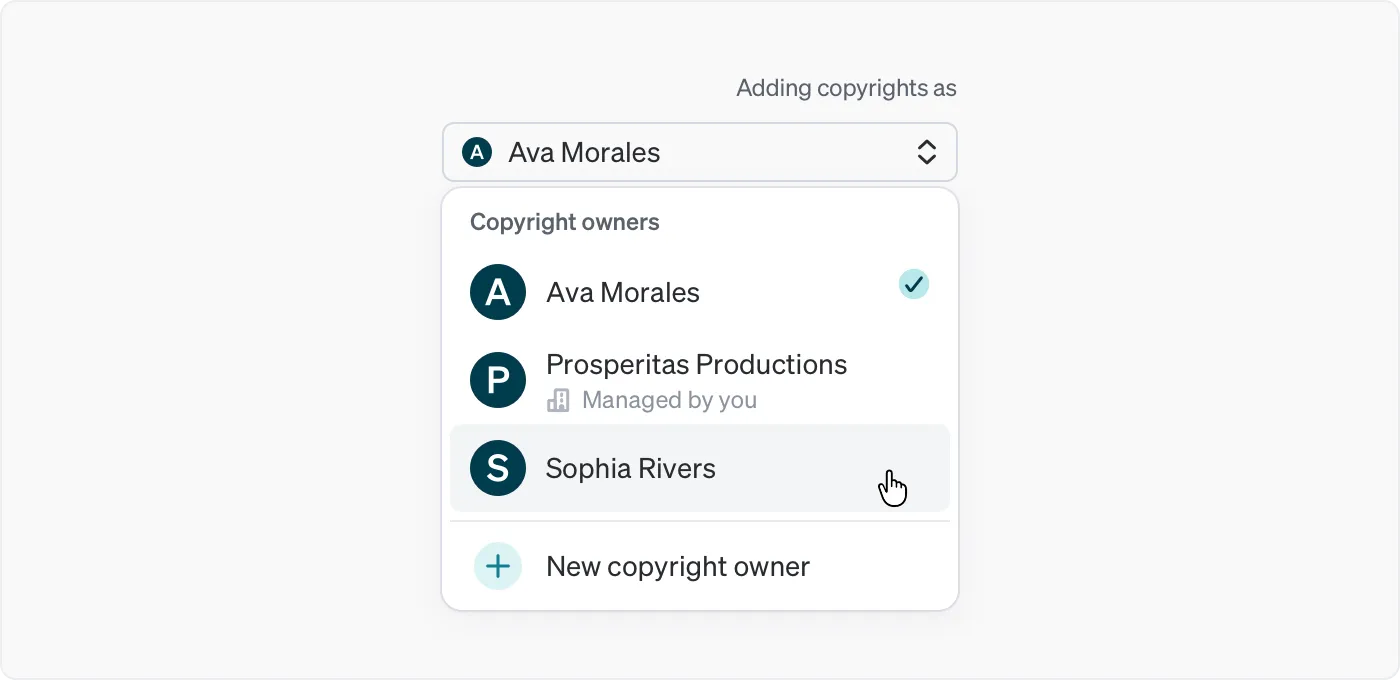
The active copyright owner is set in the file explorer rather than in Account settings. The “Adding copyright as” control. Your choice there persists across sessions and devices, so if you work under a studio as well as your own name, it’s worth checking which one is selected before a session rather than after.
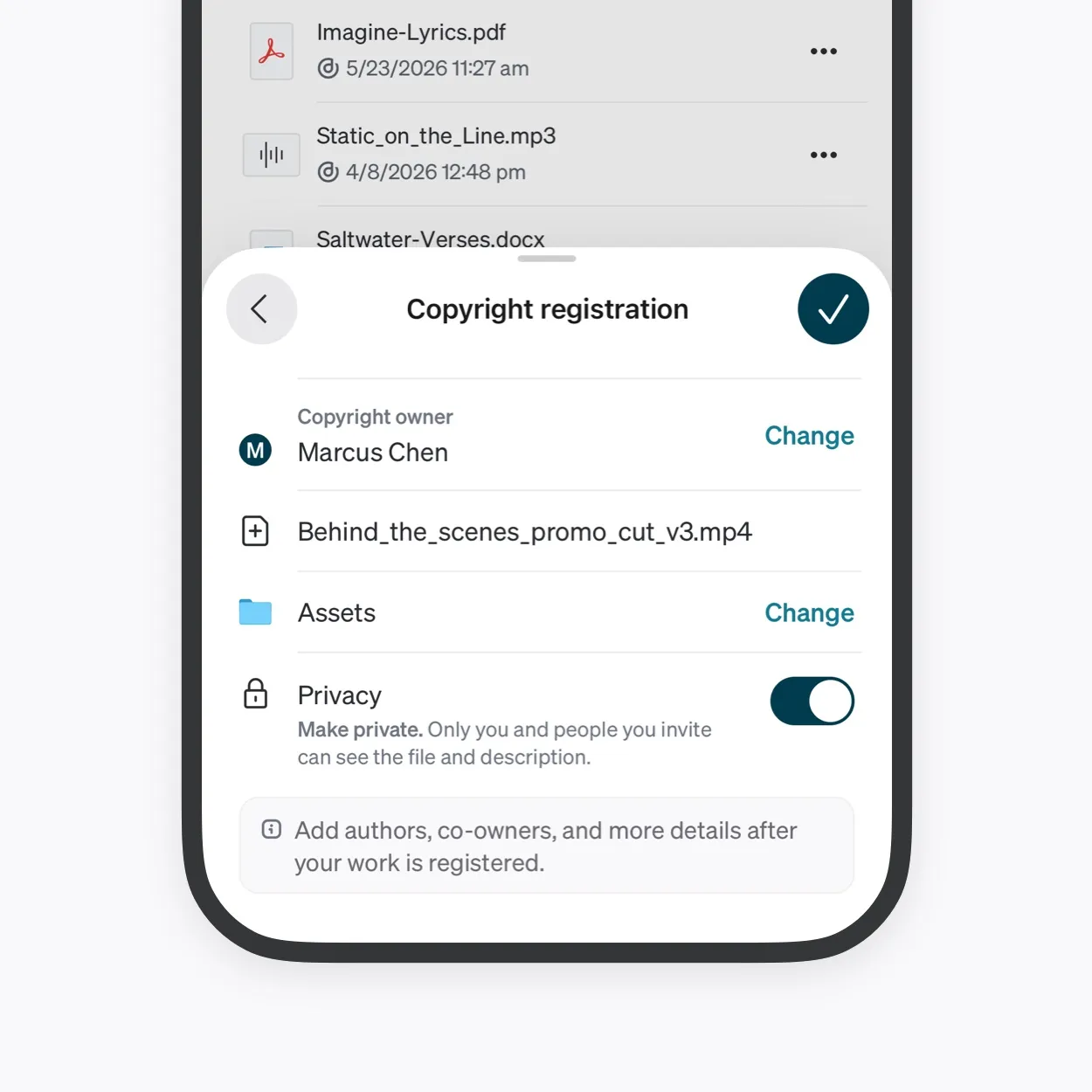
On desktop, registration doesn’t ask about owner, folder or privacy at all. It takes them from what’s already set: the owner you selected in the explorer, the folder you’re in, and your account default. On mobile the registration sheet does ask, which is why the same task can feel different depending on where you’re doing it.
Where the countries come from
Jurisdiction works differently from the others, and it’s the part worth understanding before you build a habit around it.
There’s no default-jurisdictions setting. Registration uses your account’s origin, and Dacr Members have the option of registering a work in additional countries, either at the point of registration or afterward.
The reason to think about it early is that coverage added later is timestamped from the moment it’s added. A country you add in 2028 has a record beginning in 2028, so this isn’t a decision you can defer and then recover.
Pick a rhythm that matches how your work finishes
Calendar intervals suit some practices and not others.
Photographers, illustrators, and producers who finish things continuously do well with a fixed weekly slot, same day, same time, whatever’s done that week. The regularity does more work than the frequency.
Commissioned work often fits better to delivery than to the calendar. Register when a job goes out, so the record attaches to the moment work leaves your hands.
Long-form work needs less. A novelist or documentary editor produces fewer discrete finished pieces, and monthly catches them without inventing a chore.
Pick the interval you’ll still be keeping in March.
Deciding what’s in each session
Each file you register is its own registration, so what goes in is worth deciding rather than defaulting.
Work that’s finished, going out to someone, and could plausibly be reused by another party belongs in. A rough cut you’re still arguing with doesn’t. Neither does the version you exported by mistake.
Iterations cause the most hesitation. Register what you consider done and what you actually deliver, and let the intermediate states go. Pitches and submissions are the exception. There, the version you sent is the version worth having on record.
The backlog is a different job
Years of unregistered work will swamp the habit before the habit establishes itself, and it needs its own budget.
Treat it as a separate exercise and let the weekly slot handle what’s new.
When to step outside the rhythm
Two situations justify registering ahead of schedule.
Work about to be released somewhere new is worth registering, with that country covered, before it goes out. And anything heading into a licensing conversation is better registered before the conversation than during it.
Neither means abandoning the routine. They’re reasons to add a session.
This week
Look at what you finished, decide what’s worth a record, and register it. Next week’s session will be shorter than this one.