Eleven years of photographs. Four albums. A decade of illustration across two hundred clients. None of it registered, all of it still earning or still capable of being copied.
Most people who take this on start at the earliest work and move forward. Three weeks later they’ve registered a lot of material nobody has looked at since 2016, run out of enthusiasm, and stopped before reaching anything that earns.
Sort by exposure, not by date
Chronology puts your least relevant work first and burns the momentum you need for the rest.
Sort by exposure instead. What’s published right now, what’s currently licensed or earning, and what you’d be genuinely upset to find copied. That’s a much shorter list than the full catalog, and it’s where a registration does the most for you.
Anything already in dispute goes first.
Work out the arithmetic before you start
Each file is its own registration. A five-thousand-image archive would be five thousand of them, which is why the first question is which part of it belongs on the record.
Which makes this a question about selection rather than scheduling. Registration is priced per work, so you’re choosing which parts of a decade of output belong on the record and in which markets, and you can take that at whatever pace suits you.
Tier the catalog
Dacr Members have the option of registering work in additional countries, and coverage added later is timestamped from the moment it’s added. So for anything you do register, choosing the countries at the time is what gets you the earliest possible record in each of them.
That argues for tiering rather than treating the catalog uniformly. Commercially significant work and anything still earning justifies the broader list. The middle tier gets your primary market. The long tail may not warrant registration at all.
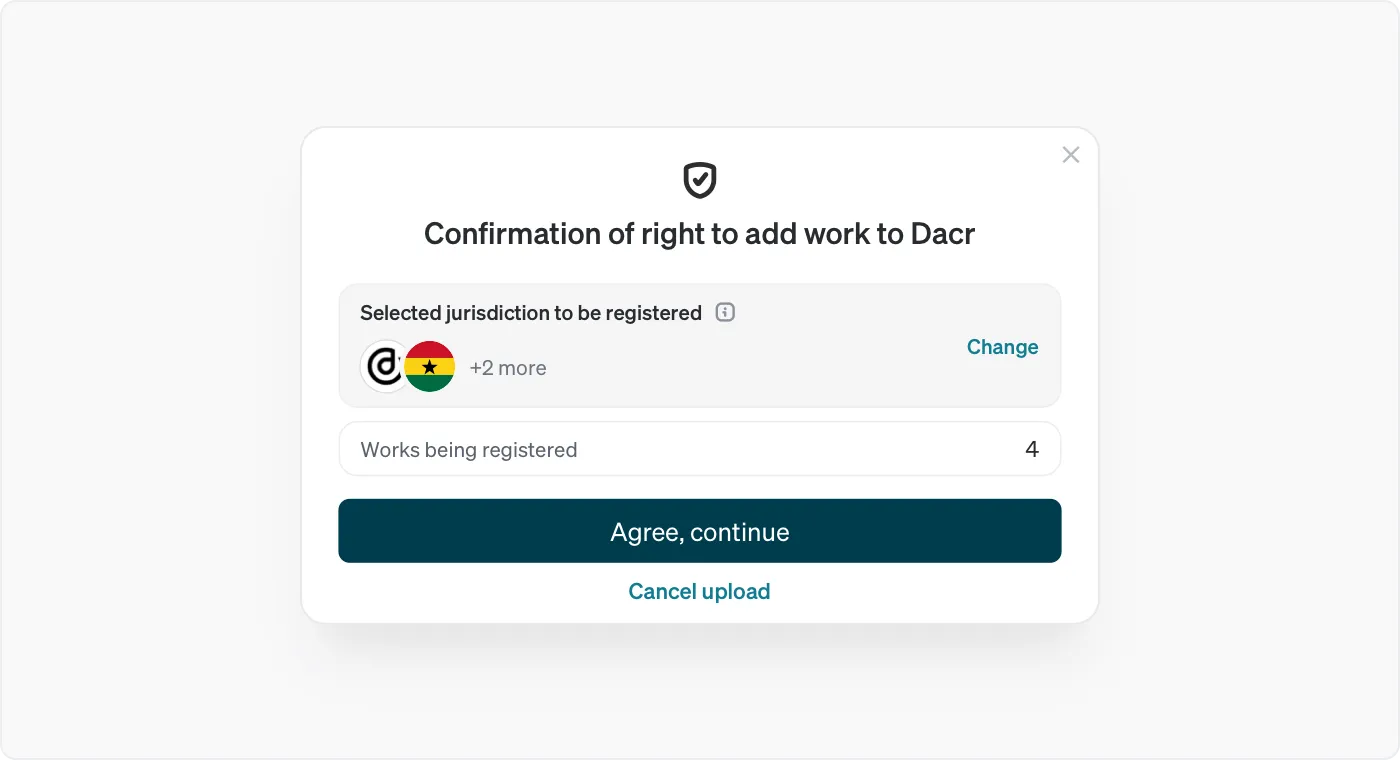
For a catalog with a clear commercial core, a hundred works covered properly is usually worth more than a thousand covered in one place.
Everything you register now carries today’s date
Registering a 2019 photograph today produces a 2019 photograph with a 2026 record. There’s no way around that and be clear-eyed about.
What it gives you is a fixed point from today forward. The alternative reasoning, that an imperfect record isn’t worth creating, is what keeps catalogs unregistered for another two years.
Uploading in groups, and what that actually does
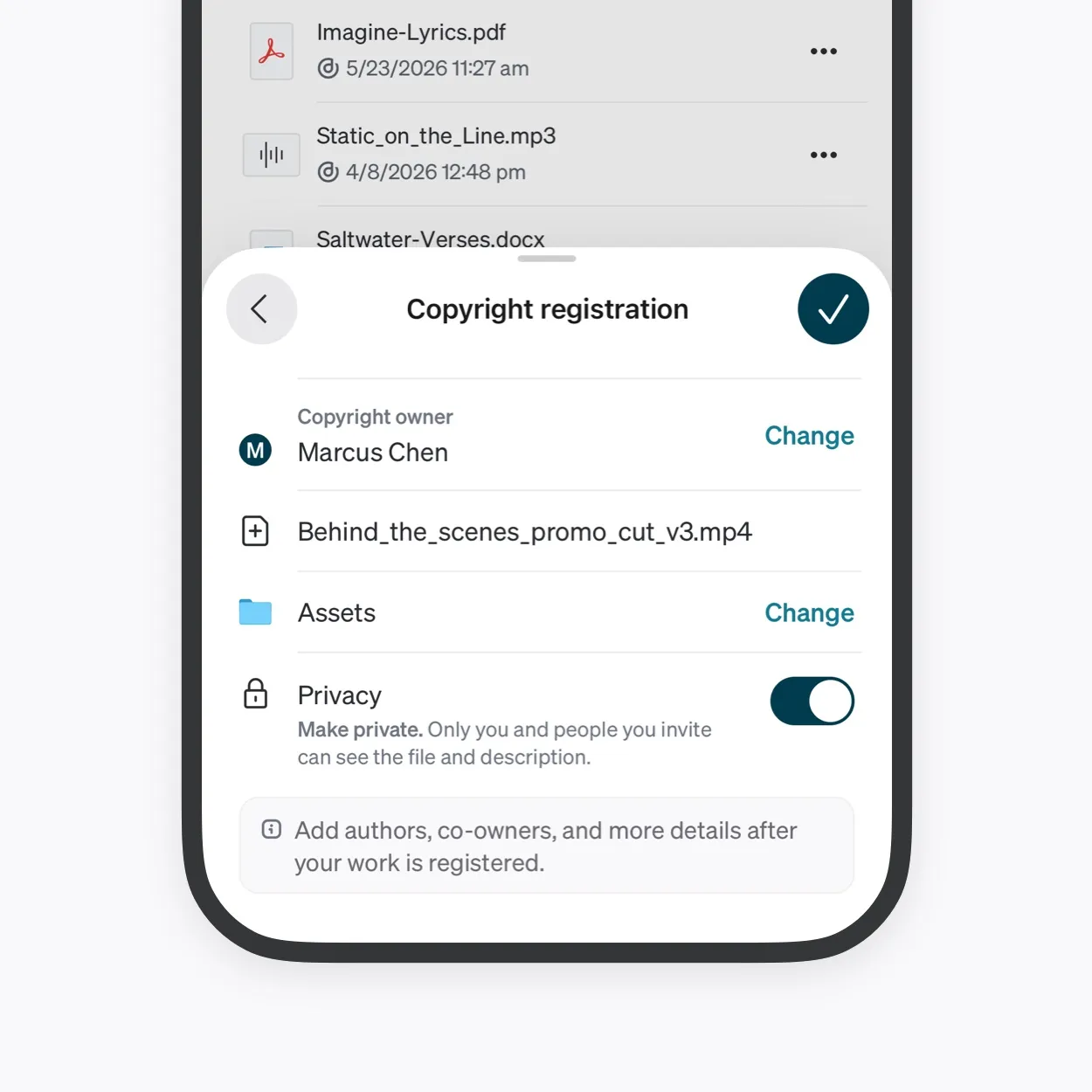
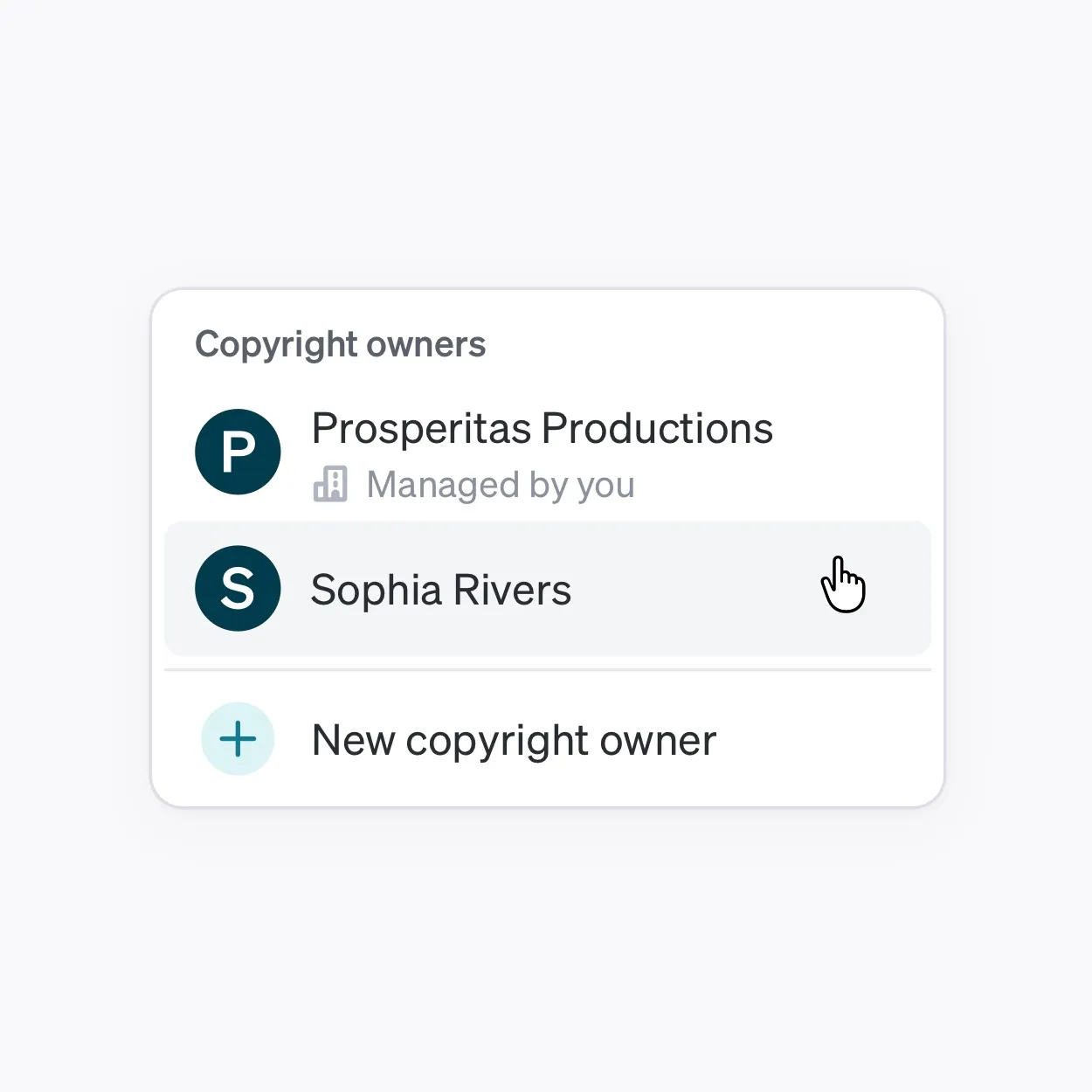
Select many files in one pass and the same owner, folder, jurisdictions and privacy get applied across all of them, which saves configuring each one. Each file still becomes its own registration.
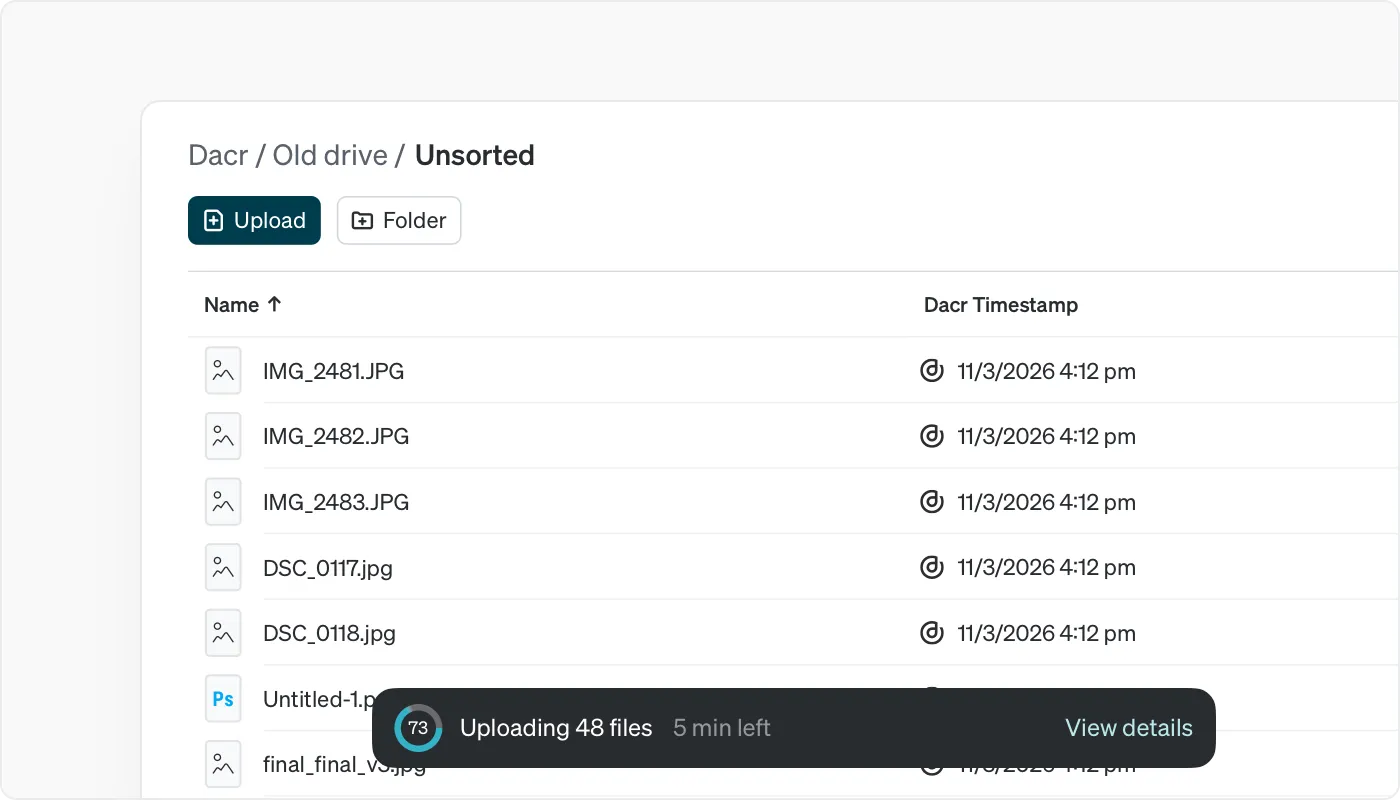
Group by how the work already clusters, a shoot, a release, a project, a client year, so the settings you apply are right for everything in the group. Build the folder structure as you go; you’ll know more after the third session than before the first, and registrations can be moved later in bulk.
Rename the ones that matter first
The filename captured at upload is permanent and public. The title is seeded from it and editable afterward, and whatever the file is called going in is what the record carries.
Renaming five thousand files isn’t realistic. Renaming the two hundred you’ll actually search for is, and those are the ones going into the top tier anyway.
Titles carry more weight than descriptions here, because search looks at the title. Write the description for whoever reads the record later. The title is what gets you back to it.
Deciding what to leave out
Most catalogs contain a long tail nobody will ever copy and nobody would pay for. Outtakes, abandoned drafts, client work that ran once in a local market eight years ago.
Leaving it unregistered is a decision rather than a gap. An exercise that ends with the commercially meaningful portion registered has done its job.
Start with one category
Pick a year, a client, or a release, and register that.
You’ll have a much better sense of the cost, the structure, and how long it takes after one session than after a week of planning it.