A documentary is shot years before it is finished. Interviews from 2024 sit on a drive while the story changes twice, funding falls through once, and an edit finally begins in 2027.
During those three years the footage exists, has value, and isn’t recorded anywhere as yours.
The gap between shooting and finishing is the problem
On most work, registration happens near the point of delivery. Documentary breaks that, because delivery is years away and the material is valuable long before then.
Interview footage gets shared with a commissioning editor, cut into a funding trailer, sent to a co-producer, licensed to a news outlet when the subject becomes topical. Each of those is the footage leaving, and each happens long before the film exists.
Registering as you shoot means the record sits close to when the material was made, rather than close to when you finally finished.
Register per shoot, not per card
Rushes are enormous and mostly not the work. A three-hour interview isn’t three hours of anything anyone will use.
Register the selected material from each shoot: the interview as you would keep it, the key sequences, anything you would be able to describe as a piece of footage rather than a card dump.
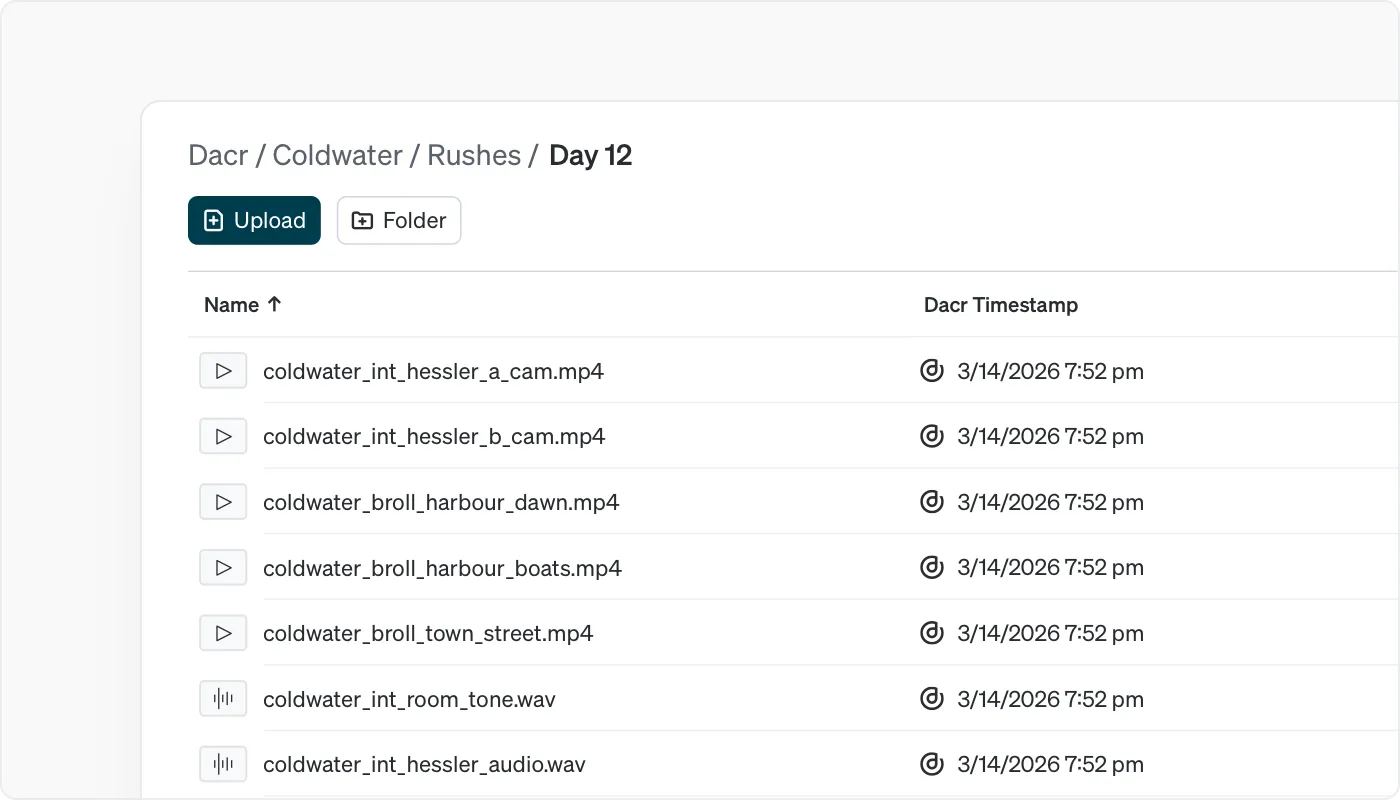
Each file is its own registration, so the sensible unit is the shoot rather than the frame. A day with one subject and four setups is a handful of registrations, not four hundred.
File by subject and date, and mean it
You will be searching this material in four years, possibly with an editor who wasn’t there.
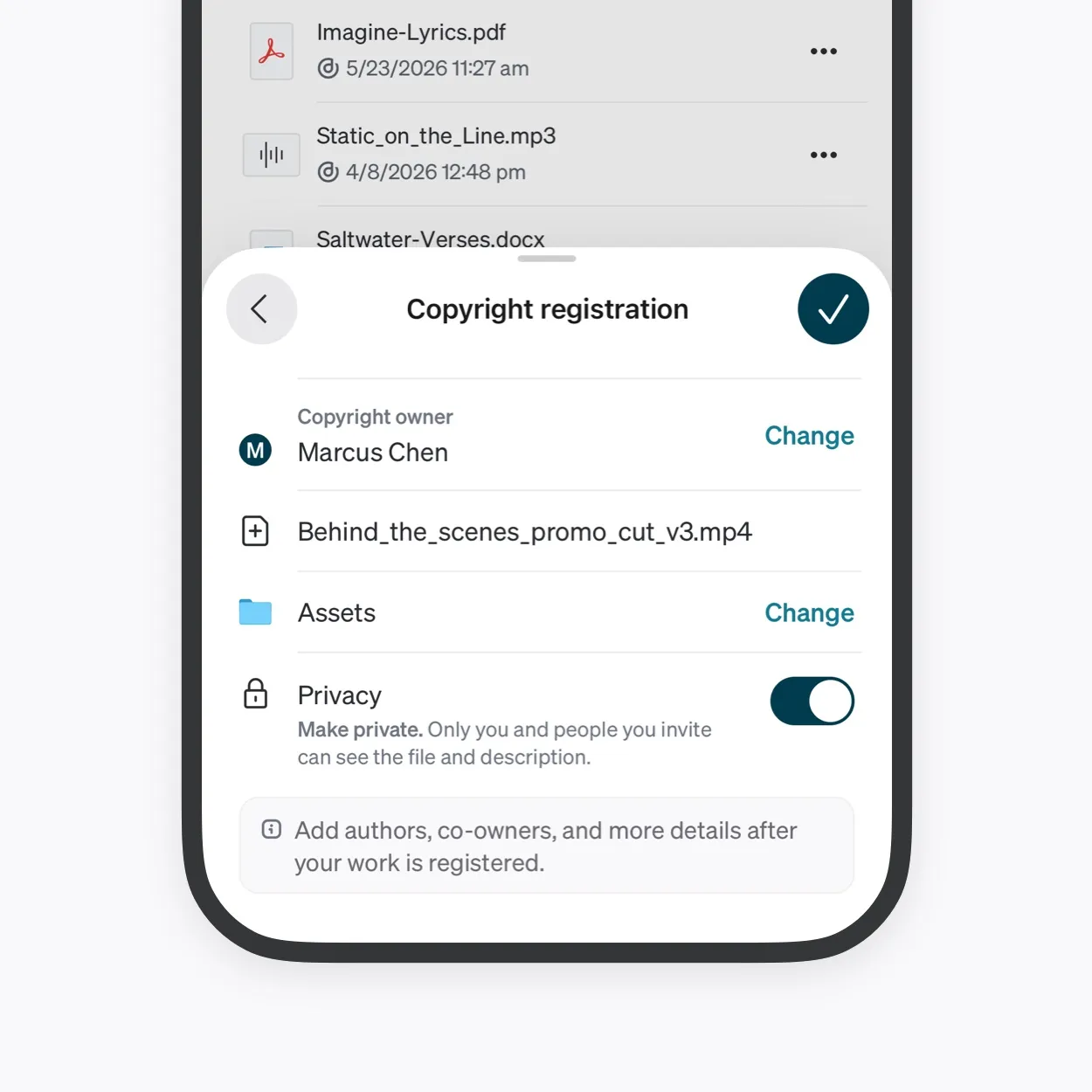
The filename you upload is permanent and stays publicly visible, and the filename becomes the record’s starting title. Search looks at the title, which makes naming the difference between finding the second interview with a subject in a minute and scrubbing through drives.
Subject, location and date is the convention that survives. Titles can be edited afterward, so a project you started naming badly can be improved.
Keep it private, for reasons beyond your own
Documentary subjects agree to be filmed for a project, not to appear on a public record while the project is unmade.
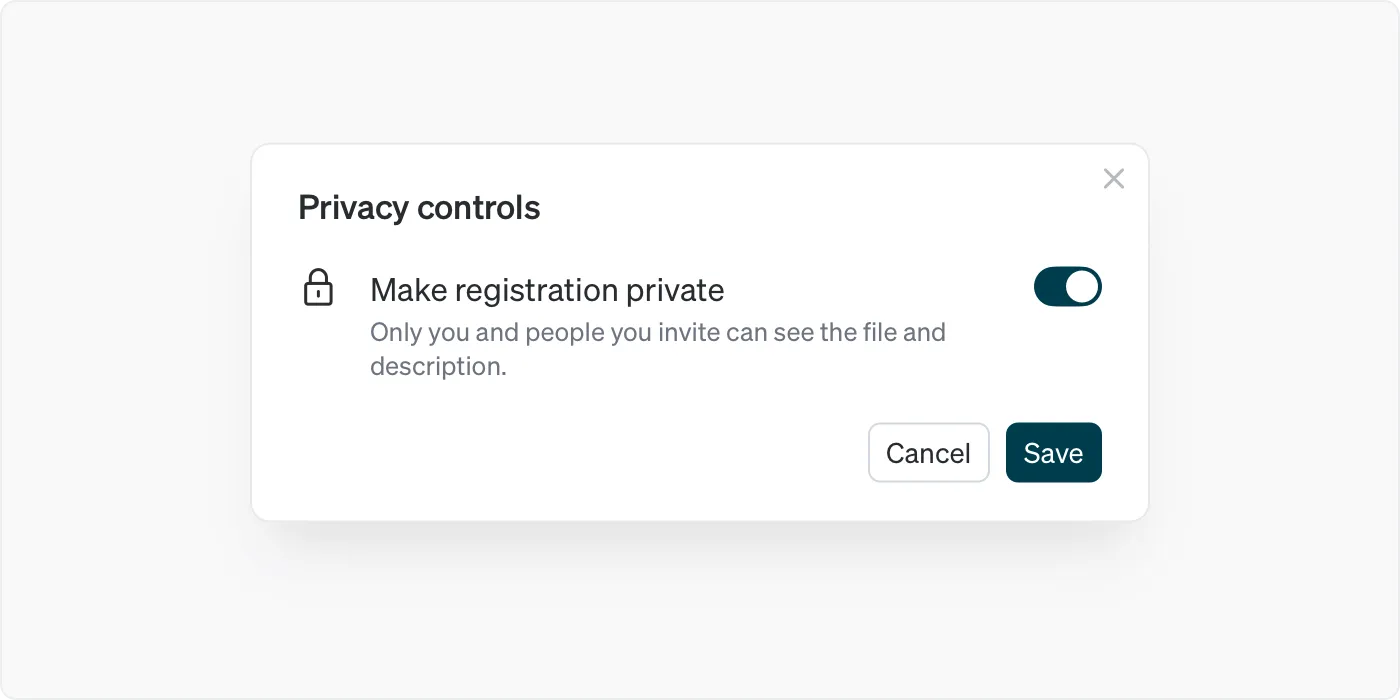
A private registration hides the footage and the description. Ownership, authorship, the timestamp and the filename stay publicly verifiable, which matters when a subject’s name would otherwise sit in a filename on a public page. Use initials or a code where the subject is sensitive.
Set your default file privacy to private if you work this way, rather than deciding it shoot by shoot over three years.
Ownership is set by how the film is financed
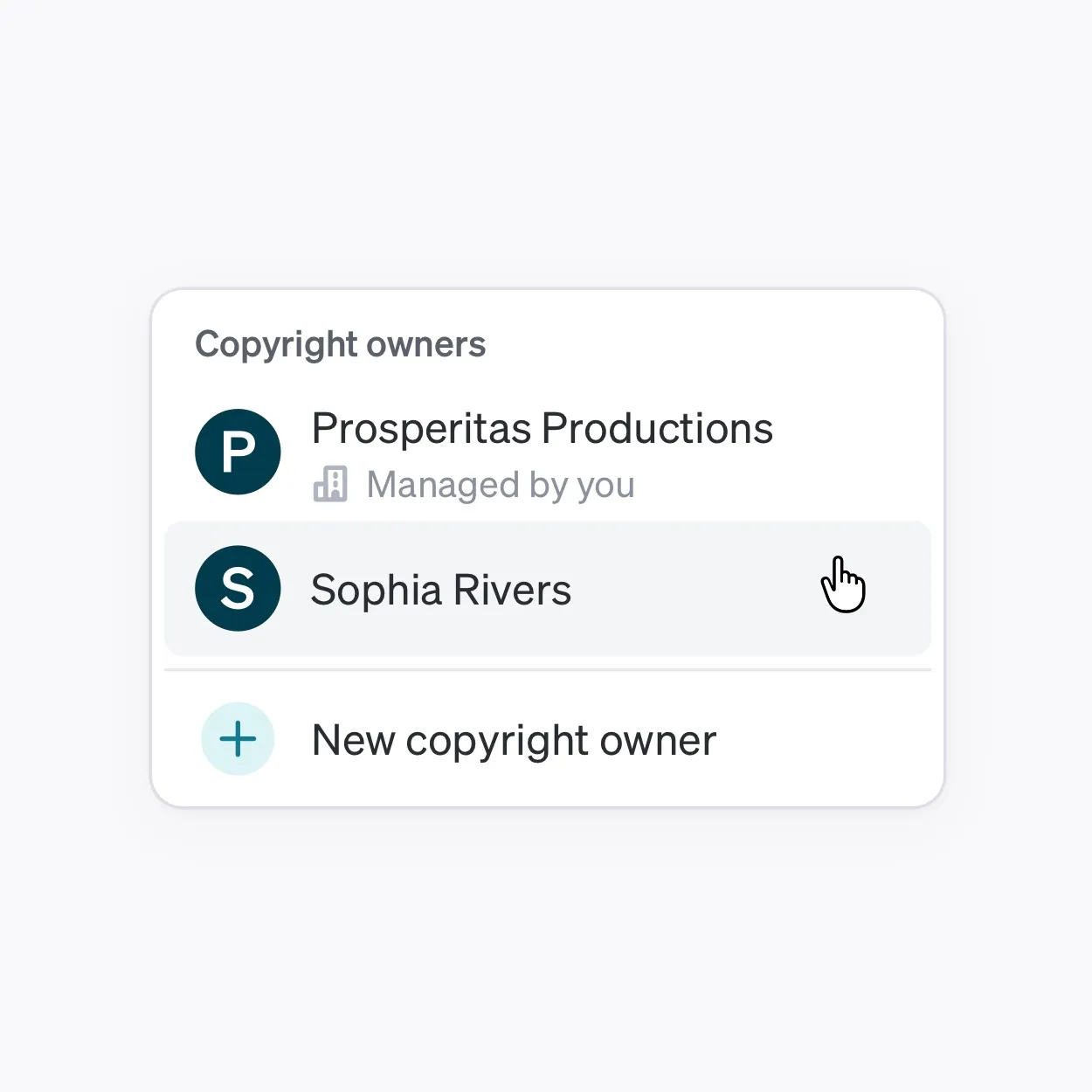
Documentary ownership varies more than almost any other form. A self-funded film is usually the director’s. A commissioned film often belongs to the broadcaster or the production company. Co-productions split it, and grant conditions sometimes attach terms of their own.
Register under whichever owner the arrangement names, and get it right at the point of registering, since the principal owner can’t be edited afterward and changing it means selling or reassigning the registration.
Where financing arrives partway through a project you began yourself, the footage shot before that point and the footage shot after may sit under different owners. That is worth understanding when you sign, not when you deliver.
Credit the people who shot it
Camera operators, sound recordists, fixers, translators, researchers. On a long project the crew changes and by the end nobody remembers who was on which shoot.
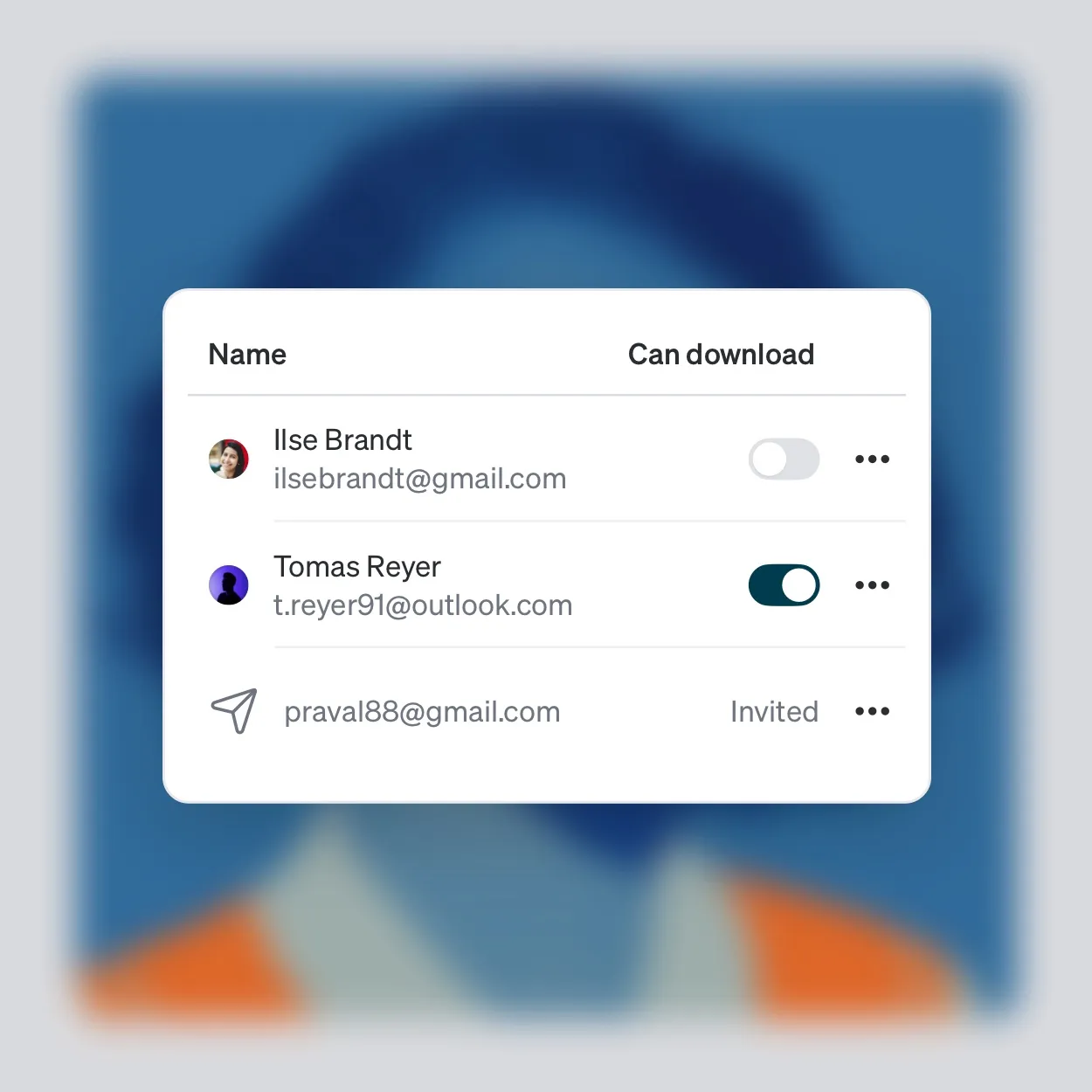
Authors can be added at any time, so record them as each shoot is registered rather than reconstructing a crew list at the edit. That list is also what your end credits are built from, and assembling it in 2027 from memory is how people get left off.
The footage has a life after the film
Documentary rushes get licensed. A subject becomes newsworthy, an archive wants material, another film needs a sequence you shot.
That is a real revenue line for long projects, and it depends on being able to say what you shot, when, and that it is yours. A record made at the time of the shoot is what makes that conversation straightforward five years later.