A character isn’t a drawing. It’s a model sheet, a turnaround, an expression sheet, two hundred poses, and a personality that only exists across all of them.
That’s what makes characters worth licensing, and it’s what makes the registration question harder than it is for a single illustration. There’s no one file that is the character.
Register what defines it, not everything it appears in
Each file is its own registration, so registering every drawing a character has appeared in isn’t the goal. Concentrating on the material that defines it produces a stronger record than volume would.
What you want on record is the defining material: the model sheet, the turnaround, the expression sheet, two or three key illustrations that establish the design, and the bible or style guide if one exists. That’s the set a licensee will actually be shown, and the set anyone copying the character would have to have seen.
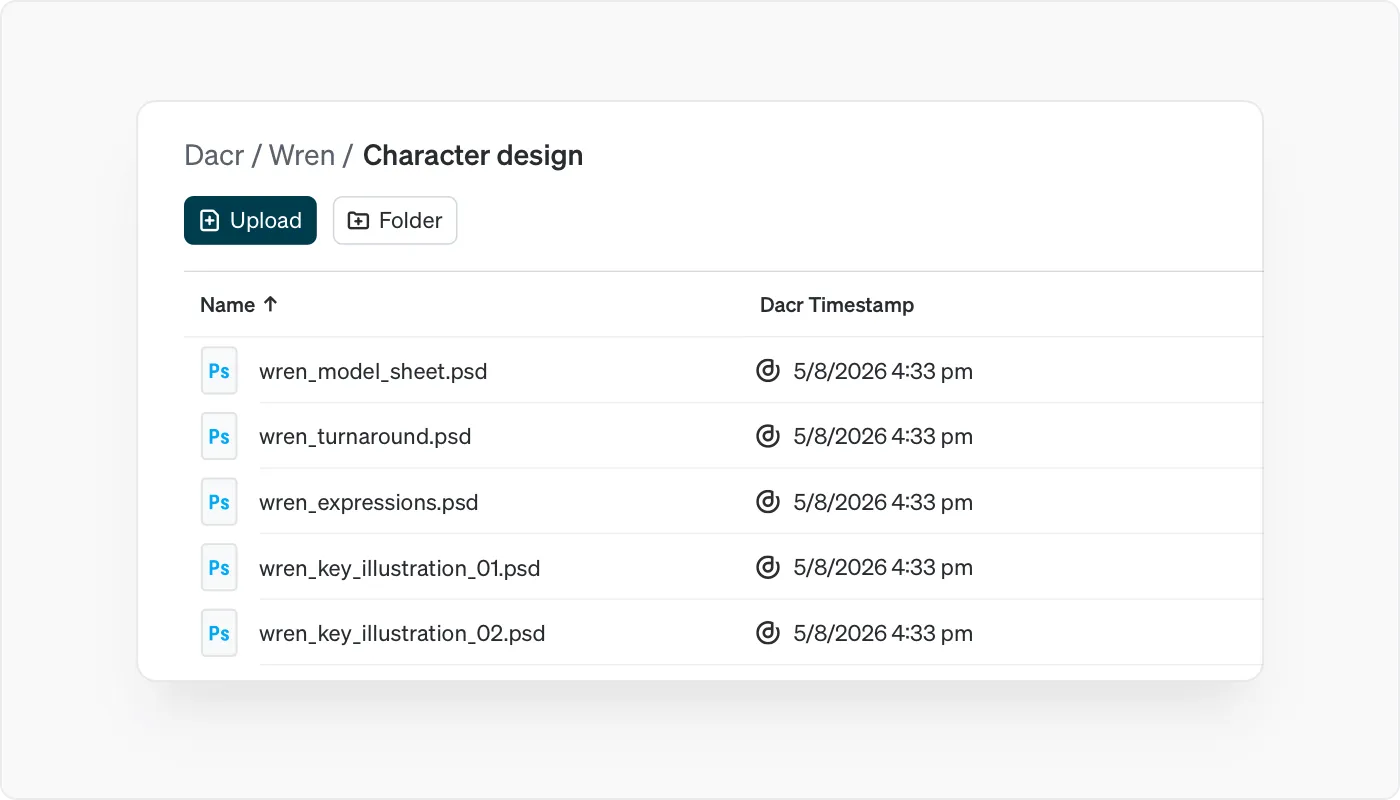
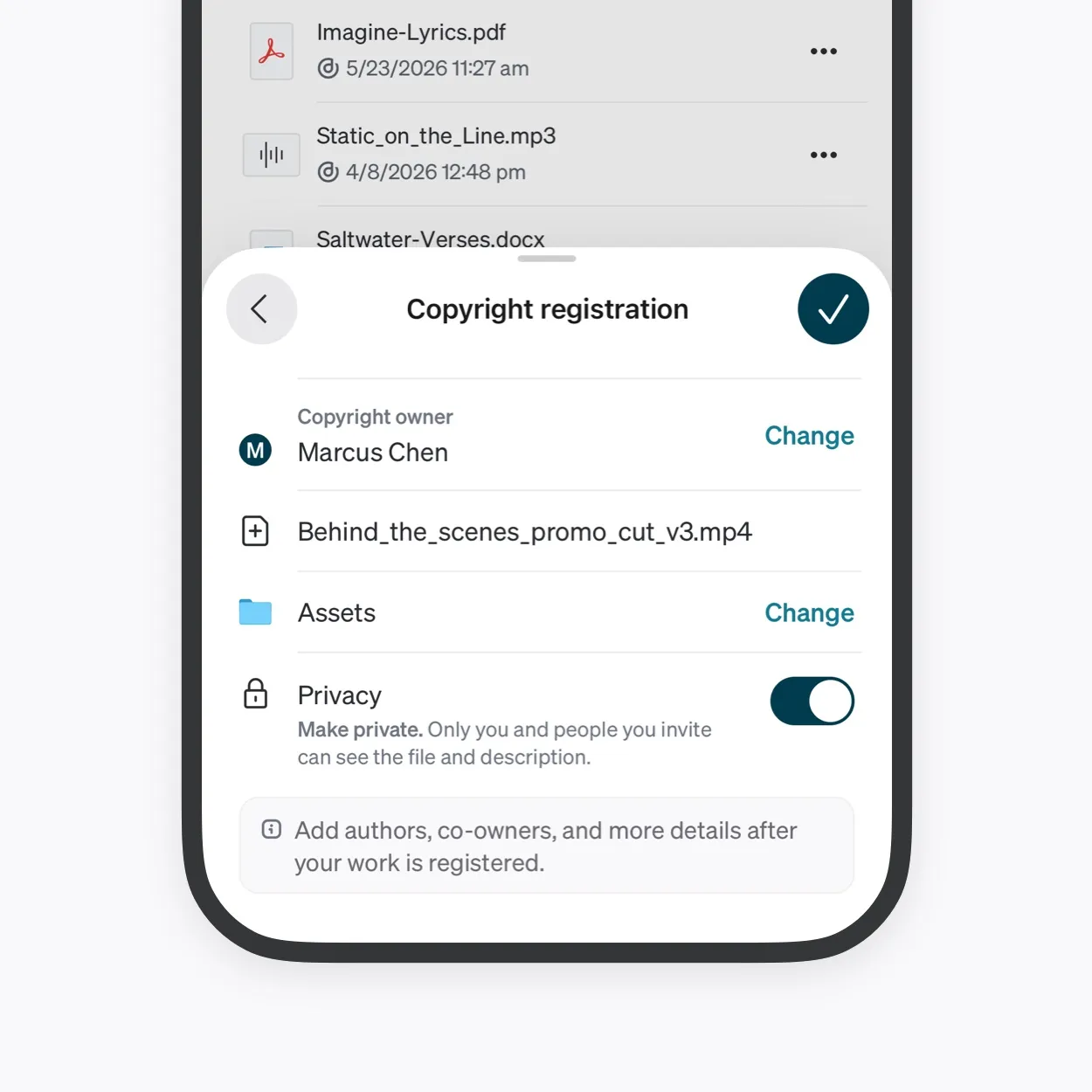
File it by character. Everything the character subsequently appears in, new poses, scenes, merchandise artwork, a second book, goes in the same folder, so the character exists in your catalog as a body of work rather than scattered through four years of general illustration.
Register before the conversation, not during it
Licensing discussions move quickly once they start, and the early stage involves sending material to people deciding whether to invest.
The first substantive question is almost always some version of what exactly would we be licensing, and are you in a position to license it. Arriving with that documented is a different footing from assembling it while a licensing manager waits.
It also matters that the record predates the conversation. A registration dated the week after you first emailed a publisher is a weaker artefact than one dated eight months before, and the difference costs you nothing if you register as you design.
What different licensees ask for
Publishing wants to know you own the character and the artwork, and usually cares about the bible.
Merchandise and toy licensing cares about the turnaround and the model sheet, because those are what a manufacturer works from. Animation cares about the expression sheet and any rig-adjacent material. A brand collaboration may only want a single approved illustration.
Registering the defining set covers all of them. Registering only your favourite finished illustration covers the last one and leaves the rest thin.
Send the record before you send the art
For an initial approach, the registration’s public page shows the work is yours without sending artwork at all.
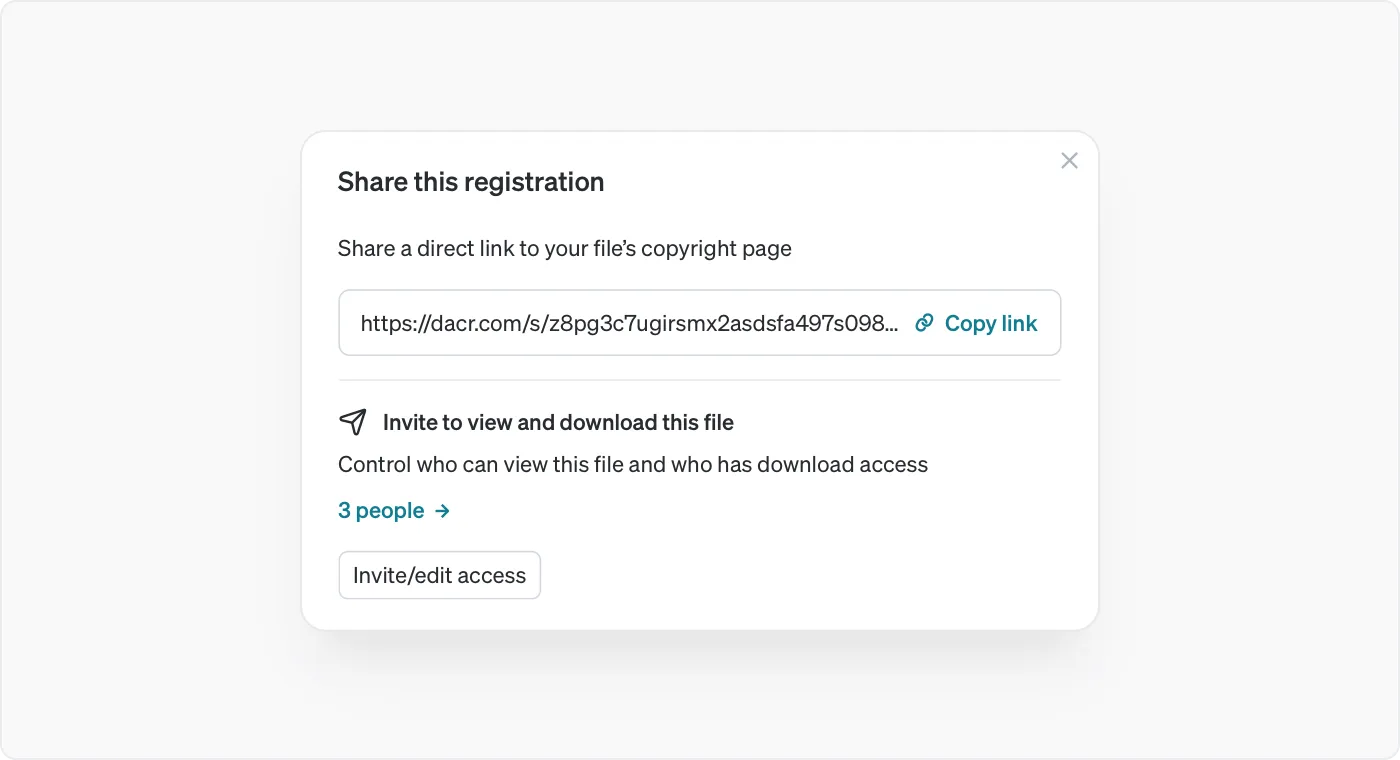
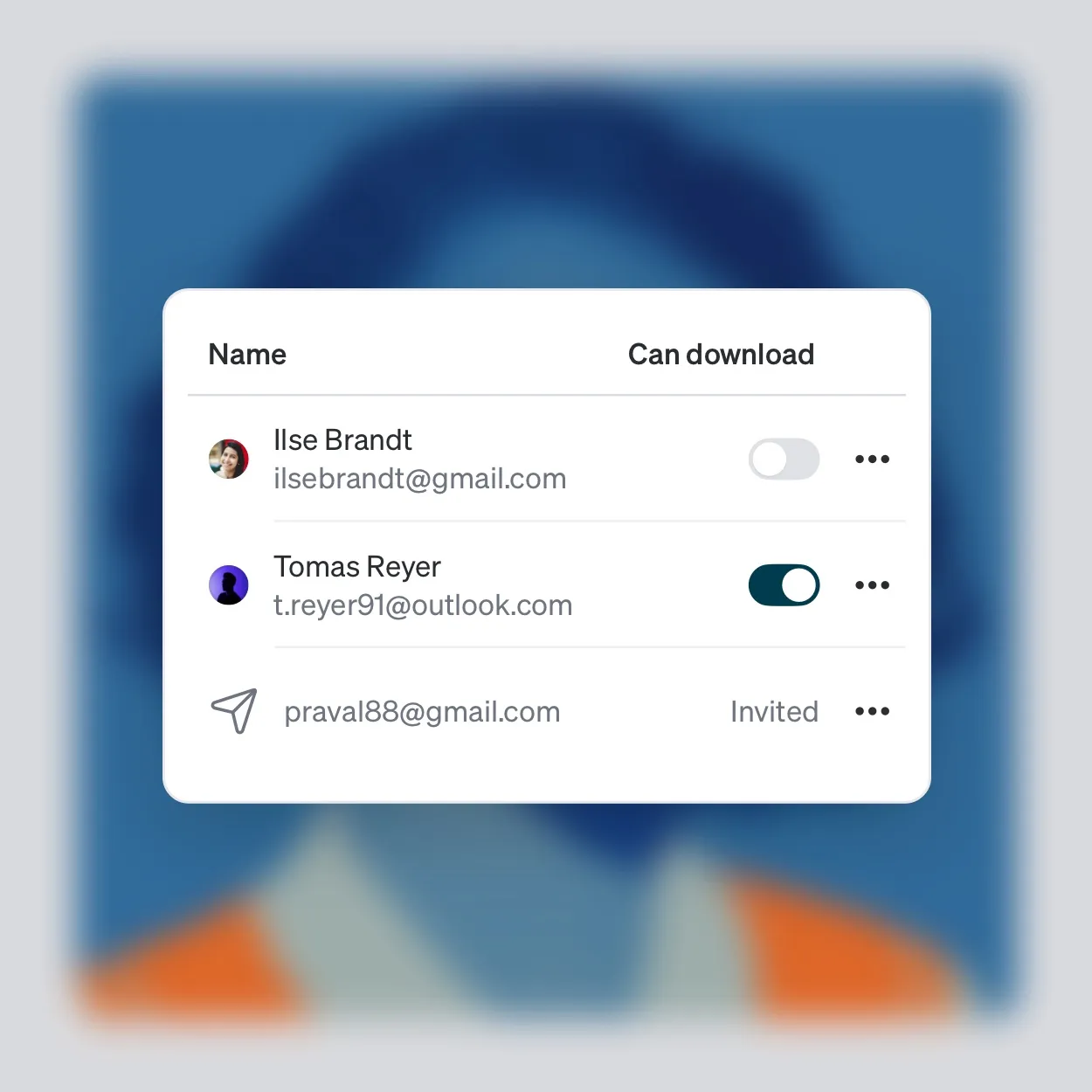
When they need to see the material properly, invite them rather than attaching a folder. Downloading starts switched off, which is the state you want while a prospective licensee is still deciding. They can look at the model sheet without a copy of it ending up in a deck at their end.
Once a deal is real, that changes and they’ll need files. The point is that it changes deliberately rather than at the first email.
What registering the artwork actually covers
Registering your character artwork records those works, their authorship, and their ownership. That’s solid ground.
How far protection extends around a character as a concept, across different drawings, different media, or a similar character someone else creates, varies by jurisdiction and is genuinely complicated. If a character is becoming commercially significant, that’s worth proper advice rather than an assumption.
Trademark is often the other half of this, particularly for names and for anything heading toward merchandise, and it’s a separate system with its own requirements and its own filings. A licensee’s lawyers will ask about both.
Keep registering as the character develops
A character designed in 2023 and substantially redesigned in 2026 is two sets of material. Register the redesign rather than assuming the original covers it. The version being licensed is the version that needs a record.
The same applies as the world grows. A supporting cast, a setting, a format for a series: each is its own body of work, and a licensing conversation will treat them separately even if you’ve never thought of them that way.
Practically, this means adding to the character’s folder whenever a redesign or a significant new element lands, rather than doing it once when a licensing conversation starts. By then you’re registering under time pressure, which is when things get missed.