A fashion shoot runs on a crew. A stylist who sourced and built every look, a hair and makeup team, a set designer, a digital tech, an assistant or three, a retoucher who works on the images for a week after everyone else has gone home.
On the published page some of them get a credit line. On the files, historically, none of them exist anywhere.
Ownership and credit are separate lists
A registration records owners, the parties holding rights, and authors, the people credited with creating the work. They are different fields and they do different jobs.
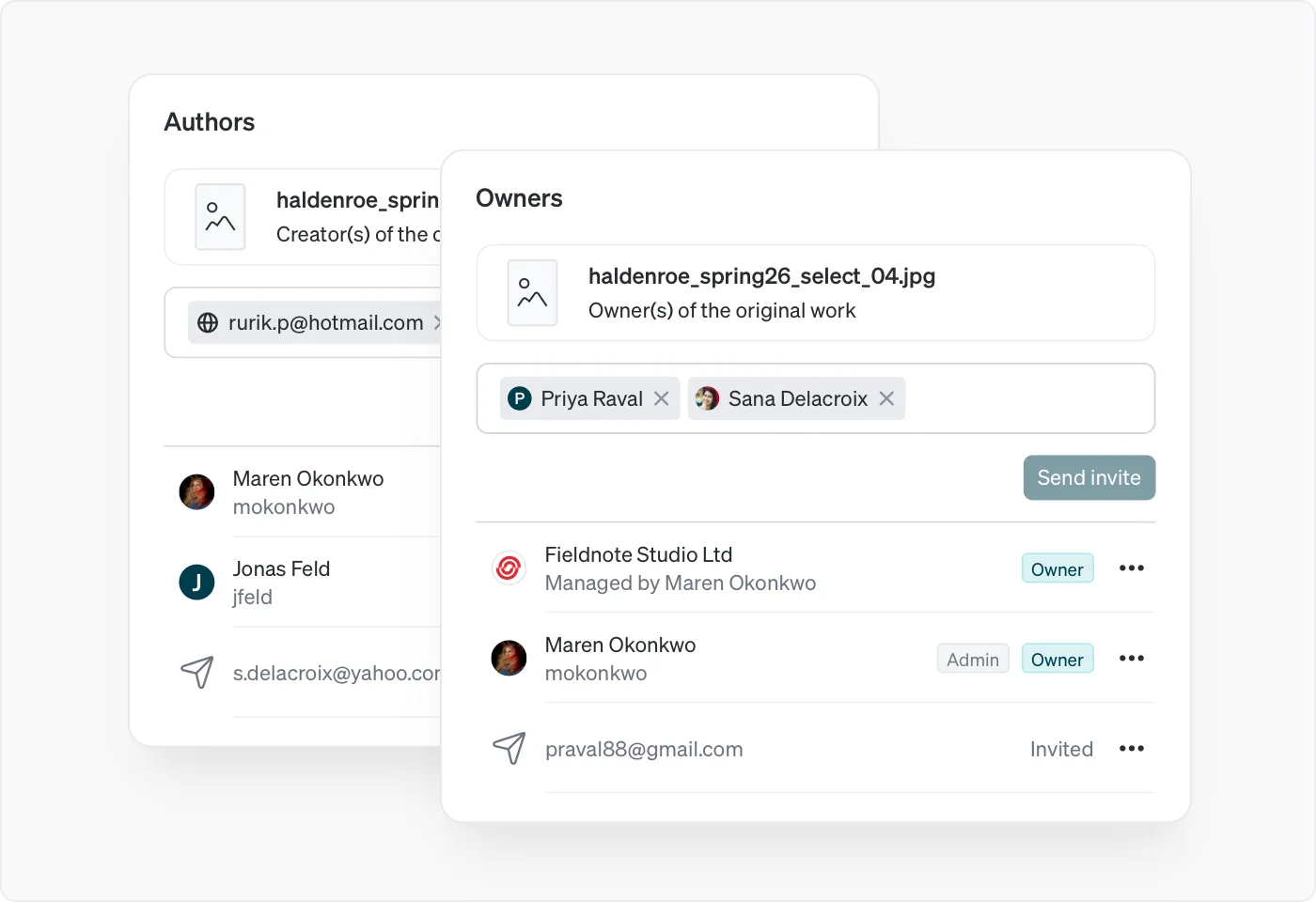
In most fashion work the photographer or their company owns the images, or the client does under the commissioning agreement. The crew are authors: their contribution is recorded without implying they own anything.
Which means crediting a stylist costs you nothing in ownership terms. That matters, because the assumption that it might is why a lot of contributor credit never gets recorded anywhere durable.
The distinction is long established. Article 6bis of the Berne Convention gives an author the right to claim authorship of a work independently of the economic rights, and even after those rights have been transferred. Credit and ownership were never the same thing.
Who belongs on the author list
People whose work shaped the images. The stylist, hair, makeup, set design, the retoucher, and assistants who did more than carry things.
The author list records who was involved. The specific roles belong where they always have, in the credit block that runs with the story.
Authors can be added at any time, so the list doesn’t need to be finished on the shoot day. A retoucher who joins the following week can be added then, and often that is more accurate than guessing in advance.
Register the delivered images, and be deliberate about the take
A shoot day might produce two thousand frames. The images that exist afterward are the twelve to twenty that get retouched and delivered.
Register those. They are what runs, what gets reposted, and what a client or a magazine holds.
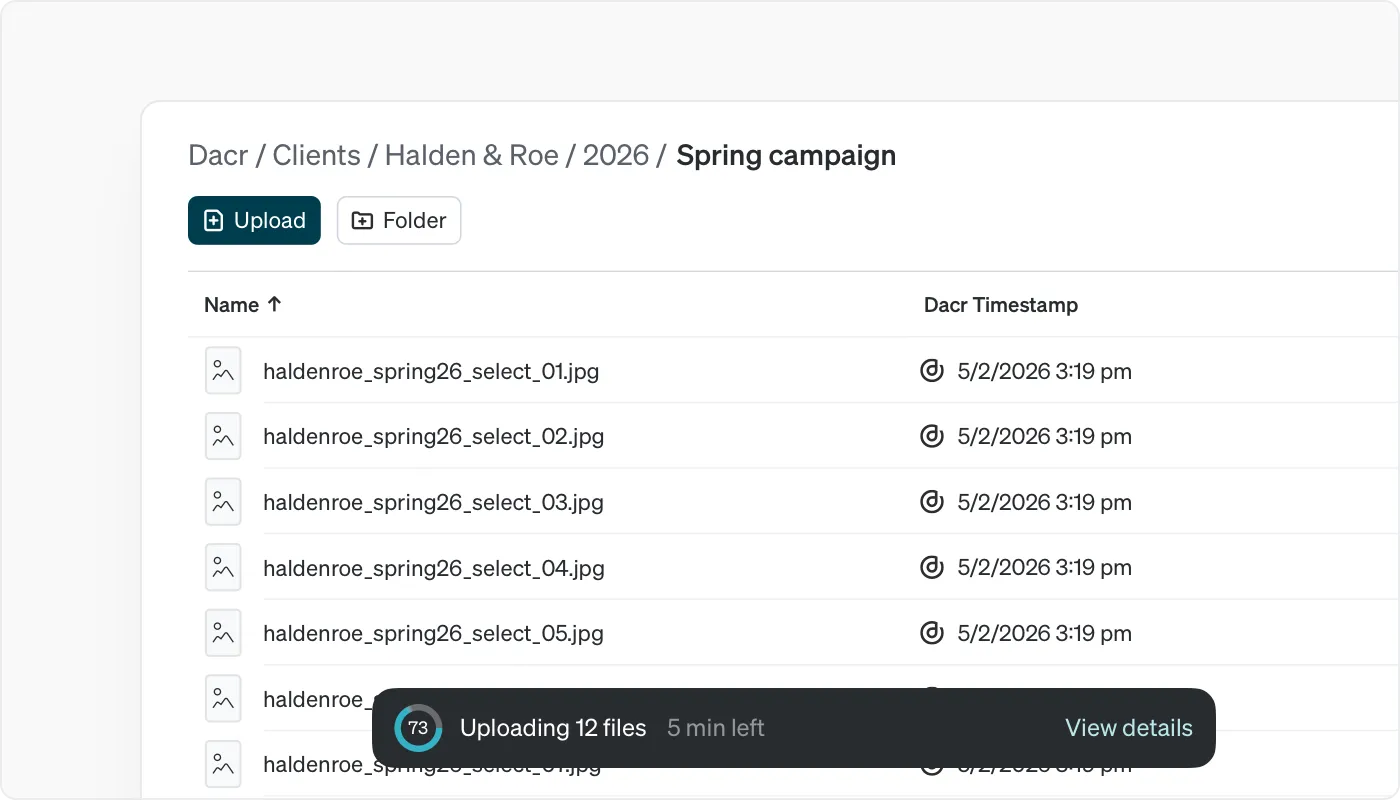
Registration is priced per work, so you decide how much of a shoot goes on the record. The delivered edit is the sensible unit for most jobs, with unpublished outtakes worth covering separately if you plan to use them later.
Editorial and commercial are different arrangements
An editorial for a magazine and a campaign for a brand look similar on the day and are governed by very different agreements.
Editorial usually leaves ownership with the photographer and licenses publication. Campaign work frequently transfers ownership, or licenses it so broadly that the distinction is academic.
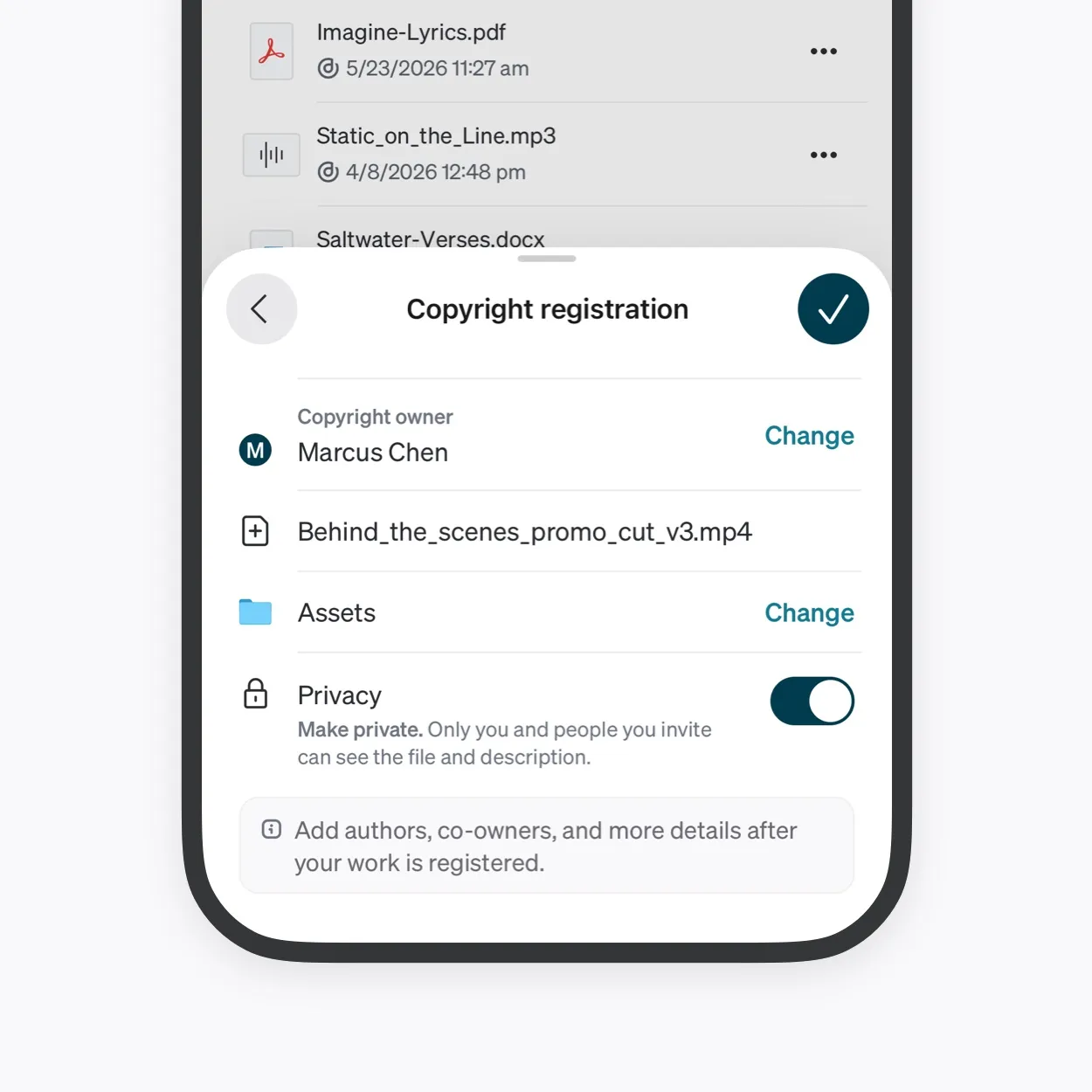
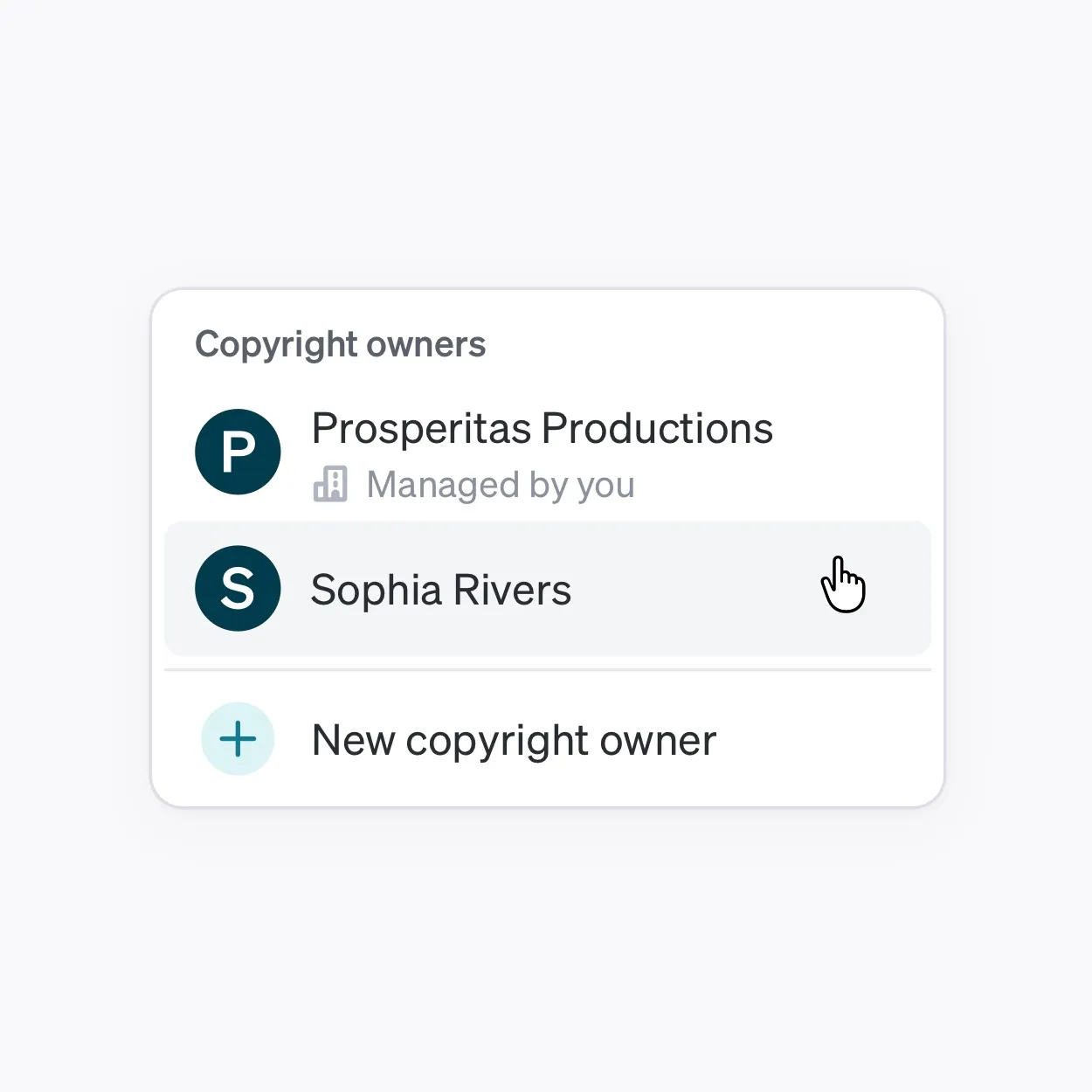
Register under whichever owner the agreement names. This is the moment it matters, because the principal owner can’t be edited afterward and changing it means selling or reassigning the registration. If you shoot both kinds of work, the owner you have selected should be checked at the start of a job rather than assumed.
Private until publication
Fashion runs on release dates, and a shoot is often under embargo until the issue lands or a campaign goes live.
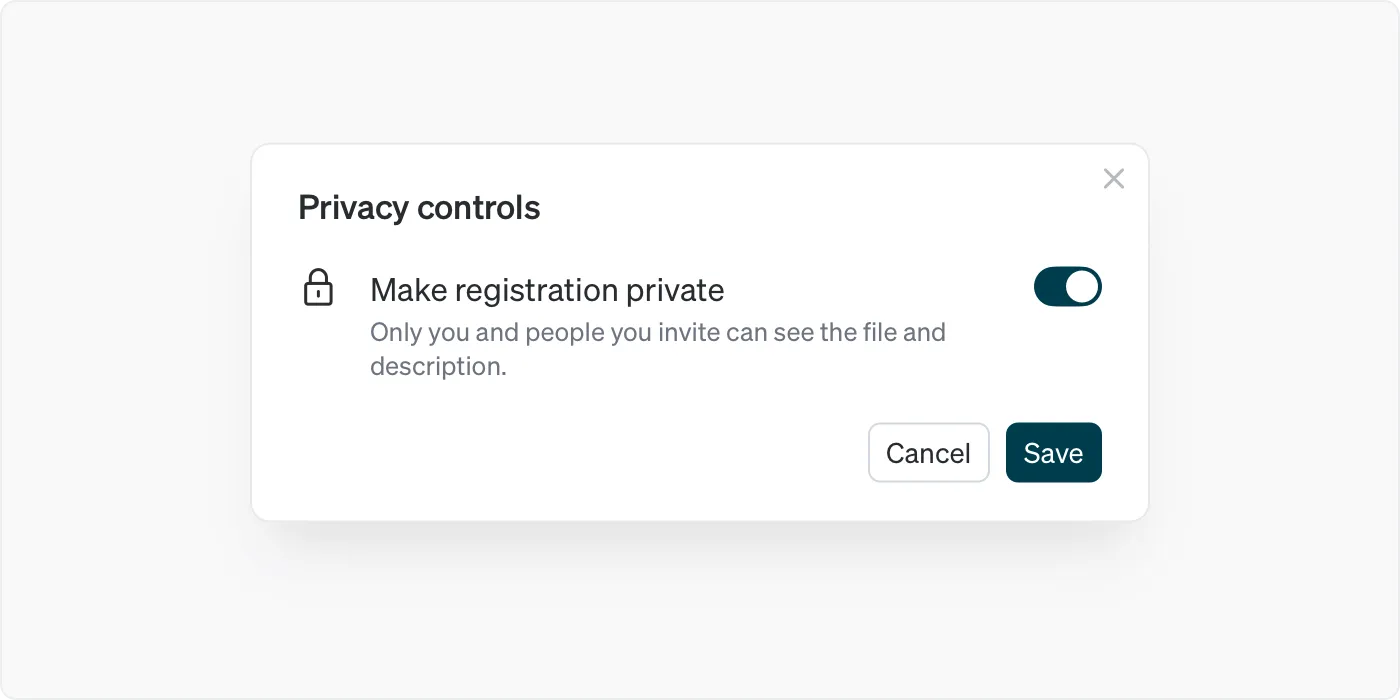
A private registration hides the images and the description. Ownership, authorship, the timestamp and the filename stay publicly verifiable, so name files without the brand or the title of the story if the work is unannounced.
Make the registrations public when the work runs, individually or across a selection.
Why the crew record is worth having
Two reasons, neither of them adversarial.
Credit gets lost. A story is reposted without its credit block within hours of publication, and a stylist trying to evidence their own portfolio three years later is relying on a magazine’s archive being intact and searchable. A dated record naming them is more durable than that.
And it is accurate. Fashion images are made by teams, and a record that names one person implies something about how the work was made that everyone on the shoot knows isn’t the case.
Telling the crew you have done it is the part that lands. It costs a message and it is remembered.