Two works turn up similar enough that someone will have to explain. Both parties are certain they got there first, and both are probably being honest, independent creation is common and memory is generous.
What settles it is rarely conviction. It’s whose record is older and what that record shows.
What a registration date establishes
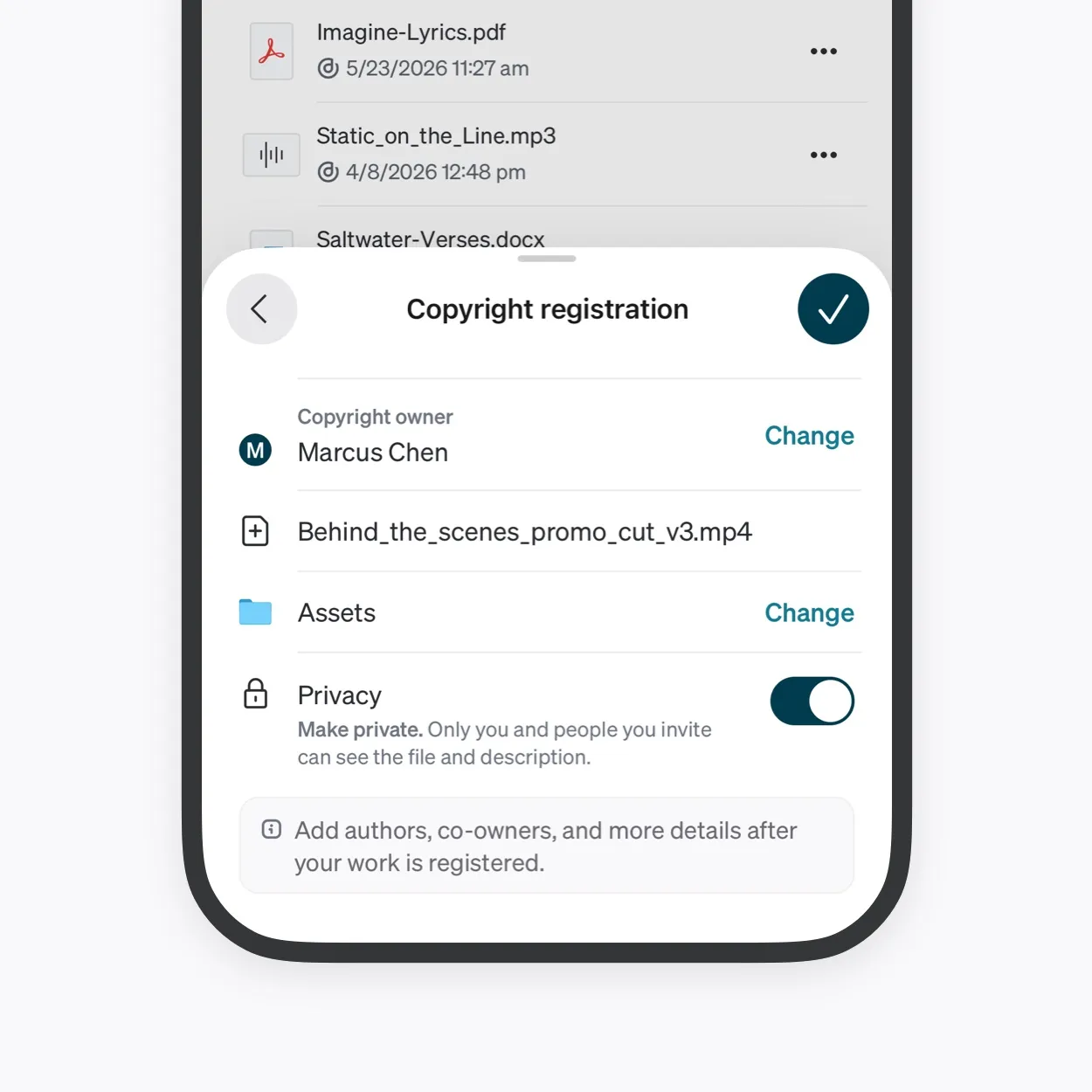
A registration made on a particular date records that the work existed in that form, under that owner, on that day. A fixed point that doesn’t depend on anyone’s recollection.
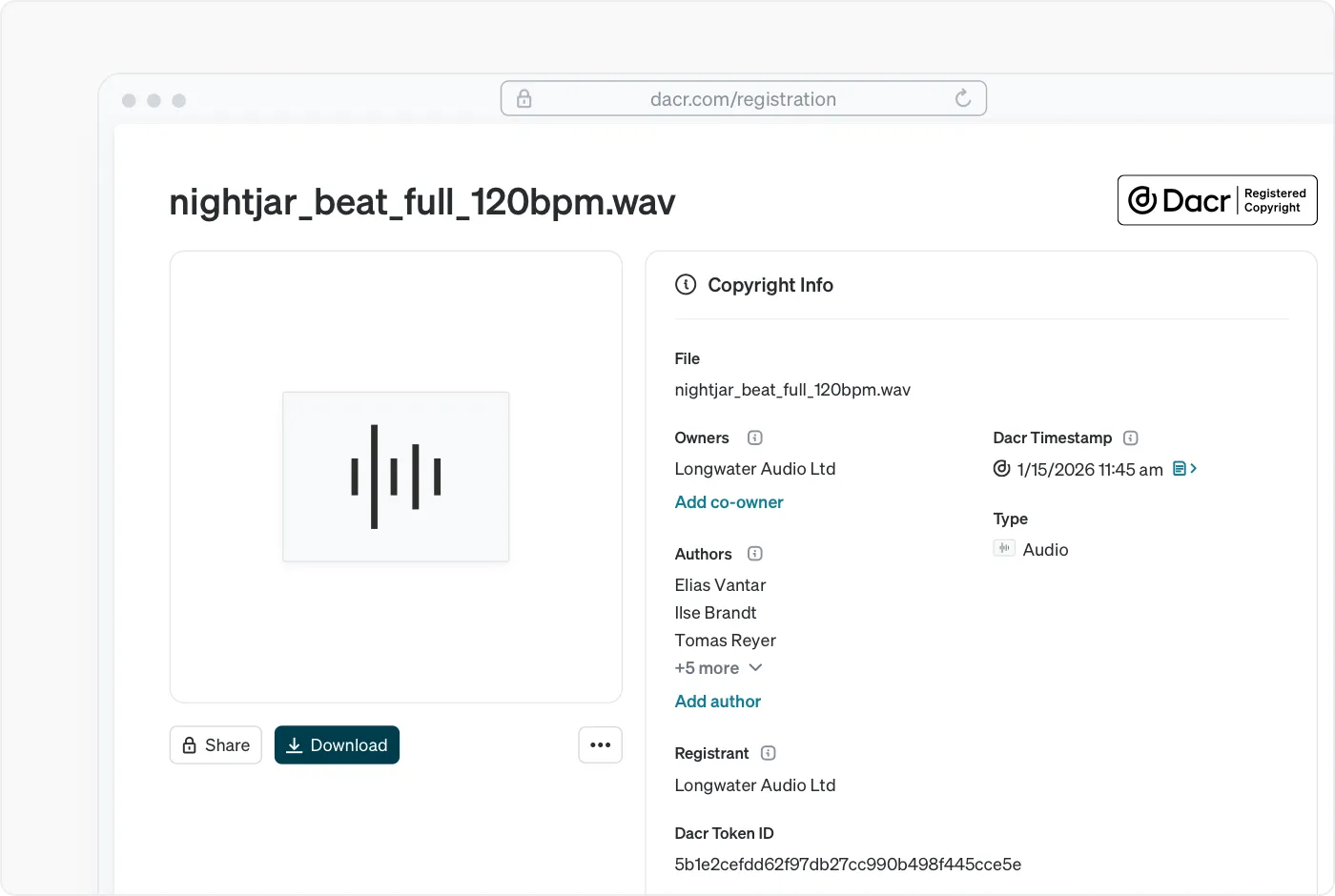
It doesn’t establish when you created the work. You may have made it two years before registering, and the registration says nothing about that. It also doesn’t rule out that the other party made theirs earlier and registered later, or never registered at all.
What it gives you is the earlier fixed point. A real advantage in a dispute, and not the same as a conclusion.
Why the gap costs you
All of which argues for closing the distance between finishing something and registering it.
Work registered the week it was made carries a date close to when it actually existed. Work registered three years later, after a problem appeared, carries a date that says as much about when you got worried as about when you created anything. Anyone assessing the situation can see that.
This is the whole case for registering on a routine rather than in response to something.
What supports the timeline
Registration is the fixed point; the rest is corroboration. Working files, dated correspondence, briefs, delivery emails, publication history. Each speaks to when the work came together.
Keep them findable, filed in step with the registration rather than scattered across drives and inboxes. Assembling this under a deadline is much harder than keeping it in order as you go.
Whether it holds together is a legal question that depends on where you are and what’s disputed. That’s a conversation to have with the material already assembled.
Check the docket while you’re there
If the other work is itself registered with Dacr, the match may already have been flagged. Comparison runs automatically against everything already registered, on every account, whenever anything new comes in.
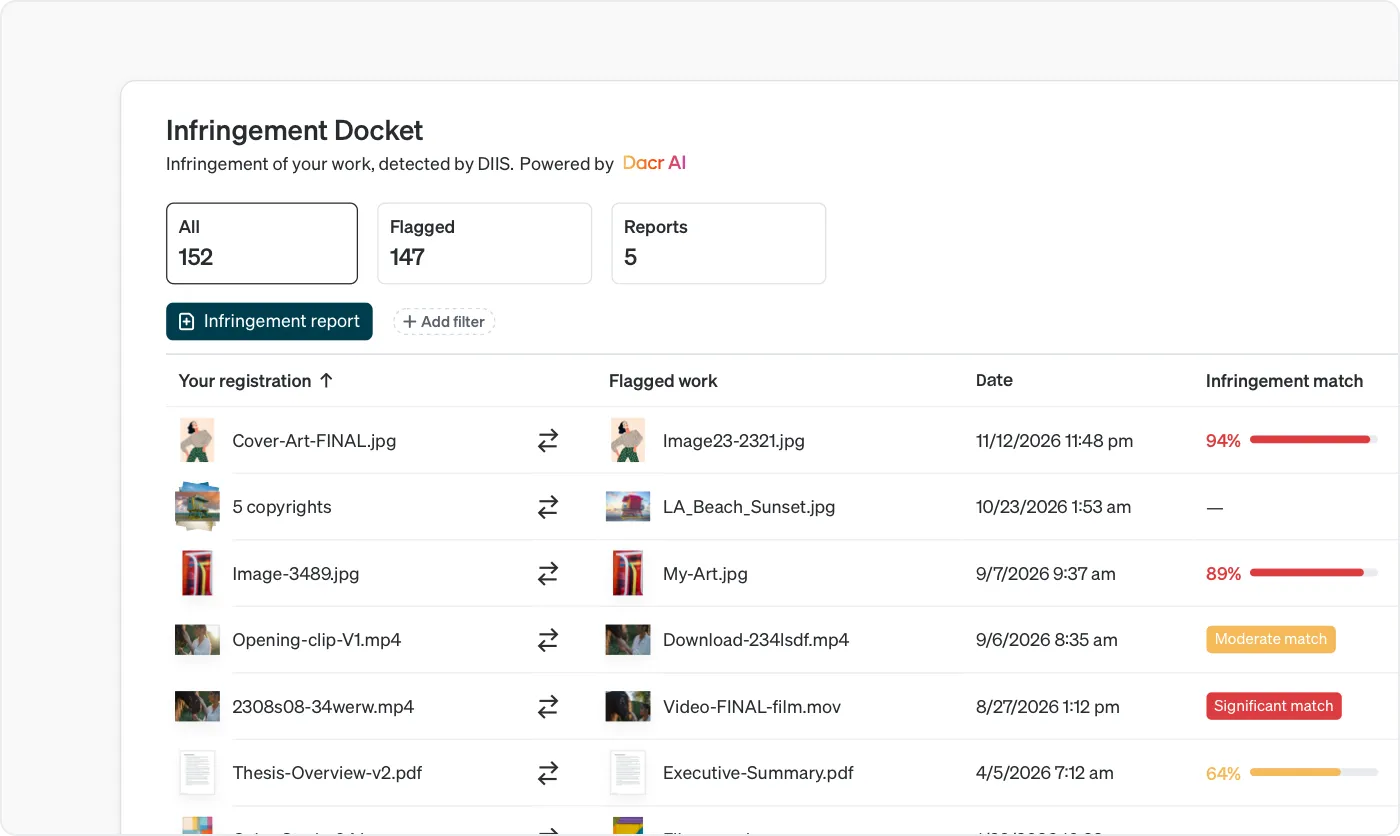
It covers work registered with Dacr, so it’s worth a look before you assume there’s no record.
If this is happening now
Register the work today. It won’t reach back, and it beats an unregistered position.
Then gather your files and correspondence, and don’t argue the timeline over email while you’re still working out what you can show.