An A&R inbox isn’t a considered place. Tracks arrive in volume, most get thirty seconds, and a transfer link that expired four days ago gets nothing.
So the question isn’t only how to protect a track you’re pitching. It’s how to send something that survives that inbox while the audio stays with you.
What a registration link does in a pitch
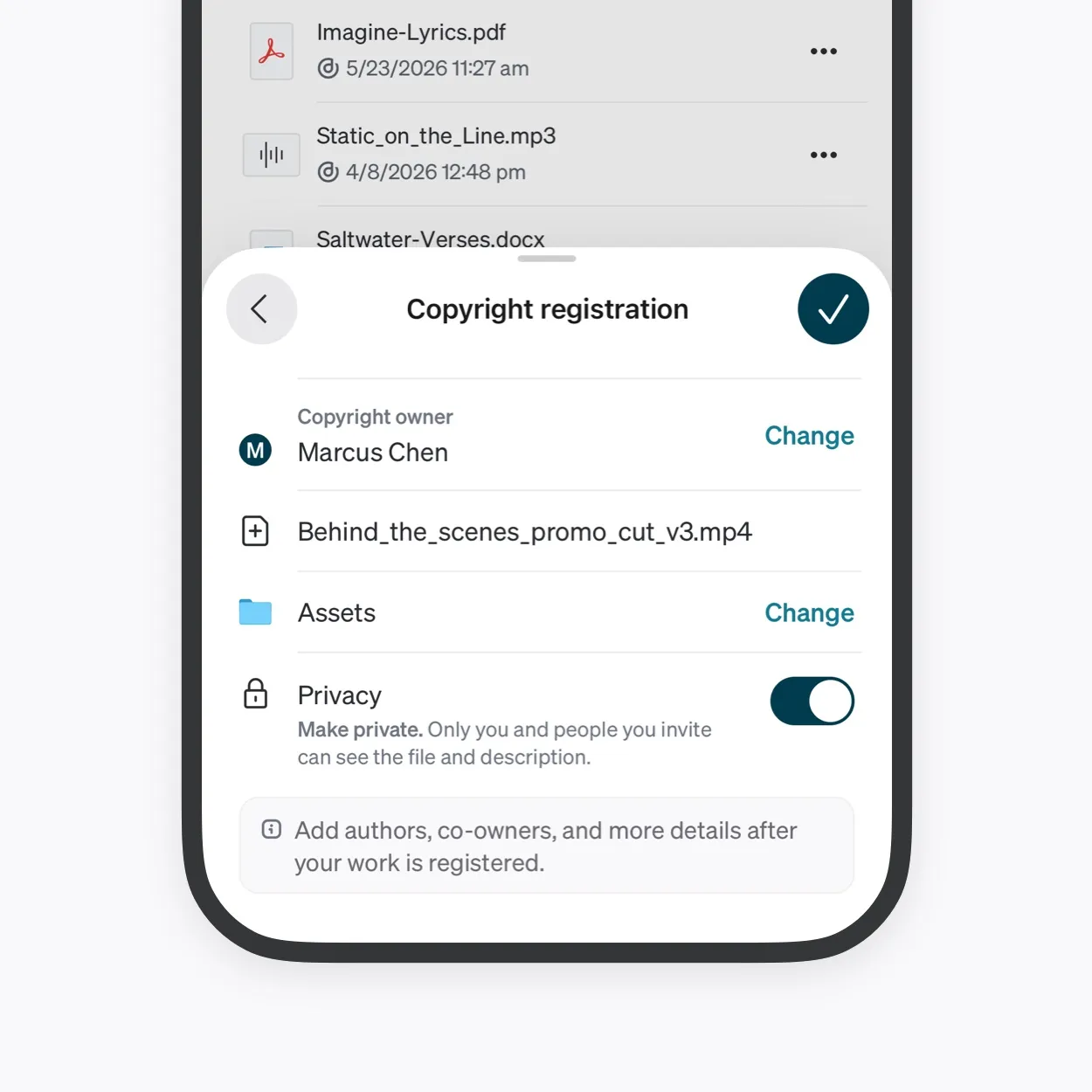
Every registration has a public page. Its link shows the work is yours, the owners, the authors, the timestamp, the Dacr ID, while the audio itself stays private.
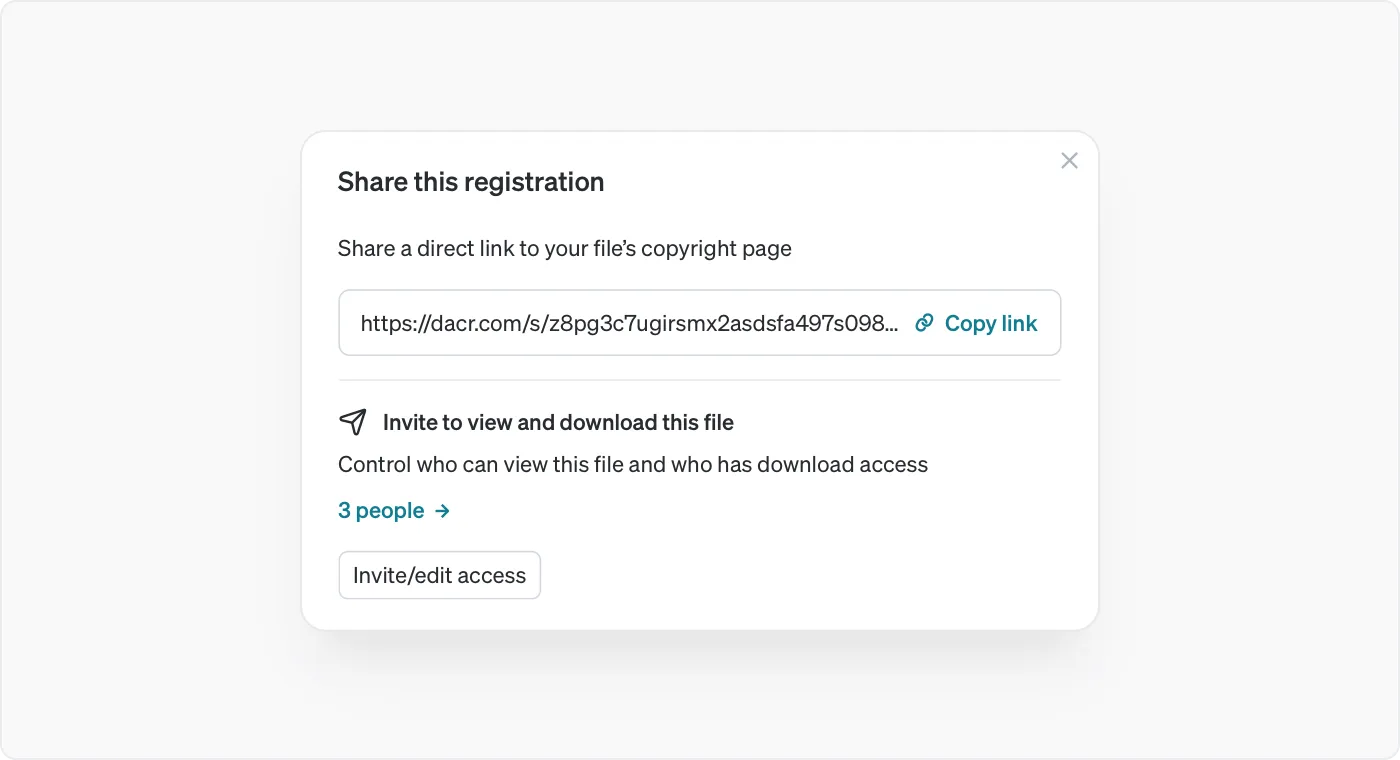
For a cold or semi-warm approach that’s usually the right first contact. It establishes that the track exists, is finished, and has settled ownership, which is more than most pitches manage in an opening message. It’s also a link rather than an attachment, so it doesn’t expire and doesn’t sit in a download queue.
Because it’s the registration’s own address, anyone can forward it. That’s fine for a pitch and worth understanding before you use it for anything you’d want to take back.
It also reads as professional
Labels deal with ownership problems constantly: uncleared samples, unresolved splits, a producer who never signed anything. A pitch arriving with ownership already recorded removes a question they’d otherwise have to ask before doing anything.
That counts for more with smaller labels, who have no legal team to untangle it and will often pass rather than try.
When to send the audio
Eventually somebody has to hear it. When they ask, invite them rather than attaching a file.
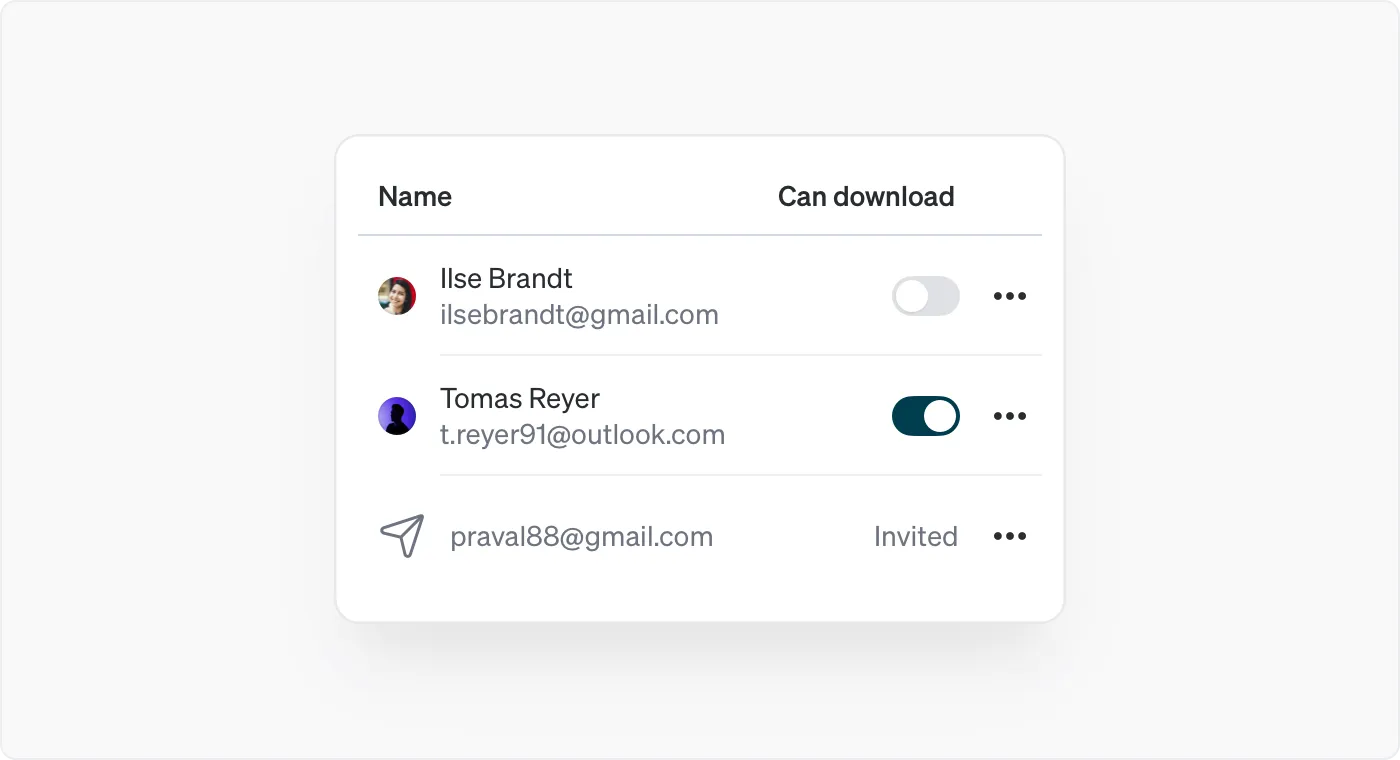
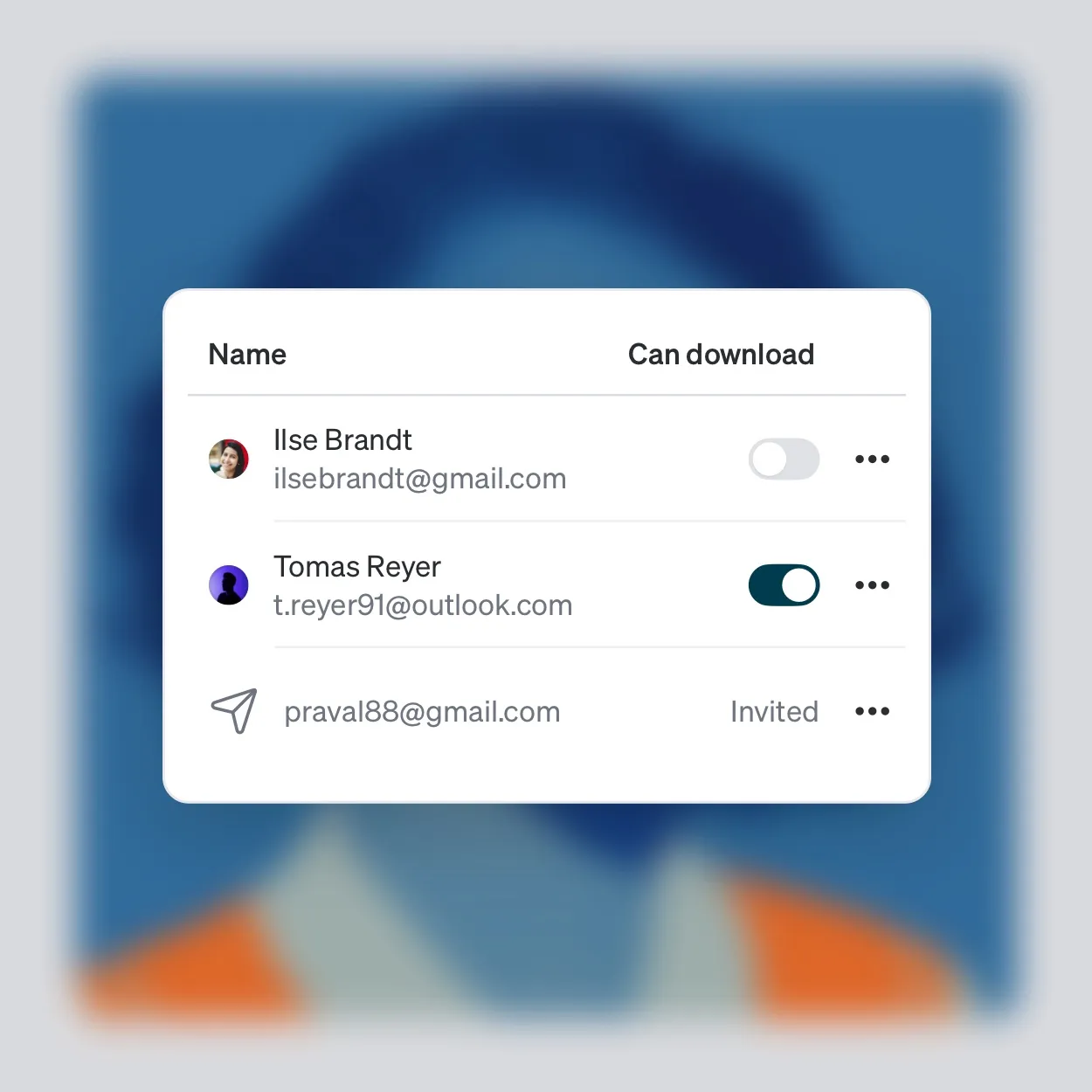
An invitation goes to a named person or an email address, and downloading starts switched off, so they can listen without taking a copy until you decide otherwise. If you invite by email they’ll need to create a Dacr account before they can see anything, which is worth mentioning in your message rather than letting them discover it.
You also end up with a record of who you sent it to, which is more than most people can reconstruct after a month of pitching.
Register the version you’re pitching
Pitch versions drift: a radio edit, an instrumental, a different vocal take, something you shortened after the last label’s feedback.
Register what you send and name it clearly before you upload, since the filename is permanent and publicly visible. “Which mix went to which label” comes up more often than it should.
Before the first email
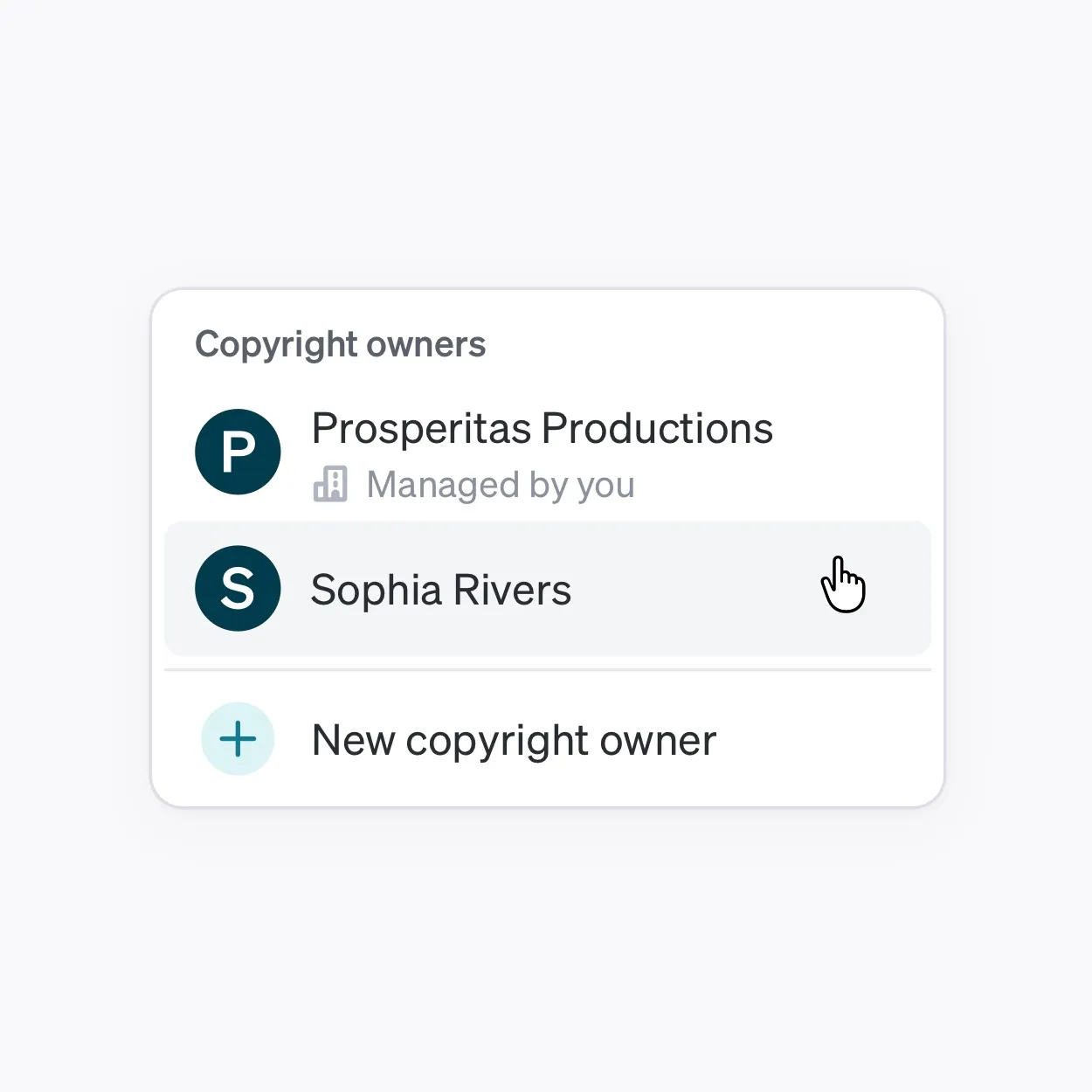
Sort ownership before you pitch rather than after someone’s interested. If a producer, co-writer, or featured vocalist is involved and the arrangement isn’t settled, a label discovering that at the point of enthusiasm is the worst available timing.