Platforms and Claimants Can Destroy Creator Income in a Click. The Law Rarely Makes the Creator Whole.
At 8:00 on a Friday evening, a creator publishes the project that has consumed the previous three months. The sponsor’s post is scheduled, the advertising budget begins to run and the first audience notifications go out. By 8:17, a copyright claim has removed the video.
The creator appeals. Screenshots are submitted. Draft files are uploaded. The claimant doesn’t respond for days. When the platform finally restores the work, the dashboard records a successful appeal. The launch itself is gone.
That distinction matters because digital businesses are unusually sensitive to timing. A first weekend can determine whether a release is recommended, discussed and shared. A sponsor may not repeat a campaign because the creator later won an internal dispute. Momentum isn’t something a platform can simply switch back on.
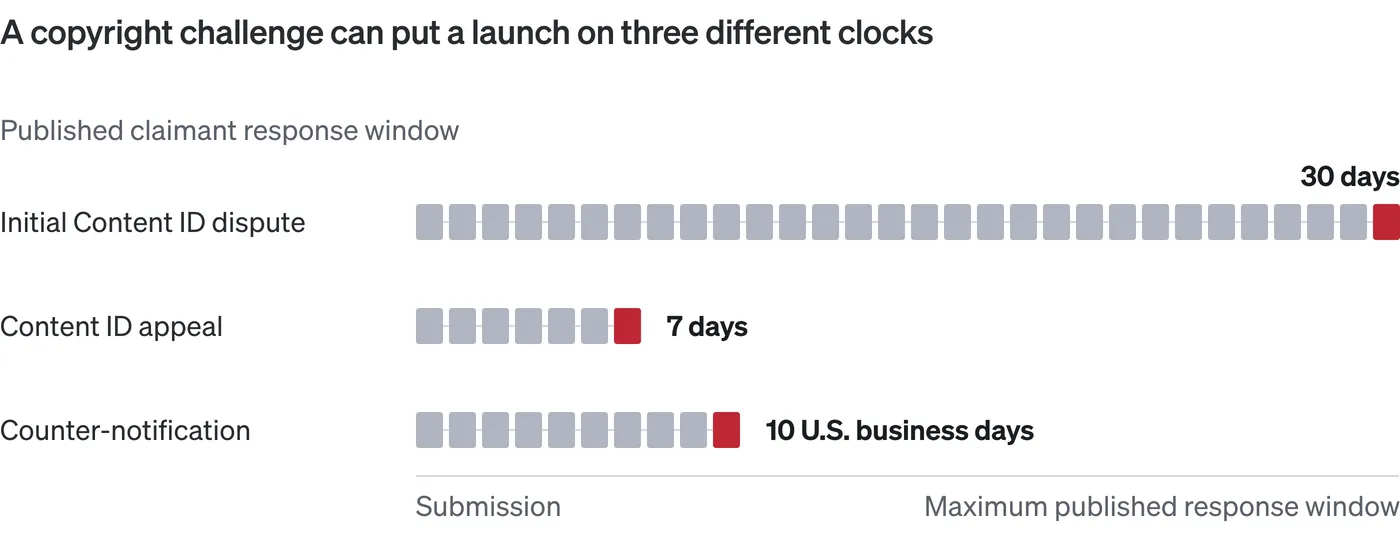
False claims are especially damaging when the claimant understands platform timing better than the creator. A competitor may target the exact hour of release, knowing that even a short removal can break advertising links and recommendation signals. The platform’s later apology does not undo the strategic advantage.
The problem also affects smaller claimants on the other side. A legitimate creator may rely on an automated tool that overclaims material because the platform offers no more precise option. Reform should make claims more accurate, not simply make people afraid to protect their work.
The remedy ends too early
Most platform systems treat restoration as the end of the matter. That makes sense for ordinary mistakes, which happen in any large system. It makes far less sense when a claimant knowingly submits false information or continues a claim after being shown clear evidence that it is wrong.
The law already recognizes that rights come with responsibilities. A person who invokes a process capable of freezing another person’s income should not be free to use it as a competitive tactic. The difficult question is where to draw the line so that legitimate rights holders aren’t punished for making a reasonable claim in a genuinely uncertain case.
The answer should turn on conduct and proof. An honest claimant who relies on credible evidence and withdraws after learning new facts is different from someone who fabricates ownership, ignores the official record or repeatedly targets a competitor. The first situation calls for correction. The second may justify compensation for losses that can actually be shown.
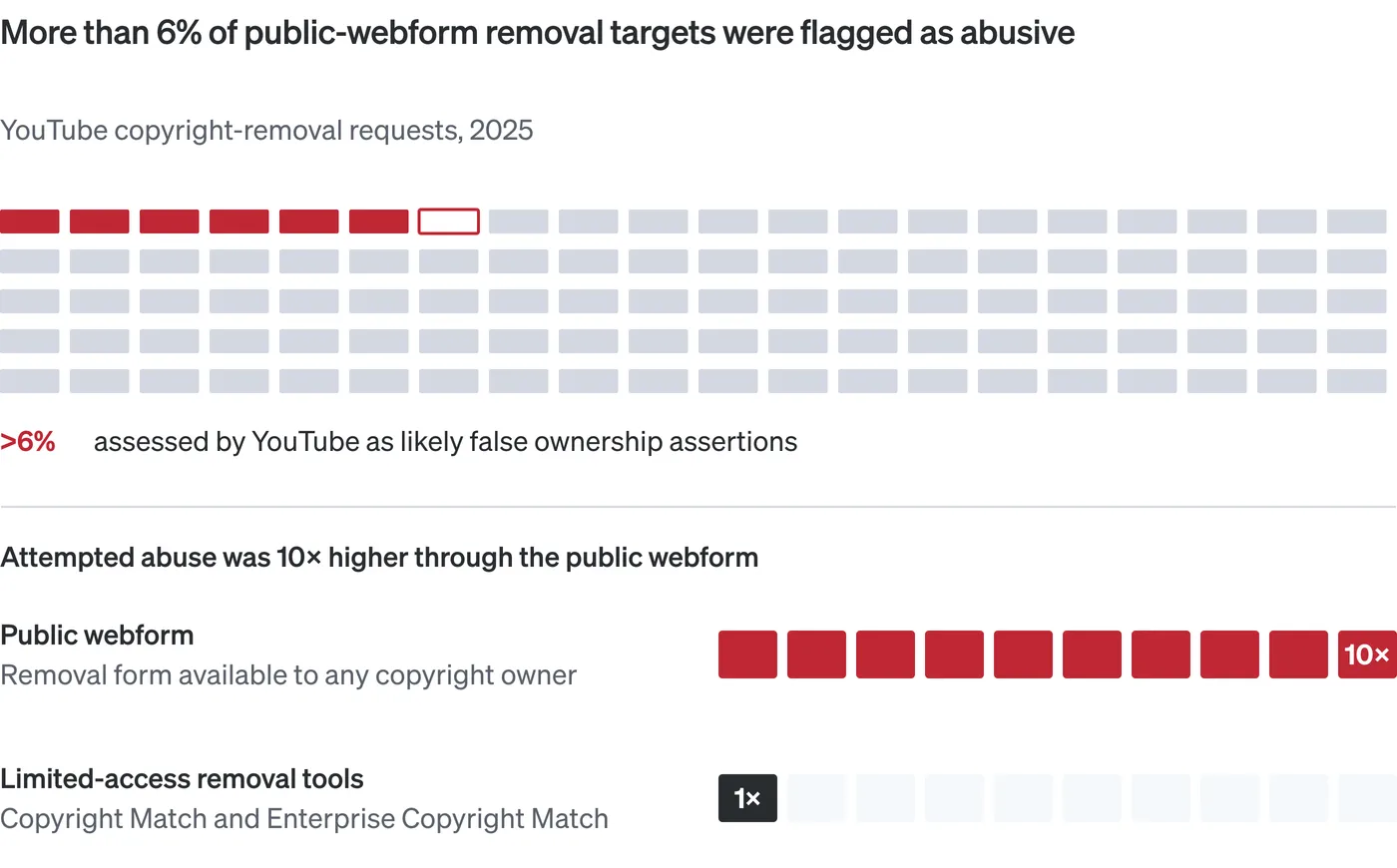
A sensible remedy wouldn’t promise damages every time a creator dislikes a platform decision. It would focus on claims that were materially false, made knowingly or maintained recklessly after contrary evidence became clear. Lost advertising spend, a cancelled sponsorship or revenue from a defined launch window may be measurable. Speculation about a project that might have become famous is much harder.
Platforms also have a role. They need to act quickly when genuine infringement is obvious, but speed shouldn’t become an excuse for ignoring authoritative evidence. When a platform receives a verifiable registration record, the claimant’s identity and technical material showing that the disputed file matches the creator’s registered work, an appeal deserves more than an automated loop.
Dacr could supply part of that factual starting point. Its contribution here is specific: a digital certificate connected to the registered work, together with a content-based fingerprint that can help identify the disputed material even when its filename or metadata has changed. Dacr wouldn’t decide liability or calculate the creator’s losses. It would give the platform and any later tribunal a more reliable answer to the threshold question of what was filed and who stood behind it.
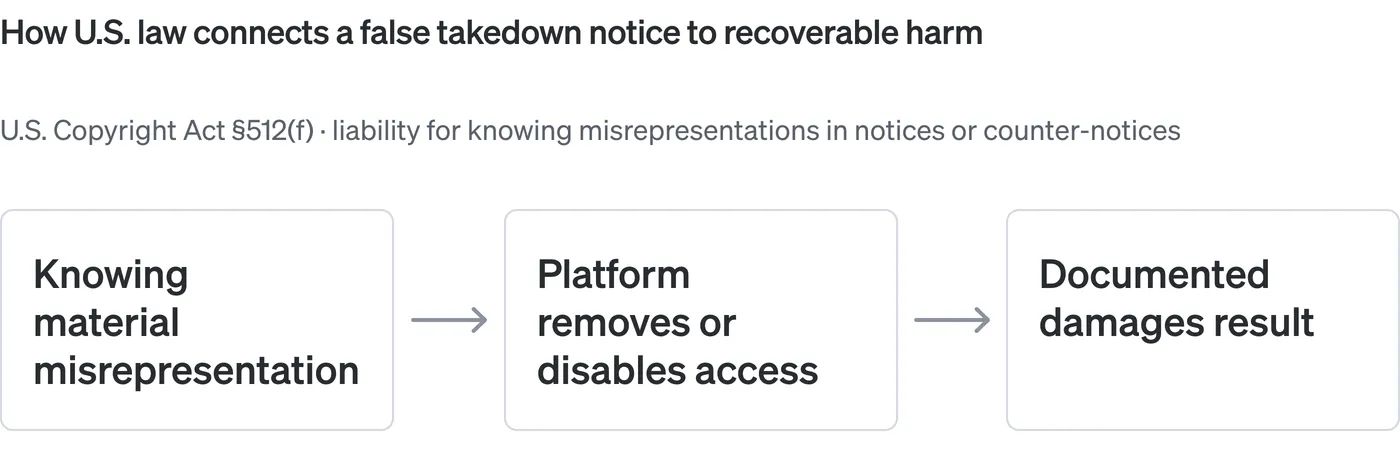
Any compensation rule would need a demanding evidentiary threshold. The creator should show that the claim was false, that the claimant knew or recklessly ignored that fact, and that the loss followed from the removal. A documented advertising spend or cancelled agreement is easier to assess than a claim that the video would certainly have gone viral.
A fast correction process could resolve many cases without litigation. Once authoritative evidence is presented, the claimant might receive a short period to withdraw. Platforms could preserve the launch data and restore monetization immediately while the parties address any remaining dispute. Liability would be reserved for conduct that continues after the mistake is clear or for claims that were dishonest from the beginning.
Rights holders will reasonably worry that tougher consequences could make platforms reluctant to act against real infringement. The answer is to target abuse rather than ordinary disagreement. A claimant who presents a good-faith case should be protected even if a later decision goes the other way.
Platforms will also argue that they cannot become courts. They should not have to resolve every complex ownership dispute. They can, however, verify identity, preserve evidence, provide a human appeal for high-impact decisions and respond differently when an official record plainly contradicts an unsupported claim.
A tiered process may be appropriate. Low-impact disputes could remain automated at first, while claims that block a launch, freeze substantial income or affect an entire account receive faster human review. The degree of procedural care should reflect the likely harm.
Transparency reports could reveal how often claims are withdrawn, reversed or linked to repeat abusers. Public data would help lawmakers distinguish isolated mistakes from structural misuse and would give platforms an incentive to improve their systems.
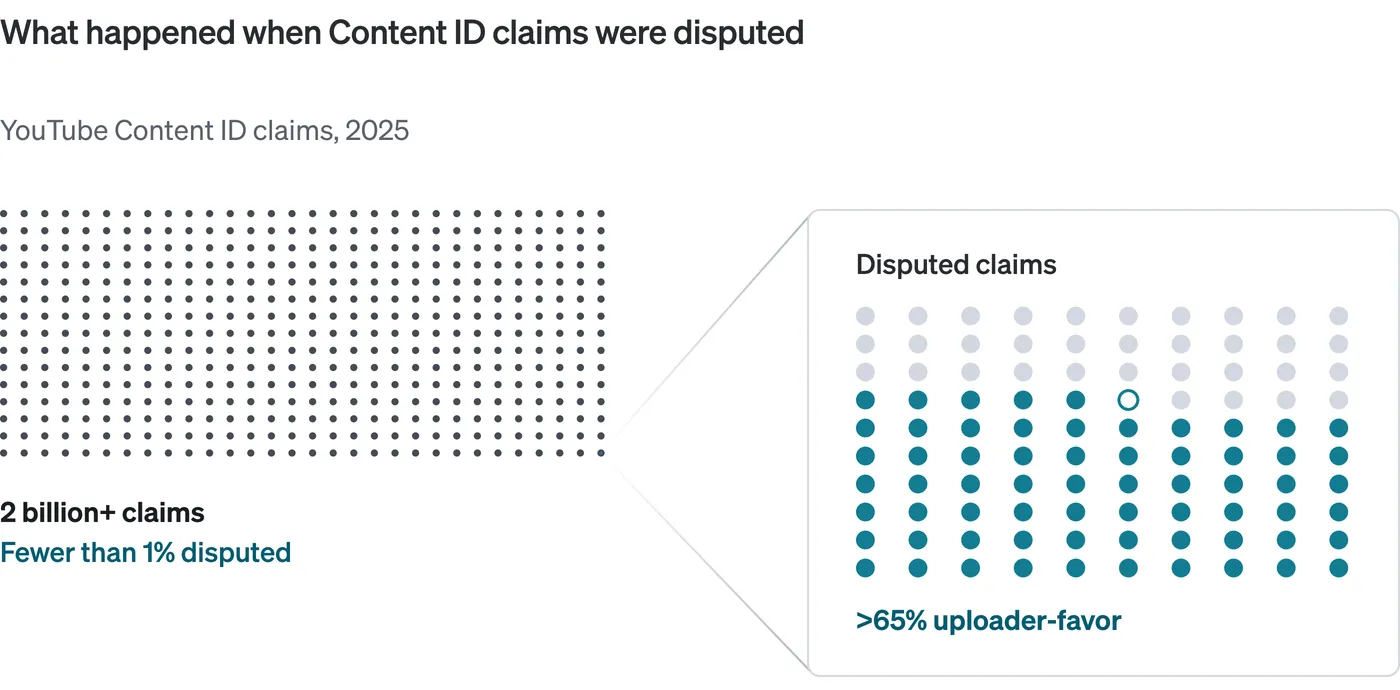
A legislative question worth asking
El Salvador’s creator economy includes musicians, video producers, educators, designers and small businesses whose commercial lives may depend on accounts they don’t control. A false claim can mean a missed payroll, a failed campaign or a partner who never calls again.
Legislation should set an expectation that serious claim systems preserve evidence, identify the claimant and provide a meaningful appeal. It should also examine a narrower but more controversial principle: when someone knowingly uses a false copyright claim to cause measurable harm, should the victim be left with nothing more than a restored upload?
That is the point at which due process becomes economic policy. A creator who wins the appeal but loses the business hasn’t been made whole. Any modern framework for digital enterprise has to account for the value destroyed while the truth was waiting in a queue.
The immediate legislative opportunity is to define duties around evidence and appeal before trying to design a sweeping damages regime. Who must identify themselves? What information must a platform preserve? How quickly must a clearly mistaken removal be corrected? Those procedural questions can protect creators even before lawmakers decide when compensation is appropriate.
El Salvador can frame this as part of digital-enterprise policy. Creators are small businesses, and the systems that interrupt their income should be held to standards proportionate to the power they exercise. That principle can be developed without turning every disagreement into a lawsuit.
Creators should receive notice that explains the claim in usable terms. A reference number and the claimant’s name are not enough if the creator cannot see which portion of the work is disputed or what ownership basis has been asserted. Meaningful notice shortens appeals and discourages vague claims.
Repeat abuse deserves special treatment. A claimant who has submitted several demonstrably false claims should not retain the same access to instant removal tools without additional review. Platforms already use graduated trust systems in other areas; copyright claims should not be exempt from accountability.
The remedy can also include restoration measures short of money. Platforms can reinstate lost recommendation signals, preserve the original publication date and notify subscribers after an erroneous removal. Those steps may recover part of the momentum that a simple re-upload cannot.