
Why an Official Digital Certificate Must Connect to Verification, Evidence, and Enforcement
A public registry is judged twice. The first judgment comes when a citizen uses the service: was the process clear, was the record created correctly, and did the certificate arrive without unnecessary delay? The second comes later, often when the creator is under pressure. Can the record still be found, verified and understood when a platform, licensee or court asks what was actually registered?
The second judgment is where many registration systems become less useful than their certificates suggest. A creator may have a valid document but still be asked to reconstruct the history of the work from drafts, emails and screenshots. The problem isn’t the certificate. The problem is that the document has become detached from the living public record that gives it meaning.
Public trust also depends on accessibility. A creator should not need a lawyer to understand whether a certificate is current or to request a correction. The system should provide clear status information and preserve service channels for people who cannot complete every step online.
The registry’s staff remain central. Digital tools can reduce repetitive data entry and surface conflicts, but experienced officials are needed when a claim involves an estate, a corporate transfer or inconsistent documents. Modernization should strengthen institutional judgment rather than hide it behind software.
What happens after registration
For the Centro Nacional de Registros, this is fundamentally a public-service question. Registration should create legal certainty that survives the moment of filing. The citizen should be able to return months or years later and confirm the same record. An authorized platform should be able to verify the certificate without relying on a screenshot sent by email. A later transfer or correction should be visible without erasing the integrity of the original filing.
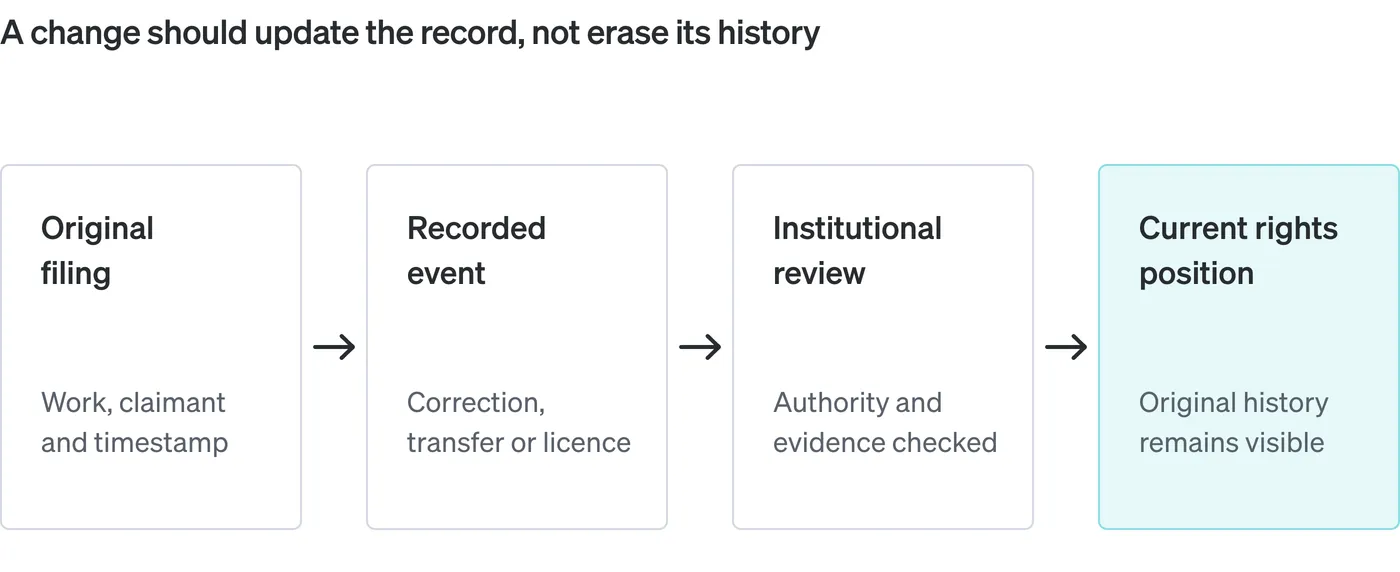
That requires careful administration. Records need version history, clear authority for amendments and a process for contested claims. A registry that allows silent changes will lose trust; one that never permits correction will preserve mistakes. Good design keeps the original history intact while showing what changed, who approved it and when the change took effect.
The official digital certificate becomes useful because it is the citizen-facing expression of that history. It can be stored and presented easily, but anyone relying on it should be able to confirm that the certificate still corresponds to the national record. This is similar to other modern registry services: the document matters, and the underlying database is what lets the document continue to function.
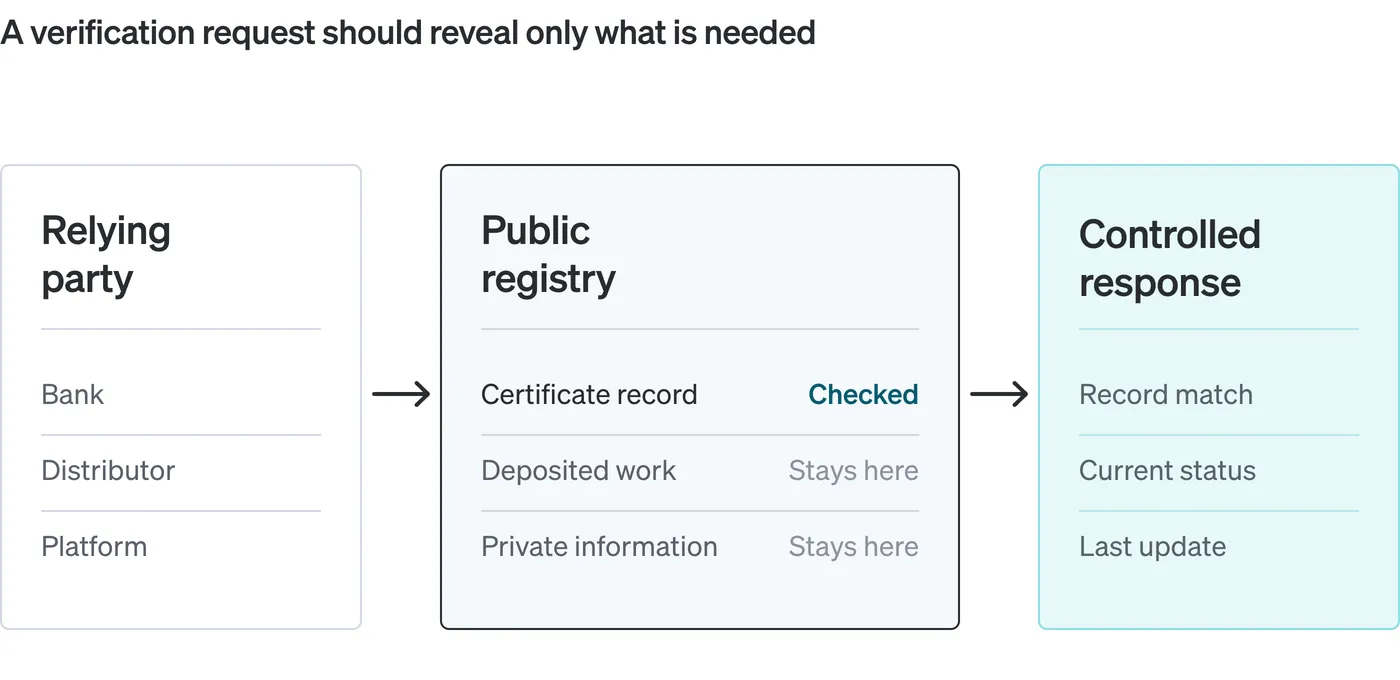
The citizen’s experience after registration should be designed with the same care as the application itself. A creator may need to share proof with a bank, a distributor or a foreign partner. The verification process should be simple enough for legitimate users and controlled enough that private information is not exposed broadly.
Public records also need rules for change. A copyright may be assigned, inherited or licensed. A clerical error may need correction. The registry should distinguish between updating the current rights position and rewriting the historical record. Someone reviewing the file years later ought to see the original registration and the lawful path by which the current claimant acquired authority.
That kind of version history is essential to legal certainty. It allows the institution to correct errors without creating a record that can be altered invisibly. It also gives citizens confidence that an official certificate cannot be undermined by an unexplained change inside the system.
The certificate can also support ordinary commerce. A lender considering intellectual property as part of a business asset, a publisher negotiating a license or a public agency procuring creative work may all need to confirm that a claimant has a real record. Verification should answer that question efficiently without disclosing material unrelated to the transaction.
A redesigned service model
Dacr offers a practical example of that service model. A creator can register through a citizen-facing system and receive a digital certificate connected to the filed work. Rather than asking every institution to interpret a static document, the underlying record can support controlled verification when proof is needed.
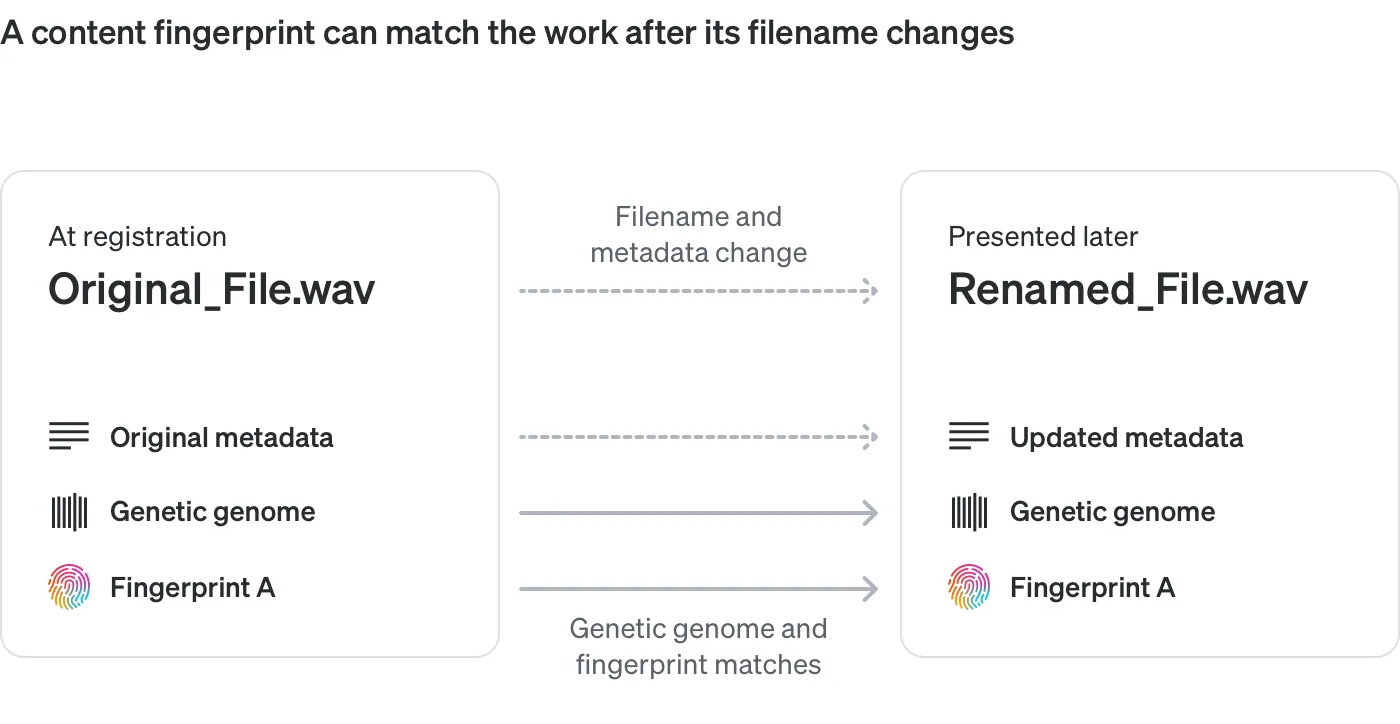
Only a narrow set of technical capabilities needs to be emphasized here. Cryptographic timestamping preserves the timing of the filing. A fingerprint derived from the file’s content helps confirm that material presented later corresponds to the registered work, even when the filename or metadata no longer matches. Together, those functions make the certificate more dependable without changing the legal role of a public registry or outsourcing authority to a platform.
The design also has to account for ordinary administration. Citizens will make errors. Companies will merge. Rights will be transferred. Some claims will be disputed. The system needs a path for each of those events that is understandable to the public and reviewable by the institution. Automation can speed routine work, but decisions that affect ownership and legal standing still require accountable procedures.
Platform verification presents another design choice. Commercial services should be able to confirm a registration, but the registry should not hand over its entire database or allow private actors to decide the legal effect of the record. Controlled queries can answer the narrow question without weakening public custody of the information.
Implementation will require staff training, clear escalation procedures and public guidance. A fast interface cannot compensate for unclear institutional responsibility. Citizens need to know which issues can be resolved administratively, which require additional evidence and which belong before a court.
There is also a long-term preservation duty. File formats, security methods and software platforms change. The national record must remain readable and verifiable after the tools used at registration have been replaced. That requires planned migration and durable identifiers, not dependence on one user account or vendor interface.
Public reporting can help the institution improve. Aggregate data on processing time, corrections and contested claims can reveal where citizens struggle without exposing the content of private works. A modern registry should be accountable for the quality of the service as well as the number of filings.
The benchmark for modernization
Digital transformation is sometimes measured by how much paper disappears. That is useful, but incomplete. The stronger measure is whether the service remains helpful when the citizen has something at stake.
A modern copyright registry should be able to answer a verification request, preserve a chain of changes and give the creator a clear route when the record is challenged. It should also explain where its authority ends. The registry can establish and maintain the official filing; it doesn’t decide every infringement dispute or replace the courts.
El Salvador’s implementation priority should therefore be concrete: make every official digital certificate verifiable against a durable record, and make every significant change to that record traceable. When those two conditions are met, registration stops being a one-time transaction and becomes a reliable public service throughout the life of the work.
The design should also anticipate creators who work through intermediaries. A lawyer, agent or company employee may submit a filing, but the record should show the authority under which that person acted. When the representation changes, the creator must be able to appoint someone new without disturbing the underlying work record.
Integration with commercial services should be monitored rather than assumed to be beneficial. Verification traffic, failed queries and recurring data conflicts can show where private systems misunderstand the national record. Those patterns should feed back into public guidance and technical standards.
The quality of a registry is ultimately visible in moments of stress. When a creator has a dispute, a financing opportunity or an international license, the official record should become easier to use, not another administrative obstacle to explain.