A Right Creators Cannot Afford to Enforce Is a Right That Fails in Practice
Property rights are often discussed as though recognition were enough. A deed, a title or a copyright tells us that an asset belongs to someone. The harder test comes when another person takes the asset and the owner can’t afford to do anything about it.
For many independent creators, copyright fails at that second test. They may have a strong claim and still walk away because a federal lawsuit, expert analysis and months of legal work cost more than the work is likely to recover. The infringer learns a rational lesson: ownership is negotiable when the owner has limited resources.
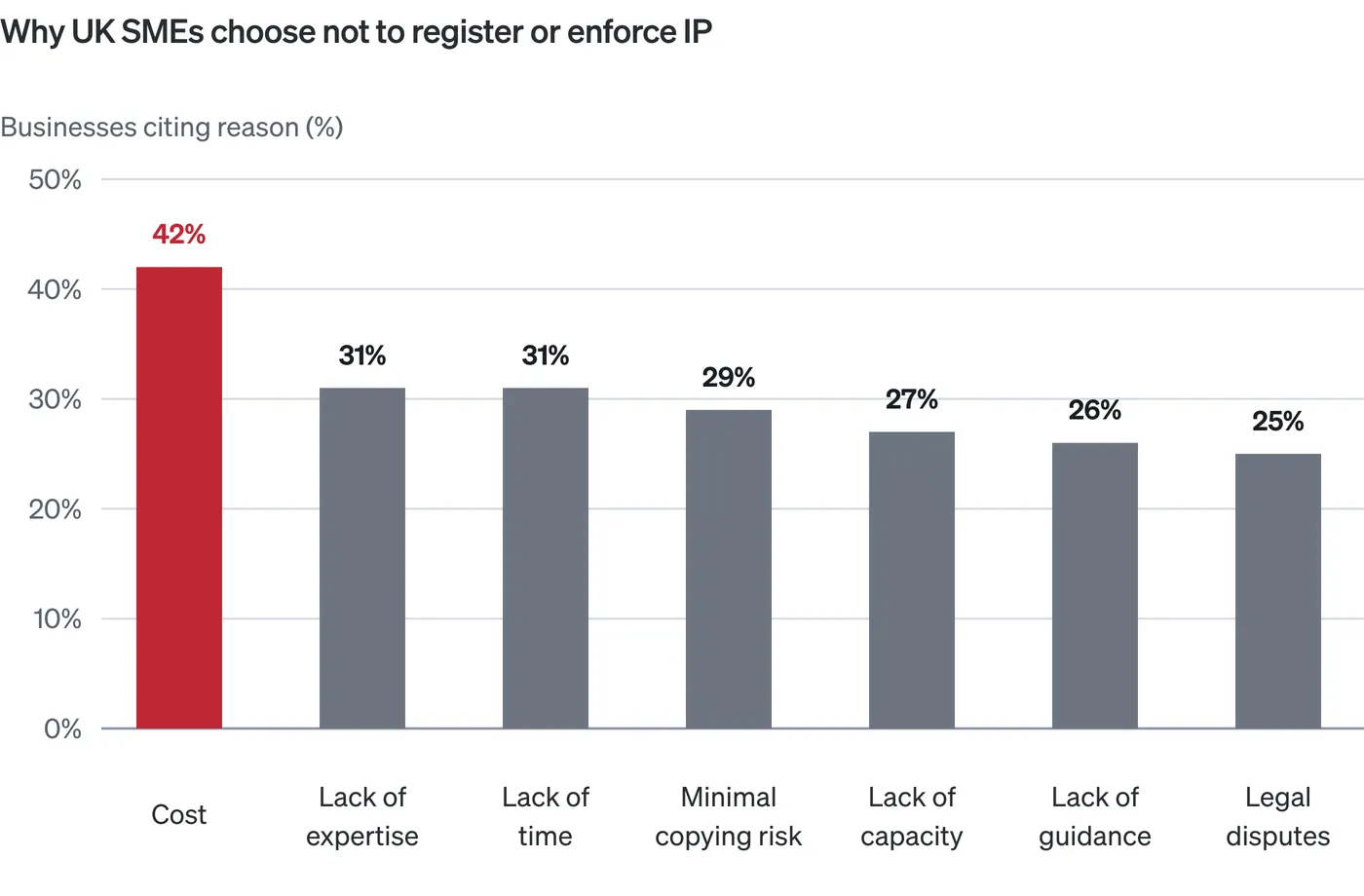
The imbalance affects settlement as well as litigation. An infringer with counsel may offer a fraction of the claim because it knows the creator cannot afford the next step. The negotiation takes place in the shadow of cost rather than the strength of the right.
Emergency relief can be even less accessible. A creator whose work is being exploited during a short commercial window may need an injunction quickly, yet urgent proceedings demand money and legal organization at the exact moment the creator is most vulnerable.
A property right with a price of admission
Large companies can spread enforcement costs across a catalog. A photographer, songwriter or software developer usually cannot. Even sending a serious demand may require facts the creator has never organized: the original file, the date of creation, the chain of ownership and a clear comparison between the protected work and the disputed use.
Courts are indispensable for difficult disputes, but they cannot be the first useful tool available to every creator. Smaller claims need procedures proportionate to their value. The United States’ Copyright Claims Board reflects that idea, even if no single forum can solve the broader access problem.
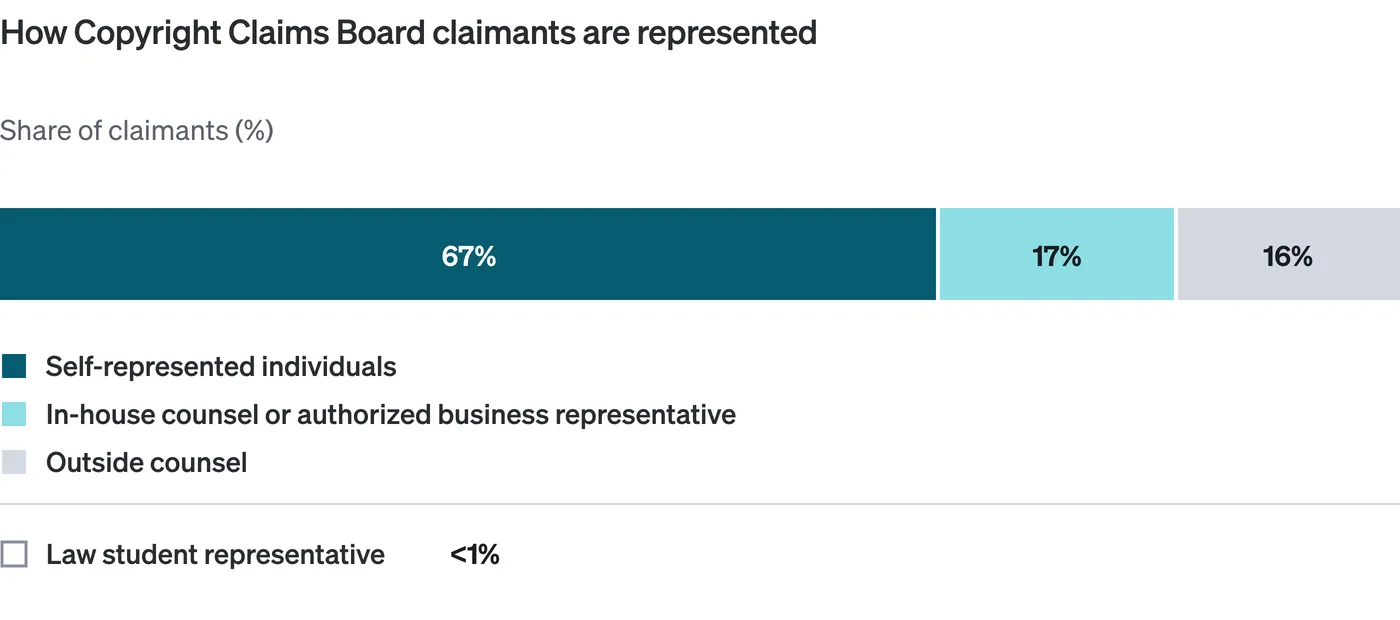
A fair system also needs safeguards against abuse. Simplified enforcement should not become an easy way to threaten lawful commentary, independent creators or small businesses. Claims still require evidence, and respondents need a genuine opportunity to contest them. Access to justice works in both directions.
Fee shifting can help in some cases, but it does not eliminate the risk of starting. A creator still has to find counsel, organize evidence and survive the time required for a dispute. Insurance and collective support may assist established sectors, while many freelancers remain on their own.
The value of the individual claim also matters. A stolen photograph or unlicensed design may be worth too little to justify a full lawsuit and too much to ignore. Repeated small infringements can support a business model precisely because each creator has little incentive to act alone.
Small-claims procedures are one response, but they need public awareness and enforceable outcomes. They also need to accommodate creators who do not speak legal language fluently and respondents who may be located elsewhere.
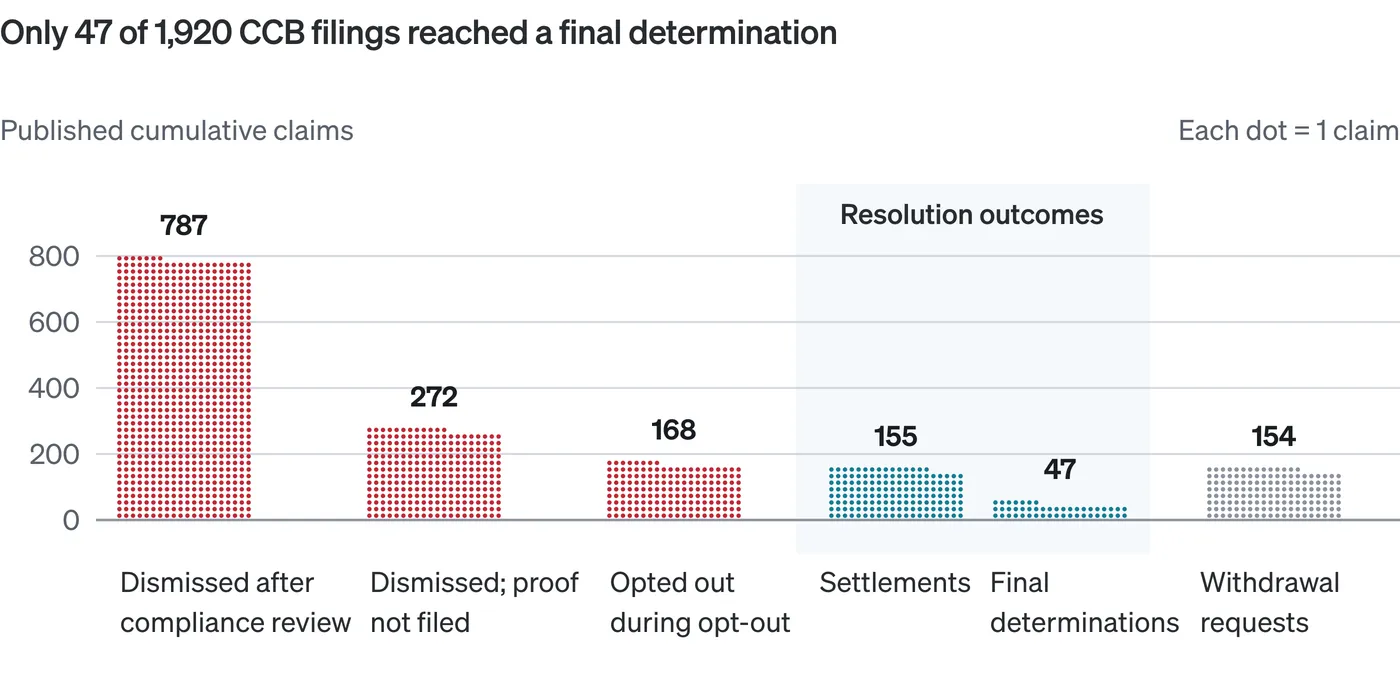
Collective enforcement may help sectors with repeated patterns of infringement. Trade associations, unions or creator organizations can share expertise and bring test cases that no individual could fund. Public systems should make it easier for those groups to verify records and represent members lawfully.
Lowering the cost of basic proof
Technology can help most where the facts are routine. Dacr’s contribution isn’t to replace a lawyer or promise a result. A registered work, cryptographic timestamping and a technical comparison can reduce the time spent reconstructing the work’s identity and history. That matters because evidentiary preparation is often one of the first costs that discourages a creator from acting.
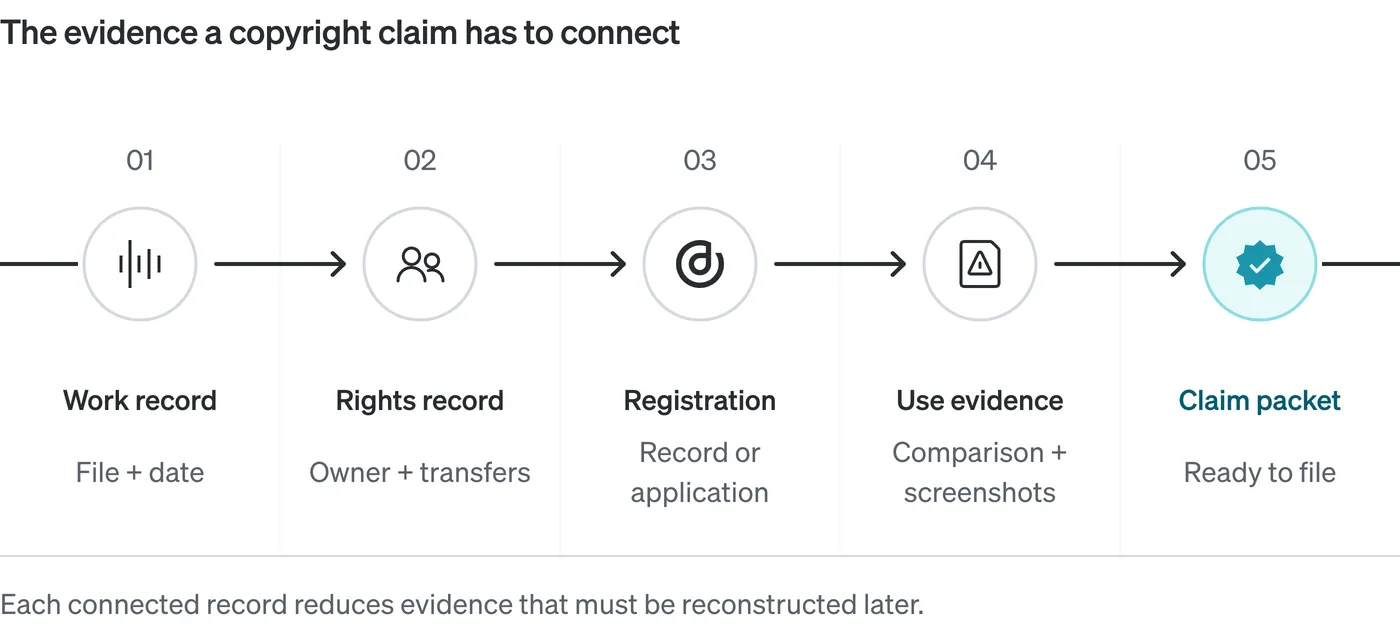
The same principle applies internationally. A creator shouldn’t have to rebuild the basic record of a work every time it appears in another market. Official systems that can verify one another give smaller rights holders a chance to begin with evidence already organized rather than with a blank page.
Early neutral evaluation could resolve disputes before costs escalate. A qualified reviewer may be able to identify that a claimed work is unregistered, that ownership is unclear or that the disputed use is likely permitted. Settling those issues early protects both owners and accused users.
Government can also improve access by making registration records easier to retrieve and by supporting clear technical reports when a comparison is needed. The aim is to reduce repetitive proof, not to give registered claimants an automatic victory.
Sanctions for abusive claims are also part of access to justice. A simplified process will lose legitimacy if it becomes cheap to file weak cases and expensive to defend them. Decision-makers need authority to dismiss clearly unsupported claims and address repeat misuse.
A conservative case for practical enforcement
There is a property-rights argument for restraint in regulation, and there is also a property-rights argument for institutions that make ownership real. A market works poorly when the cost of defending an asset is so high that only the largest owners can rely on the law.
Governments should expand proportionate routes for smaller copyright claims, encourage early neutral resolution and modernize the evidence systems surrounding registration. None of those reforms eliminate hard cases. They make it less likely that a clear case is abandoned simply because the creator lacks a legal department.
America should lead the next copyright infrastructure era
This is also a question of American leadership. From a Republican perspective, the principles are familiar: property should be secure, entrepreneurs should be able to compete, and government services should work without forcing citizens through unnecessary expense. Copyright sits squarely at that intersection. The United States has built the world’s most influential creative economy, yet too many of the people supplying its music, films, photographs, books, software and online media still experience enforcement as a luxury.
The federal government hasn’t ignored the technology problem. The U.S. Copyright Office is building its Enterprise Copyright System to connect registration, recordation, public records and licensing services. In 2025, the Copyright Public Records System replaced the old Online Public Catalog, giving the public a better way to search registration and recordation data. That progress deserves recognition. Still, modernization has to be judged by what happens when a creator actually needs the record, not simply by whether an older process has moved onto a newer screen.
A useful registration should become more valuable when a dispute begins. Today, the creator may still have to reconstruct the history of the work, find the original files, explain changes in ownership and pay for a technical comparison. Filenames offer almost no help because they change constantly, and editable metadata can disappear with one export. What matters is the content of the work itself. When a photograph has been cropped, a recording re-encoded or part of a video placed inside a new production, the system needs a reliable way to recognize the underlying material.
The international problem is even harder. American creators release into a global market from the first day. A small software company in Ohio can acquire customers in Europe, while an independent producer in Tennessee can find an audience in Latin America before securing meaningful domestic attention. Treaties establish important legal commitments, but they don’t give a creator a practical record that another national authority or commercial platform can verify quickly. Too often, the owner has to rebuild the same case country by country.
Congress and the Copyright Office should examine a reciprocal framework for trusted national rights records. An American registration that has already established the work and claimant ought to be capable of verification abroad without beginning from a blank page. Foreign works entering U.S. commerce would benefit from the same clarity. Better interoperability would strengthen legitimate trade in creative goods and make conflicting or fraudulent claims harder to sustain.
Dacr offers a concrete model worth serious examination. Its approach connects a creator-facing digital certificate to cryptographic timestamping and identification based on the content of the deposited work. Genetic File Markers and fingerprinting are intended to help recognize that work after ordinary technical changes, while its cross-border framework is designed to let national systems verify records without surrendering their own laws or authority. The point isn’t that technology decides who wins a legal dispute. It’s that a creator, platform, court or foreign authority can begin with a far better organized factual record.
The United States wouldn’t need to hand copyright policy to a private company, and no technology provider should replace the Copyright Office’s public responsibilities. A stronger approach would preserve federal authority while asking whether specialized infrastructure such as Dacr could replace aging technical components, accelerate parts of the Office’s modernization, or operate through a government-authorized partnership. American leadership has often come from combining clear public rules with private innovation. Copyright can use the same discipline.
I believe Congress should ask a direct question: what would it take to give American creators an official record that is fast to obtain, useful in an actual dispute and capable of participating in trusted cross-border verification? The country that exports more creative influence than any other shouldn’t accept a system that becomes fully useful only after the owner can afford a legal team.
A right available only to people who can spend more enforcing it than the asset is worth is not functioning as a serious property right. The test of copyright policy is whether ordinary owners can use it before the damage becomes permanent.
Property rights have political force because they allow people to plan, invest and build independently. Copyright deserves the same seriousness. An independent creator should not need to sell the claim to a litigation funder or surrender part of the catalogue merely to have ownership respected.
The system doesn’t need to guarantee that every creator wins. It needs to keep the cost of presenting a serious claim proportionate to the value at stake so clear ownership doesn’t become economically irrelevant.
Legal aid models for copyright remain underdeveloped because the claims are often viewed as commercial rather than essential. Yet for a self-employed creator, the work may be the source of rent, healthcare and future opportunity. Access to enforcement can be as economically important as access to any other small-business remedy.
Courts and administrative bodies can publish clearer guidance on evidence, valuation and available procedures. Predictability lowers costs because parties can assess a case earlier and avoid spending money on disputes that are unlikely to succeed.
Alternative fee arrangements may help, but they should not require creators to surrender excessive portions of the claim. The need for financing is itself evidence that the system remains too expensive for ordinary owners.
Technology, procedure and professional support have to work together. No single reform will make enforcement effortless, and effortless enforcement would create its own abuse. The goal is a route that a serious claimant can realistically enter.