The advice circulates in forums, comment sections, and art school corridors: post yourself a copy and leave the envelope sealed. Or the updated version, email it to yourself, so there’s a timestamp.
It persists because it sounds sensible and costs nothing. It’s also the weakest thing on a very short list of things people actually do.
What you’ve made
An email you sent yourself is a message in an account you control, dated by a system you have some ability to influence, containing a file you attached.
The date is real in the sense that a mail server recorded it. It’s weak in the sense that it’s your account, your file, and a chain with nobody independent in it. Nothing distinguishes a genuine record from a constructed one, which is the same difficulty screenshots have.
Whether it would carry weight in a dispute depends on your jurisdiction and on what’s being argued. A question for a lawyer rather than for received wisdom.
The modern versions
Posting the work publicly with a visible date is better, because a third party recorded when it appeared. It’s also a disclosure, which rules it out for anything unreleased, and platforms edit, migrate, and delete.
Cloud storage dates are convenient and easy to overwrite. File metadata is trivially editable. Neither was built to establish anything.
None of it is worthless. It’s corroboration, supporting material alongside something more substantial, which is a different job from the one people ask it to do. The wider comparison, including what each kind of record actually establishes, is set out in what actually counts as proof that you made something.
What a registration adds
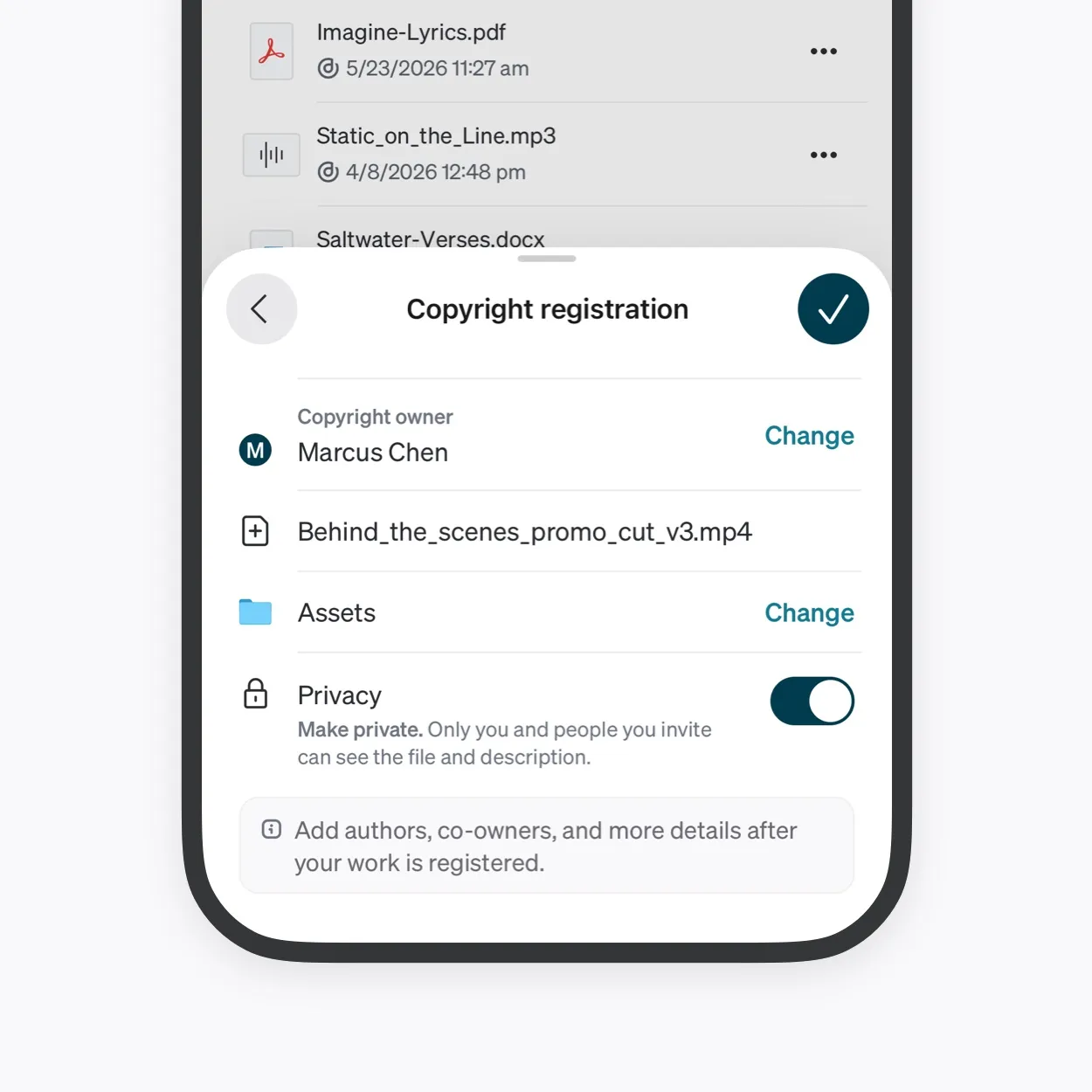
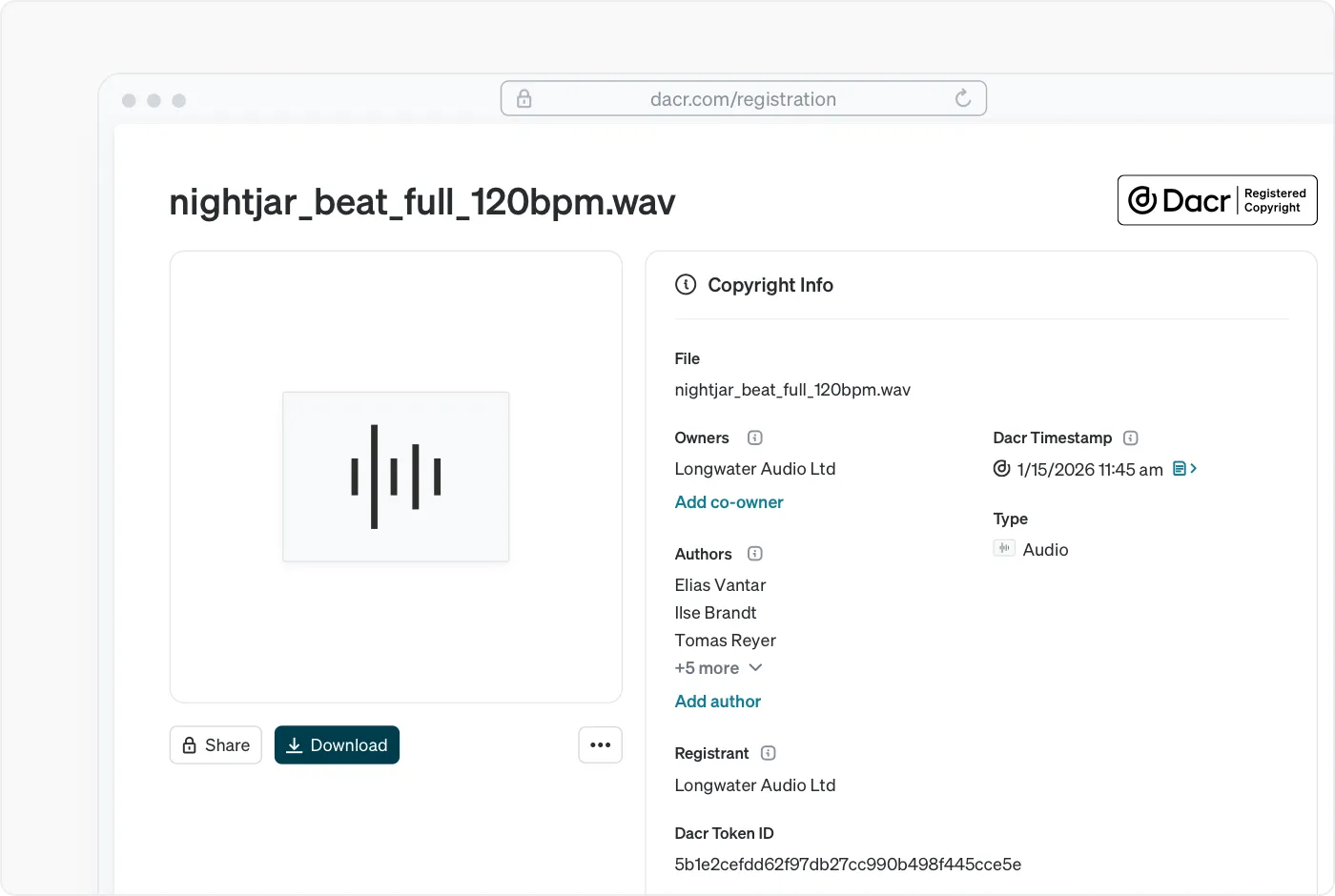
A registration creates a dated record held by a third party, recording the work, who authored it, and who owns it. You aren’t the one attesting to when it existed.
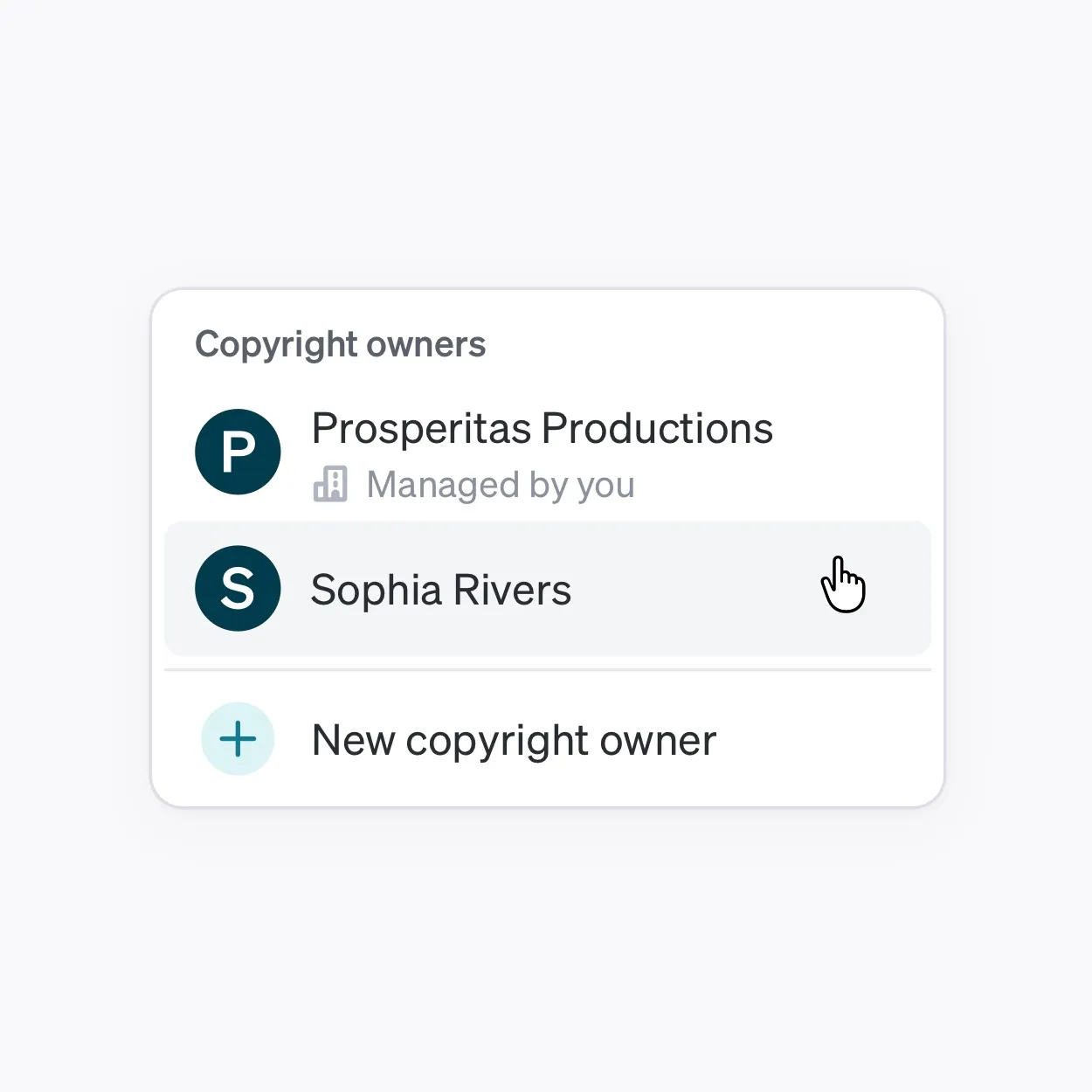
It also records what an email attachment doesn’t: the ownership structure, the contributors, and where the work is registered. Those are the questions that arrive alongside “when.”
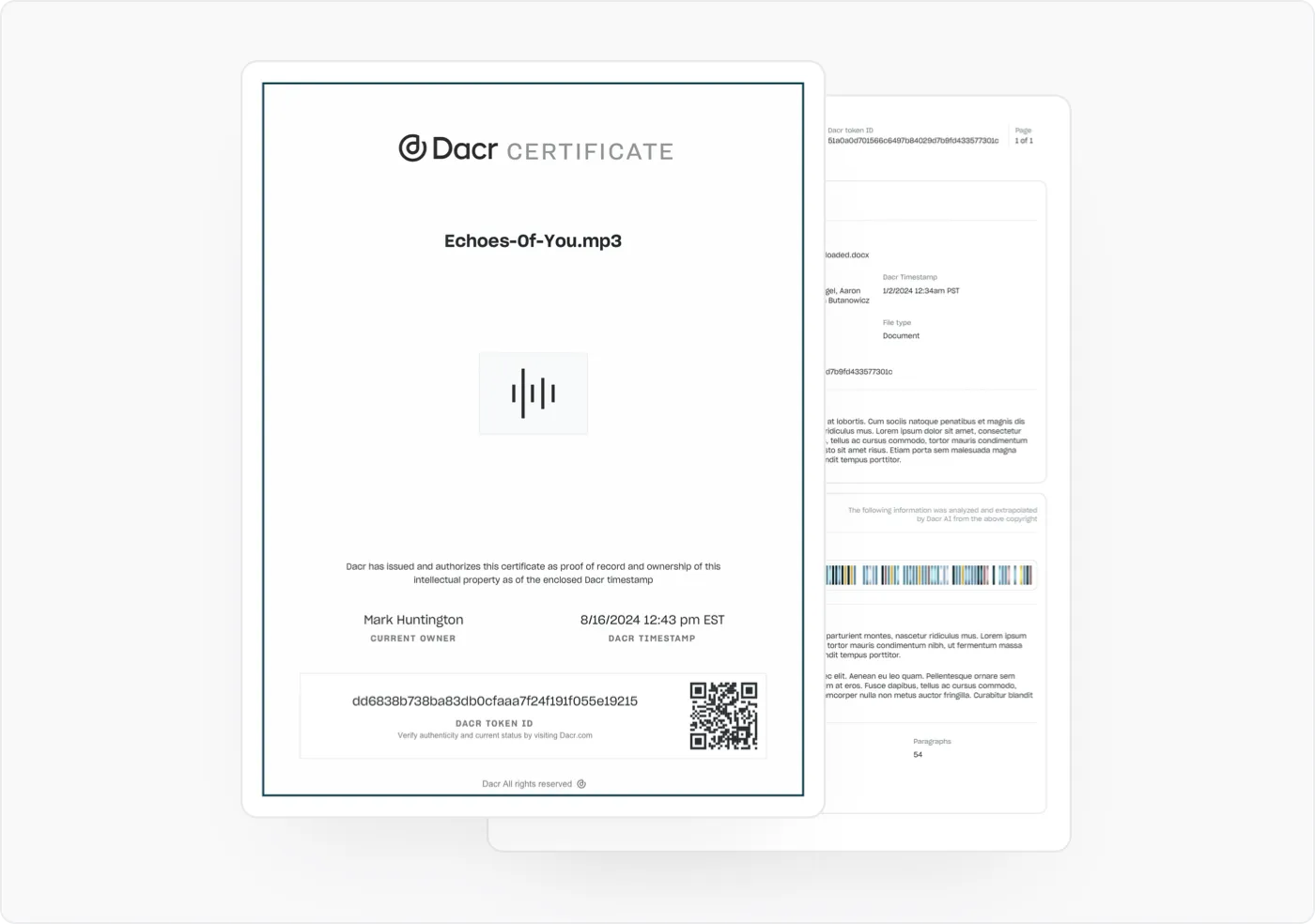
And it produces a certificate, a downloadable PDF certifying the registration, which is the artifact a platform appeal or a client’s legal team will actually ask for. An email to yourself has no equivalent.
If you’ve been relying on the envelope
Register the work now. Today’s date is worse than a date from when you made it and considerably better than an email in an account you may not still have access to in five years.
Keep the email. It costs nothing to hold onto, and corroboration is still corroboration.