The Missing Link Between National Identity and Creative Ownership
Identity verification works best when it answers only the question that needs to be answered. A bank doesn’t need to publish a customer’s private file to confirm that the customer exists. A public service doesn’t need to expose every personal detail to verify eligibility. Good identity systems are designed around trust, consent and the minimum necessary disclosure.
Creative ownership needs the same discipline. The Ghana Card can establish who a person is, but a copyright claim raises another question: how is that person connected to the work? The answer isn’t always visible from a social-media profile. Musicians use stage names, filmmakers work through production companies, and software may be built by teams spread across several countries.
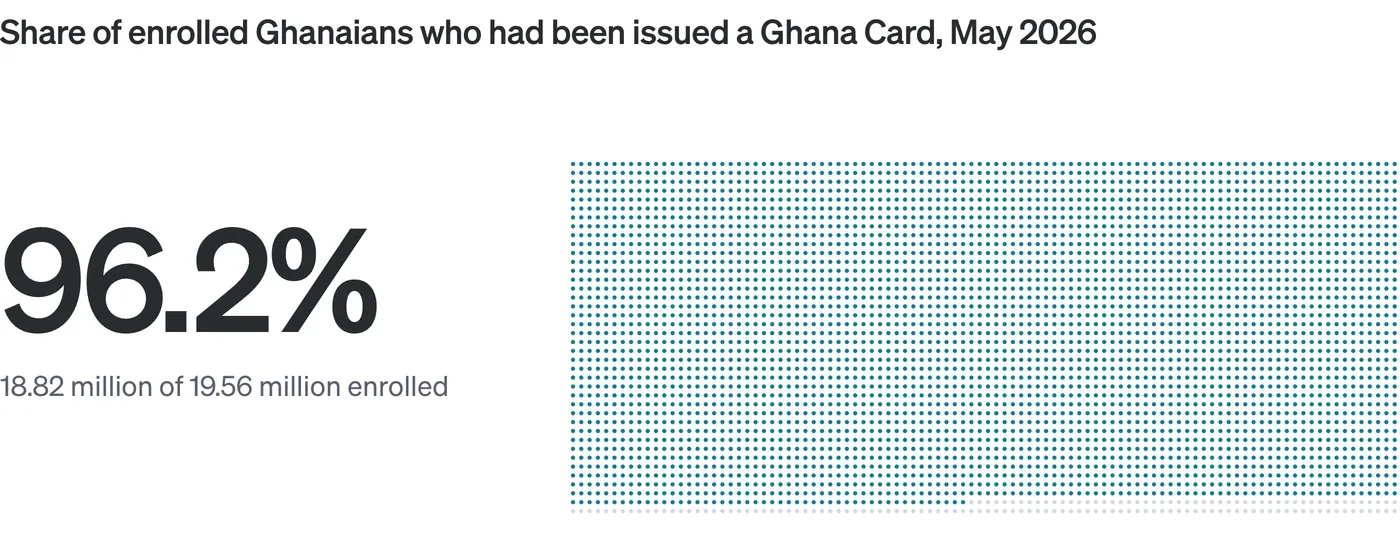
For creators, the danger lies in the space between a public identity and a verified one. A polished account can look legitimate while belonging to the wrong person. An impersonator may submit an image, approach a licensee or redirect a payment before the real creator even knows a claim has been made. At the same time, forcing artists to publish legal names and personal details would expose people who have sound reasons to remain pseudonymous.
Selective disclosure, not public exposure
The solution is to separate verification from publicity. A performer can remain known to audiences by a stage name while a trusted national system confirms the legal person behind it. A production company can register a film through an authorized representative without turning every director, editor and investor into a public data point. The public record can show what is necessary for confidence while the more sensitive identity information remains protected.
This approach also respects consent. Identity data shouldn’t be reused simply because it exists. A creator may authorize verification for a copyright registration without agreeing to have the same information exposed to a platform, a commercial partner or the general public. The system has to record who is asking, what they are entitled to know and why the disclosure is justified.
Authentication is only part of the design. A verified person can still make an inaccurate claim, and genuine authorship can exist under a pseudonym. That means the work record must carry its own evidence: what was filed, when it was filed, who was declared as a contributor, and how another person can challenge the record. Verification gives accountability to the claimant; it doesn’t transform a claim into an unquestionable fact.
Minors require particular care. A young creator may be capable of authorship and commercial success while a parent or guardian manages the legal relationship. The system should preserve the young person’s connection to the work, record who has authority to act and make it possible to update that authority as the creator reaches adulthood.
Identity also changes over time. People change names, companies reorganize and representatives are replaced. A strong system keeps continuity without forcing the creator to begin again or allowing an obsolete identity link to remain active indefinitely.
Authentication is a transaction, not a permanent disclosure
A licensing company may need to know that the claimant is a verified person and has authority to act for a registered work. It usually does not need the person’s residential address or the identity data used to issue the Ghana Card. A platform handling a dispute may need stronger verification than a member of the public viewing a certificate. The system should be able to answer each request at the appropriate level.
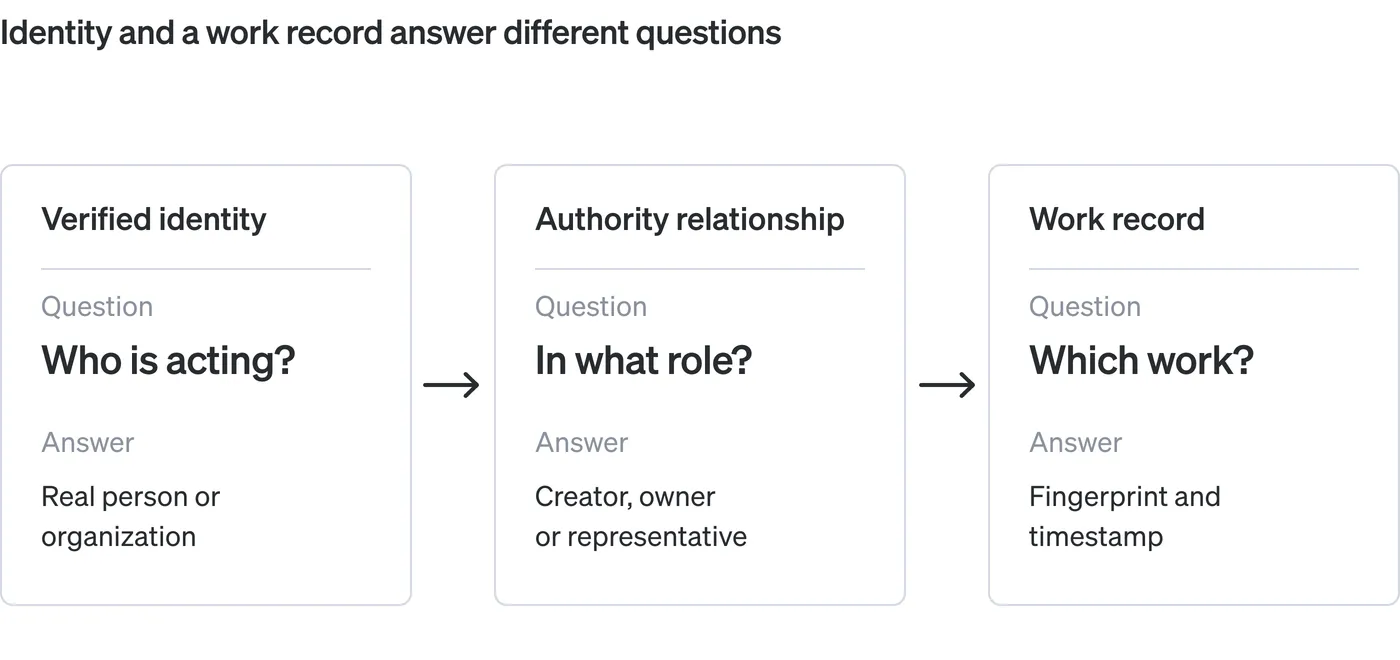
This is where consent becomes operational rather than rhetorical. The creator should know when identity is being checked, by whom and for what purpose. A verification result can confirm that the claimant is authentic without giving the requesting party a reusable copy of the underlying identity record.
Selective disclosure also helps companies. A production house can prove that the person filing on its behalf is authorized without publishing internal corporate documents. When that authority ends, the record can be updated so a former employee does not continue acting through an old account.
The work-side record
Dacr offers a practical example of the work-side record. When a creator registers, the digital certificate points to the material that was filed and the time the claim was recorded. A trusted identity system such as the Ghana Card can verify the person or authorized organization behind that filing without forcing private identity into every public interaction.
Dacr’s most relevant capability here is the stable link between a verified claimant and a particular work. Cryptographic timestamping preserves when the record was created, while a fingerprint derived from the file’s content can recognize the work even after the filename or metadata changes. The technology supports the identity design without deciding the claim on its own.
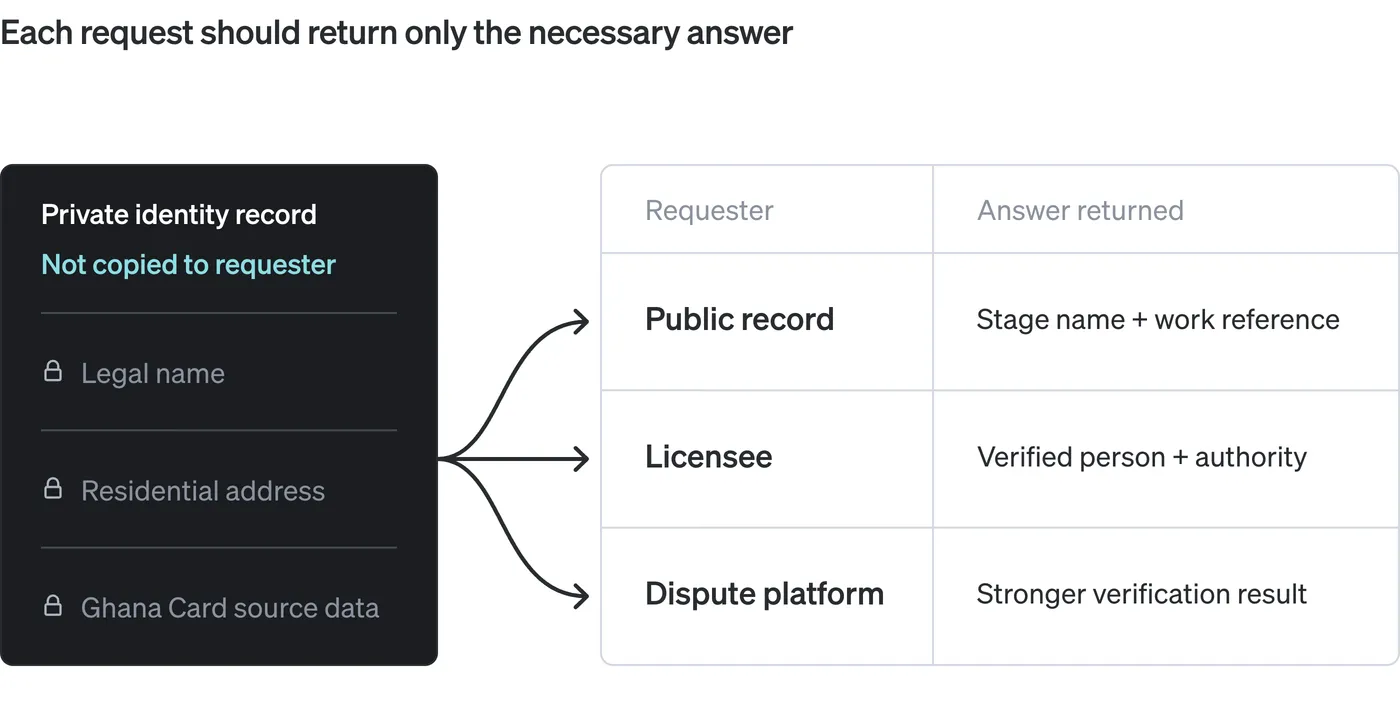
Creative relationships also require nuance. A songwriter may be the author without owning the master. A company may own rights while an individual remains the credited creator. A representative may have authority to register or license a work without becoming its owner. The registry has to record these relationships rather than forcing every participant into one label.
Auditability is essential. An institution that verifies a claimant should be able to show that the check occurred and what level of assurance was returned, while avoiding retention of more personal data than necessary. That record protects the creator when a licensee later claims it relied on no verification at all.
The same architecture can reduce fraud in inheritance and corporate ownership. A person acting for an estate or a company should prove authority through the appropriate legal record rather than by borrowing the public profile of the original creator.
Disagreement has to remain possible
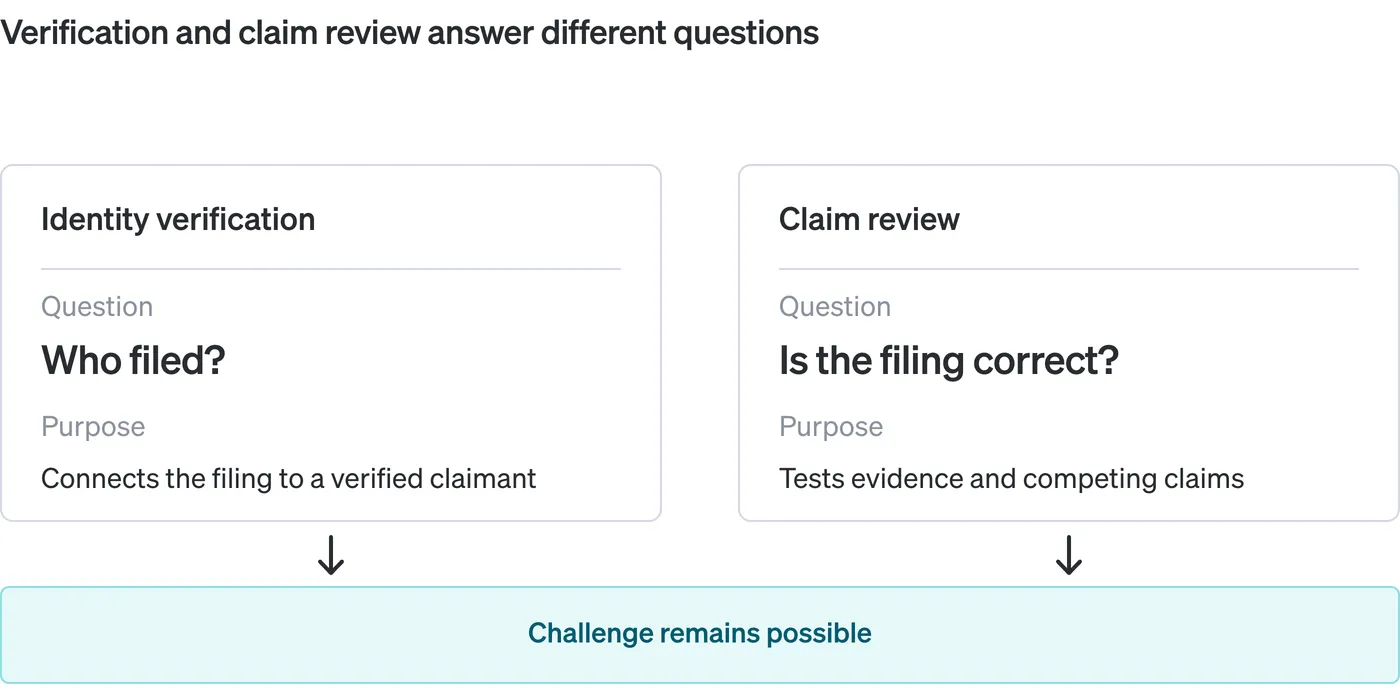
Identity systems are designed to reduce uncertainty about people, not to settle artistic history. Two verified collaborators may still disagree about authorship, and a company with valid registration documents may still overstate what it owns. A challenge process should therefore separate questions about who filed from questions about whether the filing is legally correct.
That separation protects both sides. It prevents an unverified stranger from making an anonymous claim, while ensuring that the first verified person to register cannot use identity as a shield against better evidence. Strong authentication and fair review are complementary parts of the same system.
A national identity question for the creator economy
Ghana’s young creators are already entering the economy through intellectual property. Someone may release a beat, publish a game or build a design portfolio before opening a conventional business. For that person, the first valuable asset may be a copyright rather than land or machinery. A trusted connection between identity and work can make it easier to negotiate with a serious partner, receive payment under the right name and carry a credible record into another market.
The policy challenge is to make that connection useful without making it intrusive. The strongest system will disclose less, not more, while still giving institutions confidence that a real and accountable person or organization stands behind the claim.
A simple test should guide the design. When ownership matters, can the system verify who is acting, confirm the work they are acting upon and reveal only the information necessary for that purpose? If Ghana can answer those three questions well, identity infrastructure will become a foundation for creative opportunity rather than another gate creators have to pass through.
Identity integration will succeed only if creators understand it as protection rather than surveillance. That means plain explanations, meaningful consent and clear limits on who can see what. Trust will depend as much on restraint as on technical accuracy.
A well-designed system can also reduce repeated verification. Once a trusted institution has confirmed the relationship between a person, an organization and a work, later users should be able to rely on an appropriate verification result instead of asking the creator to submit the same sensitive documents again.
The long-term value is institutional confidence. Creators gain a way to stand behind a claim without exposing their private lives, while platforms and licensees gain a reliable method of knowing that the claimant is more than a convincing profile.