On short-form platforms, reposting isn’t an edge case. It is how distribution works. Accounts exist for no other purpose than collecting other people’s videos, stripping the watermark and posting them as their own.
Some of that reach benefits you. Some of it is an account with two million followers building an audience on your work and monetising it.
You cannot register everything, and you should not try
Posting daily means hundreds of videos a year. Each file you register is its own registration, and registration is priced per work, so this is a selection decision rather than an archiving one.
Three kinds of post are worth the record. Anything that performs unusually well, because that’s what gets lifted. Anything you made rather than filmed, meaning original music, animation, graphics or a written piece performed to camera. And anything that is the first instance of a format you intend to keep making.
The daily post that did fine and will never be referenced again doesn’t need a record.
Register when it starts moving, not only before
Registering before you post is ideal, and unrealistic if you post daily.
The workable habit is a weekly pass over what actually travelled. Anything that broke out gets registered that week, which is usually before the aggregator accounts have picked it up in volume, since the reposting wave follows the performance rather than the post.
Registering an established hit months later still creates a record. It creates one dated after the copies, which is a weaker position to explain.
Be honest about what a record covers
Your video is yours. The format isn’t, and this is the part creators most often expect to work differently.
If you invent a way of presenting something and it becomes a trend, a registration of your video doesn’t give you a claim over everyone doing the trend. It records that your specific video existed on a date, in that form, under your name.
This is the idea and expression line, and it is settled internationally rather than being a quirk of any one platform. Article 9.2 of the TRIPS Agreement provides that copyright protection shall extend to expressions and not to ideas, procedures, methods of operation or mathematical concepts as such. A format is closer to a method than to an expression.
That still matters, because the common dispute in short form isn’t the trend. It is your actual video, reposted whole, with the watermark cropped out.
Sound is somebody else’s work
Most short-form video is built on audio the creator didn’t make, and the platform’s licensing arrangements cover the use of that audio on that platform.
Registering your video records your work in it: the footage, the edit, the performance, anything you made. It isn’t a claim over the track underneath, and it doesn’t travel with the video if you republish it somewhere the platform licence doesn’t reach.
Where you use audio you made, register that separately as well. Original sound gets lifted more than video does, because it is easier to reuse.
Name exports for a library you will actually search
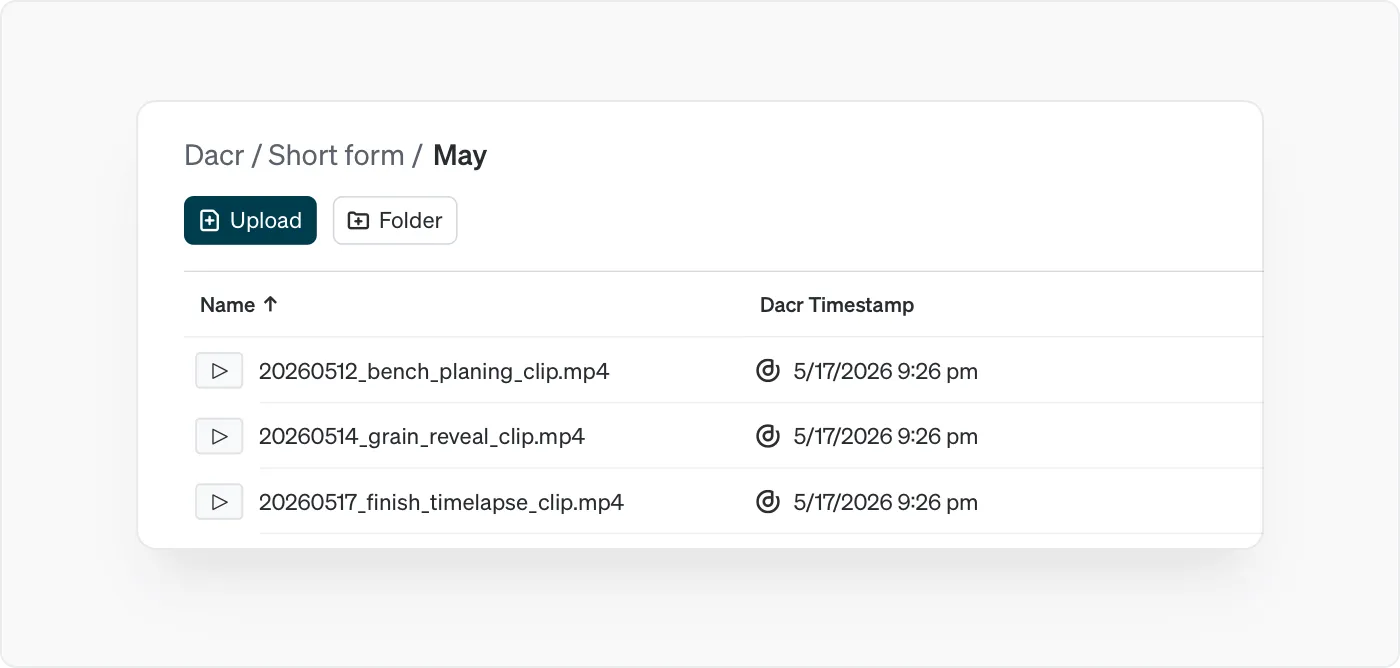
The filename you upload is permanent and stays publicly visible, and it becomes the record’s starting title. Search looks at the title.
Short-form exports default to a timestamp or a platform-generated string, which is useless a year later when you’re trying to find the video an aggregator has just reposted. A date and two words of description is enough, and it is the only moment you can set it.
When an account reposts you
Download their version. Not a screenshot of the profile, and not a screen recording if you can avoid one, because the file is what a comparison runs against.
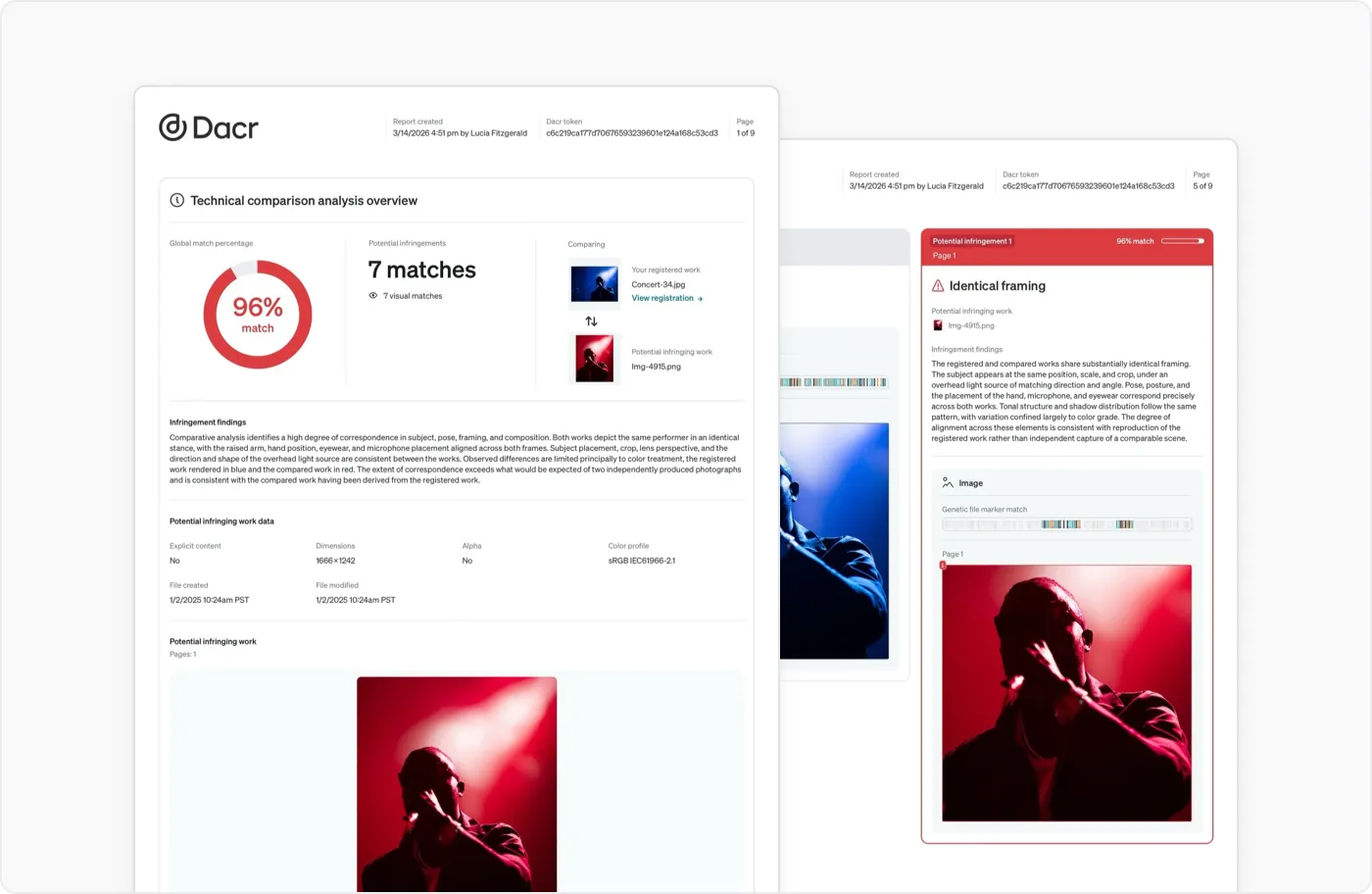
Then decide what you want, because that varies more in short form than anywhere else. A credit and a tag is often the outcome worth having from a large account, and a takedown is the right call for someone monetising a library of other people’s work.
Platform reporting tools handle most of this. What a documented comparison adds is the case where the platform declines and you need something better than a claim.