You present three directions. The client picks one, pays for it, everyone moves on.
Eighteen months later a sub-brand launches using direction two. Or the client’s new agency finds your deck on a shared drive and works up direction three. Or a regional office uses the mark you showed as a stretch option, having never been told it wasn’t included.
None of that usually involves anyone deciding to take something. It involves a deck outliving the conversation that produced it.
The unselected work is the exposed work
The direction they chose is covered by an agreement. Everyone knows what it is, what was paid, and roughly what it’s for.
The others sit in a PDF with no terms attached to them, in an organisation where the person who commissioned the project may be gone within two years. Whoever finds that file later has no way of knowing the marks weren’t part of the deal, and no reason to suspect it.
So the concept set is what you register, not the winner.
Register before the presentation, not after the decision
Register all the directions the day you present them, before the deck leaves your machine.
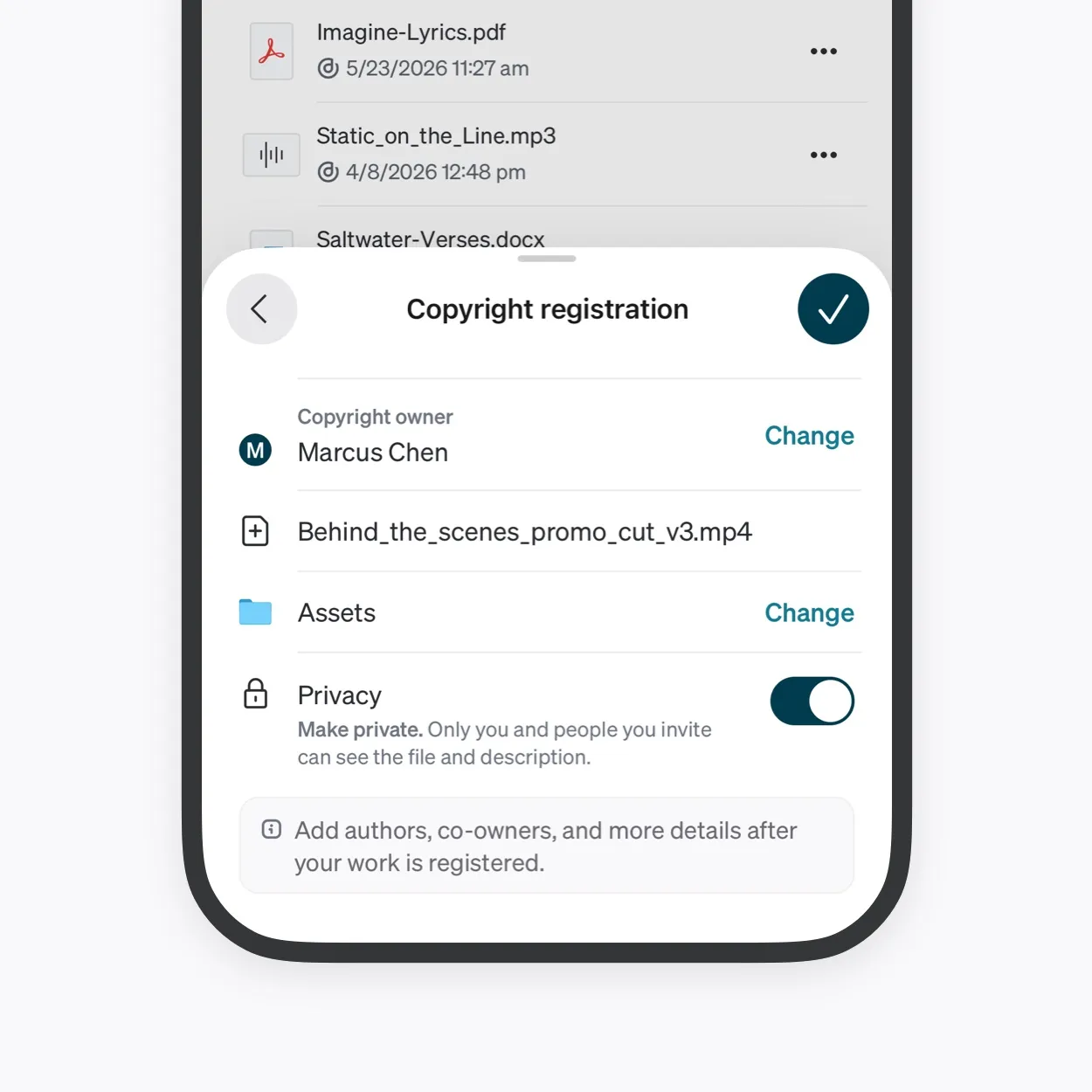
Each mark is its own registration, so register the directions as presented: the finished marks, one per concept. The forty exploratory sketches behind them can stay in your working files, since nobody is going to lift a rough.
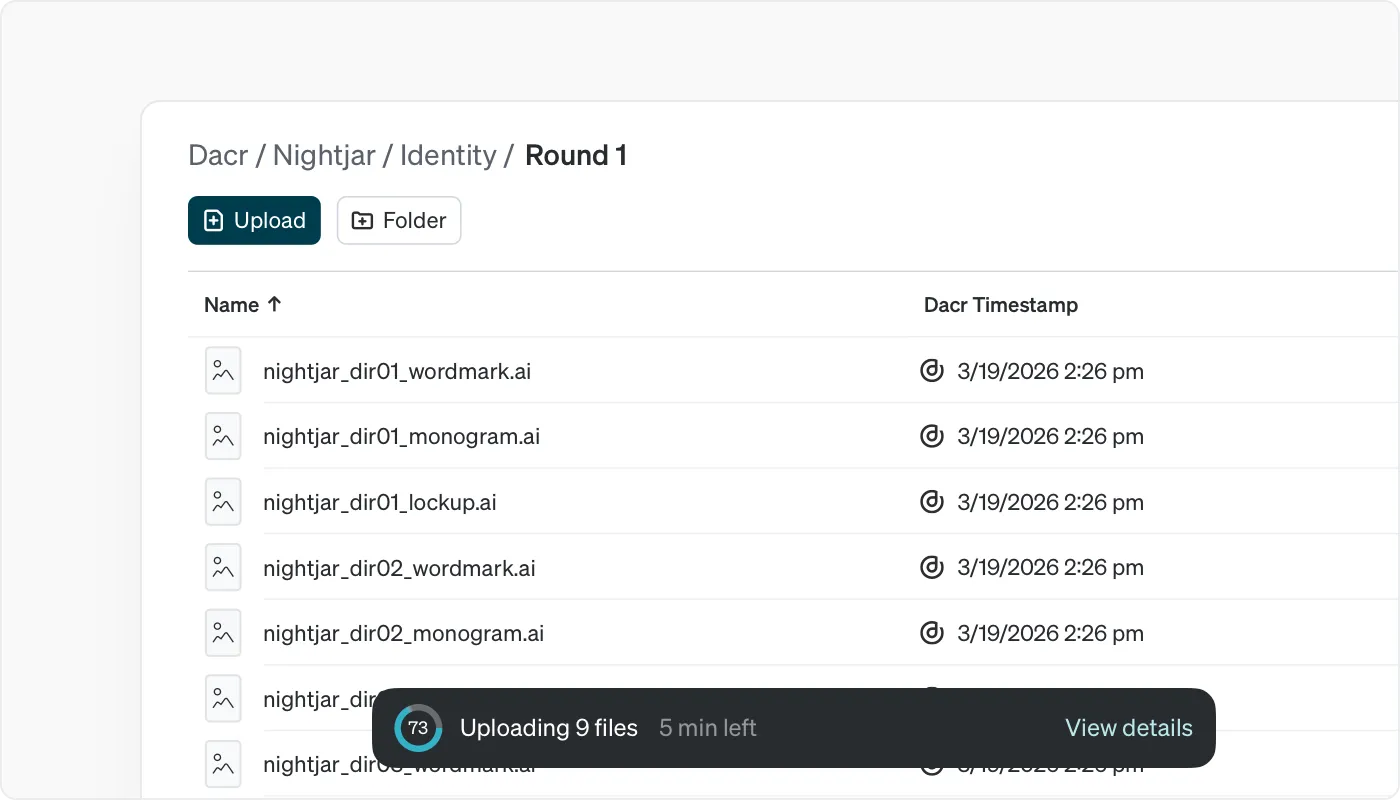
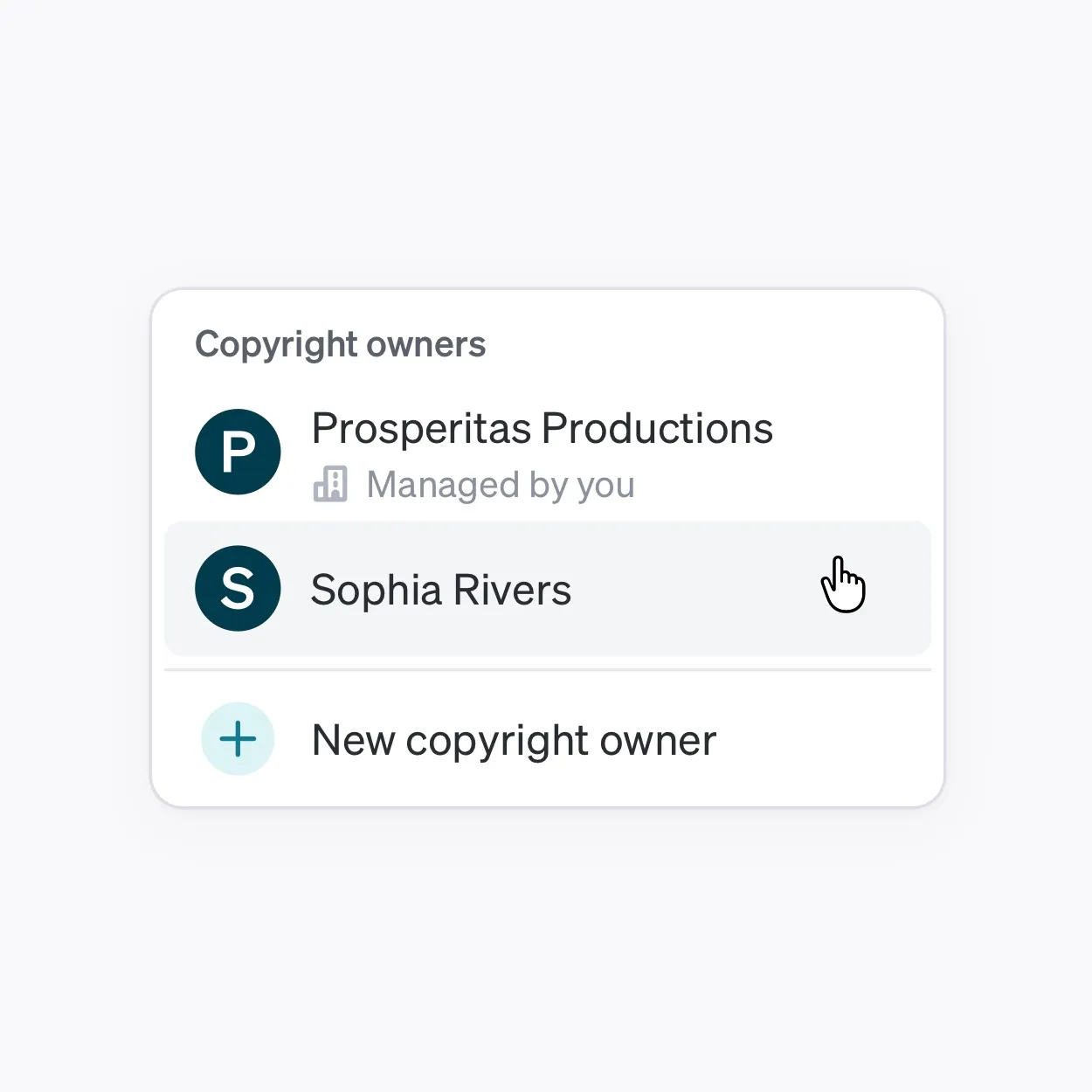
File by client and project. When a sub-brand appears two years later, finding the concept set should take a minute, not an afternoon in an archive drive.
Name the files as if someone will read them
A private registration hides the artwork and the description. The filename stays publicly visible.
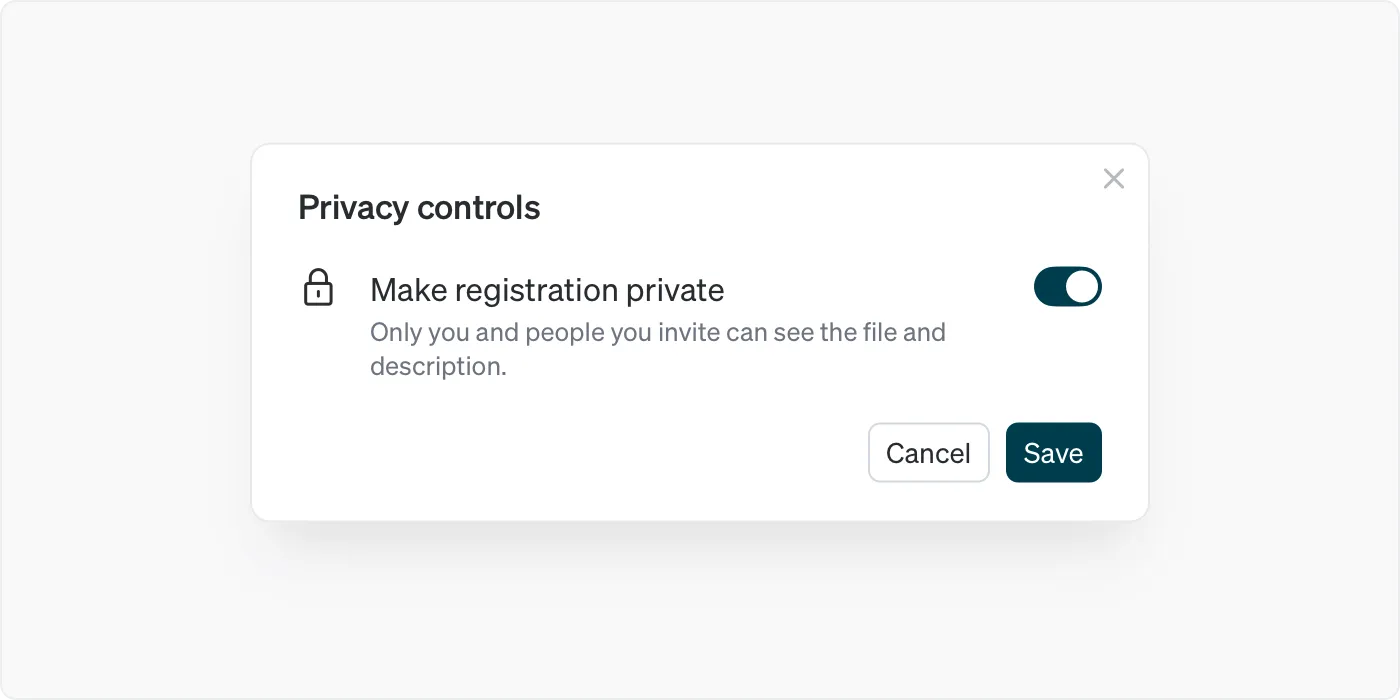
So Nightjar_Rebrand_Dir02.ai discloses the client and the project on a registration you’ve deliberately set to private, and the filename can’t be changed afterward. Neutral names before you upload, and set your default file privacy to private if most of your work is under embargo.
Say what’s licensed while you’re presenting it
Registration records what you made. It doesn’t tell a client what they’ve bought, and the client using direction two eighteen months later almost always believed they could.
Which makes the presentation itself the useful place to be explicit. That the fee covers the selected direction, that unselected work remains yours, and what it would cost if they wanted one of the others later.
That last part is worth including because it converts. Clients who like a second direction sometimes buy it. Clients who assume it’s already theirs never ask.
When a direction resurfaces
Find the registration for the concept set, get the artwork as it’s actually being used rather than a screenshot of the site, and compare them before you contact anyone.
Then remember what this is. It’s a scope conversation with a client, not an infringement by a stranger, and you may well want to keep working with them. Having the record makes it a short conversation that starts with what happened rather than one that starts with you trying to establish it.
The usual resolution is a licence fee for the second mark, which is the outcome you’d have wanted anyway.
Where it matters most
Retained clients and long relationships, where the deck from job four gets reused during job eleven and nobody involved was there for either.
And rebrands with multiple stakeholders, where the material circulates internally by design. If a project is going to be seen by twenty people at the client, register the set before the first of them sees it.