A model listing is a strange kind of shop window. The preview renders are public, the wireframe is usually public, and a buyer legitimately receives the whole thing in a form they can open and modify.
Relisting follows. Packs get bought once, repackaged and sold again on marketplaces you’ve never heard of, often with your own preview renders attached.
The source file is the work
A finished model is usually a folder: the source scene, exports in three or four interchange formats, texture maps, sometimes a rig.
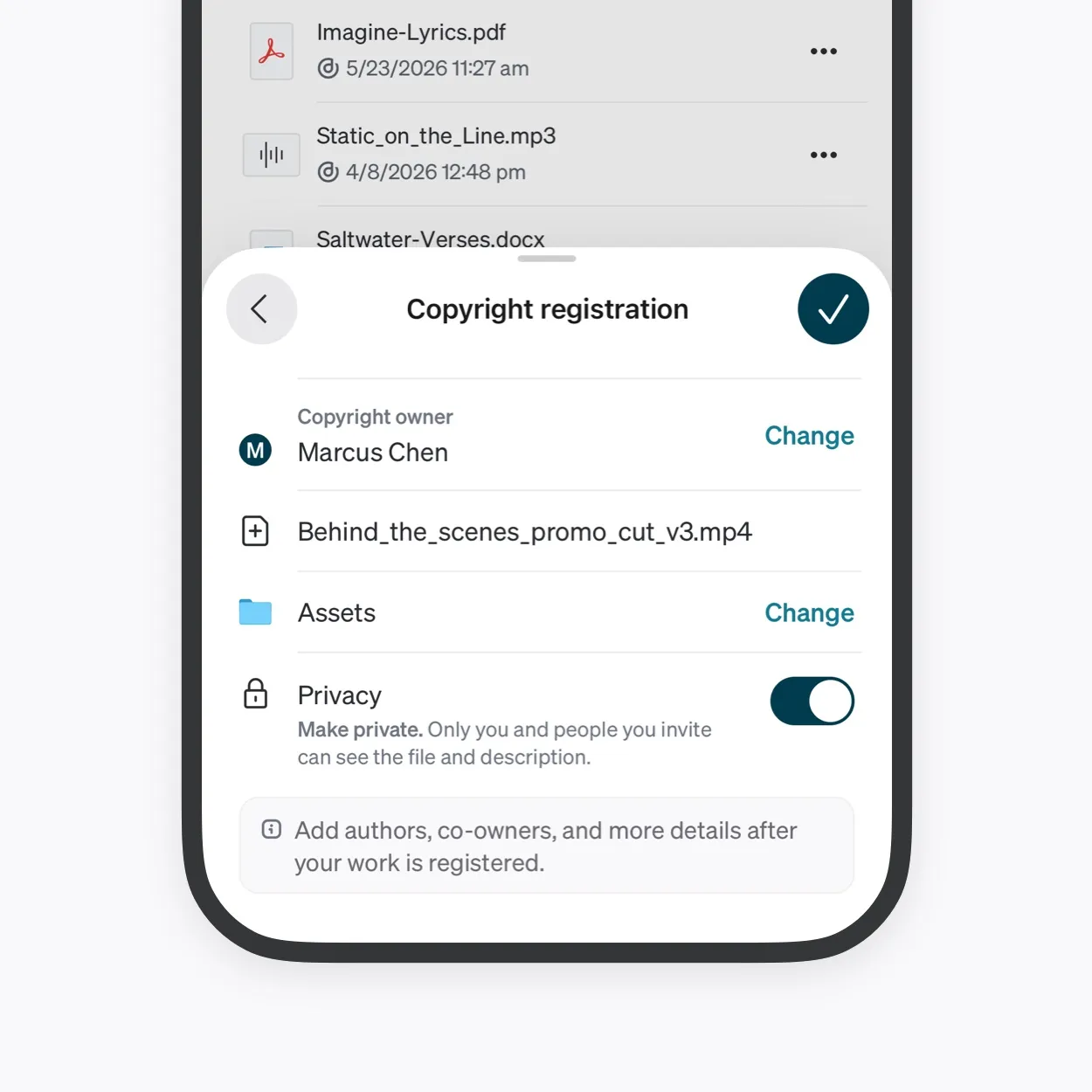
The source file is what took the time and what can’t be reconstructed from an export. Register that. The FBX, OBJ and GLB versions are conversions of it, and registering every format for every model multiplies your catalog without telling you anything the source doesn’t.
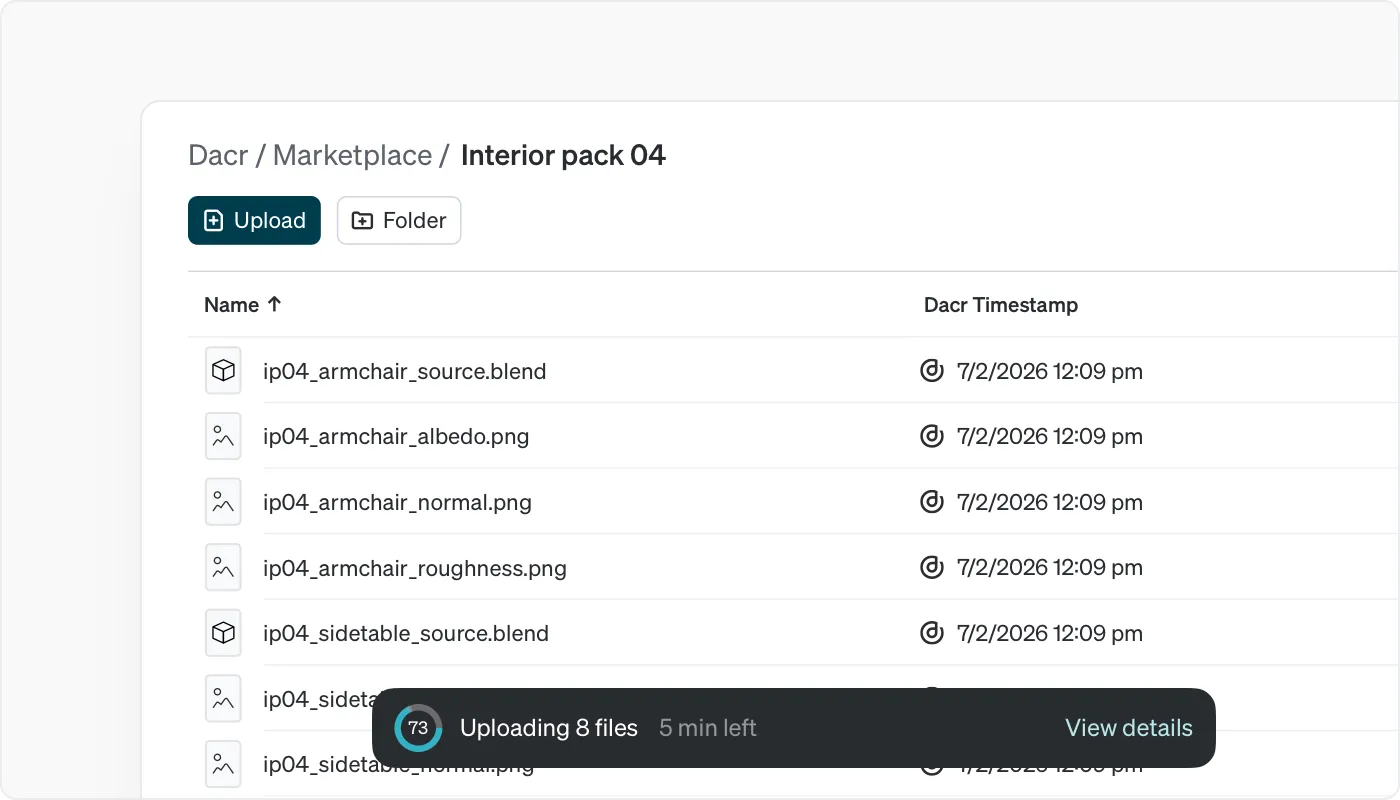
Textures are a judgement call. Maps you painted yourself are your work, and they belong on the record alongside the model. Maps generated procedurally or licensed from a library aren’t yours to register, and shouldn’t go in.
Register before the listing, not before the first sale
Exposure starts when the listing goes live. Marketplace pages are indexed and scraped, preview renders get lifted for other listings, and turntables get pulled apart by people who never buy anything.
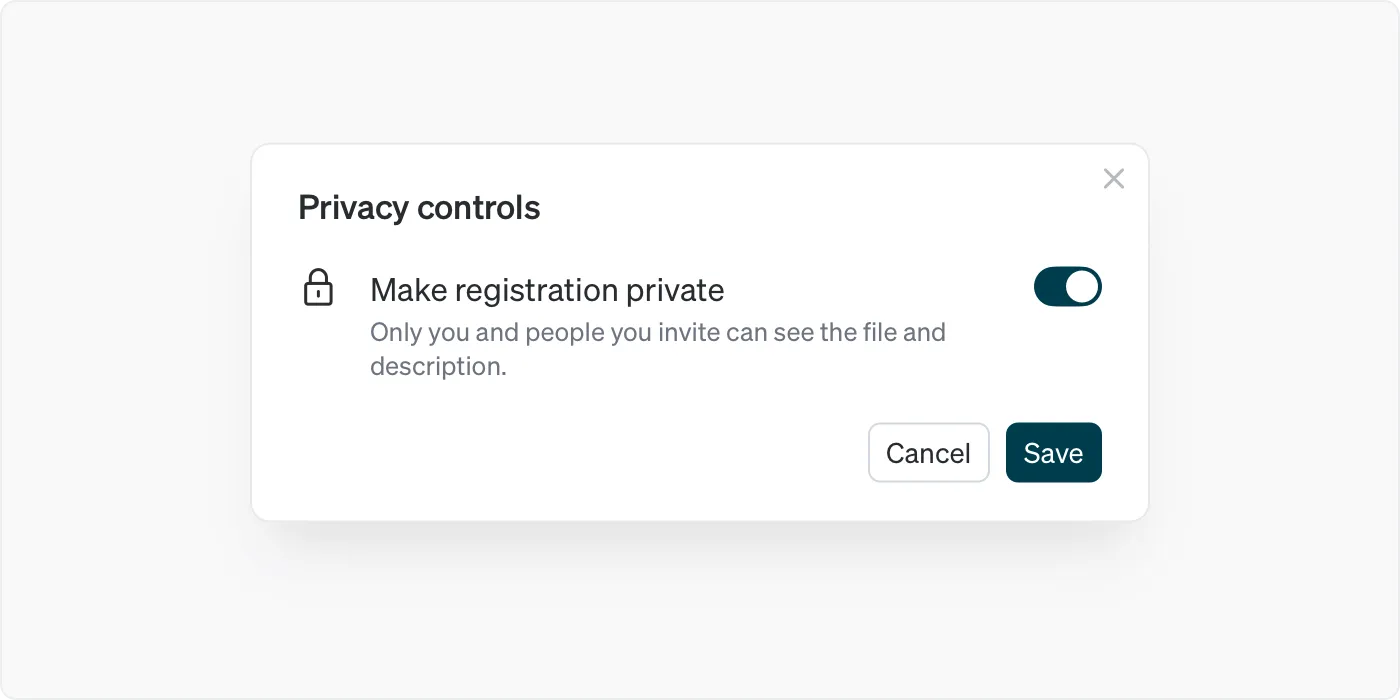
Register while the model is still unreleased and keep the registration private until launch. Private hides the file and the description; the filename, the owners and the timestamp stay publicly visible, which is worth knowing if the name gives away a client or an unannounced project.
Naming, because model files are the worst offenders
The filename you upload is permanent and public, and it becomes the record’s starting title.
Model folders are where naming discipline usually collapses: character_final_v7_REAL.blend, or a scene named after the client you’re now under NDA about. Rename at the point you package for release, which is a step you’re doing anyway.
Titles can be edited later, so a badly named catalog can be improved. The filename underneath stays as it was.
Asset packs work like a shop, not a work
A pack of two hundred props is two hundred separate models with separate value. Registering the whole folder is two hundred registrations, and since you’re choosing what to protect rather than buying coverage in bulk, that’s worth aiming at the material that carries the pack.
In most packs a handful of hero assets do the selling and the rest are filler. Register the hero assets and the pack’s showcase scene, which is the file most likely to be lifted whole.
Client work is somebody else’s to register
Models built under a studio or client contract are frequently owned by them under the agreement, and the same is true of anything made inside a game project.
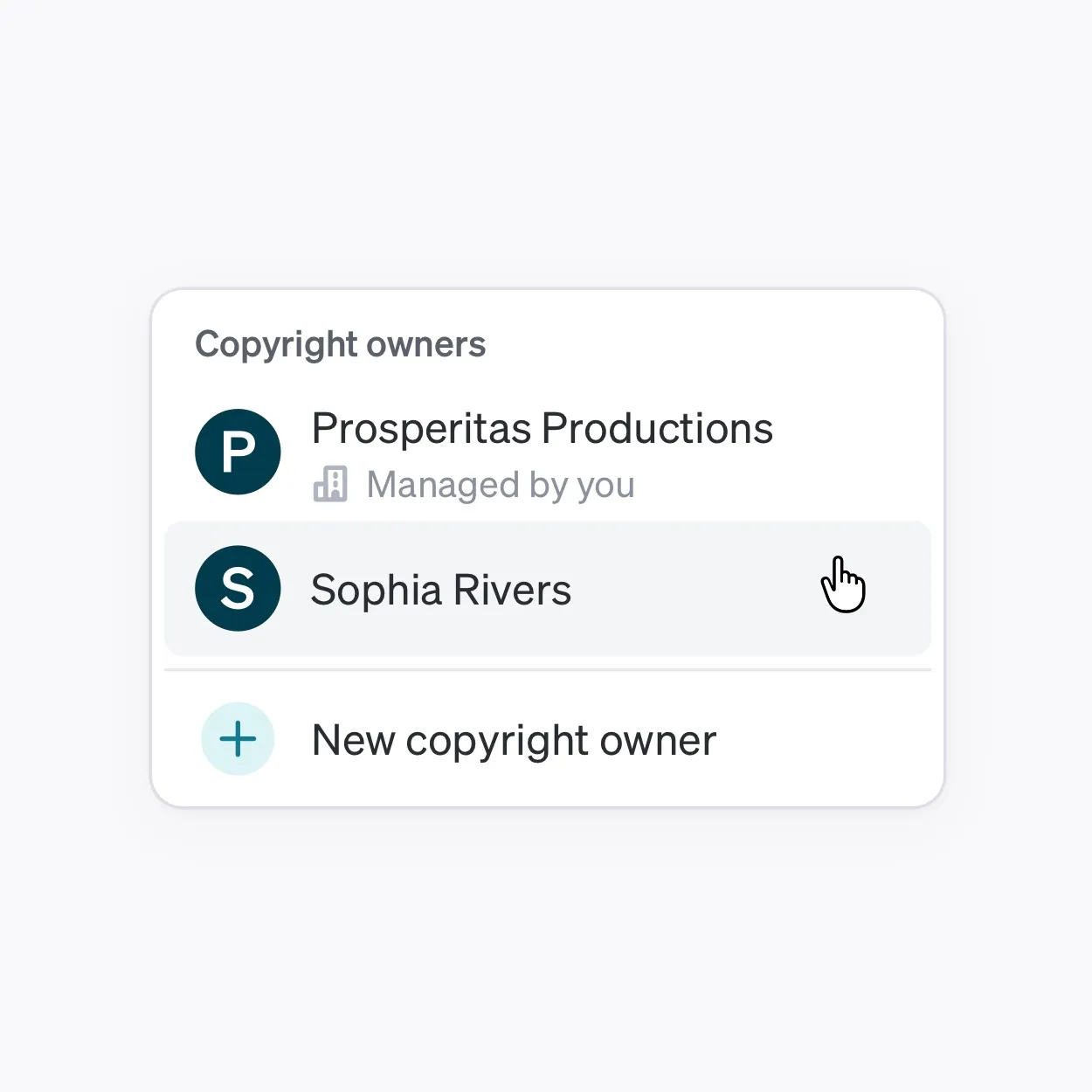
Register commissioned work under whichever owner the contract names. Getting that right at the point of registering matters, because the principal owner can’t be edited afterward, and changing it means selling or reassigning the registration.
Your own speculative work goes under your own owner, and keeping the two in separate folders means the answer to what you own is visible from your catalog rather than reconstructed.
When a model gets relisted
Buy or download the relisted version if you can. The files are what a comparison runs against, and a screenshot of the listing page isn’t.
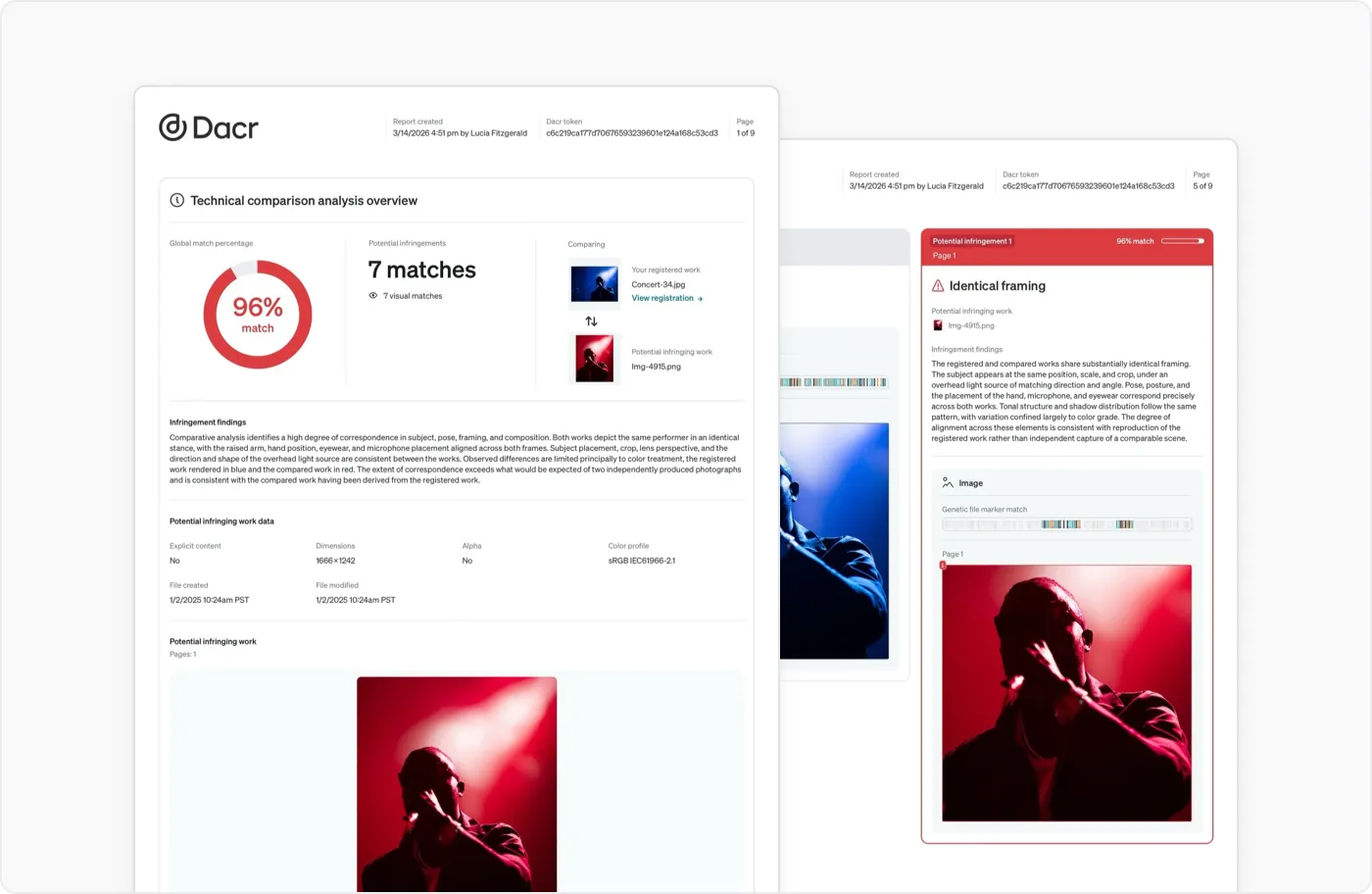
A relisted model usually isn’t a subtle case, so the report isn’t telling you something you didn’t suspect. Its job is to put it in a form a marketplace takedown process or a lawyer can act on.
Creating a report uses one report credit, spent at creation whatever the report finds. It comes back if the report fails to process or the upload fails.
Where it fits
The natural slot is packaging. You’re already exporting, renaming, writing the listing description and rendering previews. Registering the source files is a couple of minutes inside a session you’re having anyway, and it means the record exists before the listing does.