A feature score might be sixty cues written across four months, delivered in batches against a picture that keeps changing, with half of them revised at least once.
Register none of it until the score is finished and the record arrives after the material has been through an edit suite, a music editor, a mixing stage, and however many people that involves.
Each delivery is a registration point
The cues in a delivery are finished as far as you’re concerned, they’re about to leave you, and they’re about to exist in a form other people work with.
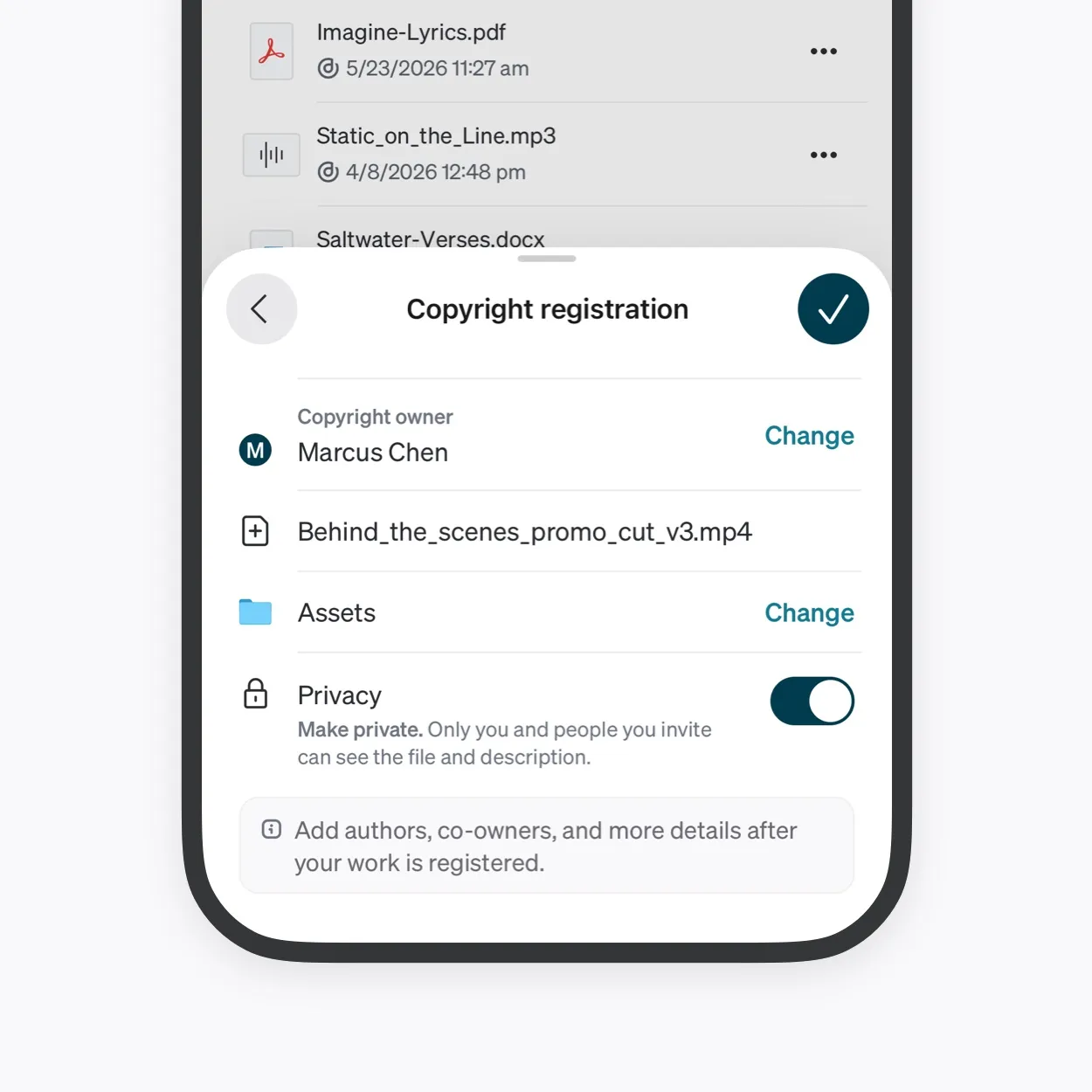
Select the whole delivery in one pass and the same owner, folder, jurisdictions and privacy get applied across it. Each cue still becomes its own registration, so the cue count and the registration count are the same number. Worth knowing when you’re planning coverage for a sixty-cue score.
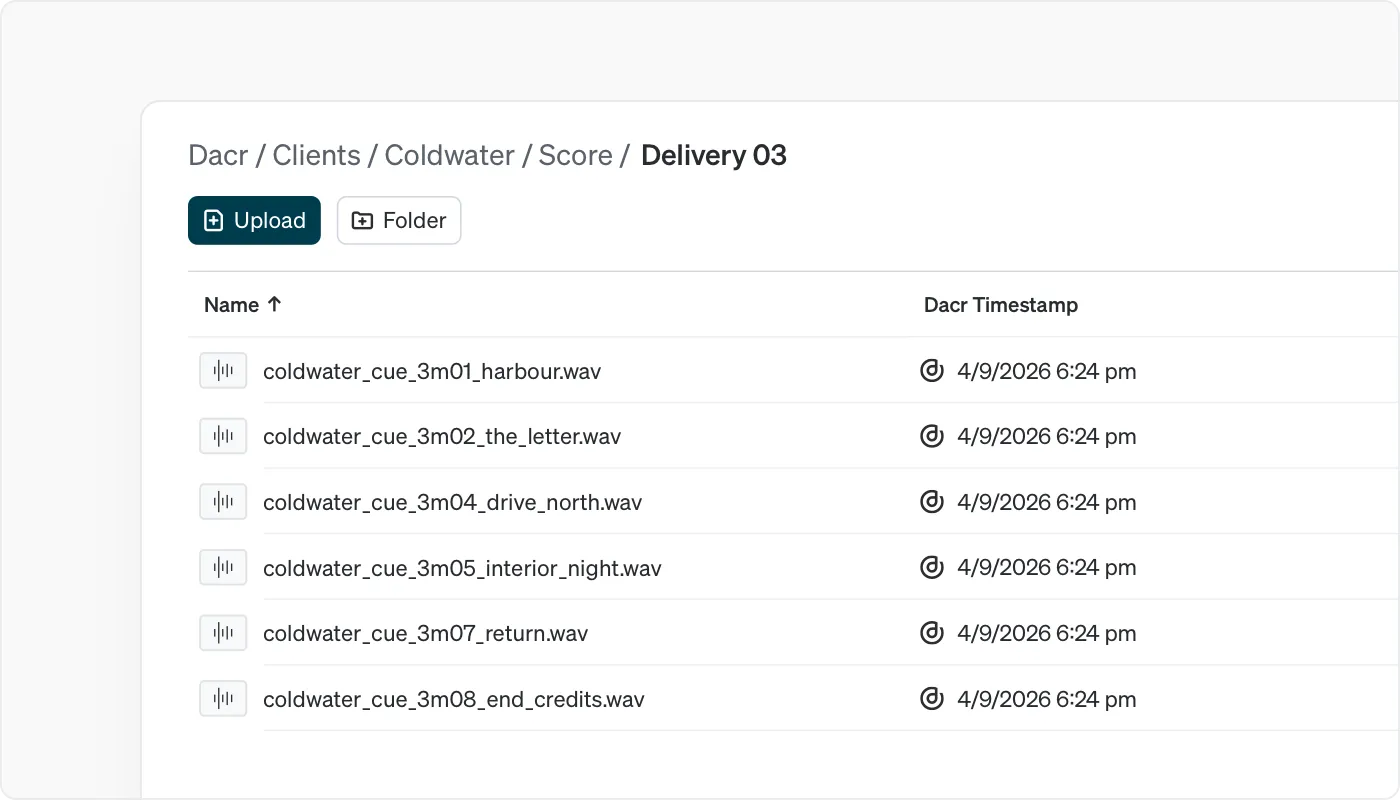
File by production so the score stays together as a body of work.
Which revisions warrant a new record
A cue rewritten to picture is arguably a new work. Extending a tail by two bars isn’t.
A workable rule: register a revision when the music changed, not when the timing did. Given that each registration carries a cost, being deliberate about this is worth more on a sixty-cue score than on a single track.
Whatever you decide, be consistent, and name versions so you can tell them apart. The filename you upload is permanent and public. The title is editable afterward, and the filename is what the record starts with.
Cover the film’s markets, not just yours
A score travels wherever the film travels, and unlike most speculative work you often know that in advance. The production has distribution plans, festival plans, or a studio behind it.
Dacr Members have the option of registering in additional countries, and coverage added later is timestamped from the moment it’s added. A cue registered only in your own market and extended two years on has a record in the film’s major territories beginning two years after the film opened.
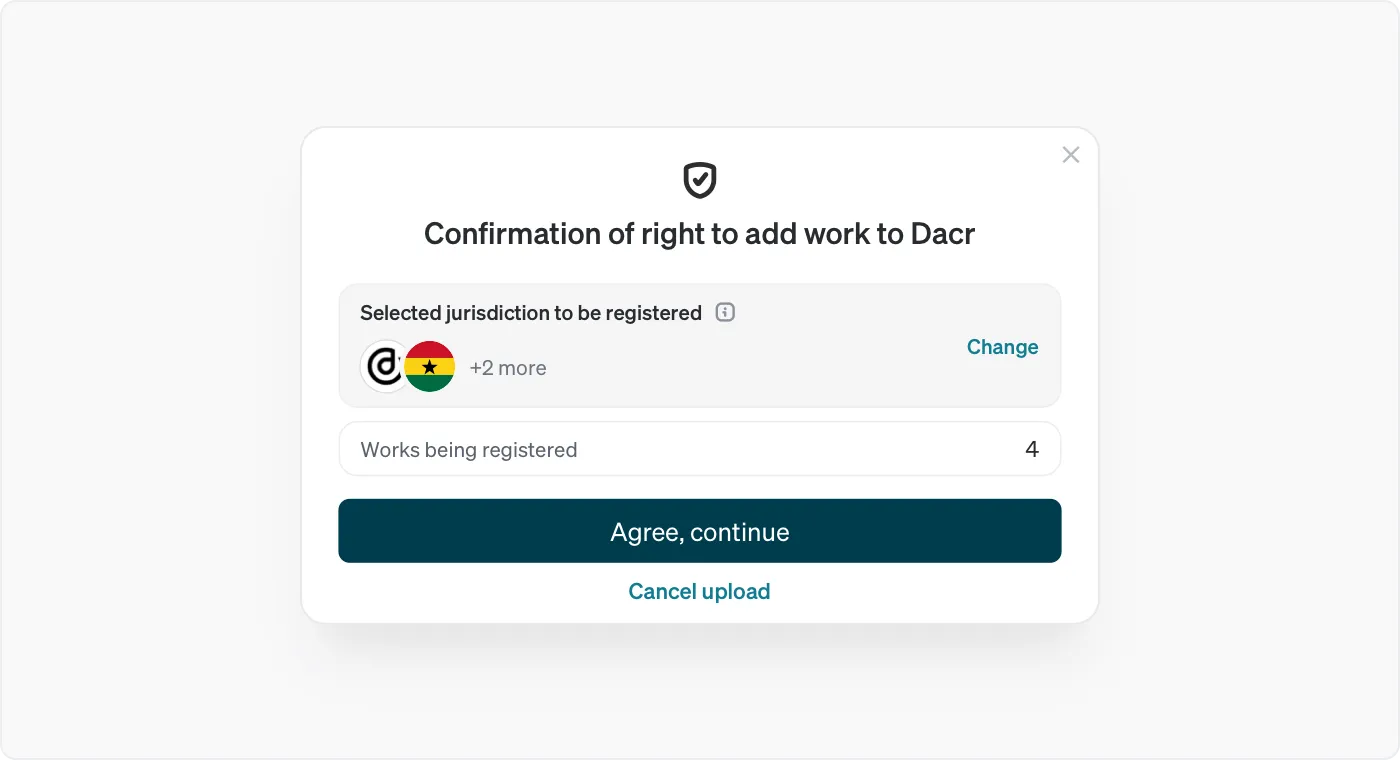
Ask the production where the film is going before your first delivery, and set the list against the answer rather than against habit.
Who owns a score is set by the contract
Scoring work is frequently commissioned under terms that place ownership with the production company, the studio, or a publisher rather than with the composer.
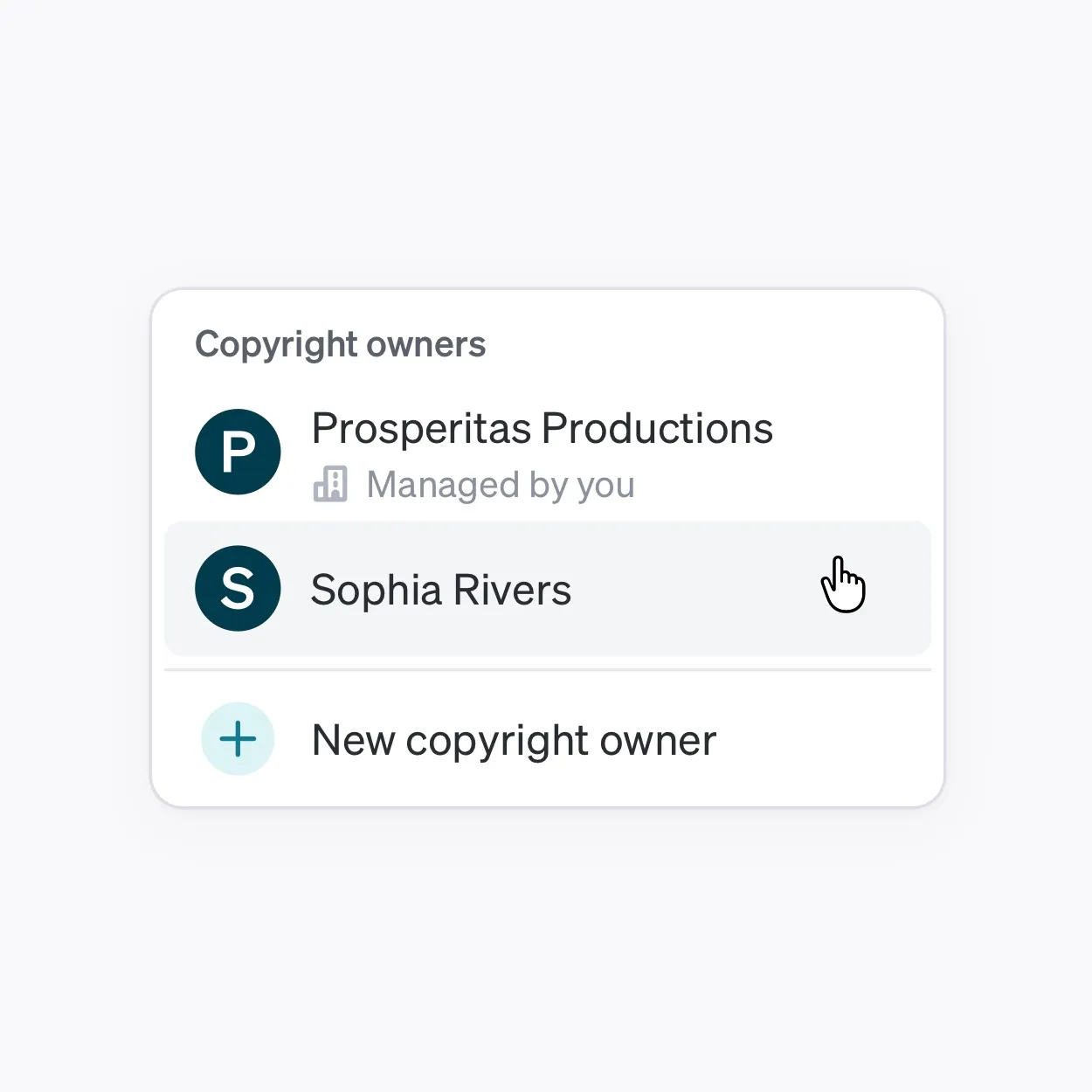
Register under whichever owner your agreement names. If your deal assigns the score to the production, registering under your personal owner creates a record that contradicts it. If you retain the composition while licensing the recording, register accordingly.
If you don’t know which of these describes your contract, find out before you deliver rather than after the film comes out.
Private until the film is out
Scores sit under the production’s release schedule and often under a confidentiality obligation. A private registration hides the work and the description, but cue filenames stay publicly visible, so a cue called 03_MainTitle_NIGHTJAR.wav discloses the project regardless of the privacy setting.
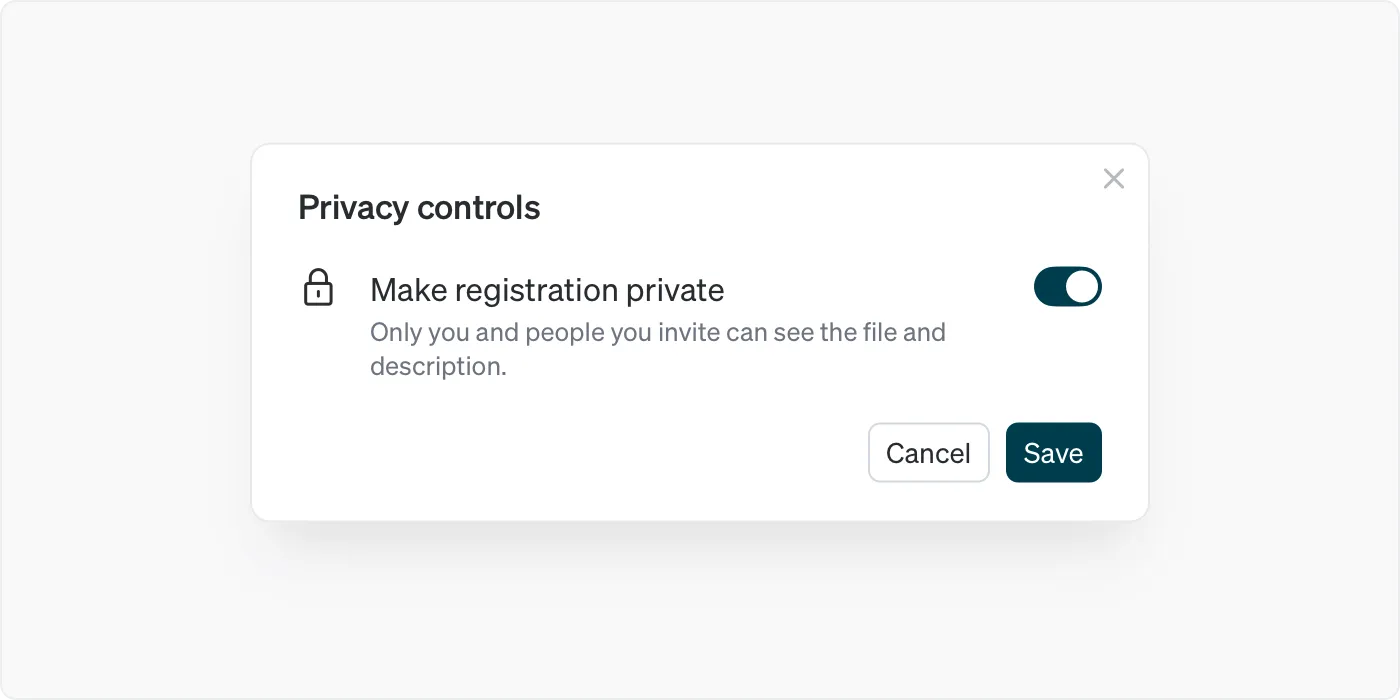
Name cues for an unannounced film accordingly, register private, and make the registrations public when the film and the soundtrack are released.
Why the per-delivery record earns its keep
Scores get reused. A cue appears in a trailer, a promo, a sequel, or a different production entirely, sometimes with permission, sometimes because a music editor had the files.
A record tied to each delivery lets you say precisely what you wrote and when you handed it over, which is what those situations turn on.