A pack goes live on a Friday. By Sunday someone has bought it, unzipped it, and posted the folder to a Discord with four hundred people in it. Within a week it’s on two file-sharing sites and relisted on a marketplace you’ve never heard of under a name that isn’t yours.
The reason packs get copied more than almost anything else in music is structural. The product is the files, and the buyer’s legitimate use involves copying them, onto a drive, into a DAW, into projects. There’s no version of this product that isn’t already a folder on someone else’s computer.
Two hundred files is two hundred registrations
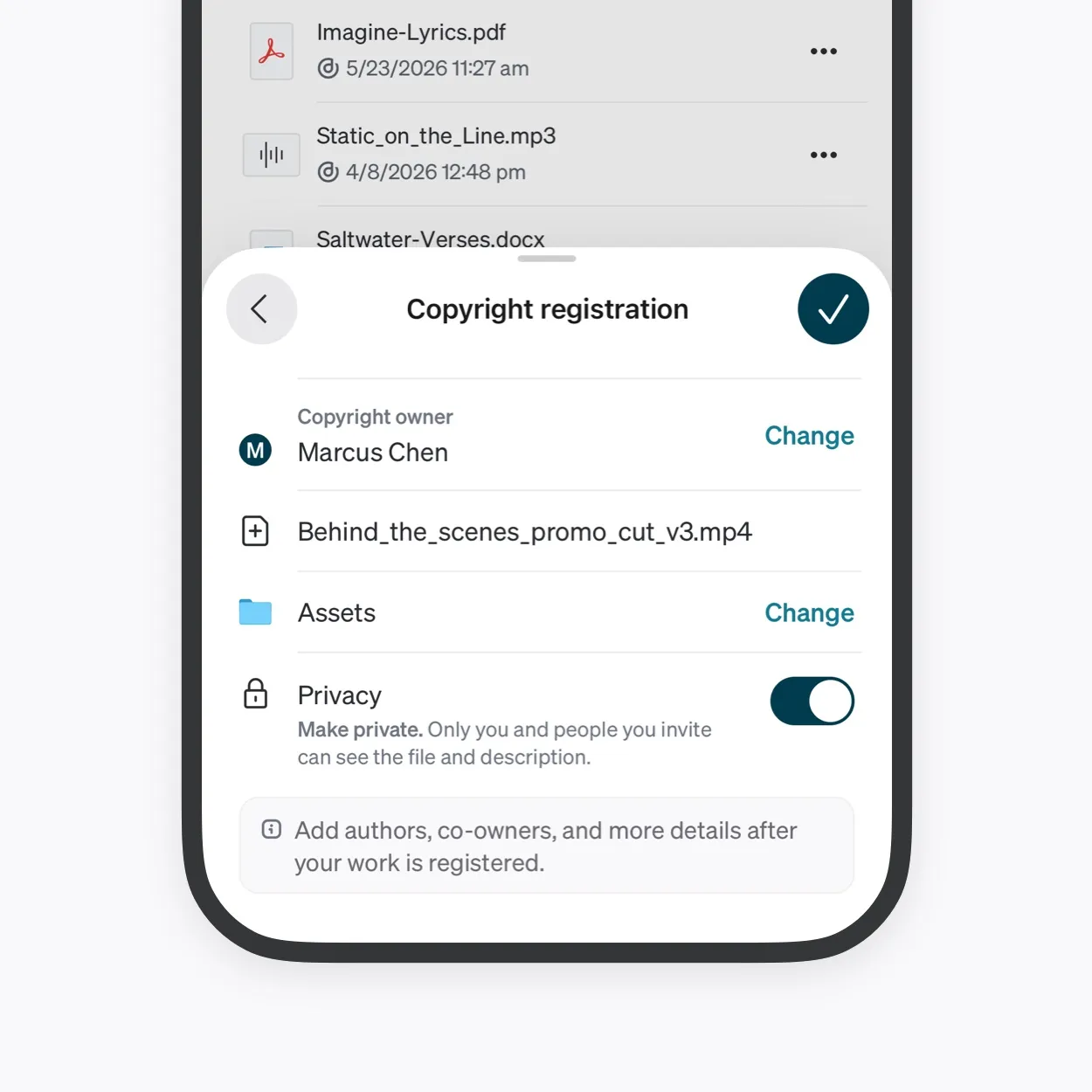
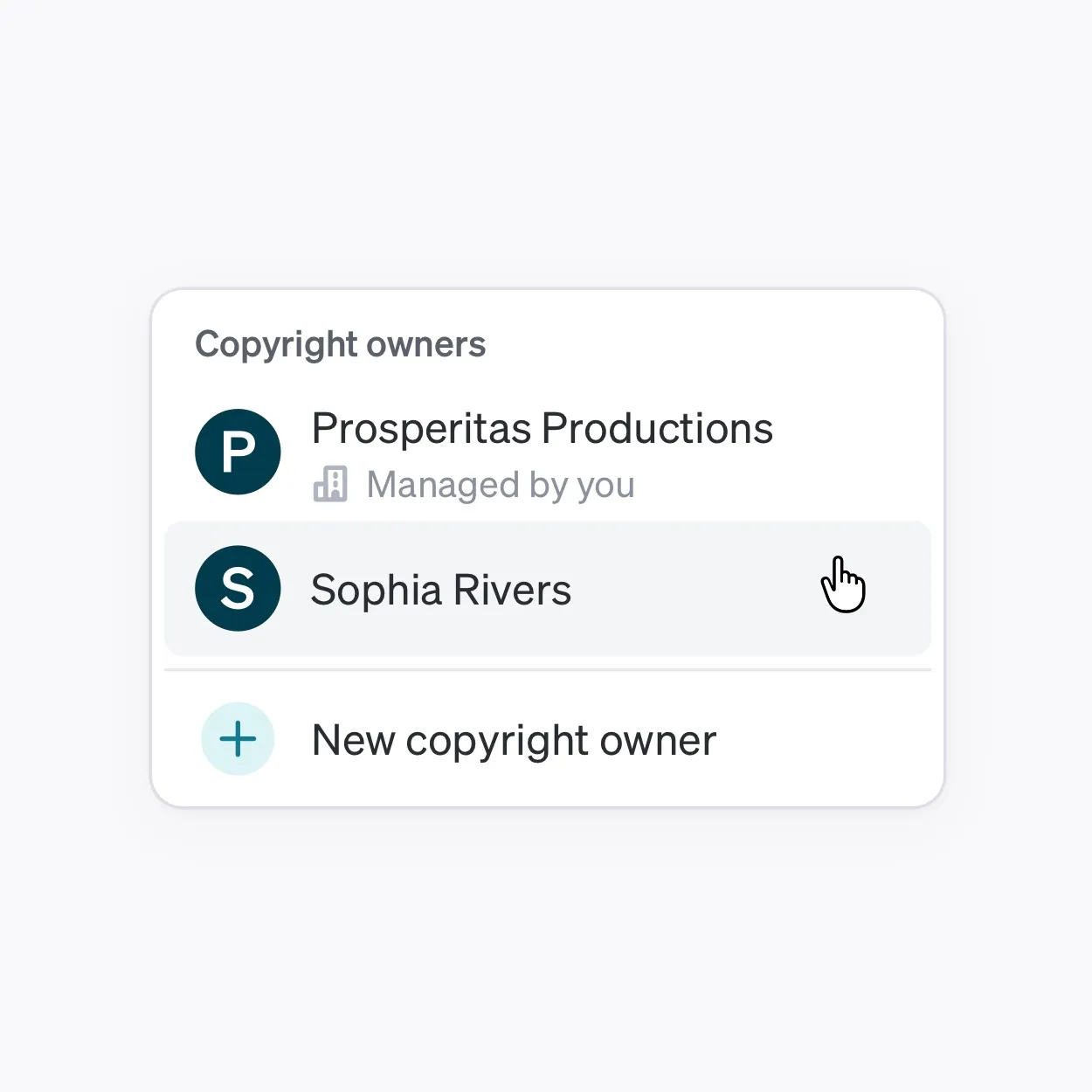
Every file you register is its own registration. Uploading a folder at once applies the same owner, folder, jurisdictions and privacy across everything in it, and then produces a registration per file.
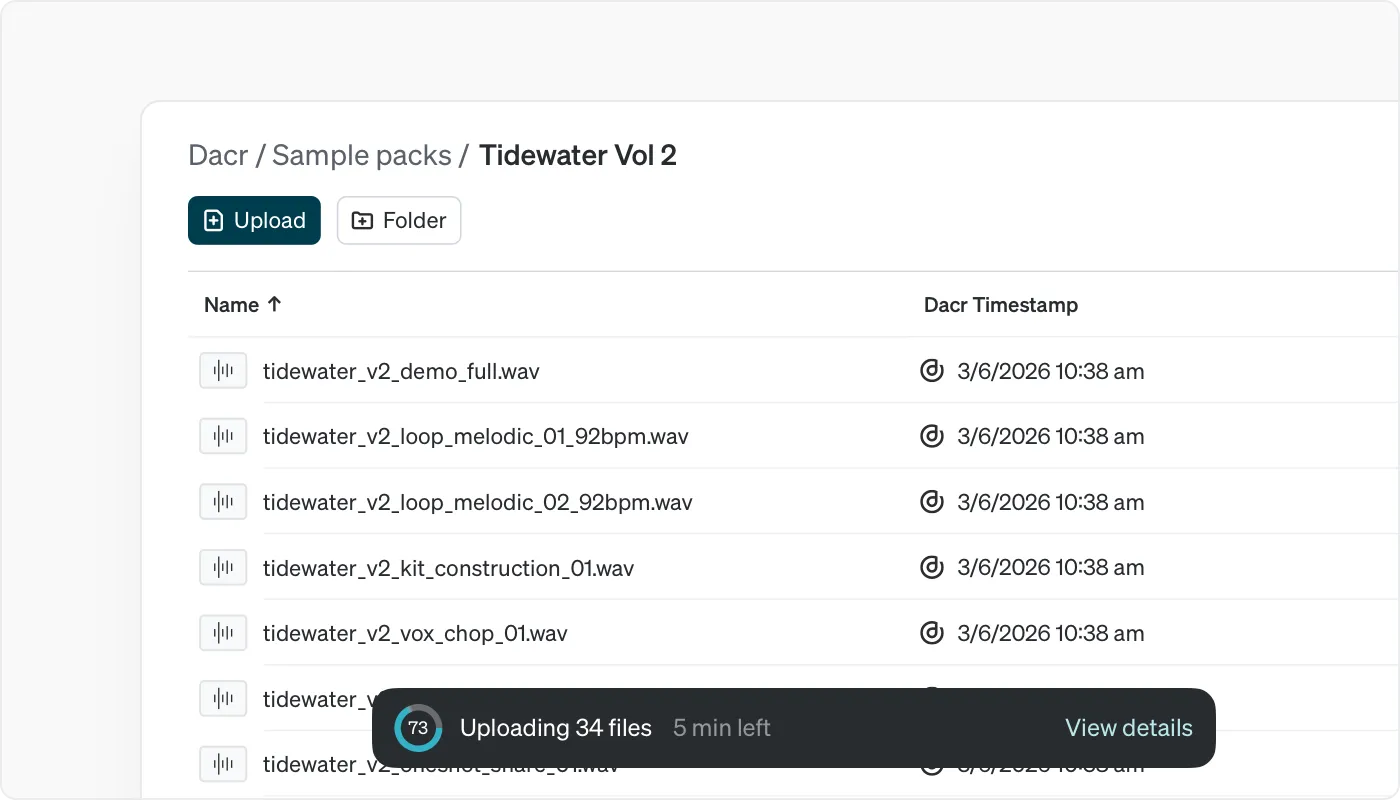
A two-hundred-file pack could be two hundred registrations, and it doesn’t have to be. Registration is priced per work, so you decide which material in the pack goes on the record rather than committing the whole folder by default.
That’s a useful amount of control. A pack isn’t a single indivisible product on the record, so you can put the parts that carry it on the register and leave the filler out.
Some of a pack is identifiable and some of it isn’t
Generic one-shots are a different case. A closed hat or a stock 808 is hard to distinguish from ten thousand others, which means a comparison has less to work with.
Melodic loops, vocal chops you recorded, one-shots you designed rather than sampled, full construction kits: these you could point at and say why a copy is obviously the same thing. For most packs that’s a fraction of the file count, and it’s the fraction carrying the release commercially.
The demo is a work in its own right
Almost every pack ships with a demo track, usually the most distinctive thing in the release and the item most likely to be lifted whole.
Register it. One file, it represents the pack, and it’s what a comparison is most likely to be run against.
Names are the product, and half of them are permanent
The filename captured at upload never changes and stays publicly visible on the registration. The title is seeded from it and can be edited later.
For a pack that matters more than for most work, because filenames are what buyers search, reference, and complain about in reviews. Register the names the pack ships with. If you’re renaming from working titles as part of release prep, do that first, otherwise your record and your product describe different things, which is exactly the wrong position when you need to compare them.
Countries, if you’re a Member
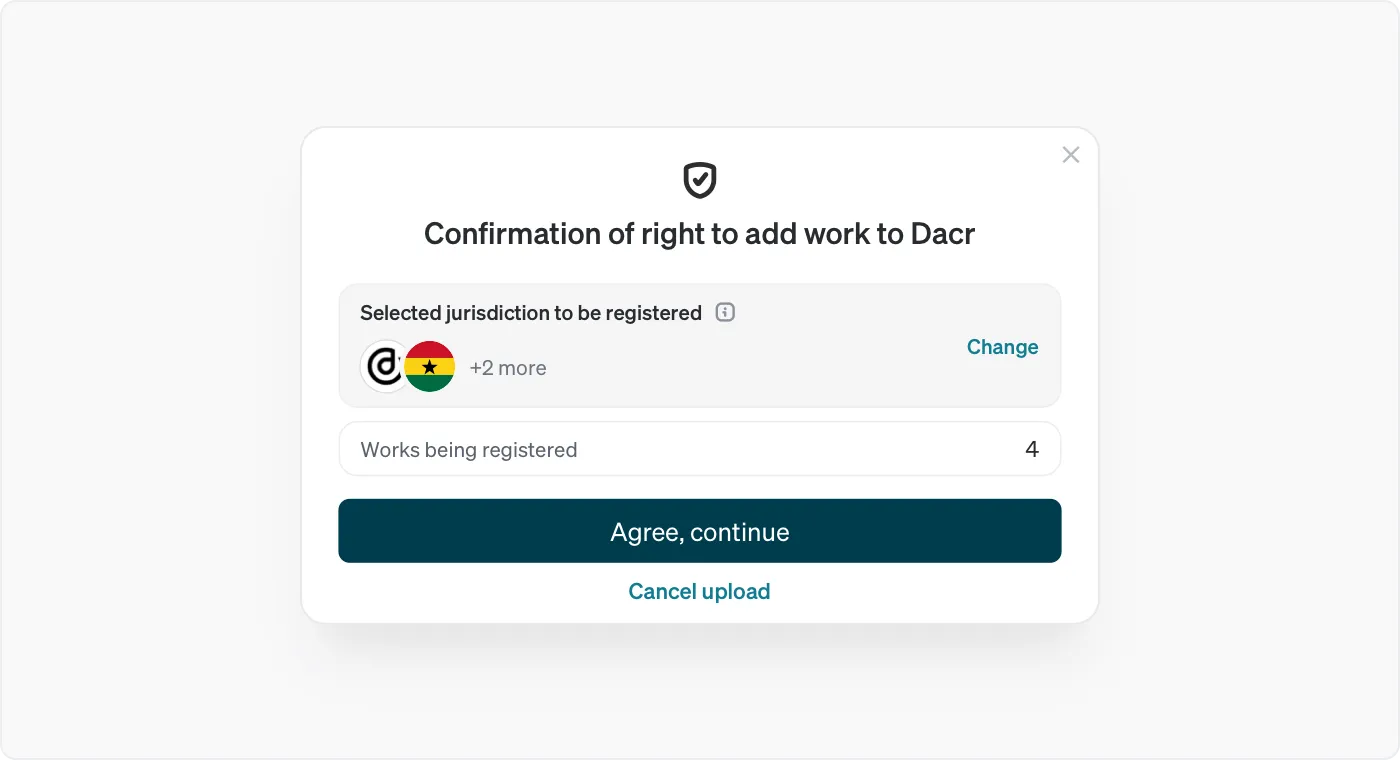
Dacr Members have the option of registering work in additional countries. Coverage added later is timestamped from the moment it’s added, so a pack resold in a market two years from now, with that country added when you notice, has a record there beginning then.
Because you’re paying per work and per country, match the list to where the pack actually sells. Marketplace analytics from your previous releases tell you that directly. Start with the markets doing real numbers and add others as a release proves itself there.
Listing is the exposure point, not first sale
Marketplace pages are indexed, previewed, and scraped, and preview audio gets pulled apart by people who never buy anything.
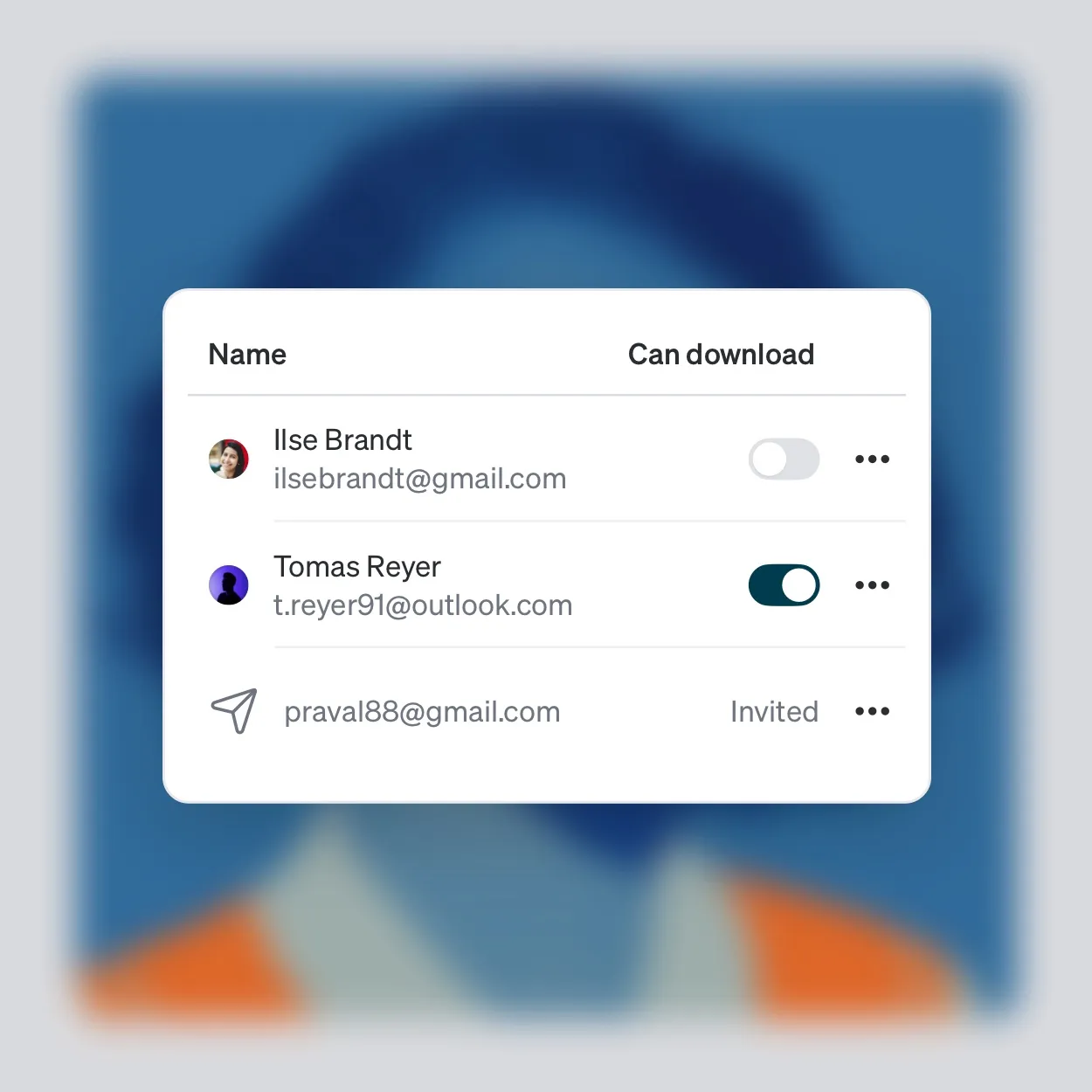
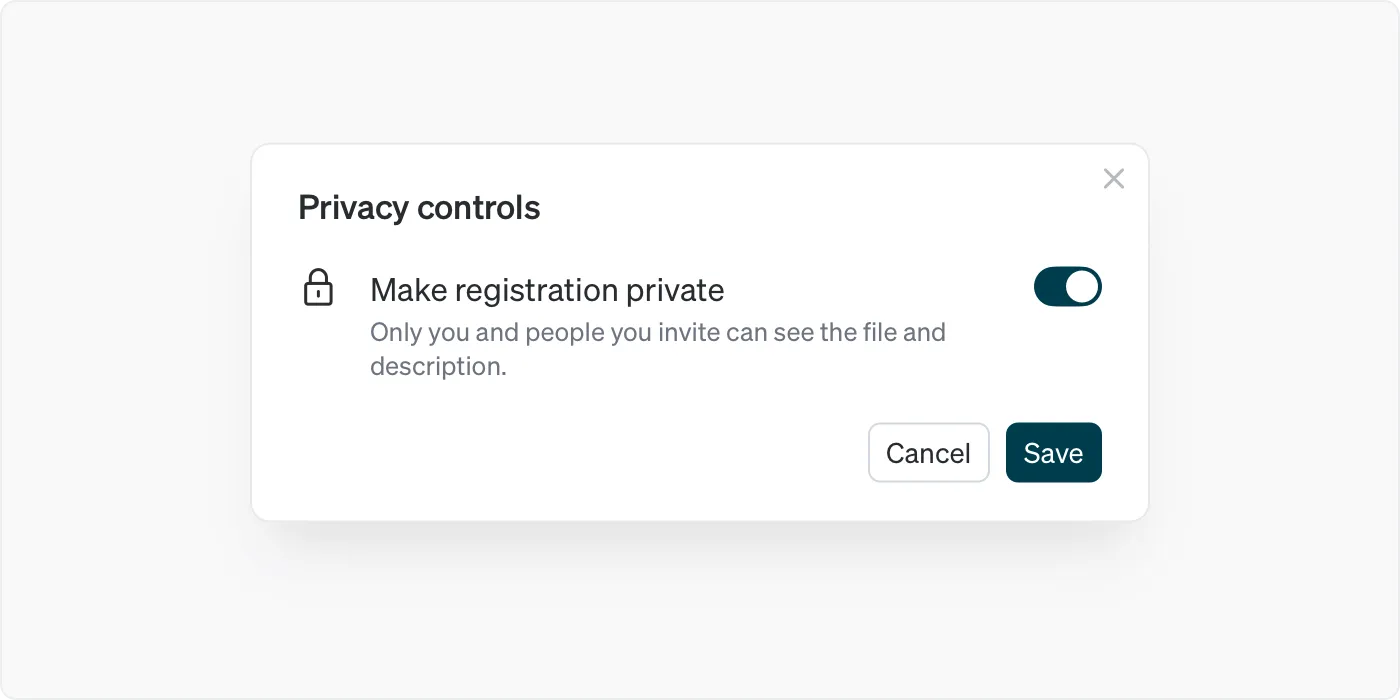
Register while the pack is unreleased and keep the registrations private until launch. A private registration hides the work and the description, though the filenames stay publicly visible, another reason to settle naming before you upload.
When it turns up somewhere
Buy or download the relisted version. Not a screenshot of the listing. The actual files, because that’s what a comparison runs against.
Then compare your registered material against what you obtained.
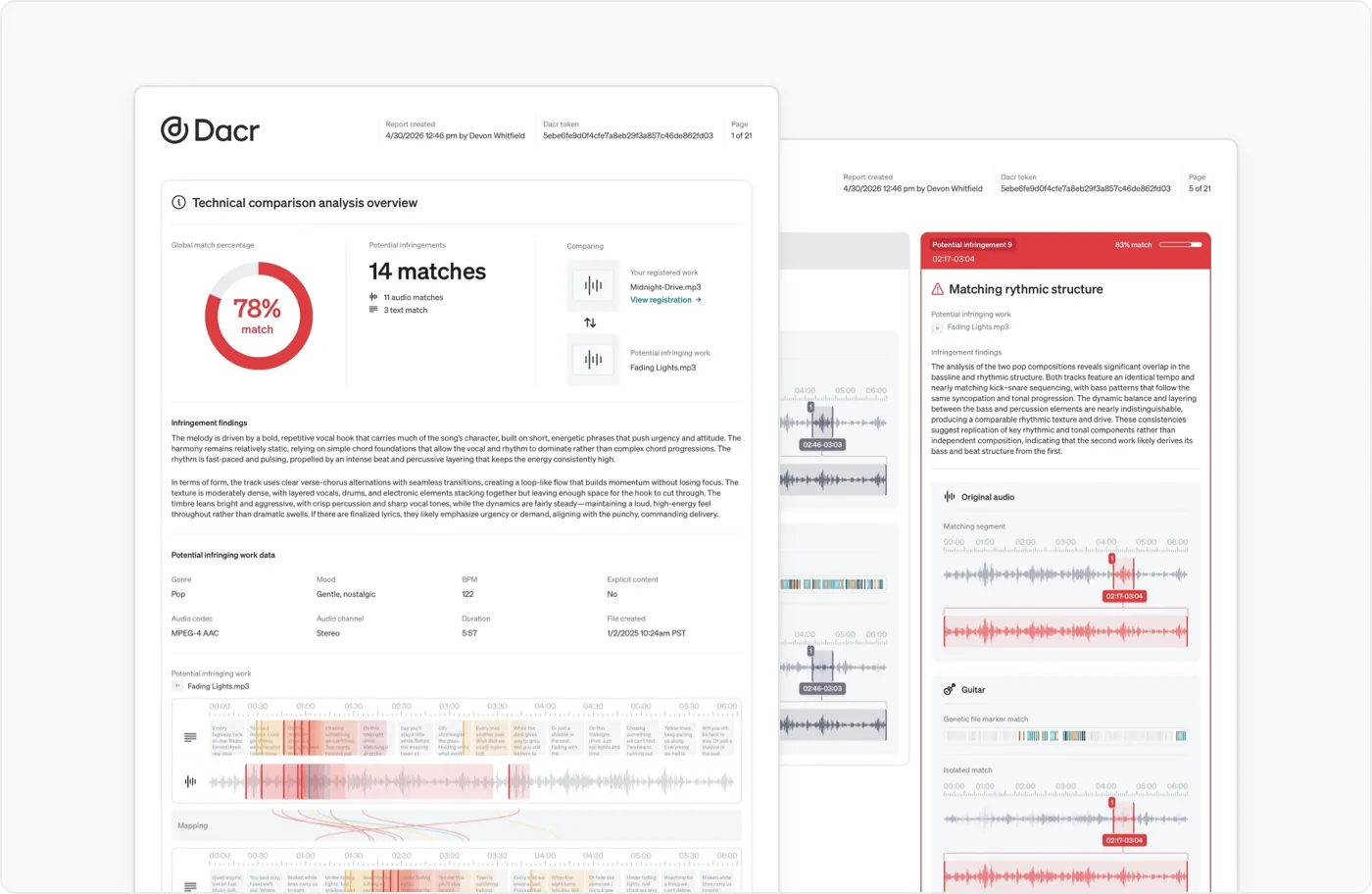
A relisted pack usually isn’t subtle, so the report won’t tell you anything you didn’t already suspect. Its job is to put that in a form a marketplace takedown process or a lawyer can act on.
Material you didn’t make
Cleared samples, licensed field recordings, third-party instrument content, a vocalist you commissioned. The terms you obtained them under govern what you can sell, and registering the pack neither changes those terms nor confirms you’ve met them.
Keep the licences filed with the release. When a marketplace asks, and for a pack that does well, one eventually will, you want to be forwarding a file rather than searching your inbox for an old invoice.