A remix contains two things: someone else’s work, and yours. Registration only ever concerns the second.
That sounds like a limitation. In practice it’s the thing that makes the rest of it straightforward, because it separates the question you can act on from the question you can’t.
What’s yours in a remix
Your arrangement. Your production. Any new parts you wrote or performed. The bassline you replaced, the drums you programmed, the vocal you cut for the bridge, the synth work that makes it recognisably your version.
That’s a real body of work and it’s what a registration records. It gives you nothing in the original composition or the original recording, and it doesn’t need to. Those belonged to someone else before you opened the session and still do.
Which is worth saying plainly, because remixers frequently register nothing at all on the assumption that a remix isn’t theirs to register. The remix is yours. The thing underneath it isn’t.
Clearance is a different question and it comes first
Whether you can make and release the remix at all depends on permission from the rights holders in the underlying work. That’s a licensing question governed by the agreements involved and by the law where you are.
Registering your remix doesn’t clear it, doesn’t substitute for clearance, and doesn’t indicate that clearance exists. Nothing about a registration speaks to the status of the release.
If you’re unsure where you stand, that’s a conversation with the rights holder or a lawyer before release rather than after, and it’s a much better conversation to have while the remix is still unreleased.
Official remixes: check who owns your work
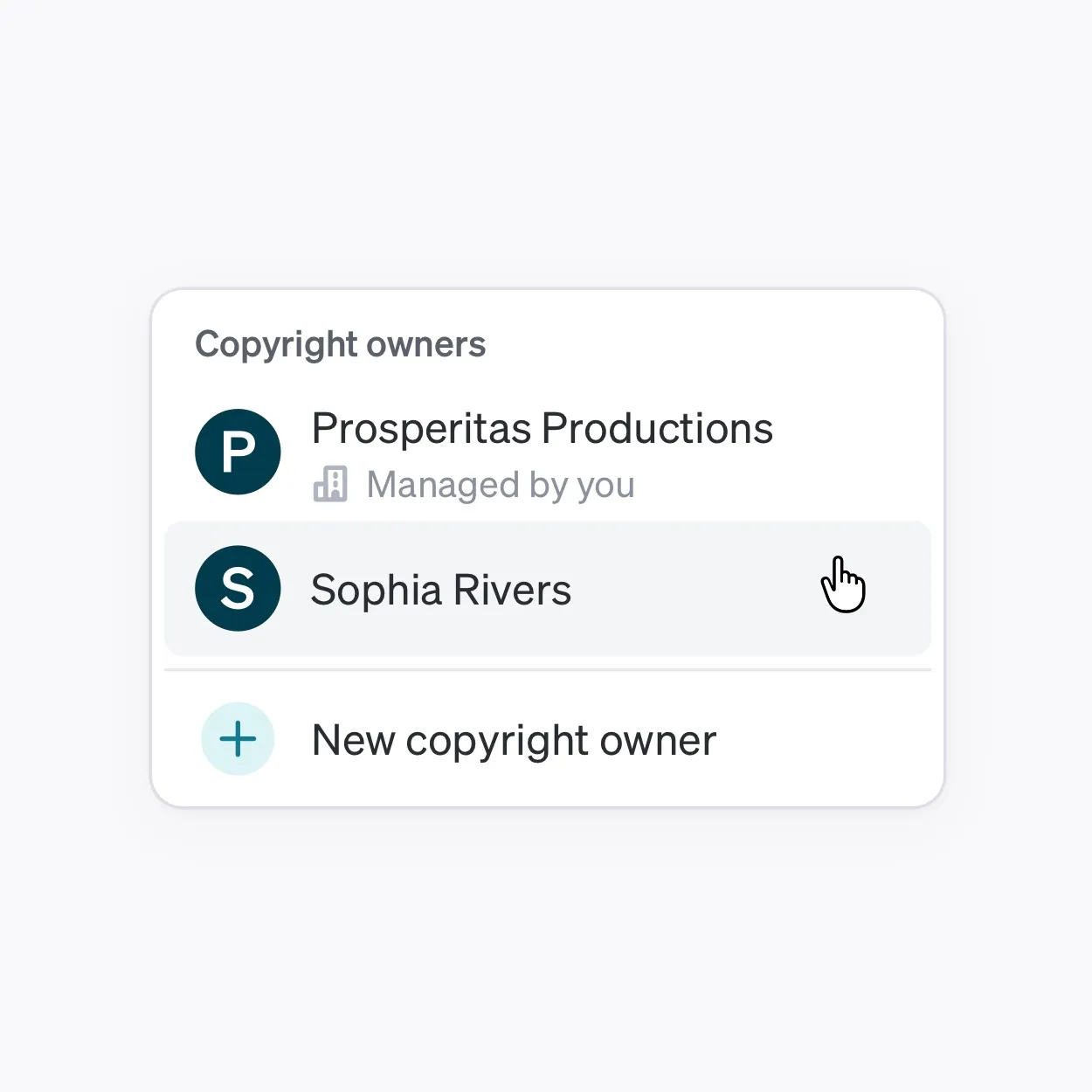
When a label commissions a remix, the agreement usually says who owns the result, and it’s frequently them rather than you.
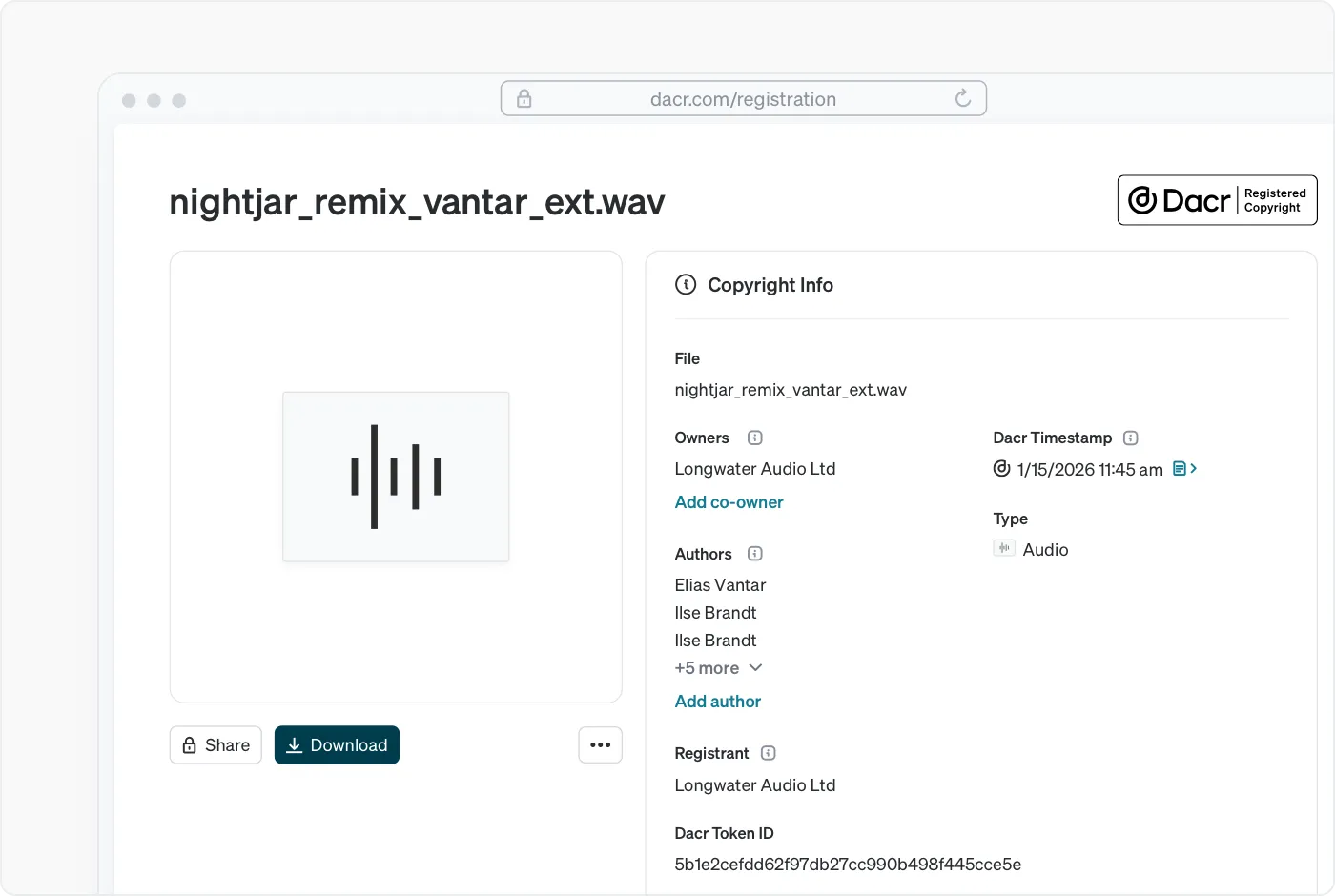
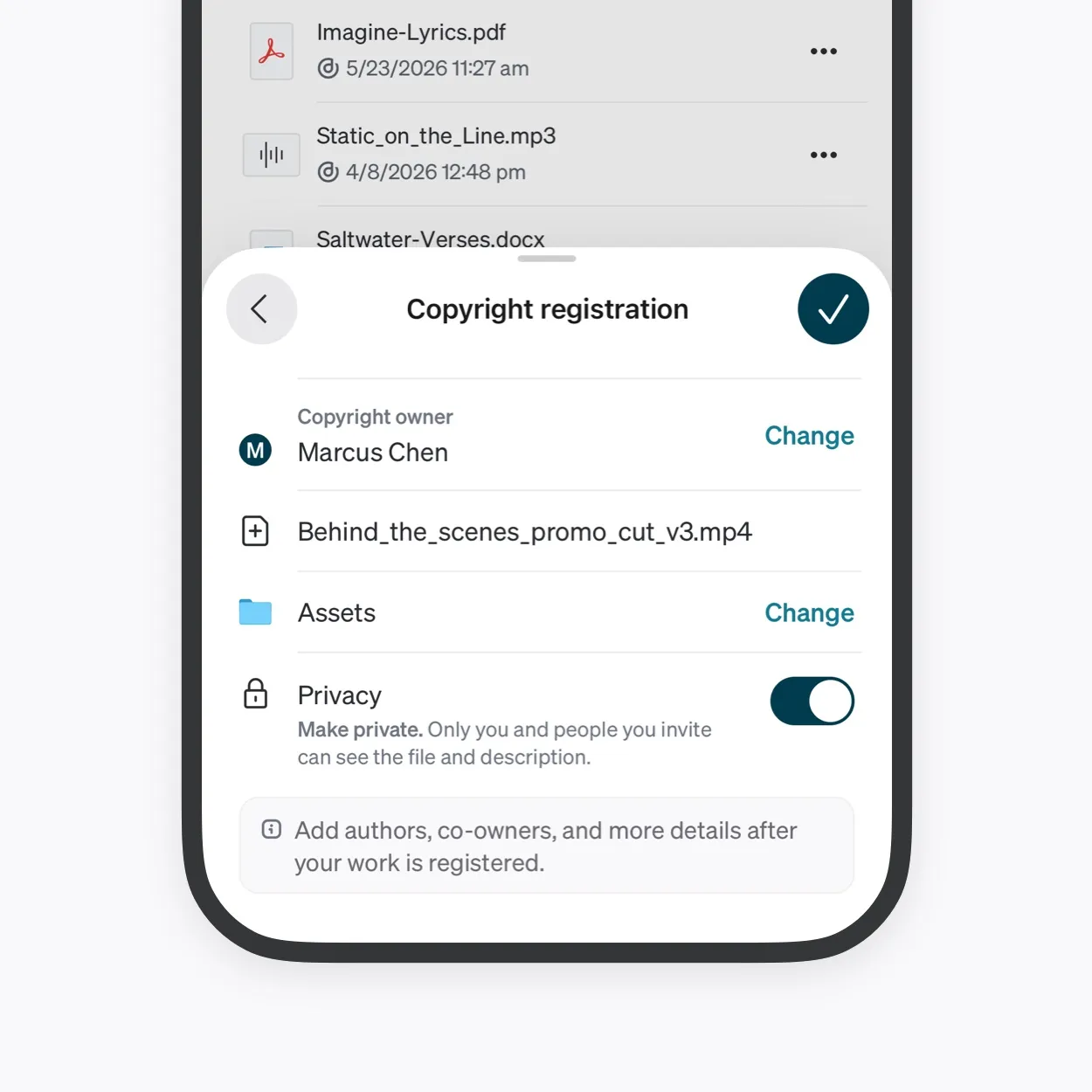
Register under whichever owner the agreement names, and get it right at the point of registering. The principal owner can’t be edited afterward. A commissioned remix registered under your personal owner produces a record that contradicts your own contract, which helps nobody and is awkward to explain.
Worth checking what the deal says about your stems too. Remix commissions vary on whether the parts you created are yours, licensed, or assigned along with the remix, and that determines what you can reuse in your own work later.
Unofficial remixes, edits and bootlegs
Plenty of remix culture operates without clearance, and a lot of careers have started there.
Registering your production work on an unofficial remix records what you made and when. It doesn’t resolve the status of the release and it isn’t a defence to a claim over the underlying work. Treat it as a record of your contribution and nothing more than that.
It does have one practical use. Bootlegs get reuploaded and relabelled constantly, often with someone else’s name attached, and a dated record of your version is what lets you say which one was yours. A separate question from whether either of you should have released it.
Describe it honestly
The description is where the relationship to the original belongs. Say what the remix is and what it’s based on.
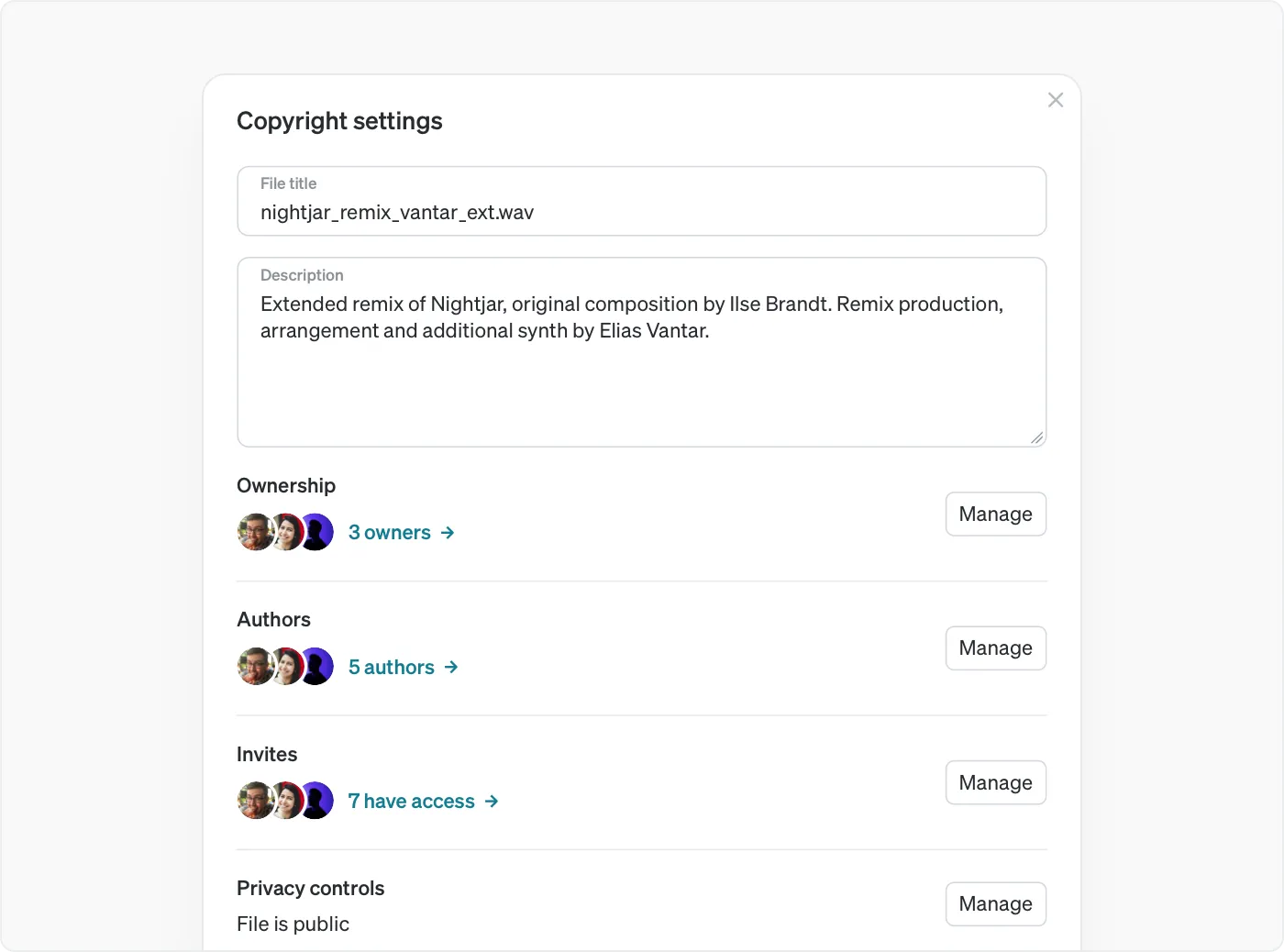
Descriptions can be edited at any time, so a record can be updated if the status changes. An unofficial edit that later gets cleared and released properly, for instance. The filename is permanent and publicly visible, which matters when remix filenames routinely carry the original artist’s name.
A record describing a remix as an original composition is inaccurate in a way that helps nobody, and least of all you in a later conversation about the work.
If your remix gets copied
This happens more than people expect, particularly with edits that circulate in DJ pools and file-sharing groups.
Your registration covers your production work, so a comparison between your registered remix and someone else’s copy of it is a normal thing to run. What it can’t do is help with the underlying track, which was never yours.
Get the actual file rather than a screenshot of the listing, and check your infringement docket while you’re there, where flagged matches and infringement reports appear. Comparison runs automatically against work already registered with Dacr, on every account, so a match may already be sitting there.