A surface design goes further from your desk than most artwork does. The repeat file reaches an agent, a buyer, a technical team, a sampling house, a mill, and a production floor, often across three countries, before anything appears in a shop.
Most of those people you will never meet. Several of them work for companies you have no relationship with and no agreement with.
Register before the file leaves for production
The exposure point is the handoff, not the launch. Once a repeat file is in a supply chain it is being opened, converted, sampled and stored by people whose job is to reproduce it accurately.
That is exactly what you want, and it is also why the record needs to exist first. A registration made before the tech pack goes out predates every copy of the file in the chain.
What counts as the work, and what is a variation of it
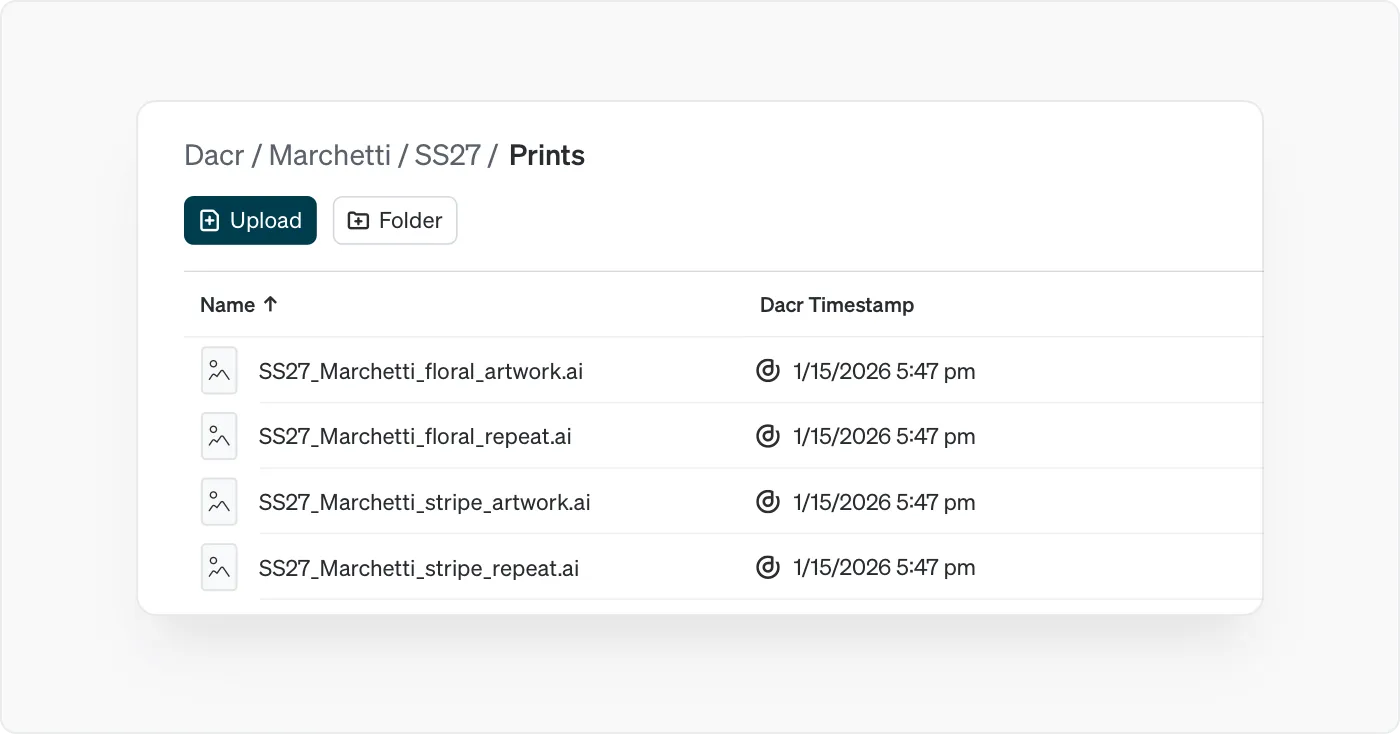
A pattern usually exists as several files: the artwork, the repeat tile, and a set of colourways.
Register the artwork and the repeat, which are the design. Colourways are a commercial variation on the same drawing rather than new drawings, and registering fifteen of them mostly fills your catalog with near-identical records.
The exception is a colourway that is genuinely a different design decision, where the palette is doing the work rather than the drawing. There are rarely many of those in a collection.
A collection is worth treating as a group. Register the designs together and file them by collection and season, which is how buyers, agents and your own team refer to them anyway.
Manufacturing markets are worth thinking about
Dacr Members have the option of registering a work in additional countries, and coverage added later is timestamped from the moment it is added rather than backdated.
For surface design that decision has an unusual input, because you often know where production is happening before the design is even finished. The countries where a pattern will be manufactured and sold are named in the brief.
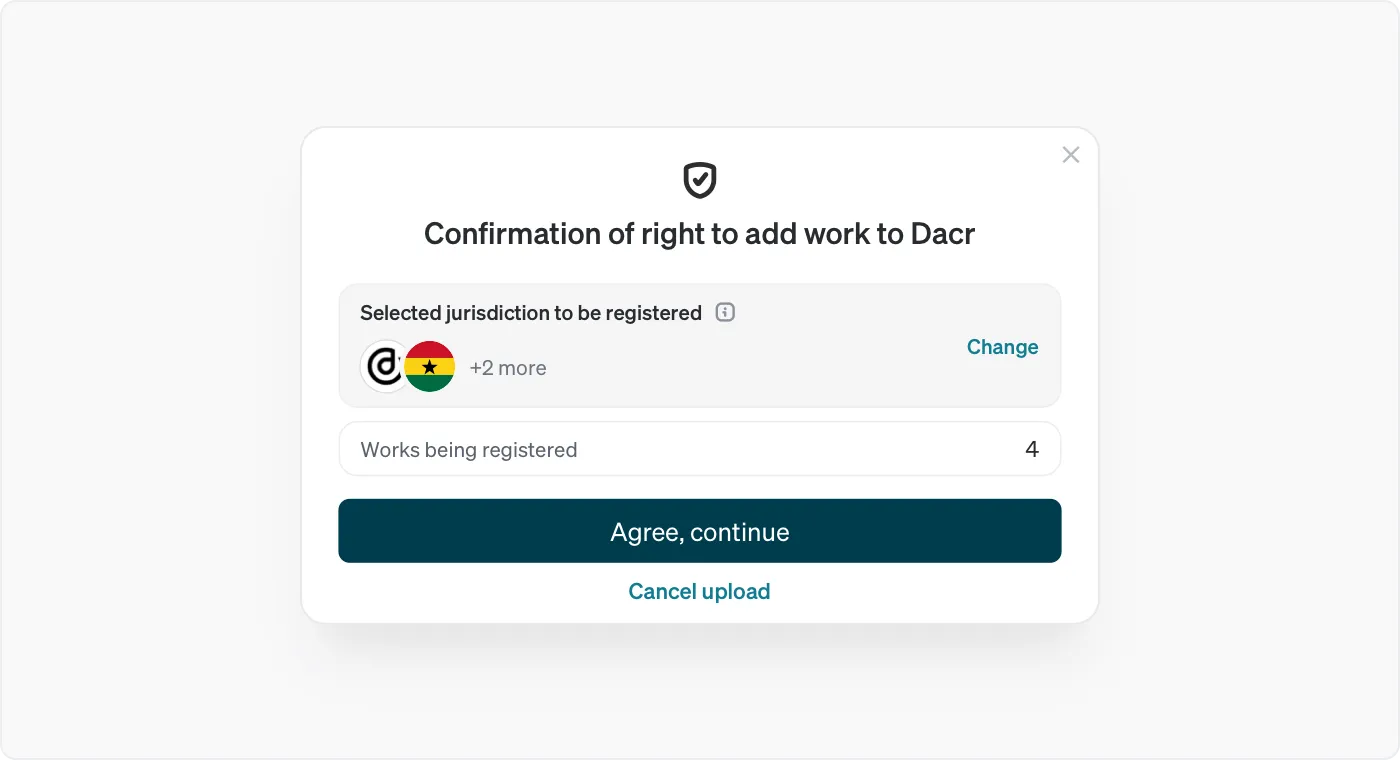
Choosing the list at the point of registration is what gets you the earliest record in each of those markets. Ask the buyer where production sits if it isn’t in the brief. It’s a normal question at that stage of a project.
Naming, and what stays visible
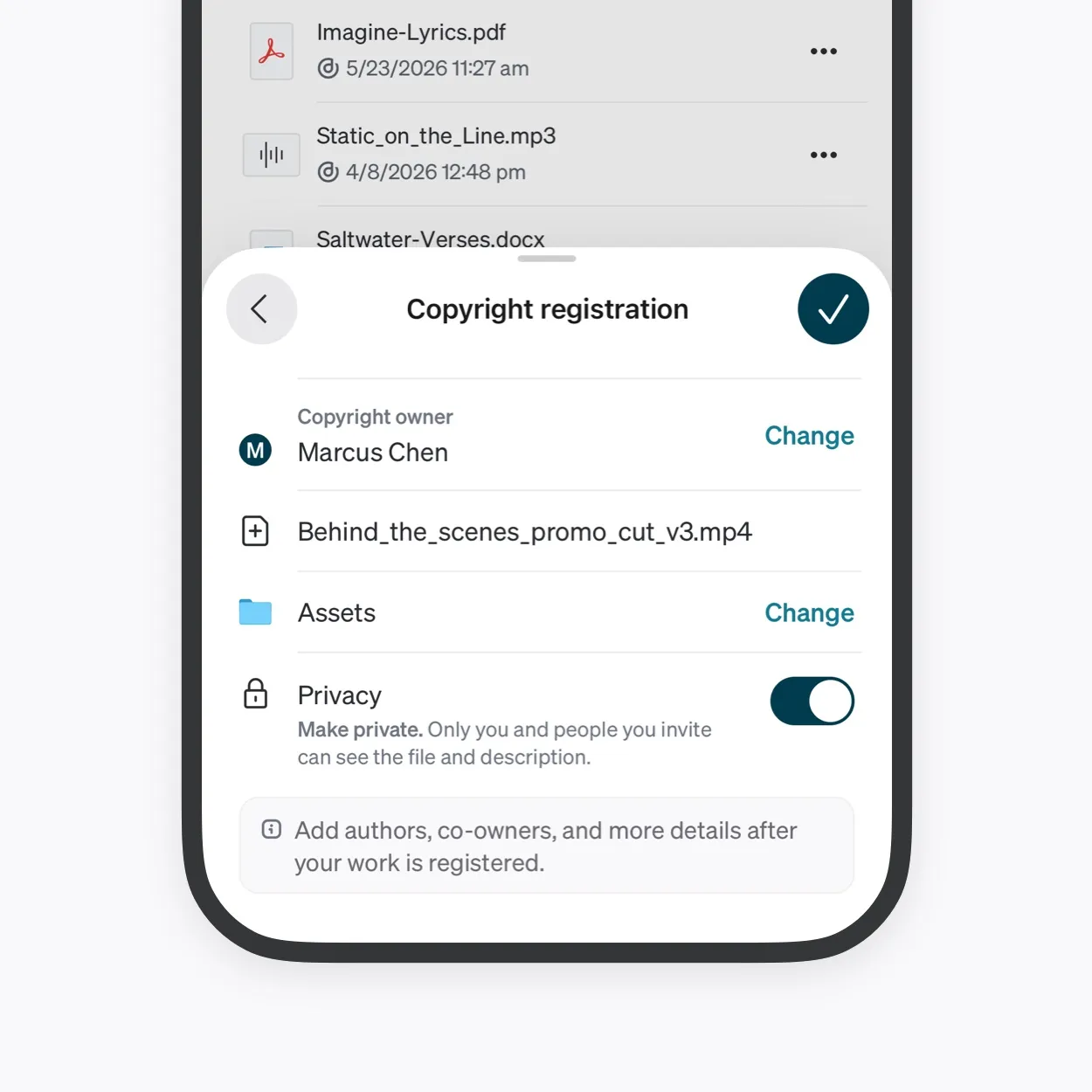
The filename you upload is permanent and stays publicly visible, and it becomes the record’s starting title.
A private registration hides the artwork and the description. The filename doesn’t become private, so a file called SS27_Marchetti_floral_repeat.ai discloses a client and a season on a registration you deliberately set to private.
Name neutrally before you upload, particularly for anything under an unannounced brief. Titles can be edited afterward; filenames cannot.
Sold outright or licensed changes who registers
Surface design splits between two arrangements, and they lead to different records.
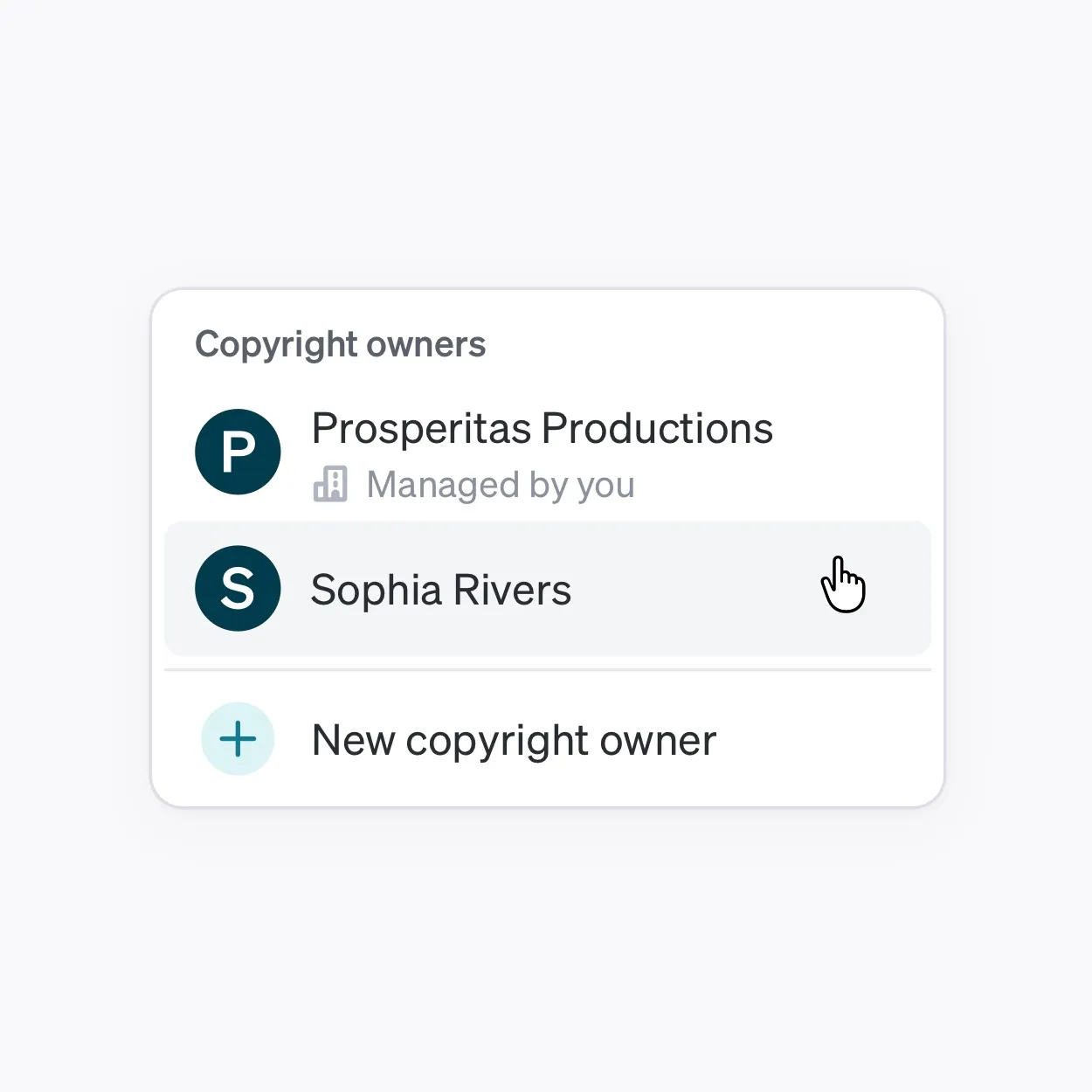
Where you license a design, you keep ownership and the buyer gets defined usage. Register under your own owner, before the file goes out.
Where the design is bought outright, ownership transfers under the agreement and the buyer is the owner. Register under whichever owner the agreement names, and get it right at the point of registering, since the principal owner can’t be edited afterward.
If the arrangement isn’t settled when the file needs to go, resolve it before you send rather than after, because it determines whose record this is.
When something similar appears
Surface design lives close to convention. Florals resemble florals, and a similar layout isn’t by itself a copy, which is why a documented comparison is more useful here than an instinct.
Get the actual artwork where you can, from a product image at the highest resolution available or from the printed item itself, and compare it against your registered repeat. What you’re looking for is the specific drawing rather than the general idea.
Dacr also compares each new registration against everything already registered with Dacr, automatically and on every account, so your infringement docket, where flagged matches and infringement reports appear, is the place to look first.
Fitting it in
The moment to do this is when you prepare a design for handoff: repeat checked, files exported, tech pack assembled. The registration goes in the same step, and takes a fraction of it.