You shoot a three-bedroom semi on a Tuesday, deliver thirty images on the Wednesday, and invoice for use on that listing. The house sells in six weeks and the job is finished.
Four years later the same house is back on the market with a different agent, and the listing carries your photographs. Nobody involved thinks of that as reuse. The images were in a folder called that address, and the folder is still there.
The images outlast the job by design
Property images live on longer than almost any other commercial photography, because the thing they depict is permanent and gets sold repeatedly.
They also propagate. A listing syndicates to portals, aggregators and the brokerage’s own site, gets archived when the sale completes, and stays retrievable indefinitely. Agents move between firms and take their image libraries with them. Vendors save the pictures of their own house and use them years later.
Most of that is nobody acting badly. It is a set of files with no memory of the licence attached to them.
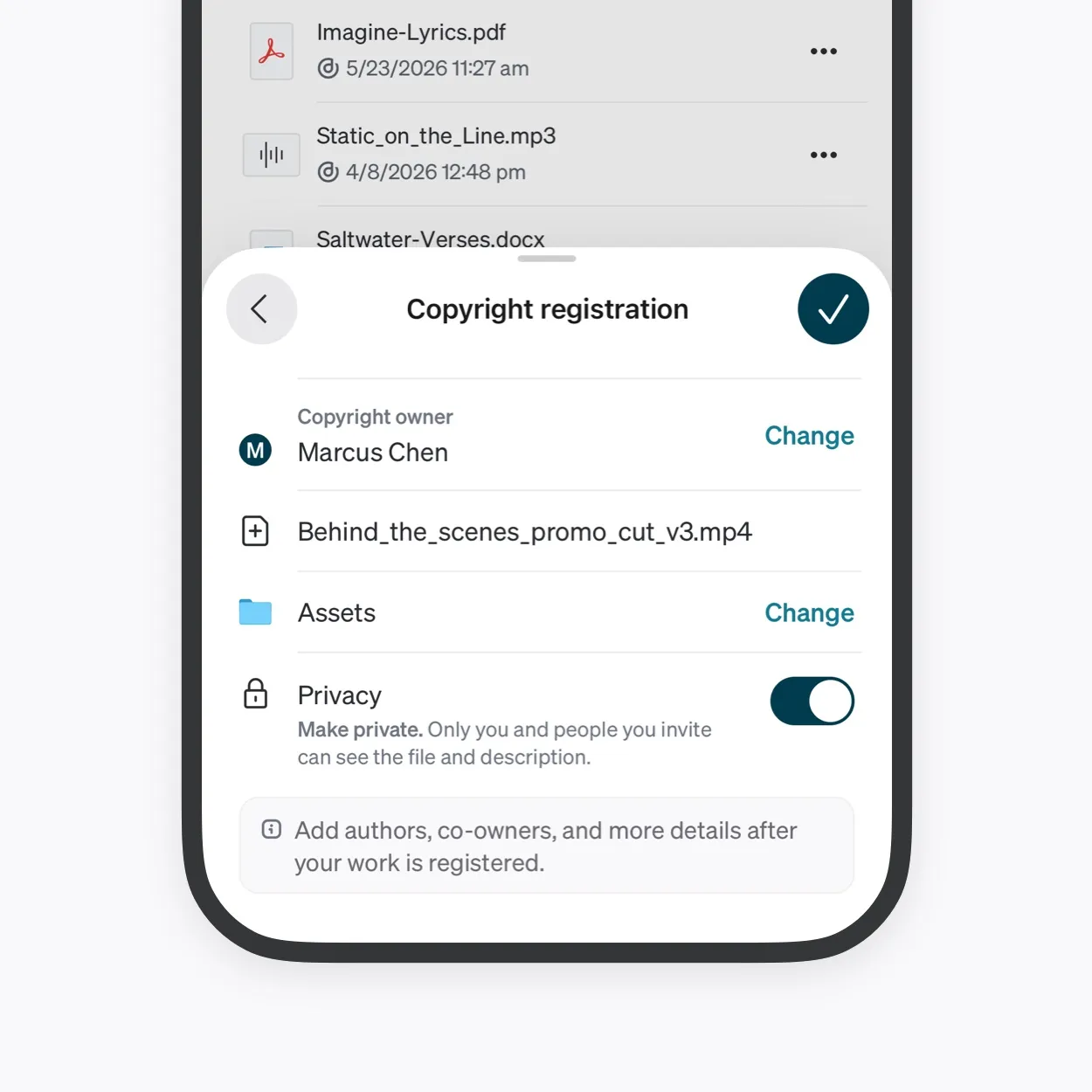
Register the delivered set, one property at a time
Thirty images per property, several properties a week, is a lot of files. Registration is priced per work, so the sensible unit is the delivered set for each job rather than every frame from the shoot.
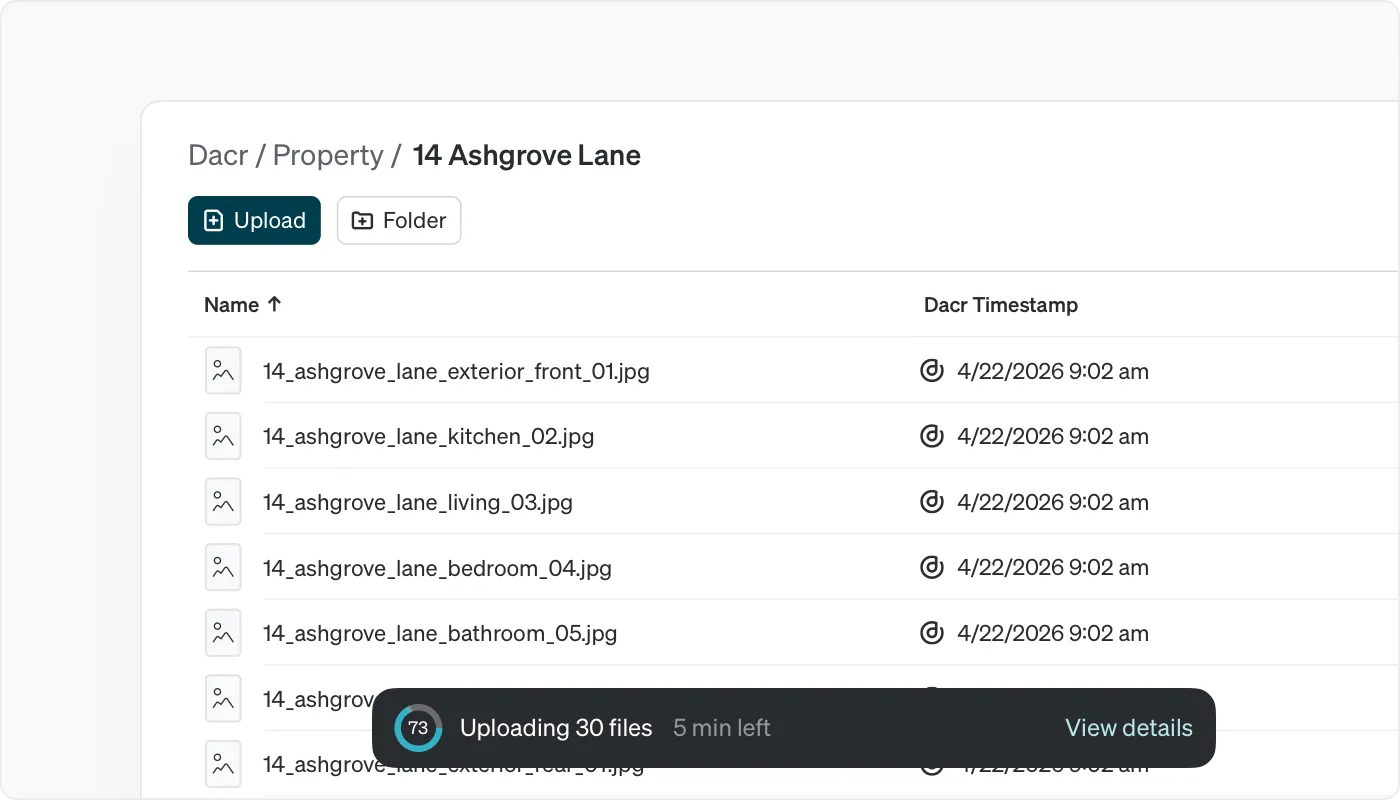
Register what you deliver, before you deliver it. The delivered edit is what ends up on the portal, in the brochure, and in a folder on a brokerage server that outlives everyone who was there.
Where a property gets a full package, stills plus floorplan renders plus a video walkthrough, the stills are the part that gets reused years later. Prioritise those if you’re being selective.
Name by address, because the address is how everyone searches
The filename you upload is permanent and stays publicly visible, and it becomes the record’s starting title. Search looks at the title, which makes this the field that determines whether you can find a job again.
Real estate is the easiest case in photography to name well, because the natural identifier is obvious. Address and date, consistently applied, means a relisting in 2029 takes a minute to check against your own records rather than an afternoon of guessing which quarter you shot it in.
Titles can be edited afterward if you want to tidy the wording. The filename underneath stays as delivered.
Be specific in writing about what the fee covers
The reuse problem here is mostly a licensing problem, and the licence is usually verbal or implied by an invoice line that says photography.
Worth stating what the fee actually buys: this listing, this agent, until sale or withdrawal. Have a number ready for what a relisting costs, because agents faced with a fee for reuse will often simply pay it. The ones who reuse without asking are frequently not aware there was anything to ask about.
That is a contract question rather than a registration one. What the registration adds is the other half of the conversation.
When a relisting appears with your photographs
This is the most common infringement in real estate work and the most straightforward to establish, because the images are unmistakably yours and the date isn’t in question.
Get the actual image files from the listing rather than a screenshot of the page. The files are what a comparison runs against.
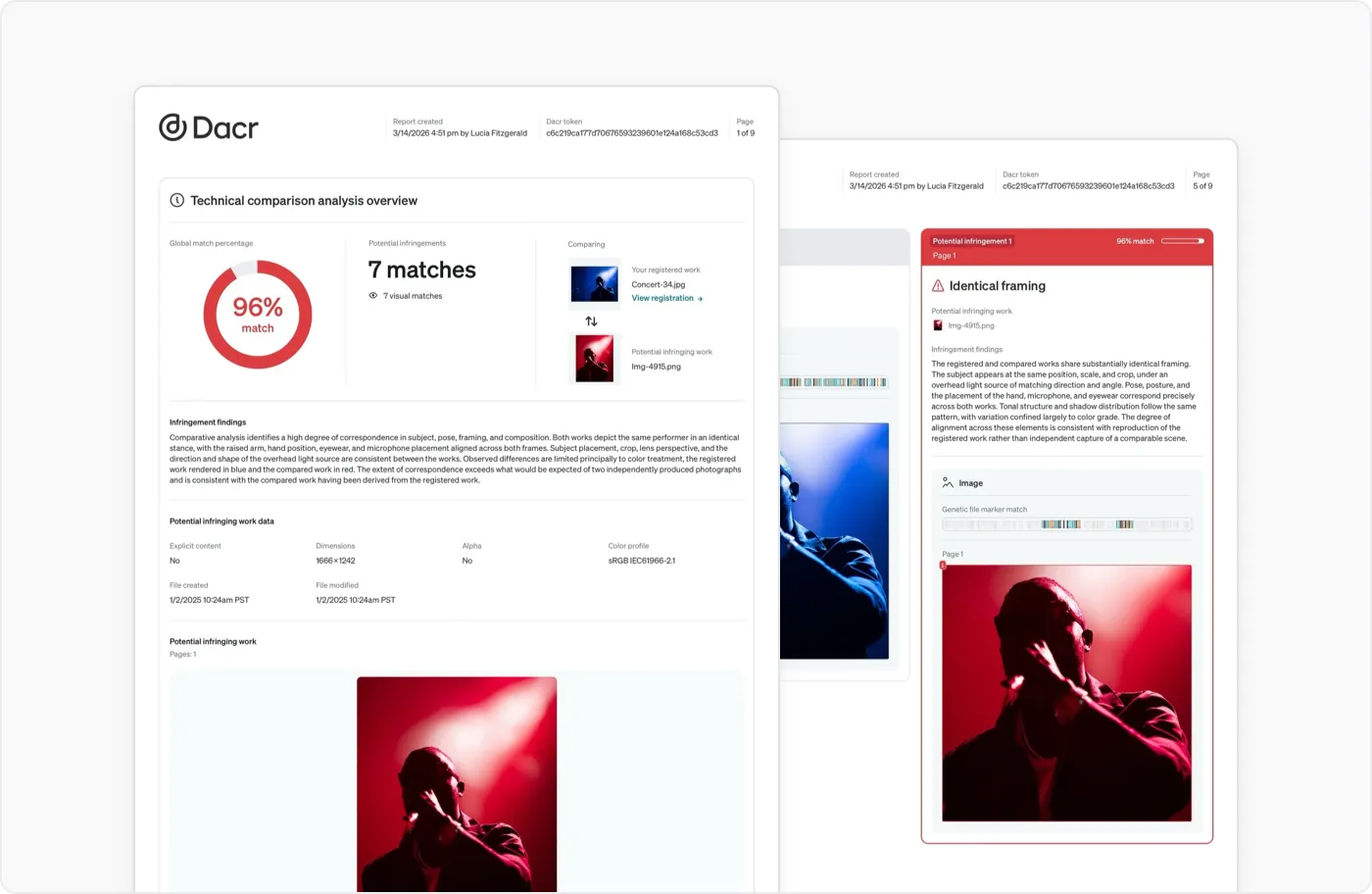
Dacr also compares every new registration against everything already registered with Dacr, automatically and on every account, so your infringement docket, where flagged matches and infringement reports appear, is the place to look before starting from scratch.
Then decide what you actually want. With an agent you may still work with, a relisting fee is usually the outcome worth having, and it is a much shorter conversation with a dated record in hand than with a recollection of a job from four years ago.
Volume is the reason to make it automatic
Nobody shooting fifteen properties a week is going to register anything they have to think about.
The step that survives is the one attached to delivery: export, rename by address, register, send. Once it is part of the same pass, the volume stops being an obstacle and starts being the point, because the properties you shot two years ago are the ones that come back.